This week, heavy rains lowered nitrate levels in Iowa’s Raccoon River, but water usage restrictions remain in place.


This week, heavy rains lowered nitrate levels in Iowa’s Raccoon River, but water usage restrictions remain in place.
Transcript
This week, heavy rains lowered nitrate levels in Iowa’s Raccoon River, but water usage restrictions remain in place.
During a tour of the testing lab at the Des Moines Water Works, staff explained how rainfall can flush excess nitrate off of farm fields and into Iowa’s rivers. They also pointed out the rise in nitrate levels was coming from multiple sources. The levels vary dramatically depending on rainfall with increases noted in locations north of Iowa’s capitol city.
Lisa Morarend, Central Iowa Water Works: “So we have analyzers upstream of us in the Raccoon River and the Des Moines River, and we watch those daily. So we can see if it rains up in Sac City, we can see how that affects the nitrate levels in the river there, and then we can watch that nitrate as it moves down the river to us.”
A study, commissioned by the Polk County supervisors, the county where Central Iowa Water Works is located, is due to be released next week. A summary, released to the Iowa Capitol Dispatch, shows agriculture is responsible for an 80% increase in nitrate levels.
Aaron Lehman, is president of the Iowa Farmers Union.
Aaron Lehman, Iowa Farmers Union: “So it is a very serious issue. Farmers very much want clean water, and we want to be part of the solution moving forward. But it's going to take a public farmer, partnership to make a good solution.”
For Market to Market, I’m Peter Tubbs.
Watch More

The White House adds detail to the new trade deal, while China dodges the details. The drought continues to hammer the south and west. We’ll look at the ticking clock facing the dairy industry. And, commodity market analysis with Sue Martin.

The White House announced this week that President Trump has secured “historic trade deals with China” after his visit last week with President Xi.

This week, the East Coast received an early blast of summer, with highs in Philadelphia reaching into the 90’s with the heatwave expected to continue through the weekend.
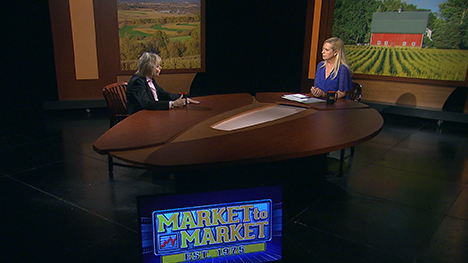
Sue Martin talks interest rates, oil, corn, soybeans, hogs, cattle and packing plants in our Market Plus.

Sue Martin discusses the latest trade deal with China along with corn, soybeans, cattle and hogs in our Market Analysis.

El Niño is officially here, and it may be intensifying fast. Eric Hunt updates us on pasture and wheat conditions in Nebraska and beyond from his role at the University of Nebraska-Lincoln.