Questions still remain if President Trump will be able to apply tariffs on imports in the long term, and whether trading partners ratify trade agreements negotiated under trade threats.


Questions still remain if President Trump will be able to apply tariffs on imports in the long term, and whether trading partners ratify trade agreements negotiated under trade threats.
Transcript
The effects of last week’s tariff ruling by the Supreme Court continue to ripple across economic and political waters.
In his State of the Union speech Tuesday, President Trump again incorrectly claimed that exporting countries pay tariffs on goods imported into the U.S. Importers and American consumers pay the tariffs on imported goods.
Donald Trump, US President: "I used these tariffs, took in hundreds of billions of dollars to make great deals for our country, both economically and on a national security basis. Everything was working well, countries that were ripping us off for decades are now paying us hundreds of billions of dollars.”
The Court’s 6-3 ruling found the tariffs placed by the Trump Administration under an emergency powers law to be unconstitutional. Thousands of companies have sued the government for refunds of tariffs paid over the last ten months. The U.S. Treasury has collected over $130 billion dollars in tariffs over that time.
Ten percent tariffs placed in the wake of the Supreme Court’s ruling went into effect on Tuesday, will remain active for 150 days, and any extensions would require Congressional action. The new tariffs fall under a section of the Trade Act of 1974.
The American Farm Bureau released a statement encouraging the Trump Administration to avoid using tariffs to settle trade disputes due to tariffs increasing the prices of inputs used in agriculture.
The European Parliament also delayed further action on its deal with the United States.
Alberto Rizzi, Policy Fellow at the European Council on Foreign Relations: “So many of the reasons that made a difficult deal palatable to the Europeans are not on the table anymore, which means it's going to be difficult to find adequate framework for the next deal or to safeguard most of this one. I don't think the EU is keen to discard it, but also sees now very little value in the deal that last year seemed a relatively good point."
For Market to Market, I’m Peter Tubbs
contact: Peter.Tubbs@iowapbs.org
Watch More
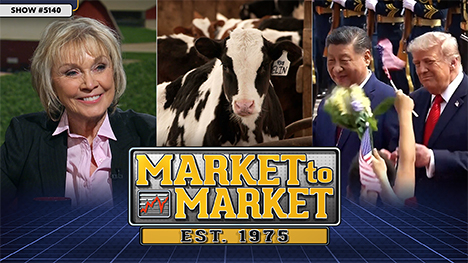
The White House adds detail to the new trade deal, while China dodges the details. The drought continues to hammer the south and west. We’ll look at the ticking clock facing the dairy industry. And, commodity market analysis with Sue Martin.
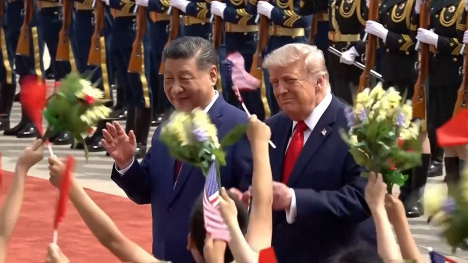
The White House announced this week that President Trump has secured “historic trade deals with China” after his visit last week with President Xi.

This week, the East Coast received an early blast of summer, with highs in Philadelphia reaching into the 90’s with the heatwave expected to continue through the weekend.
Sue Martin talks interest rates, oil, corn, soybeans, hogs, cattle and packing plants in our Market Plus.
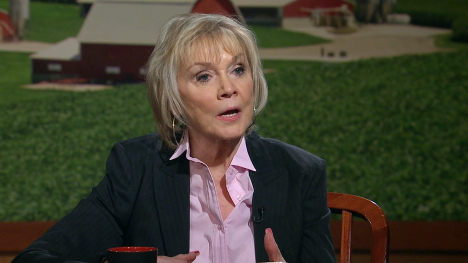
Sue Martin discusses the latest trade deal with China along with corn, soybeans, cattle and hogs in our Market Analysis.

El Niño is officially here, and it may be intensifying fast. Eric Hunt updates us on pasture and wheat conditions in Nebraska and beyond from his role at the University of Nebraska-Lincoln.