Shawn Tiffany was recently in front of the Senate Agriculture committee testifying on a litany of bills aimed at the livestock industry. As an independent owner/operator, the story is personal to his family and community.
Telling Congress the story from the Kansas feedlots
Share


Shawn Tiffany was recently in front of the Senate Agriculture committee testifying on a litany of bills aimed at the livestock industry. As an independent owner/operator, the story is personal to his family and community.
Transcript
Shawn Tiffany: About the nature of our business, because our business is something that in Congress, they were saying no longer exists. But you know, we we determined a long time ago when we were in our early 30s, that somebody was going to tell our story, as cattlemen, specifically feed yard operators. And I guess we were just bold enough to say, well, we'll tell it ourselves and make sure it's right. And so we've been willing to be in the public eye for a long time. But then last fall, I was asked to serve as president elect of the Kansas Livestock Association. You know, I don't think it was accidental that I was asked to go to DC, I think the nature of my business being an independent, custom finishing the lot was in this model as part of that story, but then it would, it wasn't for him, for me to sit in front of a bunch of people and get asked hard questions. We do that all the time. I've had people from the World Wildlife Fund at our operation farmers and ranchers and veterinarians and chefs from all over the world that sometimes don't have an understanding of what a capo is. And so I don't mind being in a situation where I'm gonna get asked the tough questions and have to defend them.
Paul Yeager: I'm gonna go all the way back to the very first thing you said, you were told in the hearing, that your type of business doesn't exist anymore. Is that the independent feeding operation? Is that what you meant with that?
Shawn Tiffany: Yeah, so both for serve, Senator Grassley alluded to the fact that there's no independent preloss anymore. Mr. Ruffin, who is a rancher and the attorney and Missouri who testified along with me, and then Miss Shelley Zetia out of North Dakota, who testified along with me, basically said, There's no such thing as independent feedlots anymore. It's all corporate, which I'm not going to deny there's a lot of corporate feed yards out there that own all their cattle, but they have to get those cattle somewhere. And that's farmers and ranchers from across the US. But but my business, we're exclusively custom. So my brother and I started with nothing we've literally bought a feedlot with a handshake is our down payment collateral, and one of our loan covenants was you're not going to uncap we had way too much risk. And we're highly leveraged to begin with, and our bankers said, no cattle ownership is not going to be a part of our deal.
Paul Yeager: Is there going to be a perfect bill? Or should we just let this thing be?
Shawn Tiffany: Well, I don't believe there's going to be a perfect bill. And frankly, I don't. I don't believe that government regulation is, is better. In many cases, I believe the private sector can sort things out. I am, there's a lot of things that myself, Kansas Livestock Association, and CBA, National Academies Beef Association are not opposed to, you know, widening the reporting regions for LMR. That's a good thing to get more data. You know, the cattle contract library, as long as it's done with confidentiality, you know, that can be a good thing. The Special Investigator bill, that I would argue, the authority to make sure that the Packers and stockyards is followed already exists, and duplicating or creating another agency. For one as to levels of your bureaucracy. It does confuse who has jurisdiction. And frankly, if you ask me, it's an admission on behalf of Congress that they haven't been enforcing the laws that were already in place to begin with. The biggest thing that I'm opposed to and frankly NCBA Kalay is the mandate, just because who gets to choose is the packer which gives them more leverage and, and I've got friends that do manage large corporate yards. And matter of fact, the CEO of one large yard, actually a collection DVRs told me months ago, he said, Listen, if I'm sitting in the sale barn, buying cattle fill our yards, which those larger yards are doing every single day of the year. He said, If I don't know how I get to market, those calves, the day I buy them, my risk just went up, which means my price just went down what I can, what I can stick my neck out for, because even the corporate yards, they're not making very big margins. The way a feed yard works is to capture very, very thin margins across a large population of cattle. But if all of a sudden there's some hiccup like you can't market them the way you thought you were going to and that thin margin goes away. Well guess what? Your profitability just evaporated.
Paul Yeager: So you think things are cyclical? Because I mean, we look at packer margin and go boy, that looks pretty good right now. Is that going to stay this way forever? Do you think that's what Congress is trying to tackle?
Shawn Tiffany: Well, I know things are cyclical, which is why we have this conversation about once every 10 years. And that's because, you know, there's an old saying that the American farmer can ruin a bull market in one year. You know, wheat gets high. Guess what, everybody's gonna raise wheat next year and the price goes down. It kind of goes hand in hand with the old saying the cure for high prices is high prices. And cattlemen are no different. It just takes us longer.
Paul Yeager: The full conversation with Sean Tiffany is available now on the Market to Market YouTube channel. New episodes of the M to M podcast come out each Tuesday.
Contact: [email protected]
Watch More
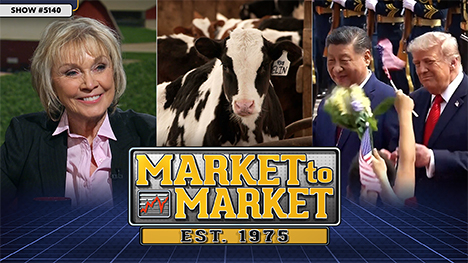
The White House adds detail to the new trade deal, while China dodges the details. The drought continues to hammer the south and west. We’ll look at the ticking clock facing the dairy industry. And, commodity market analysis with Sue Martin.

The White House announced this week that President Trump has secured “historic trade deals with China” after his visit last week with President Xi.
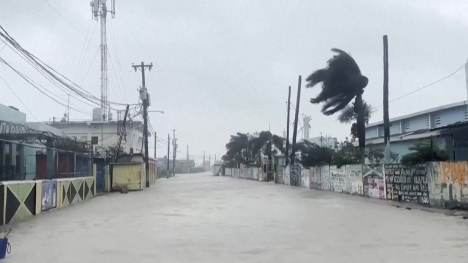
This week, the East Coast received an early blast of summer, with highs in Philadelphia reaching into the 90’s with the heatwave expected to continue through the weekend.
Sue Martin talks interest rates, oil, corn, soybeans, hogs, cattle and packing plants in our Market Plus.
Sue Martin discusses the latest trade deal with China along with corn, soybeans, cattle and hogs in our Market Analysis.

El Niño is officially here, and it may be intensifying fast. Eric Hunt updates us on pasture and wheat conditions in Nebraska and beyond from his role at the University of Nebraska-Lincoln.