President Trump put the Jones Act on a 60-day suspension in an attempt to smooth out prices spikes. The war with Iran may make for higher fertilizer prices. A Strike at the Greeley, CO JBS plant threatens to make beef on the hoof and under cellophane more expensive.
Jones Act on Hold, More Pain at the Pump & Elevator, Beef Prices May Go Higher
Share


In an attempt to smooth out spiking prices, President Trump is suspending the Jones Act. The measure mandates all cargo moved between U.S. ports must be on U.S. flagged vessels. The war with Iran may make for higher fertilizer prices. A Strike at the Greeley, CO JBS plant threatens to make beef on the hoof and under cellophane more expensive.
Transcript
A 60-day suspension of the Jones Act - the measure that requires cargo hauled between U.S. ports to be moved on U.S.-flagged vessels - is an attempt by the Trump administration to help provide relief for high prices on goods and fuel. However, many economists believe the short term waiver will do little to lower prices.
As the attacks on Iran finish a third week, the pain at the pump is increasing. The average price of a gallon of regular gas is $3.88 per gallon, up nearly a dollar from a month ago, and diesel is selling for just over $5 per gallon. The prices only serve to fuel concerns over fertilizer prices.
Tom Waters, Missouri Farmer: “The margins get smaller and smaller. So, we just have to really work hard to trim our cost and be as frugal as we can be, but still provide the soil and the crop what it needs to grow and produce.”
Farmers, like Tom Waters of Missouri, could be receiving some relief sooner rather than later according to Secretary of Agriculture Brooke Rollins who offered some hope of getting relief from higher input prices.
Sec. Brooke Rollins, USDA: “Our farmers are moving into planting season right now. So, the president is very aware of these challenges and these issues. We are very close to having, an announcement on some solutions.”
China’s refusal to help the United States in the Strait of Hormuz could be a major reason for the six week delay of a planned summit between Presidents Trump and Xi. The rescheduling of the meeting prompted a limit-down sell-off in the soybean pits on Monday.
As farmers struggle at the pump and the elevator, the price of beef might go up for consumers. Union workers went on strike Monday morning at a facility that usually processes 5,000 head a day for world beef processing leader JBS. Union leaders say 90% of the 3,800 employees at the Greeley, Colorado facility went to the picket line and are expected to stay there for two weeks. Fallout from the work stoppage may push record prices higher for cattle being harvested from a nationwide herd whose size is hovering at 75 year lows.
For Market to Market, I’m David Miller.
contact: [email protected]
Watch More
Shawn Hackett talks how the reoccurring drought in Europe might be enough for a short rally in corn.
The Senate goes to work on Farm Bill 2.0. State and Federal laws collide as the Supreme Court rules in favor of Monsanto. A growing effort to protect farmland from development. And, commodity market analysis with Shawn Hackett.
Super El Nino is part of the discussion in the commodities markets with our Market Analyst Shawn Hackett.
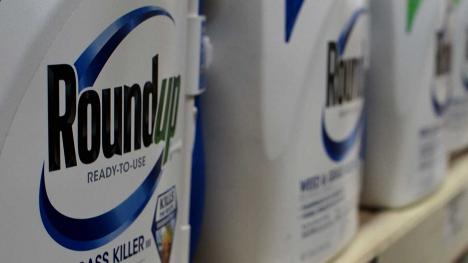
The high court struck down thousands of cases asking for billions of dollars in damage by deciding in favor of herbicide maker Monsanto and its Roundup herbicide.

Fourth-generation cattleman Will Harris of Georgia sits down to talk regenerative farming, closed cow herds, and the structural problems keeping young producers out of the cattle business — even when beef prices are at all-time highs.
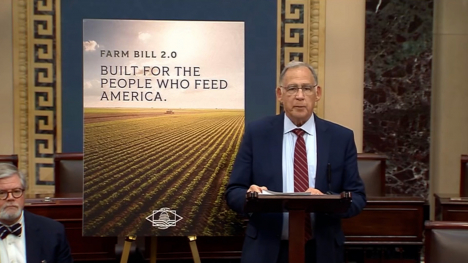
The Senate Agriculture committee introduced its draft of Farm Bill 2.0 this week.