Attorneys gave oral arguments were given in front of the U.S. Supreme Court this week over whether or not labels on the controversial herbicide Roundup needed to be specific about being a potential cancer risk.


The fate of thousands of court cases about the controversial herbicide Roundup may be determined by oral arguments given this week in front of the U.S. Supreme Court.
Transcript
The Supreme Court heard one of the thousands of cases against the agricultural chemical producer Bayer for its herbicide Roundup. The lawsuit in the high court alleged Monsanto - purchased by Bayer in 2018 and maker of the product’s active ingredient glyphosate - failed to warn people the weedkiller causes cancer.
Chief Justice Roberts: We'll hear the argument next in Case 24-1068, Monsanto Company versus Durnell. Mr. Clement.
Paul D. Clement, attorney, Monsanto/Bayer: “Mr. Chief Justice, and may it please the Court: Respondent's label-based failure-to-warn claim is preempted twice over. …Congress plainly wanted uniformity when it came to the safety Ignoring Congress's clear direction here would open the door for crippling liability and undermine the interest of farmers who depend on federally registered pesticides for their livelihood
The case came before the justices after a tidal wave of litigation and the outcome of this case may determine the fate of those existing lawsuits.
Jury awards for some state-level cases have included multibillion-dollar verdicts.
Several of the justices seemed sympathetic to Monsanto’s argument that it can’t be sued under state law because federal regulators have determined Roundup is not a likely carcinogen. Other judges on the panel questioned attorneys on both sides about whether those regulations stop state officials from responding to changing research.
There is fierce debate about whether Roundup causes cancer (despite multiple peer-reviewed studies that show glyphosate does not pose a public health risk.) The World Health Organization classified glyphosate, Roundup's key ingredient, as "probably carcinogenic". However, the U.S. Environmental Protection Agency has determined that glyphosate is not likely to cause cancer in humans when used as directed.
The EPA approved a label without a cancer warning, and Bayer argues that it’s required to follow those federal standards, not the state laws Durnell and others have used as the basis for their lawsuits.
Durnell’s lawyer argued under state law there was no legal reason a federal law would stop Bayer from putting a warning about cancer risk on its label.
Ashley Keller, attorney, Respondent John Durnell: "You unanimously held in Bates that a pesticide can be registered and nevertheless misbranded even if it uses the label that EPA approved at registration. Yet Monsanto now asks you for the opposite holding, that Roundup cannot be misbranded as a matter of law because EPA found for the first time 50 years ago as a matter of fact that it is safe based on information Monsanto submitted."
Bayer disputes the cancer claims but has set aside $16 billion to settle cases, as well as proposing a major settlement earlier this year. At the same time, Bayer has tried to persuade states to pass laws barring new cases, and a few have agreed. The agricultural chemical giant has also removed glyphosate from residential lawn and garden products sold under the Roundup label.
The American Farm Bureau Federation said in court documents removing Roundup from the market would have an "immediate, devastating risk to America's food supply" at a time when the industry is already under pressure.
Environmental groups say Bayer wants to keep juries out of the lawsuits because of its state court losses.
Roundup maker Monsanto is backed by the Trump administration, a legal position at odds with some allies in the Make America Healthy Again movement who want to curtail pesticide use.
A final ruling is expected in late June or early July in line with the end of the court’s judicial term.
For Market to Market, I’m David Miller.
Contact: [email protected]
Watch More
Shawn Hackett talks how the reoccurring drought in Europe might be enough for a short rally in corn.
The Senate goes to work on Farm Bill 2.0. State and Federal laws collide as the Supreme Court rules in favor of Monsanto. A growing effort to protect farmland from development. And, commodity market analysis with Shawn Hackett.
Super El Nino is part of the discussion in the commodities markets with our Market Analyst Shawn Hackett.
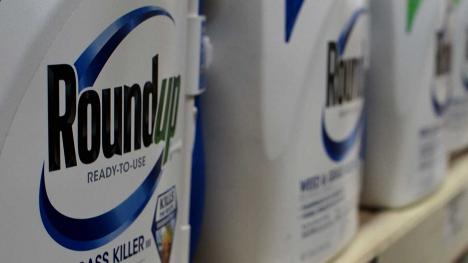
The high court struck down thousands of cases asking for billions of dollars in damage by deciding in favor of herbicide maker Monsanto and its Roundup herbicide.
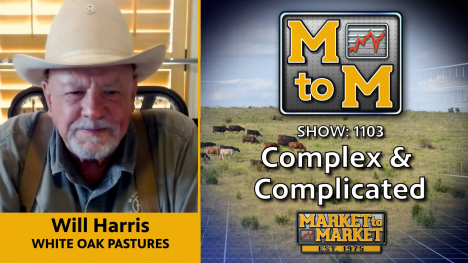
Fourth-generation cattleman Will Harris of Georgia sits down to talk regenerative farming, closed cow herds, and the structural problems keeping young producers out of the cattle business — even when beef prices are at all-time highs.
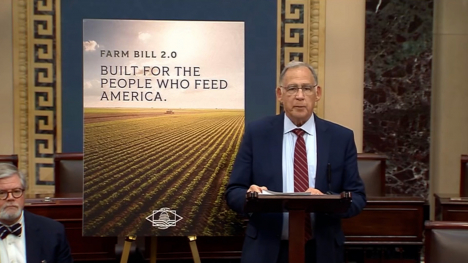
The Senate Agriculture committee introduced its draft of Farm Bill 2.0 this week.