George Washington Carver
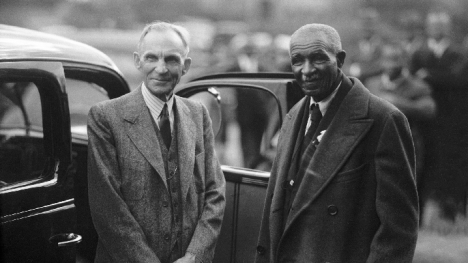
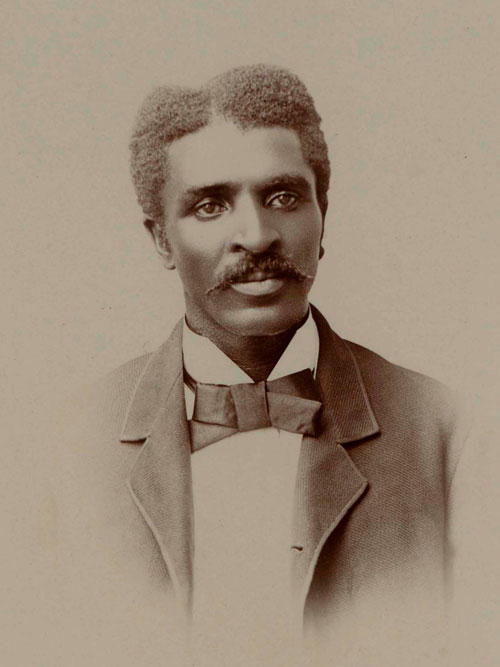 George Washington Carver’s life is a powerful story of perseverance, intellect, and service. Born into slavery during the final months of the Civil War, Carver rose to become one of the most respected Black scientists of his time. Praised by Henry Ford as “the world’s greatest living scientist,” Carver devoted his career to helping Black farmers overcome racism, poverty, and limited access to education.
Seeking opportunity, Carver traveled to Iowa in 1888 and was encouraged to apply to Simpson College, where he enrolled in 1890. There he discovered his passion for agriculture and botany, leading him to transfer to Iowa State University in 1891. As Iowa State’s first Black student and later its first Black faculty member, Carver earned a master’s degree and built lasting relationships with influential agricultural leaders, including future U.S. secretaries of agriculture and Vice President Henry A. Wallace.
Carver championed sustainable farming practices, crop rotation, and soil conservation, urging the use of restorative crops to improve depleted southern soils. His innovations produced hundreds of practical products and transformed agriculture. Guided by a deep commitment to education and service, Carver sought “the greatest good to the greatest number,” leaving a legacy that challenged segregation and advanced both science and social progress.
Learn More