Listen, Look, Explore: Investigate Iowa’s Seasonal Science with Your Senses


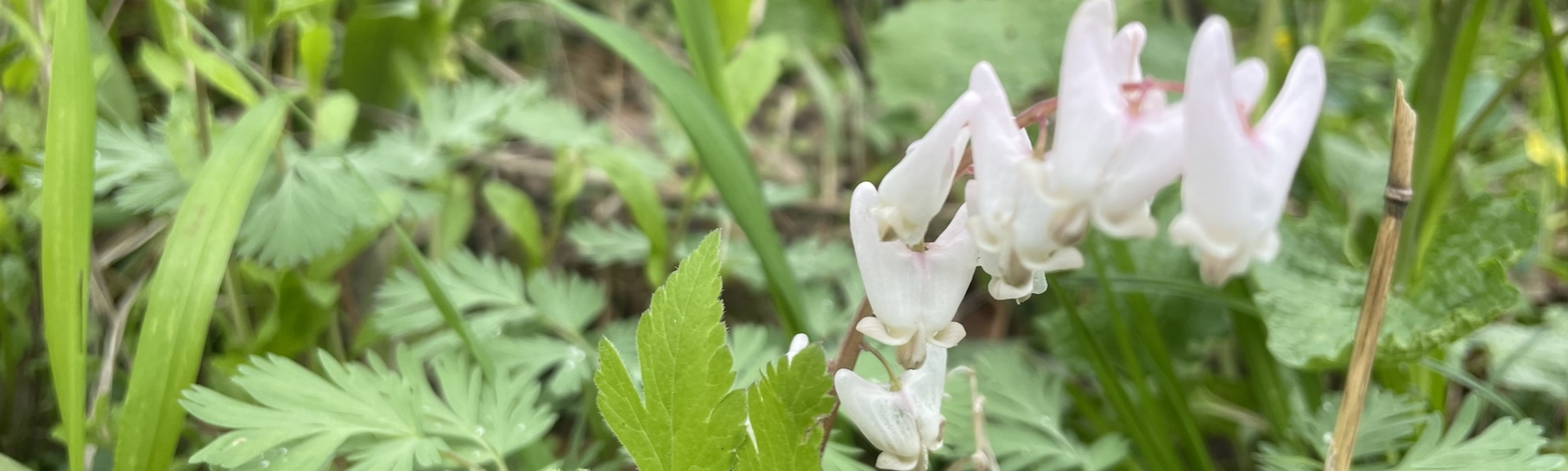
Colorful spring ephemeral wildflowers begin to dot the landscape, chorus frogs fill the early evening air with their high-pitched call, and snow covered grass gives way to rain and mud puddles. Each of these signals Iowa spring is underway.
Buena Vista County Naturalist, Katie Struss, has several personal favorite spring events. “I look forward to seeing the monarchs, hummingbirds, orioles, rose breasted grosbeak, and indigo buntings showing up at our feeder. I love to see the turtles basking, the tadpoles hatching and swimming around, the snakes basking. The bats are beginning to fly at night too.”
Investigating natural phenomena might sound challenging, but couldn’t be easier! The sights, sounds, textures and smells of spring in Iowa provide learners with a fun opportunity to investigate the natural phenomena around them, and their senses can play a critical role. Here are a few ways for you and your students to get started:
- Choose an object and observe it in different ways. If it is a colorful flower on a branch, observe all the colors on the petals and leaves. Notice how the flower smells, and if that is different from the bark on the branch. Note how the branch, petals and leaves feel, and if they are the same or different.
- Look for patterns, shapes and colors.
- Focus your attention by looking for items of only one shape or color.
- Stand quietly with your eyes closed to turn your attention to sounds near and far, loud and quiet.
- Take several deep breaths and notice what you smell.
- Notice how the ground feels under your feet, how the air feels on your face.
- Bring along a journal or notebook to record your observations. You can write, draw, or collect those things you notice.
Katie offers a few additional suggestions to get you started with your spring phenomena explorations: “Think about something you would like. Birds? Butterflies? Frogs? Plants? Start there. Plant some flowers and watch them grow. See what pollinators visit them. Set up a bird watching area, get a feeder or two and perhaps a bird bath. Set up a butterfly feeding station and see who visits. Otherwise, take a walk and see what you discover. You may be surprised by what you find interesting.”
You can also hear more from Katie in this video! Get inspired with this selection of spring-focused Iowa phenomena to keep the learning and questioning going! Visit Iowa Science Phenomena to see more!
Earth’s Patterns
- Length of Daylight (1-ESS1-2): We start to have more daylight in the spring. Why do we have more or less hours of daylight at different times of the year? (Contributed by Laney B. Berry.)
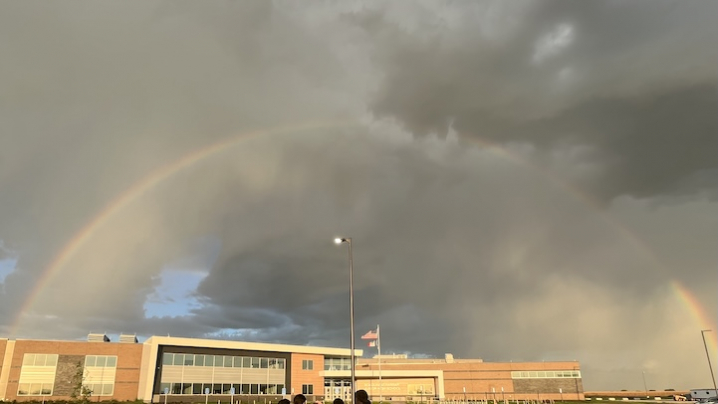
- Rainbows(K-ESS2-1): Rainbows offer a colorful surprise. When do we see rainbows? When do we not? (Contributed by Arielle Sexton.)
Spring Plants and Ecosystems
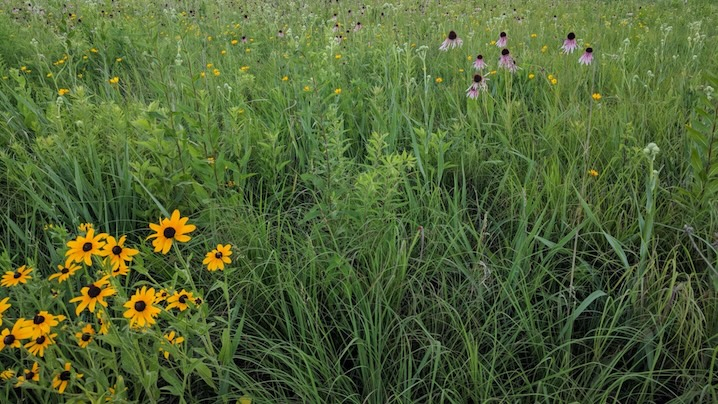
- Annuals and Perennials in Iowa (3-LS4-4): Why do certain plants grow during specific times of the year and others do not? (Contributed by Lily Aulwes.)
- Redbud Blooms in Red Hawk State Park (7-LS1-4): In the spring, Red Hawk State Park is covered in pink blossoms from the redbud trees. How do these flowers help the tree reproduce? (Contributed by Dan Voss and Madison Beeler.)
- Variety of Species in Iowa Reconstructed Prairie (2-LS4-1): Daryl Smith Prairie features many diverse plants, including many native to Iowa. Why are there so many different plants in a natural prairie? (Contributed by Gracie Elgersma, Bailey Gorgal, Abby Miller, and Olivia Terrones.)
Frog and Toad Sounds
- Frog Call Monitoring (HS-LS2-7): Volunteers around Iowa are collecting frog call data from a variety of species. What information does the frog call monitoring give us? (Contributed by Dan Voss and Madison Beeler.)
- ]Amphibian Calls (3-LS1-1): Several different frog and toad calls can be heard at one wetland. Do frogs and toads always make that noise? (Contributed by Jennifer Bliss.)
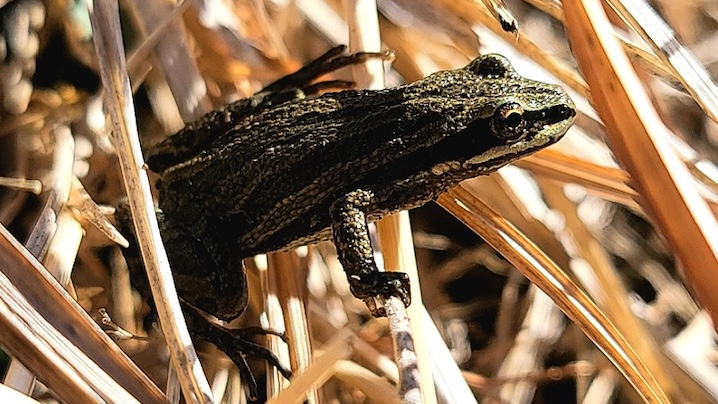
- Boreal Chorus Frog Calling (3-LS4-2): Boreal chorus frog songs are an excellent first sign of spring's arrival. What drives different frogs to call at different times of the year? (Contributed by Cassandra Barbosa.)