FFA member Mackenzie Olsen restores an antique tractor


FFA member Mackenzie Olsen is bringing an old tractor back to life. Follow her restoration work and see the hands-on skills, patience and problem-solving that go into preserving a piece of agricultural history.
Transcript
My name is Mackenzie Olson, and for the state fair this year, I have decided to restore my grandfather's tractor. So FFA started for me in 8th grade.
I heard a lot of people joining it, so when I decided to do that in that first class, I just kind of fell in love with it. I loved the competitions, I loved all the people that were doing it, and it kind of just turned into a passion for me. My grandfather was also in FFA, so I just wanted this to be like a kind of a full circle type moment. Like he did FFA and now his granddaughter's doing it and decided to do his tractor.
So it all started with my great-grandfather on my dad's side. After World War II, he actually decided to work in Milwaukee, Wisconsin, and help produce these tractors, and he helped produce some of the first D17s. And then on my mom's side, my other great-grandfather purchased this tractor, which was one of the first ever made. So it's kind of a full circle because the most rewarding part is I got to bring two sides of my family back together on one.
My family feels very rewarded with it because my grandfather actually used this tractor a lot on the farm. And to see it be restored is just such an amazing thing. So this is a 1957 Allis-Chalmers D17.
It was one of the first out of the 3,000 that were ever made. So a little bit of historical significance is there's a lot of things that other tractors don't that this does. Like on the end of it, it has these two arm bars that actually adjust. So when you hook something onto it, it actually helps bounce with it. Like when you're doing rows of crops and stuff like that.
And it actually has spin-out tires. These tires aren't like a John Deere. It actually helps lock them in so they don't spin out. And the Allis-Chalmers is just a really cool machine, and I got to learn a lot of the history, and I think it's really cool. My favorite part about the tractor is if you actually look under the steering wheel, there are a bunch of gauges, and I'm really proud about that because they used to be so eroded and rusted.
They just weren't how they were supposed to be. So now to finally see them working and like, clear, I— it's just my favorite part. So this started in January, and just over the course of the winter, due to the fact that we couldn't work outside, we did a lot of tearing apart, sanding down parts, seeing, “Hey, what do we need to fix?”
Because there was a hydraulic leak in the front, so we had to take the whole front out, and that was just—the situation itself, that was one of the hardest things that I had to do for this project because we had to replace seals and we had to figure out, “Oh, where does this go again?”
Like, we need to remember where everything goes and how to put it back together.
One thing that I'm excited for is just to be recognized for my work. I'm very excited to be known for what I did and kind of inspire other people, show like, “Hey, I did this. Other chicks in FFA are able to do this as well, and you should try it.”
It's just moving forward, I just hope that other people do projects such as this knowing, hey, there's a community behind you that wants you to do this. And I’m just, I'm so appreciative of everything. And if I do a project in the future, I'm just proud and very accepting that like, “Wow, if I do this again, I'll have somebody to come and support me.”
I just can't believe…like, do it. Why not?
Try something new and just don't think of the cons of like, “Oh, what if it goes bad?” Like, “Oh, what if I mess up?” Just try and go for it. I'm just really proud of how it's come out and me being able to do it.
Watch More
Experience the Iowa State Fair through the eyes of four individuals maintaining its traditions.
The story of the Iowa State Fair — Iowa's annual showcase and its biggest celebration.
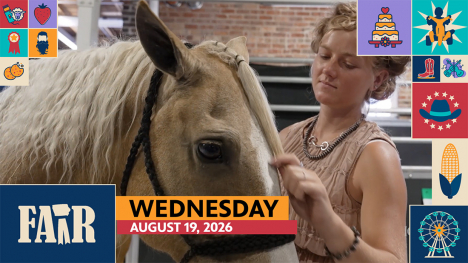
Highlights include the FFA Parade of Champions, Cowgirl Queen Contest, the Iowa Pork Tent Grill Masters and more.
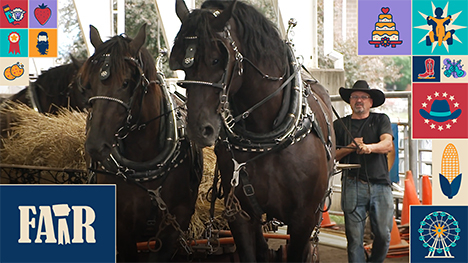
Teams of horses and handlers put their strength and teamwork to the test at the Fair.
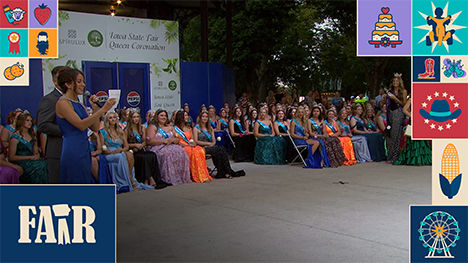
Meet the young women competing to become the next Iowa State Fair Queen.
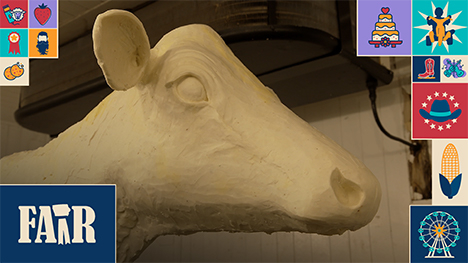
Sarah Pratt reveals what's new inside the Butter Cow cooler at this year's Iowa State Fair.
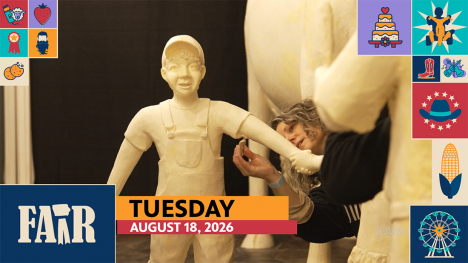
Highlights include Butter Cow, the Farm Team Contest, an FFA tractor restoration project and so much more.
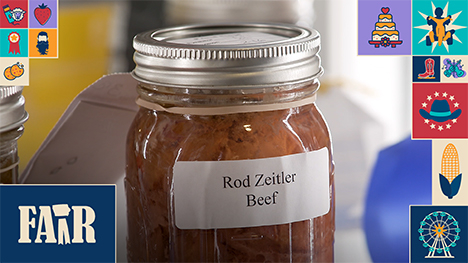
Iowa gardener and canner Rod Zeitler takes his harvest from garden to kitchen and beyond.
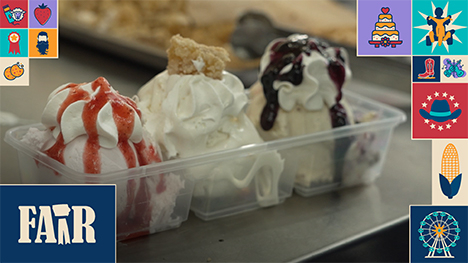
Try a taste of the Iowa State Fair's newest foods, including creative America 250 treats.
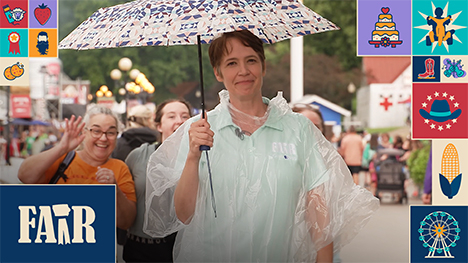
Rain changes the plans at the Iowa State Fair. Find out what to do when weather moves in.