See how the Iowa State Fair Butter Cow became part of a Smithsonian exhibition.


The Iowa State Fair is home to traditions you don't find anywhere else. We travel to Washington, D.C., to see how the Butter Cow has earned a place in State Fairs: Growing American Craft at the Smithsonian's Renwick Gallery.
Transcript
[Mary Savig] We knew there was going to be a butter sculpture, and almost as soon as I started talking to Sarah. When we talked to Sarah Pratt about the project and visiting her at the Iowa State Fair, we knew it was going to be a cow. Learning more from Sarah about Norma Duffy Lyon and how then Norma passed her butter and knife to Sarah, I think that story is exactly what we were trying to do for this exhibition, was to center these amazing stories.
And now Sarah is mentoring her 2 daughters, Hannah and Grace. Also, the cow is an icon. Everybody recognizes a giant butter cow. We knew that would be a hook for the entire show.
[Sarah Pratt] I thought perhaps they would borrow some of my tools that I inherited from Norma, or maybe some of my research. And we just were in this conversation and I was getting really confused. The question that finally dawned on me was, how are we going to get this cow to D.C.? And I was, I'm sorry, what?
I was all on board immediately, but surprised in the best way possible.
[Mary] How hard can this be? We're going to build a refrigerated case and then you put the cow in the case. It was a lot more complicated than that. We had to do a lot of problem solving.
We are in a historic building. So we also had to think about how much weight the floor could have, where the electricity was coming from, how much noise there would be. The logistics that I had to help figure out were how to bring 800 pounds of butter to Washington, D.C. That is what I lost sleep over.
[Sarah] Another process that was new for me was having a sculpture up for a long time. Most of my sculptures are like 2 weeks max. We worked a lot on how would we maintain it? What would we have in place for a maintenance plan? Maybe there's some spots on the back of the udder, but it's like right on the edge of that shadow.
[Leah Bright] I was an observer and a fan of the sculpture. And about 3 months, 3 or 4 months after it was completed, we started to notice some little dark spots appearing all over the surface. That's when I really jumped in, in a bigger role in the project.
[Sarah] We as Iowans and many other states that have this tradition hold it very near and dear. I just didn't know how it would be received in D.C., like if people would be confused or they'd be excited, and it is just a warm welcome. It's been really fun.
[Leah] The butter cow is such a perfect representation of the entire exhibition. As conservators, we are preserving the material components of artwork, but also are really passionate about preserving the stories and the histories behind them. Butter sculpture has such a fascinating and rich history.
[Mary] Since the show has been open, one of my favorite things to do is to stand in that gallery and have people discover the cow. 'Cause they're expecting a cow, but when they see the tail, when they see the veins on the udder, when they see how soulful the eyes are, they're really floored that this has so much character and so much detail.
That was really exciting to me, to be able to prove to people that this is really remarkable.
Watch More
Experience the Iowa State Fair through the eyes of four individuals maintaining its traditions.
The story of the Iowa State Fair — Iowa's annual showcase and its biggest celebration.
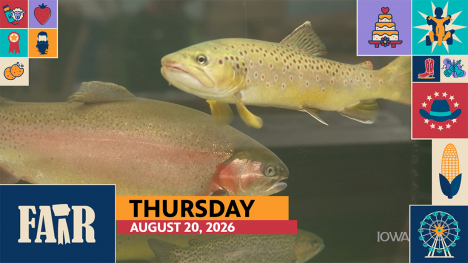
Highlights include the Governor's Charity Steer Show, the AmirrorCAN Men, the 100th anniversary of the DNR Aquarium and much more.
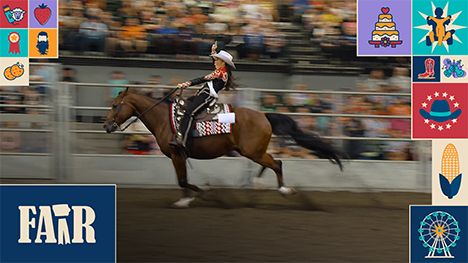
Watch skilled horsewomen compete for the title of Cowgirl Queen at the Iowa State Fair.
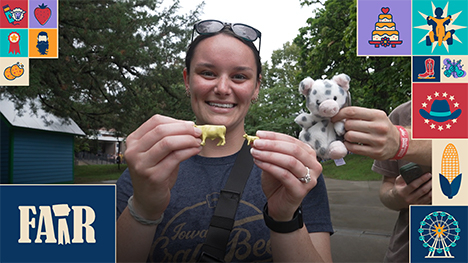
Tiny butter cows are hiding around the Iowa State Fair. Can you find them all?
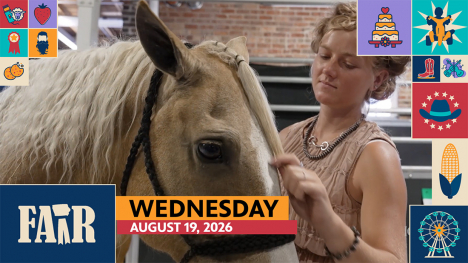
Highlights include the FFA Parade of Champions, Cowgirl Queen Contest, the Iowa Pork Tent Grill Masters and more.
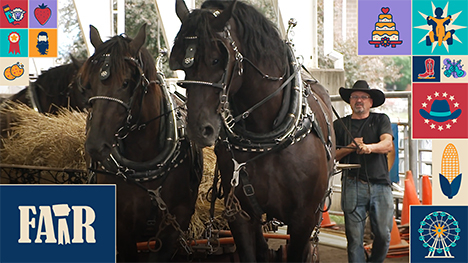
Teams of horses and handlers put their strength and teamwork to the test at the Fair.
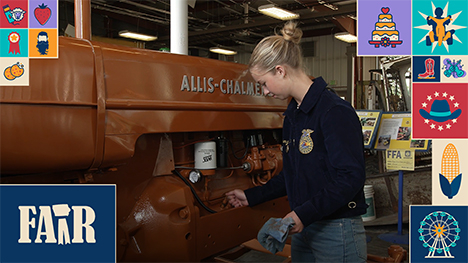
FFA member Mackenzie Olsen restores an antique tractor
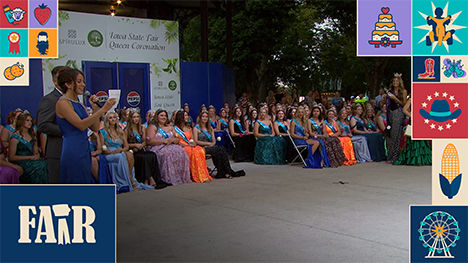
Meet the young women competing to become the next Iowa State Fair Queen.
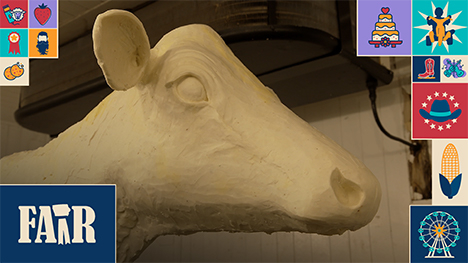
Sarah Pratt reveals what's new inside the Butter Cow cooler at this year's Iowa State Fair.