Iowa House Democratic Leader Rep. Brian Meyer (D - Des Moines) discusses the 2026 legislative session and House Democrats’ agenda.


On this edition of Iowa Press, Iowa House Democratic Leader Rep. Brian Meyer (D - Des Moines) discusses the 2026 legislative session and House Democrats’ agenda.
Joining moderator Kay Henderson at the Iowa Press table is Katarina Sostaric, state government reporter for Iowa Public Radio.
Program support provided by: Associated General Contractors of Iowa, Iowa Bankers Association and Robert and Doreen Sheppard.
Transcript
[Kay Henderson] Property taxes, eminent domain, education. How can House Democrats impact key policies? We will visit with House Democratic Leader Brian Meyer on this edition of Iowa Press.
[Announcer] Funding for Iowa Press was provided by Friends, the Iowa PBS Foundation.
The Bob and Doreen Sheppard Family proud supporters of educational programing seen only on Iowa PBS.
Iowa goes beyond transactions. Banks work to help people and small businesses succeed, and Iowa banks are committed to building confident banking relationships. Iowa banks, your partner through it all.
[MUSIC]
[Henderson] Our guest today was on this program last summer, shortly after his colleagues in the Iowa House elected him to be House Minority Leader. Brian Meyer is a native of Dubuque. He is a Des Moines resident and a Democrat, leading House Democrats into the next election cycle. Brian, welcome back to Iowa Press.
[Brian Meyer] Thank you.
[Henderson] Joining our conversation is Katarina Sostaric of Iowa Public Radio.
[Katarina Sostaric] Representative Meyer, property taxes are one of the biggest topics at the Capitol this year. There's three plans from Republicans. Two of those plans propose a 2% cap on city and county revenue growth annually, with some exceptions. How effective do you think that policy specifically would be in providing property tax relief?
[Meyer] Right. And so our goal as House Democrats is to support a property tax plan. And we have our own plan that actually protects public safety, schools and essential services on the local level does have a cap. Our cap was at 4%. Theirs is at 2%. And then deliver immediate relief to taxpayers. The concern, obviously, is delivering services. And so hopefully in the next couple of weeks, we'll be able to add to the conversation and work through this process. And address that concern with local governments and what others have with schools and that sort of thing, too. So.
[Sostaric] So it sounds like you think the 4% cap would still allow cities to move forward with, with the services they need to provide? You know, what about the argument that then that's not really providing much relief if you cap it at 4%?
[Meyer] I think everything's on the table and we are very open to anything that will reduce costs for residential property tax owners.
[Sostaric] Your property tax plan, along with two of the Republican plans, would have relief that's targeted to seniors. Why do seniors, in your opinion, need relief beyond, you know, other property tax payers.
[Meyer] So they can stay in their homes once they retire. And I think that that's a very important part of our plan and hopefully their plan as well. And the final plan, whether or not that gets capped at a certain income level, I think that's an idea we have to look at. But we are simply trying to keep seniors in their home, which I think benefits everybody.
[Henderson] The governor has suggested a $350,000 cap, and everyone with a property, a home that's at that rate or below would get the relief. Is that something you support?
[Meyer] I think that's a very reasonable and I think that's something we can look at.
[Sostaric] Another part of your plan for property taxes is property tax rebates. But you've also said that the state budget is in a fiscal death spiral. And I know Democrats have raised concerns that there won't be enough savings to cover the budget gaps that the state is seeing right now. So why propose those rebates using that money if there's that concern about not being able to cover the state budget?
[Meyer] I think it's important that we deliver immediate relief now. And with the taxpayer relief fund that we have at the state level, the actual rebates would come from that. And yes, this we are in a fiscal death spiral. But the challenge is, is that it's structural and that this is something that needs to be addressed immediately, but they seem to be ignoring it. And we need to figure out how we're going to sustain the spending that we have moving forward five years out, six years out.
[Sostaric] And I'll just note, the Republicans say that the revenue declines were part of their plan for income tax cuts, and that they believe they will have enough money to cover any budget gap.
[Meyer] And I would counter that and say that the economy is not getting better in Iowa. The agricultural economy is collapsing and we are in serious trouble in this state on many levels. But the reason I say fiscal death spiral is because they've let it go for so long, and you can only sustain that spending for for another few years before it really catches up to you.
[Henderson] There were a couple of public hearings at the state House on the House Republicans plan and the governor's plan this past week. Business groups were saying, if you do this, you could be shifting the property tax burden to businesses and to people who own agricultural property. Your plan that House Democrats proposed earlier this month didn't address ag or commercial or industrial property. Why? Well, I think that's.
[Meyer] These are good points and that's why this is such a difficult conversation. Our plan was just addressing residential simply because we thought that was the the best way to go at this time. But we are very open to any conversation that's going to lower costs for Iowans.
[Henderson] So you live in Des Moines. Prairie Meadows is nearby. There may be a betting line on this. What's the betting line on whether there will actually be a property tax deal in 2026? That clears the legislature.
[Meyer] Well, I will say this, that, you know, they've been the Republicans have been talking about this for ten years. It's time to deliver. And I don't have the betting line on it, but I would say that it's probably a pretty good shot that we're going to get to something by the end of session. What that will look like is completely unknown. It's it's something that I think the plans are a little bit off of each other. And but I look forward to having the conversation moving forward.
[Henderson] There's been a lot of conversation in the capital over the past five years about a carbon capture pipeline proposal, and this past month, the Iowa House passed a plan that is very similar to one that's in forth in the state of South Dakota that would prohibit carbon capture pipelines from using the government's eminent domain power to seize property along the pipeline route. You opposed that bill? Why?
[Meyer] Our goal as House Democrats is to make sure that we protect property rights. And 21 out of our 33 members voted to oppose that much restriction on the pipeline. And the reason for that is this bill is not real. It's just not a real bill. We're playing games. They're playing games. And at some point we need to sit down and have a conversation and negotiate a way forward on this pipeline. I had 21 out of 33 members that want to build the pipeline, and some most of them want to protect private property rights. All of them want to protect private property rights, but we need to negotiate and work with the Senate on this. And thrown a volley like that over the over to the Senate. It's not helpful, in my opinion. And it's not going to help negotiations, but we need to come to some kind of resolution on this.
[Henderson] For those who have watched recent episodes of Iowa Press, the Senate Republican leader, the majority leader over there, Mike Clemens, was on this program and explained his proposal, which he said would eliminate the need for most instances, the use of eminent domain. Is that the proposal that you think is the resolution to this ongoing debate?
[Meyer] I do I think it's probably the most likely to pass with maybe some tweaking around the edges, but it's my personal opinion that that actually would be a way forward. Obviously, I would have to take this to my caucus when we get the version over to the House and see where my caucus is on it. But it looks like we're going to make progress on that this year.
[Henderson] Speaking of progress, there's a Republican who's running for governor named Adam Steen, and he said this will be a key motivating issue for Republican voters in 2026. Will it be a motivating issue for Democrats? I think.
[Meyer] There's a lot of people in rural Iowa that want the pipeline, and you have to look at everybody, not just 250 people that show up to Capitol Hill sweatshirts on. That's certainly something to to take into account. And it's very important that we address those issues with eminent domain. And we protect property rights. And I think the Senate bill does its best to do that. And but there's a lot of people in rural Iowa that are kind of the silent majority that want this to get done because we, we, we need to address the economic realities and real lie with corn and ethanol and how we move forward in this state.
[Sostaric] So this year, you've said you want House Democrats top priority to be affordability and lowering costs for Iowans. One of the things you propose is increasing the state's minimum wage to $15 an hour. How does Iowa compare to surrounding states on minimum wage, and how would $15 bring it -- would it bring it into line with other places around us?
[Meyer] Yeah. It's my understanding and I haven't looked at the map, but we are the lowest in the entire Midwest. I think even Nebraska has minimum wage that's higher than ours. Really, when you're talking about keeping people in Iowa, the minimum wage is a part of that conversation. And so over the course of 4 or 5 years, when you're able to get to $15 from what I think we are at 7.35 or 7.25, you start having conversations about raising other wages. And so you have to look at what is around us, but also you have to look at how do you keep people in Iowa. And I think that most of the states in the Midwest have higher minimum wages. And if I recall, all of them do.
[Sostaric] And some of the states around us, I think, have used ballot measures to raise their minimum wage. I mean, I guess Iowa doesn't have that option for citizens to put things on the ballot themselves. So do you think a minimum wage raise is ever possible? You know, with the current makeup of the legislature.
[Meyer] I will say this, that with everything that we've proposed this year, we will have a vote on it and we'll see where people stand going into the election next year. And I think these are issues that matter to people. Affordability being number one. And so when you make raising the minimum wage a part of that, we need to let voters know in November, this is where your legislators sit on this. And so we will have votes on all of these proposals.
[Sostaric] We also as part of that agenda, proposed freezing electric and natural gas rates. Can you talk about how that would work and just the motivation behind that?
[Meyer] And I think that what we have is in Iowa, a system where we can, as a legislature, freeze those rates, and we have to be mindful of the of what that's going to mean for the utilities. But at the same time, we also have seen in other states, and this is our concern, that rates have gone up to pay for A.I. data centers and things like that. And so I saw somebody say that they expect an American rates to go up 10 to 15% in the next couple of years. That's not acceptable. We have to, you know, provide energy for residential people. And we have to make sure that that's affordable moving forward. And so the goal would be that we freeze for the next couple of years and take a step back and see how do we pay for these data centers and A.I.
[Henderson] You have also, as a group of House Democrats, made some proposals about water quality, rather than me telling you what they are, could you briefly describe.
[Meyer] Yeah, it creates a tax credits for farmers to do work on their property to help with runoff. It triples the amount of money we're spending on nutrient reduction in the state. And it also kind of takes a look at how do you do this in the context of the watersheds and provide farmers with the incentives to do it? I think it's important as an agricultural state that we include everybody at the table and we say, how can we do this? By protecting the water that's coming off of the watersheds. But at the same time, working with farmers and not just poking everybody in the eye and saying, this is their problem. This is our problem. We all need to address it. And I think that again, you will see us get votes on this, on this proposal and see where everybody is.
[Henderson] When you say triple the amount spent on the nutrient reduction strategy, are you talking about the cost share grants to farmers or are you talking about other.
[Meyer] No, I'm talking about the cost share grants to farmers. And it's my understanding that, look, we can do all of this, but we have to have buy in from everybody. And the conversation is triple the amount of money we use for that program. But we're open to anything, anything that will address the problem. And maybe we've missed something. The difference is, is that we are proposing things to say to voters in November. This is what we would do if we were in the majority. And so these problems have festered for ten years under the Republicans. They don't want to address it. We want to address it, and we want to make sure that voters know in November where they're legislator stands.
[Henderson] There have been Democrats sitting at this table who have said the voluntary strategy does not work, and it's time for limits on the amount of fertilizer that farmers can apply to their land. Why is that not part of your proposal? Well.
[Meyer] I think we have to have a collaborative effort with farmers to sit down at the table and say, how can we help? I don't think it's particularly helpful to say this has to be mandatory. We have to do this. We have to do that. We're going to force you to do this. We live in an agricultural state. Everybody needs to be at the table, and we need to sit down and say, how can we help?
[Sostaric] And somewhat related to that, people bring up cancer wanting to, you know, pass legislation to deal with Iowa's rising cancer rates. And some people think the water quality issue to Iowa's cancer rates. Do you see anything in the legislature going on this year that could potentially address that?
[Meyer] Yeah, I wish I had an answer as an individual. I lost my mom to cancer. We've all been touched by cancer, and I wish that I could tell you there was a silver bullet here. I don't know what that is. You know, Austin Bass, Representative Bathe is a doctor. Megan Srinivas is a doctor in our caucus, and they've been advising us on this, and I'm sure that they will have proposals and they know more about it than I do. But clearly we have to address it. And again, it's something that the Republicans just turn away from and don't want to even look at or have conversations about.
[Henderson] But governor last year proposed $1 million of funding to the University of Iowa to try to figure out why Iowa's cancer rate is so high. Is that sufficient?
[Meyer] I think it's not sufficient to address the cancer problem. I, I hope we get the results of that. I have not seen the results of that. And we can implement some things that are going to correct the problem. Boy, it's just tricky. And I don't know what I don't know what to say other than once we find out what the problem is or why the cancer rates are so high, we really need to make a bipartisan effort to address it.
[Sostaric] And there's federal legislation passed last year that's expected to reduce Medicaid funding coming into the state, potentially people losing Medicaid coverage as well. How should the state be preparing for that?
[Meyer] Well, that's that's this is outrageous that this was passed, especially the people in Iowa are representatives in Congress that voted for it, because it's really going to harm especially rural Iowa, but also different parts of the state. I'm not sure what it accomplished. I get that what they're trying to do is, is destroy the programs, but it's going to do real harm to real people. And it's unfortunate that our representatives in Congress voted for that.
[Henderson] As Republicans this past week proposed three crime related bills, one of which would establish a mandatory 20 year sentence for people who would be classified as habitual offenders for violent offenses, previous violent offenses. Is that something that you would support?
[Meyer] I think we need to look at the final product when it comes before us, and we will evaluate it based on what is actually in the bill when it comes up on the floor. I'm not going to say absolutely not, because I think there are some places where we can we can do better. But you also have to take into consideration that we're already maxed out in prisons, and we probably will have to build another prison to deal with it. So I want to see the final product before I take it to the caucus, and then have a conversation about it.
[Sostaric] And there were two bills advanced in the legislature recently related to the immigration arrest of the former Des Moines school superintendent, Ian Roberts. One would make it a crime to lie about your academic degrees when applying for a job. Do you think that's necessary?
[Meyer] I don't think that's necessary. But I again, you know, I have not seen those specific bills, but I'm not going to close the door on on advocating for them or voting for them until we see the final product. But something like that probably is not necessary.
[Henderson] Also this week in the Senate, there was a subcommittee hearing on a bill that would have banned smoking at the state casinos. What is your view about the impact of smoking on the casino floor? It's not allowed in the rest of the facility, but it's on the casino floor. And the impact that has on employees.
[Meyer] Yeah, no, that's a huge problem. And I think it's time to to take a look at that. Again. It depends on again what the specifics are dealing with that. I remember I think I was on staff 15 years ago when we did the smoking ban, and that was just part of the compromise that we had to do in order to get it passed. And I think society has shifted and people have changed. And perhaps we need to take a look at that a bit.
[Sostaric] So there's a new Democratic caucus that launched the Black and Brown Caucus, launched this week. They're proposing banning ICE agents from wearing masks and concealing their identity, as well as preventing ICE arrest in schools and churches. Can you talk about why these proposals are important to Democrats and just, you know, in the context of what's been going on in Minnesota.
[Meyer] Right, that was proposed by a few people. I have not taken it to the caucus yet. I think Ice agents probably need to be treated the same way as as any other police officer. I mean, you know, I think that everybody needs to show a badge and and not have their face covered. I think that's pretty reasonable. But for the rest of it, I have not read those bills, and I'm not familiar with what the specifics are. So it's just very unfortunate as to what happened in Minnesota. And we can do better as a state, you know, and it just doesn't it's not something that is sustainable moving forward when you have this much chaos in the system.
[Henderson] We have about 4 or 5 minutes left in our conversation, I wanted to sort of circle back to the budget discussion. That was a little bit of a property tax discussion. You and other Democrats have suggested that the education savings account for private school expenses should be repealed, or at least limited. Just looking at what's going on in the federal level. Republicans have been trying to repeal Obamacare since 2010. Once something like this is established, what's the impetus and how would you repeal something like that?
[Meyer] Well, again, we have to give voters something to to to take a look at and compare and contrast Democrats and Republicans. And what would we do if we were in the majority? So number one, we would cap it and we would put limits on it and we would slowly, slowly. Kind of remove them from the system. And so we are spending, without any oversight, close to $400 million a year. And it's only going to go up. And so the challenge here is with these ISAs is that there's no nothing that says private schools can't raise tuition. There's nothing that says that that you can't spend more and more and more every year on these things. And so that's really what we have to start with, looking at it. And it is unsustainable with this budget to spend the way they have been on those, on those credits.
[Henderson] When you were on this program last summer, you said Iowa Democrats should go rogue if they need to and hold the Iowa caucuses first. During the 2028 campaign. Before we get to that topic. Caucuses are happening on Monday night here in Iowa. For people who aren't familiar, what's the point?
[Meyer] What's the point of having a caucus in an off year? Well, the caucuses came before the presidential preferences, right? And I don't want to get into the minutia and details of a presidential preference. But the point is, is that you come together as a party and you say, these are our priorities moving forward, and you elect members to the central committees, and you just have conversations. It's kind of an old fashioned way to bring people together to talk about politics. And I think it's a wonderful system that we have.
[Henderson] So back to 2028. Iowa Democrats have applied to the Democratic National Committee's committee, making that calendar decision. What would be your argument if you were able to speak to national Democrats about this?
[Meyer] Well, the argument simply is that the Republicans are going to be here. They're going to hold their presumably hold their caucuses, and we are left out of that when we don't do it. The other part of it is, is that we have a real problem on a national level with Democrats relating to people in rural Iowa, rural America. It's become a very urban party, and it's unfortunate because I want to try and win everywhere. And you have got to engage people on the level where they are. And so that's why I think it's important that we be at at the very beginning of the process, if not first.
[Sostaric] You say you want to try to win everywhere. So does that mean are you trying to get candidates, even in places that you have, you know, a really small chance of of winning an election for the House?
[Meyer] No, I'm just joking. But the reality is, is that yes, we have candidates all over the state of Iowa. And sure, there's going to be situations where we're not going to win in certain areas, but we deliver the message and the message I think is going to change and resonate with people all over the state of Iowa. And so we try to deliver that message everywhere.
[Sostaric] What is the message?
[Meyer] The message is, is that I'm glad you asked. So the message is that we want to make Iowa number one again in education. We want to tackle affordability, and we want to make Iowa the best place to live and raise a family. And I always tell people, if you can't fit it into one of those three categories, you probably not should not be talking about it. Yeah.
[Henderson] Perhaps you could provide some insight on this and Republicans could as well. But with about a minute left, heading into Governor Reynolds last session, where she'll be signing bills, what is her influence inside the Capitol at this point as as legislation is being crafted?
[Meyer] Well, that's a good question, and I'm not sure what that is. I know there's been fights in the past between the majority party and the governor. I'm not part of their caucus, obviously.
[Henderson] But what do you see?
[Meyer] Well, I can I can see that, you know, there's a direct line of communication. And I think that there's always going to be influence when you're the governor. But you can't bully people. And I think over the course of the time she's been governor, she's tried to bully people into doing what she wants to do. And I think there's going to be some backlash to that.
[Henderson] Final question, should VEISHEA be reinstated?
[Meyer] I saw that bill, and I don't know, I'm not up on that. I'm I'm more than willing to come here and tell you I don't know.
[Henderson] Okay. Well, I do know something. We are out of time for this conversation. Thanks for joining us at the table today. You can watch other episodes of Iowa Press at iowapbs.org. For everyone here at Iowa PBS, thanks for joining us today.
[MUSIC]
[Announcer] Funding for Iowa Press was provided by Friends, the Iowa PBS Foundation.
The Bob and Doreen Sheppard Family proud supporters of educational programing seen only on Iowa PBS.
Iowa goes beyond transactions. Banks work to help people and small businesses succeed, and Iowa banks are committed to building confident banking relationships. Iowa banks, your partner through it all.
Watch More
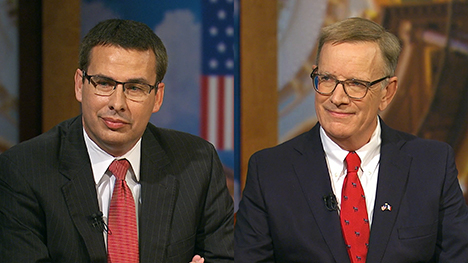
Zach Lahn (R-Belle Plaine) and Rob Sand (D-Des Moines) will answer questions from Iowa reporters and discuss their priorities and vision for the state during a 90-minute debate.
Iowa State Treasurer candidates John Norwood (D-West Des Moines) and Roby Smith (R-Davenport) discuss key issues and policy positions.

Candidates Dave Dawson (D-Lawton) and Chris McGowan (R-Sioux City) will answer questions from reporters and discuss their platforms, concerns and future plans.
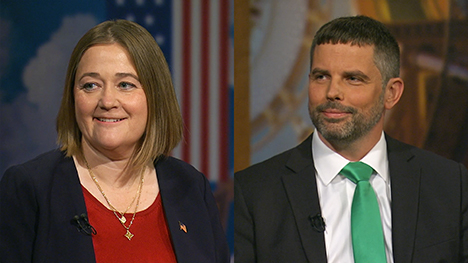
Iowa Attorney General candidates Brenna Bird (R-Dexter) and Nate Willems (D-Mount Vernon) discuss key issues and policy positions.
Lindsay James (D-Dubuque) and Joe Mitchell (R-Clear Lake) answer questions from Iowa reporters and discuss their platforms, concerns and future plans.
Candidates Ashley Hinson (R - Marion) and Josh Turek (D - Council Bluffs) answer questions from reporters and discuss their platforms, concerns and future plans.