On this edition of Iowa Press, Rep. Zach Nunn (R - Ankeny) discusses his work in the U.S. House.


On this edition of Iowa Press, Rep. Zach Nunn (R - Ankeny) discusses his work in the U.S. House.
Joining moderator Kay Henderson at the Iowa Press table is Brianne Pfannenstiel, chief politics reporter for The Des Moines Register.
Program support provided by: Associated General Contractors of Iowa, Iowa Bankers Association and Robert and Doreen Sheppard.
Transcript
[Kay Henderson] Congress is debating appropriations bills and deciding consequential issues, from tariffs to voting laws. We'll visit with Iowa's third district representative, Zach Nunn on this edition of Iowa Press.
[MUSIC]
[Announcer] Funding for Iowa Press was provided by Friends, the Iowa PBS Foundation.
[Announcer] The Associated General Contractors of Iowa, the public's partner in building Iowa's highway bridge and municipal utility infrastructure.
[Announcer] The Bob and Doreen Sheppard Family, proud supporters of educational programming seen only on Iowa PBS.
[Announcer] Banking in Iowa goes beyond transactions. Banks work to help people and small businesses succeed, and Iowa banks are committed to building confident banking relationships. Iowa banks, your partner through it all.
[MUSIC]
[Announcer] For decades, Iowa Press has brought you political leaders and newsmakers from across Iowa and beyond. Celebrating more than 50 years on statewide Iowa PBS, this is the Friday, February 13th edition of Iowa Press. Here is Kay Henderson.
[Henderson] Our guest on this edition of Iowa Press has served in the Air Force, the Iowa Air National Guard. He served in the Iowa House in the Iowa Senate. In 2022, he was elected to the U.S. House and reelected in 2024. He has recently moved with his family to Ankeny. Congressman Zach Nunn, welcome to Iowa Press.
[Rep. Zach Nunn] Thank you so much for having us. And we are loving our new community in Ankeny. We were remiss to leave, you know, our little hometown of Bondurant area, but still, we're kind of in that country, urban, just like Iowa, right on the edge, loving both sides.
[Henderson] Joining our conversation today, Brianne Pfannenstiel of the Des Moines Register.
[Brianne Pfannenstiel] Congressman, this week, some of your Republican colleagues in the House joined with Democrats to vote to try to override President Donald Trump's tariffs on Canada. Yeah, obviously, those tariffs broadly have big implications for Iowa's ag economy. Why did you vote the way you did?
[Nunn] You know, we've been out across all 21 counties here talking specifically to rural communities on how these tariffs have, first of all, been reset from where we were. Let me speak specifically to the Canadian one first. The reality was after talking to a dairy farmer in western Iowa, they highlighted the fact that they could sell dairy product. But when they tried to sell to Canada, they were facing a 200% increased tariff. That was not only unfair to them, but it really goes to the point of what tariffs on both sides of the border are impacting. And so, you know, on this one, we feel very strongly that Canada needs to bring those down and make fair trade across the border a reality. On the broader spectrum of tariffs, though, let's talk about a situation that's not the last year in the making. This is decades in the making. And we have seen tariffs against the United States just really punish, particularly our ag community. As a result, over the last four years of the Biden administration, we saw trade deficits hit $50 billion negative against U.S. farmers. We saw no new trade deals being presented. And we saw a number of countries really take advantage of it. And so, when President Trump did tariffs on places like Vietnam and said, bring it to zero or you're getting the same thing back, and they were at 95% against U.S. producers in 24 hours. We saw Vietnam drop it, and so did the United States. But what we also saw and I serve on the China Select Committee, is that China, in this built multiple railroads from Beijing all the way down to Vietnam. And their entire intent is to subvert the international structure, to cheat tariffs, and to continue to exploit the United States. And so, what tariffs has brought us on the good side for AG is 24 million metric tons of soybeans being sent to China. It also means that we have 17 billion or million bushels of Midwest corn being sent to Guatemala, something that has never happened before. I think this is a step in the right direction. I don't want to see tariffs used viciously, and I still believe that the first article of the Constitution says that Congress should be leading this. But I do support the president in holding offenders accountable. Let's bring trade tariffs down to zero.
[Pfannenstiel] Well, we're expecting to see more votes along these lines in the coming weeks, coming months. Could you see yourself joining with those Republicans who've crossed sides? We're about a year into this and farmers are still feeling it.
[Nunn] I absolutely can and here's why. And I was one of the last ones to vote on the first bill that would have effectively stripped the president from unilateral tariffs. And I said it was very important that while we should hold our friends accountable, we should not let our enemies off the hook. And so, I've moved forward a very aggressive sanctions package against places like Russia, which I think are the worst offender, not only in tariff violation, but in a country that hasn't been held accountable. And so, our bill called the Peace Act, named after Ronald Reagan's peace through strength, puts the toughest sanctions on Russia in history. It's even more so than Lindsey Graham's bill in the Senate. And I'm happy to say it's the only sanctions bill against Russia that has moved forward. Also, with bipartisan support, 53 to 1 out of committee. It's ready for the floor. And I told the president that night, I want to vote on Russian sanctions, because this is really what is harming the world economy. Tariffs are a part of getting back to right. But we got to hold the bad guys accountable to.
[Pfannenstiel] About a year into this, a year ago, you said that that the tariff program that President Trump was pursuing was winning. Do you still think it's winning?
[Nunn] I think where we were a year ago, it absolutely was. And like I said, this is 40 years in the making. We've had a lot of countries take advantage of us and Challengingly we still have a lot of countries taking advantage of us, whether that are the ones in Southeast Asia where we've moved. I think we've got great capacity for U.S. goods to be exported, but they shouldn't have to face an arbitrary trade barrier right now in an ethanol plant in Georgia, it is cheaper for Brazil to dump corn on the U.S. market, and at the cost to U.S. producers right here in Iowa. To be able to get a better advantage, we have got to fix this. And these are our partners, these are our friends, but they shouldn't get to have an advantage or a subsidy effectively on the back of the U.S. taxpayer.
[Henderson] You and other House Republicans have recently advanced an election related bill. Yeah. Explain to the Iowan who's watching how that would change, how they register to vote.
[Nunn] Well, this is the great thing about Iowa. We help frame this bill in this state. And I was part of the legislature when we did it. It's called the Save America Act. It passed overwhelmingly. And I think that this is a real standard of saying you have to have an I.D. if you want to go vote. And most of us here in Iowa have been doing this for a long time, and I think it makes common sense. The federal government should be telling states what to do, but they should be setting a standard of excellence on what can be done, how states want to implement it. Like Iowa, I think, really matter. You got to be 21 years old to buy alcohol. You got to have an I.D. to buy a weapon. You should have an I.D. to know that there's integrity. When we go to vote. And in places like Iowa, we've proven this in election after election, that this doesn't suppress voter turnout. In fact, if anything, it enfranchises our ability to have faith in our elections here.
[Henderson] So, if a person is watching and they're a registered voter, will they have to reregister?
[Nunn] No. That's the great part about this. You have to have voter I.D. when you show up.
[Henderson] So, if I go to an election site on June 3rd, when there's a primary, right. What is the I.D. that I present? A passport?
[Nunn] Well, and this is where we're giving it back to the states. Right. So, Iowa has a very clear lineup of what IDs would qualify. That could be a passport. That could be a driver's license, a military I.D. And also, there's a situation where maybe you forgot your I.D., maybe your maiden name changed. Maybe there's a situation that requires it. You can have an elector there validate that you are who you say you are, and we can go back and check that. So, every state's going to have the ability, like Iowa has proven now on several elections, that this is a very effective model. It's not a high bar. It's an integrity bar.
[Henderson] So, for people who are reading things online that say, I'm going, if I'm a married woman, I may not be able to register to vote. If I can't find my birth certificate with my original name.
[Nunn] Yeah, I would call that complete bogus. In fact, it's frightening that we're pushing that out as a part of the conversation here, because in Iowa, we've proven this time and time again.
[Henderson] Final question on this. In 2021, before you were elected to the House, Nancy Pelosi, speaker of the House, and other Democrats were pursuing election related bills that dealt with a whole different kind of set of issues. And Republicans at the time said, we can't do it. We have to leave this to the states. States are the ones that do this.
[Nunn] And I would still very much agree with it. And I think the Save America Act is in line with this. Look, we set a standard of, hey, we want voter I.D., it's up to the states on how they want to implement it. It's very different. I would offer from what Speaker Pelosi wanted her, a whole scale takeover of every state's election board by the federal government. I actually think one of our strongest integrities of voter security comes from a diverse system. It's better for cybersecurity. It's better for mass voter fraud, and it allows the states to really know what works best in their communities to be effective.
[Pfannenstiel] Let's talk about Year-Round E-15.
[Nunn] I all the time, every time, all across the nation I'm there.
[Pfannenstiel] This is something that Iowa biofuels groups have said is absolutely critical for, for their industries here in Iowa, there was a provision creating Year-Round E-15 that was supposed to be included in a in a federal budget bill got removed and instead created a committee to discuss this. You've said Congress doesn't need another debate on biofuels. Is this kicking the can down the road? And are you confident that Congress can actually get this done?
[Nunn] So, this is one of the areas where I've been most frustrated, and it's certainly an area where I will continue to put Iowans ahead of either Republicans or Democrats or leadership in the House. We fought very hard on this. We believe that it's well past time we were able to work to try and get it included in our package that went through in the farm bill and the farm bill markup that we're having this month. Let me be very clear. Biofuels produced here in America are a national security opportunity. They are an energy independence opportunity. And most importantly, they drive down costs for every American. Whether you're filling up a minivan, a motorhome, a trailer, or a tractor or a truck or a tractor, these are things that are going to save folks money, not only at the pump, but in the overall cost. So, let's talk about how I approach this one. When it was taken out through a rule, I brought forward my own amendment that reinserted it into the final bill. Now it went through rules and rules as a committee, which they get to vote on it too. And they took my amendment out and we move forward. And I said, well, then I'm not voting for this bill. And, you know, in Congress right now, we only have a vote of one. So, all of a sudden, I had a lot of people who want to talk to me very late into the night. We spent time with the speaker, we spent time with the leader, and we ultimately spent time with the president. As a result, they made a full commitment that we could have a vote. And I drove not just that we would have a vote. I wanted a deadline. And here's why it's so important. On March 1st of this year, producers, growers and consumers need to have certainty that we're not going to have another emergency waiver this summer or for years to come. For the last four years, under the Biden administration, emergency waiver after emergency waiver, even with Vilsack as our ag secretary, we couldn't get it done. I'm committed to making sure this is a priority this year. And here's where I'm happy about this. After this conversation, the president came to Iowa, and the thing he talked about was providing not only biofuels, but year-round nationwide, E15 and giving it a fair shot in an open market. This is something that I feel confident, even bullish, that with the work we've done with the corn growers, with biofuels, with refineries, we've got a bill that is being prepared for a markup in the weeks ahead.
[Pfannenstiel] The president, when he was here in Clive, said, send me a bill on E15 and I'll sign it. Right. Do you think he has done enough to push for it and to urge Republican members of Congress to actively move this through?
[Nunn] Well, I will always push the president to do more on this, particularly when it comes to the Senate, particularly when it comes to getting some of our recalcitrant Republicans to get on board with this. Because here's the reality if we truly want to deliver on what we passed this summer, the largest tax cut in American history, the best border security in American history, let's also have the best energy independence plan in American history. It starts by growing it in Iowa and producing it right here in the United States.
[Henderson] Speaking of production, there are cattle producers in Iowa, and they are unhappy about Argentine beef.
[Nunn] I am too.
[Henderson] What's your message to them?
[Nunn] My message to them is that this is exactly why we need to hold not only the administration accountable, but we need to work to lower tariffs across the board. Folks like Argentina for beef cattle, just like Canadians on dairy cattle shouldn't get an advantage at the cost of the American taxpayer.
[Henderson] So why is the Trump administration allowing more Argentine beef to flood the market?
[Nunn] Well, I'm going to tell you right now, the president and I don't agree on everything, in fact, on a number of issues, we've been on very opposite sides of the issue. I am always going to fight for an Iowa priority. Iowa cattlemen have asked me to fight for them on this, and we're going to hold the administration accountable. I've talked with Secretary Rollins about this repeatedly. This is something that has to stop. There cannot be a dumping of Argentinean or anybody else's beef when we have great USDA grade beef that I'll be grilling up later tonight.
[Pfannenstiel] Another major issue moving through Congress. It's been a busy week. Debate over funding for the Department of Homeland Security that's being held up over conversations about immigration enforcement. Democrats are withholding their votes until they can try and force some action on requiring immigration agents to show their faces, have identification, having warrants to enter private property. Republicans have been really resistant to that. Why? Why are those unacceptable?
[Nunn] Well, let me just begin by saying, I think all of us see an American shot in an American street. And it is not only tragic, it is something that demands we have a full and transparent investigation on. I was very early on coming out on this, and I still am holding the administration accountable on this. I spoke with Denny Holman, who's in charge of Border czar, but specifically the Minnesota operation right now. And I said I have real concerns on a couple of issues. One, law enforcement should be working in tandem at the federal level with locals. And candidly, here in Iowa, we do this right. We've done it effectively. I'm very concerned with the number of now released individuals happening in Minnesota. Folks who were detained by law enforcement, who were not handed over to Ice. We're talking about hundreds of people who have been let go into the community. There are things that I'm encouraged by. One, I think that the president has turned down his rhetoric and that that was needed. I think the folks in Minnesota have had their voice heard, but I'm concerned about their commitment to helping local law enforcement do the job they need to do, including our federal agents. And for I'm encouraged by the fact that we save 3000 kids who are involved in human trafficking, something I've worked very long on in Minnesota. As a result, where 98% of those federal incursions have resulted in no violence, have taken very violent offenders off the street, have pushed back on sanctuary cities who have released these individuals and have helped save these children. We should be talking about that, too. Going forward, I want to make sure that we are realistic about this shutdown that the Democrats have foisted upon us, and it certainly is not all Democrats, but it is a progressive left that is clearly afraid of their primary electorate. What they have done is not defund Ice that was already taken care of through 2029. They're full funding, is there. They're not going to shut down a single Ice officer. But what they are going to do is they're going to take guys like Todd of the Des Moines airport, who has already gone through the longest shutdown as a TSA officer who didn't get paid, and they're going to take his paycheck away again to try and prove a point. They're going to take him as a hostage. They're going to take my friend Sami, who's been working in the Coast Guard most of his life. Sammy's right now out there trying to shut down illicit oil flow from Venezuela to places like Russia and China are known adversaries by seizing tankers. He's not going to get his paycheck as a result of this. And I think, tragically, as we've seen over and over again, we're going to have situations where there is an unpredictable natural disaster. And when we pick up the phone to say we need help from the Federal Emergency Management Agency, they're going to say, sorry. FEMA was shut down by Democrats and they have no plan to open up the government. This is who's impacted by this. And it is a very frustrating point. So, the very fact that the House sent over a bipartisan DHS funding bill and it was shut down by the Senate, the very fact that President Trump has sent a response to every request that the Democrats have, and it was ignored. And the fact that the white House and the House have sent over a proposed revision to this to open the government back up as of yesterday, and Democrats simply hadn't read it, is unacceptable. I'll end with this. I'm very proud that Republicans and Democrats have worked together to move forward. All of the appropriations bills. You all appreciate this. That hasn't happened since the 1990s. This is getting back to business as usual. I hope that my colleagues in the Senate, my Democratic friends, can come back to the table and say, let's get after solving the acute problems of ice, but let's not hold the entire government hostage by shutting down DHS funding, which candidly, is there to protect us, not to harm us.
[Pfannenstiel] Looking at what's happening in Minnesota, though, do you feel that it's been an effective immigration enforcement?
[Nunn] No, I don't, and here's why. There was here in Iowa is a good model of where local law enforcement and federal law enforcement work together. And as a result, we can both protect our communities. We cannot cause a scare, and we can make sure that things are secure. Minnesota and other what I will call sanctuary areas are not only hostilely opposed to federal law enforcement in the area, they're just opposed to the policy. They don't have a better solution, but they like to shut it down. I think that's dangerous long term, and it undermines our efforts not only to secure the border where, you know, we had 10 million illegals for the last four years down to zero on a monthly basis. Now, to get to where I want to be, immigration reform that allows folks who want to come to the country the right way, have an expedited path and make sure they're taken care of here, along with their families that want to be here.
[Henderson] In December, you were among a small group of House Republicans who voted to extend the Obamacare tax credits for three years while Congress worked on a solution. That didn't happen.
[Nunn] Yep.
[Henderson] Is Congress ever going to come to a solution on this particular issue, or will this keep, you know, festering?
[Nunn] Kay, I think you and I have both seen the fact that Congress can do some things well, and there are other things that it has challenges on health care in this country is broken. And this is not a Republican or a Democratic issue. And it's not completely a congressional issue. Whole responsibility. But I know this Congress has a responsibility to act and to help protect citizens right here in Iowa. I am fully aware that Congress was not going to reform health care in the two months that leadership told us they could get it done. Neither Republican or Democrat could deliver on that. And so, what I did not want to do is I did not want to pull the rug out from 130,000 Iowans that depend on the ACA, specifically on the ability to get their health care when it comes to the Covid era extensions. But what I'll also say is this we have got to get to a better solution. We move forward. A bipartisan piece of legislation. I'm proud that the Iowa delegation got to lead on this. That helps bring down health care insurance costs by 11%. It shines real transparency onto where the insurance companies have had trillion-dollar profits. But patients and providers aren't getting any support. Where prescription drug costs have gone through the roof. But you can go to Canada or England and get it for a quarter of the price. These things need to change, and it starts with holding these guys accountable. That's the reform I'd like to see. Equally, I joined with a majority of Democrats to have a discharge petition to make sure that Iowans were taken care of. When I felt that leadership was not going to put their health care first.
[Pfannenstiel] This week, the House passed the housing for the 21st Century Act that included provisions that you had been working on in a separate piece of legislation. What is that going to do to improve access and affordability for Iowans in the near term?
[Nunn] Well, I think this is huge. The immediate aspect is we know that DC hadn't updated the housing rules in decades, and as a result, it was becoming more and more difficult just to achieve the American dream of home ownership. You know, we've got a friend, and she looked at getting into her first house. She actually was one of my students when I taught at Drake. And the challenge for her was she wanted to stay in the hometown she grew up in, but there wasn't a single housing stock available. The reality is, we need 5 million new homes in this country just to meet the demand signal. On top of that, it used to be you could buy a home in your mid-20s. Now it's up to north of 40. The reality is we passed the 21st Century Housing Act to help on all these fronts. First and foremost, we increase the housing stock using things like micro loans, targeted loans and access to capital for our local lenders. That's a huge start. The other aspect of this is that we're increasing what it is to have a home, not just build a new home, but let's keep the housing stock. We have the Rural Housing Act that I was able to lead forward. That's I'm thrilled passed again Bipartisanly 380 plus means that now that beautiful Victorian on Main Street doesn't have to go into dilapidation, it can go into development because we doubled the repair costs for those kind of facilities. I know we're running short on time, but I do want to highlight here we've also included things like mobile housing, refurbished housing, prefab housing. This all adds to the housing stock marrying up with lower interest rates. But also, we cut a lot of the red tape at USDA. What used to take months in some cases years to get an approval from somebody copying down what you'd written into a computer. Now, with our upgrades, we're able to get this done in days. The expedited route for this is already proving itself to be true. This is now once again a home buyer's market. And that doesn't just help a first-time home buyer. This helps somebody who might be in their last home, who wants to be able to go and downsize and open up that housing stock for young family while they can finally get out of the mortgage they've had for decades.
[Henderson] Speaking of computers, there have been some troubling reports this week about artificial intelligence. Computers talking among themselves. What role does Congress have in making sure that computers don't become our overlords?
[Nunn] Well, this is one of the challenges that I think is very serious. It seems like sci fi, but I sit on the select committee and this is becoming a reality here. We have a situation where not just ChatGPT and others that have amazing computing capability, but also have very few guardrails in what's out there. I've got six kiddos. One of them's off to college, the other ones are all at home, and four of them are still very young. You know, I, as a parent, want to make sure that what they're doing online is safe and secure. But I can't be on four digital pads at the same time. They only get them for a short amount of time, but that's enough to do some serious concern. Here's where I think Congress needs to stand up. There's bipartisan effort here to make sure that hostile platforms or shell platforms, largely by places like the Communist Party of China that are trying to insert themselves, are held accountable in the same way we did for farmland we should be able to do for tech. The second aspect of this is we should be able to put up real parameters here that protect privacy first and foremost, starting with children, and also bring to the table the tech providers who are doing this. They can't just be transaction areas who get to cash in on the money. They've got to have skin in the game, too, and making sure not only our apps are safe, but that the future of artificial intelligence, which can be a huge benefit for growing jobs in the economy, doesn't run off the rails and become the sole source of what destroys a lot of our market spaces. The privacy of our lives. Or Kay, to your point become a danger to the nation.
[Pfannenstiel] We're coming up on a midterm season. You are in one of the most competitive seats in the country. You've said it's perhaps the most fairly drawn district in the country, because we've got Democrats, Republicans, independents. You've been endorsed by President Donald Trump. But as you've indicated, you'll need to attract some independents, possibly some Democrats, to win in November. What's your message to those independents who are maybe souring on the president at this point?
[Nunn] Well, look, you don't have to agree with what the president says to appreciate that some of the policies we've been able to lead have had a really positive impact. But here's the reality. I have always been, you know, a Republican who has served in a liberal leaning district. My first House seat, we turned from blue to red, my first Senate seat, we turned from 40-year blue to red. And in this congressional seat, we beat an entrenched incumbent. It's less about our or D after your name on the ballot. It's more about who's have the trust of Iowans and can deliver. And here's what I offer up. You know, not only is a career military officer, but is somebody who has tried to work across the aisle. I'm proud that I'm the top ten most bipartisan members of Congress, and that's a pretty partisan place up there. We've also been able to deliver a majority of bills that really help Iowans, things that are Iowans ideas, whether you're in AR, whether you're an independent, whether you're my mother-in-law, if she's watching, who's a Democrat, this is an opportunity for us to say, all right, what works in Iowa? How do we take this up to the national level? And the results are real. We got more amendments into the National Defense Authorization Act that were passed and signed into law than any other member of Congress. The very first bill I passed took care of Iowans so they could have family leave. That was signed into law by Joe Biden. I've worked in the Obama White House. I've served at the pleasure of Republican presidents and military capacities. I've served with Iowans as my boss for several years now, and I want to hear what they say. But more importantly, I want to deliver what they want. I think we've got a really good track record of this, and candidly, I like working with both sides of the aisle because I think that's the only way you get things done, whether you got a Republican or a Democrat in the white House.
[Henderson] Speaking of getting things done, this conversation has been completed in the time allotted. Thank you for joining us today on Iowa Press.
[Nunn] Thank you very much for your time, guys.
[Henderson] You may watch other episodes of Iowa Press at iowapbs.org. For everyone here at Iowa PBS, thanks for watching today.
[MUSIC]
[Announcer] Funding for Iowa Press was provided by Friends, the Iowa PBS Foundation.
[Announcer] The Associated General Contractors of Iowa, the public's partner in building Iowa's highway bridge and municipal utility infrastructure.
[Announcer] The Bob and Doreen Sheppard Family, proud supporters of educational programming seen only on Iowa PBS.
[Announcer] Banking in Iowa goes beyond transactions. Banks work to help people and small businesses succeed, and Iowa banks are committed to building confident banking relationships. Iowa banks, your partner through it all.
Watch More
Zach Lahn (R-Belle Plaine) and Rob Sand (D-Des Moines) will answer questions from Iowa reporters and discuss their priorities and vision for the state during a 90-minute debate.
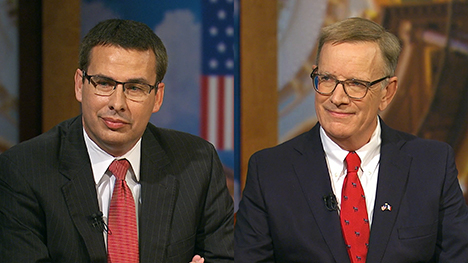
Iowa State Treasurer candidates John Norwood (D-West Des Moines) and Roby Smith (R-Davenport) discuss key issues and policy positions.

Candidates Dave Dawson (D-Lawton) and Chris McGowan (R-Sioux City) will answer questions from reporters and discuss their platforms, concerns and future plans.
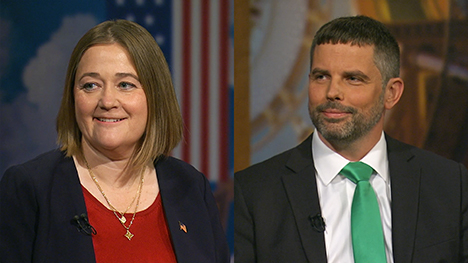
Iowa Attorney General candidates Brenna Bird (R-Dexter) and Nate Willems (D-Mount Vernon) discuss key issues and policy positions.
Lindsay James (D-Dubuque) and Joe Mitchell (R-Clear Lake) answer questions from Iowa reporters and discuss their platforms, concerns and future plans.
Candidates Ashley Hinson (R - Marion) and Josh Turek (D - Council Bluffs) answer questions from reporters and discuss their platforms, concerns and future plans.