Marty Martin, president of Drake University in Des Moines, and Mark Putnam, president of Central College in Pella, discuss private higher education in Iowa and the challenges and opportunities for those colleges and universities.


On this edition of Iowa Press, Marty Martin, president of Drake University in Des Moines, and Mark Putnam, president of Central College in Pella, discuss private higher education in Iowa and the challenges and opportunities for those colleges and universities.
Joining moderator Kay Henderson at the Iowa Press table is Erin Murphy, Des Moines bureau chief for The Gazette.
Program support provided by: Associated General Contractors of Iowa, Iowa Bankers Association and Robert and Doreen Sheppard.
Transcript
[Kay Henderson] How could proposed higher education legislation impact private institutions? We'll visit with the presidents of Central College and Drake University on this edition of Iowa Press.
[Announcer] Funding for Iowa Press was provided by Friends, the Iowa PBS Foundation.
[Announcer] The Associated General Contractors of Iowa, the public's partner in building Iowa's highway bridge and municipal utility infrastructure.
[Announcer] The Bob and Doreen Sheppard Family. Proud supporters of educational programming seen only on Iowa PBS.
[Announcer] Banking in Iowa goes beyond transactions. Banks work to help people and small businesses succeed, and Iowa banks are committed to building confident banking relationships. Iowa banks, your partner through it all.
[MUSIC]
[Announcer] For decades, Iowa Press has brought you political leaders and newsmakers from across Iowa and beyond. Celebrating more than 50 years on statewide Iowa PBS, this is the Friday, February 20th edition of Iowa Press. Here is Kay Henderson.
[Henderson] Our guests today are, like many college and university administrators, dealing with a number of pressures. One of them being the shrinking pool of high school graduates heading into college these days. Let me introduce our guests. They are Mark Putnam. He is the president of Central College in Pella. This is his 16th year at Central and his 43rd year working in higher education. Welcome back to the program.
[Mark Putnam] Thank you.
[Henderson] And first time guest, Marty Martin is president of Drake University in Des Moines, where he has served since 2015. He's also worked at Gonzaga, Texas Wesleyan and as a staff judge advocate officer in the Air Force. Welcome to you as well.
[Marty Martin] Thank you. It's great to be here.
[Henderson] Joining our conversation is Erin Murphy of The Gazette in Cedar Rapids.
[Erin Murphy] So, gentlemen, we wanted to start with Kay and I are just coming from another week at the Iowa Capitol. There was a key legislative deadline in the session this week. I wanted to ask you both about and legislation. Mark, I'll start with you on this one. There's a bill up there that I know a lot of private colleges have been keeping an eye on, which would allow community colleges to also offer four year degrees now. And there's been some concern from the private colleges about how that could impact the competition and the playing field. And I want to just read a quote. And I'm I'm sort of tightening here, but the quote from a lobbyist for the Iowa Association of Independent Colleges and Universities, the gentleman said, without question, doubt or hyperbole, some of our private colleges will close if this bill passes. Do you share that level of concern?
[Putnam] To some degree, it depends on where you are in the state. So there are some areas of Iowa where the concentration of community college and independent college locations can overlap pretty heavily. And some of those program interests would be the same. I think underlying that is a policy principle that I think is foundational. As I've been talking to policymakers, and that is the fact that we may have a workforce need, does not create students. That's what I think is a fundamental flaw in the way this is being understood. So the colleges themselves, I think you take the example of Buena Vista, as we represent our colleagues across the state. Under the current provisions of the bill, where it says you could it can't be within 50 miles of the campus of an independent college or one of the universities that a community college could offer a baccalaureate program. It says nothing about satellite programs in Storm Lake. Iowa Central has a campus, and so they would be able, under this bill, to open up baccalaureate programs in the direct fields that Buena Vista offers. So this is education, business, agriculture, computer science, down the list of all those that would be approved. And so we do have a fundamental concern that this is opening up a pathway where we don't see an end to what that appetite might be.
[Murphy] Marty, I doubt correct me if I'm wrong, but I doubt Drake's worried about closing as a result of this bill. But do you have concerns about that?
[Martin] I do. The same concerns that Mark has expressed, and I want to thank Mark for his leadership as the chair of our Iowa Association of Independent Colleges, Universities, President's Council. So he really carries a lot of weight for us and does a lot of work in that space. If there is an issue with more Iowans needing more access to higher education, which that's not shown, there's this assertion of what are called education deserts. But that's not been established. And a lot of the rhetoric around it has to do with the differential in cost of tuition. But of course, in one instance, you've got the state underwriting the program, and another instance you've got us operating as private, entrepreneurial, innovative institutions. And so working with students and families to find affordable path for them to achieve their education. So this absence of proof that there's actually a need and as Mark said, a dwindling population of students where's how do these things match up? And I would say that if there is an issue of a need for more access, challenge us to provide that, we will meet it. We and we will meet it largely in partnership with Iowa's community colleges, which we all work very closely with, to deliver programs now to have really robust articulation agreements. We can figure this out without creating a whole new a whole new infrastructure that's going to require a lot of funding from the taxpayers and put some of our institutions at risk.
[Murphy] Mark, you're in that role. Have you talked to legislators about this? And I'm curious if your message has been the same as what you just shared here?
[Putnam] Yeah, I get I get the question often certainly in our area around Pella. But more broadly, I've gotten inquiries about the bill and I think people are struggling in the legislature with what is the policy aim here? If I was to ask my board, could I start a new program? Whatever field it might be in, they're going to say to me, well, let's consider this, but let's see the market research and the market is not about the availability of jobs, because that does not create students. We've established that. And Marty and I have been in this business long enough to know that creating a program does not guarantee students. And so what they would require of me is an analysis that actually looks at the student market. What can we see in those who are interested, who would pursue under these conditions, in these kinds of schedules, with these costs and education, desert has to be defined by what students need and want, not by what employers are considering.
[Henderson] So, Marty Martin, I hear you saying, if we build it, they will come is inaccurate in this.
[Martin] Exactly.
[Henderson] How so?
[Martin] Well, because one of the points Mark just made, we literally have fewer high school graduates. And of the group of high school graduates that are there now, fewer of them are choosing to go to college in the first place. And there's a lot of explanations for that. But those explanations are not going to be solved by simply offering more programs. And to the extent that you do, and it does bleed away, students that heretofore had attended some of our sister private universities or colleges, you're going to put them at greater risk of closure, which does have dramatic consequences for any community in which that occurs. Look at Mount Pleasant losing Iowa Wesleyan.
[Henderson] Let's talk about the value of a four year liberal arts degree, which I would expect you to to express that, articulate that at a time when it seems as if students and parents are very debt conscious. And also there's this, you know, big discussion about being more technically oriented than just sort of generally oriented. How do you answer that when you have students and parents saying, I don't know if I can get this four year degree and would be able to get a job. Mark?
[Putnam] The response we get from employers is the exact opposite. It is those who are hiring our graduates right out of college are saying, we want a well-rounded person who can think critically, who can work in teams, who understands how to mediate a conflict, those kinds of skills, we typically call them soft skills, which I think is now a ridiculous notion. These are essential skills for the workplace. If you don't understand the difference that happens among people, many of our organizations across Iowa work with international populations in various ways. So what I've had said to me repeatedly is a college graduate is really not going to be contributing to an organization for probably 12 to 18 months because they have to learn their business. One CEO said to me was just taking an accounting. For example. He said to me, listen, Mark, we teach accounting all day long. We're in a particular industry. We have specific systems we use. We teach accounting all the time, he says. I can't teach what you have to teach, which is the quality of this individual to be a great and contributing employee of this college, of this, of this organization. And so from a college standpoint, everything belongs to education. We're not students are not a transcript. They're not the sum of their courses. What they actually are is a human who is developing in all the intricate ways that a four year liberal arts college experience brings because of athletic participation and being in the arts, one of the best things. How do you teach teamwork? Have them sing in a choir.
[Henderson] Marty Martin how do you have this conversation when Erin and I are at the Capitol hearing, legislators on behalf of businesses say we need people with technical skills and we need the institutions, the higher education institutions in this state to help that feed that chain. At the same time, when you know you're you're seeing online courses evolve and you have a bricks and mortar institution where people come and live for four years, right. How do you answer that?
[Martin] Well, our mission statement commits us to integrating the liberal arts and sciences with professional preparation so that our students acquire. Mark referred to them as the essential skills. I often call them the hard skills and indifference to the soft skills. These are the differentiators when you can think critically, engage in analytical reasoning, communication, written and verbal form, work across boundaries. However they are defined and then do that in connection with some real expertise in a field or fields, all overlaid with the capacity to continue to learn and adapt so that you become value not just out of the gate, but you retain your value and actually grow your value over a lifetime. You're not going to get, you know, we referenced online, we did see this, this proliferation of coding schools. Right. And what you've seen happen to coding schools, they've collapsed because they learned one specific thing. And that thing now has been threatened if not overwhelmed by artificial intelligence. So how do those persons adapt when they've had that limited exposure to new information and new ways of doing things they can't. They have to go get more education. So our education is intended to be resilient for a lifetime, and we both can have the evidence to back that up, you know, on the technical skills, we both offer many programs that fall right within what our state legislatures are looking for. You offer engineering. We're excellent in analytics and technology. And we could add many, many different programs to that list, but just focus on those two. Those two field, those two areas of professional life are incredibly in demand. And every student that we educate is gobbled up.
[Putnam] And the riskiest thing you can do as we're talking to parents, is to major in a job title.
[Martin] Yes.
[Putnam] We wouldn't do that kind of concentration with risk in anything else in our lives. Right? So I say to all students, if you're going to major in something major in adaptation.
[Murphy] Marty, I'll start with you on this one. We've seen the Iowa legislature in recent years have a growing interest in state laws around private colleges, more so than just the state's public universities. A lot of different areas, but some that stand out dealing with diversity, equity and inclusion programs and tying that to Iowa tuition grant waded into curriculum discussions now and haven't necessarily passed. But but they're being discussed more than they have in the past. I'm curious your comfort level and your sort of philosophy of the role of state government with private colleges.
[Martin] Sure. Always troubled by the effort to connect policy objectives to eligibility of students where they choose to apply their Iowa tuition grant dollars. You know, this is a student choice law. That is, students are in control of where they take that grant and apply it in the private college university of their choice. And we've seen more and more of an effort to tie other policy objectives to the ability of students to make that choice. So that's fundamentally object to that intrusion into that student. The specific bills we've taken issue with, any number of them, we've we've talked we'll talk a little bit about as we have the community college bill, you mentioned the diversity bill. Drake University does oppose this. It is an extraordinary intrusion into the way that we choose to proceed around what we believe to be fundamentally important issues. The bill would prohibit establishing a diversity, equity and inclusion office. And then it goes on to define efforts that fall within the definition of diversity, equity and inclusion. And as I read that and try to imagine everything that it might cover, I really see no stopping point or the, the, the expansiveness of it combined with the vagueness of it, makes it almost impossible to imagine how it would be operationalized. And yet it would have certainly a chilling effect on speech, engagement, conversation that we believe is essential to the full formation of a student. So that bill, in particular, we do oppose. But any effort to link the Iowa tuition grant, which has been a phenomenal success, phenomenal success for the state of Iowa, to these other policy objectives, is troubling.
[Murphy] Mark, he did a good job of speaking very specifically on some of those bills, maybe just broadly speaking, do you feel like you're got one eye on the Iowa capital more often these days than you have in past years?
[Putnam] But this is a trend that exceeds higher education's interests. So if you want to generalize, let's really generalize because there are bills about John Deere and manufacturing. MidAmerican energy. There's there's questions in here about what is the scope and the role of government in private corporations. That is the fundamental principle. We're all looking at. So if there's conversations about taxing endowments of certain institutions in the state, if that kind of thing were to occur, what a charitable organization is going to be thinking when their donors are asking the question, is there a risk that my donation to your endowment as a charitable organization, as a hospital and anything that could be in that framework would suddenly be subject to potential of taxation. That's going to have another chilling effect of a different kind.
[Hendeon] Mark, just real quickly for people who aren't familiar, explain what the Iowa tuition grant is, in case we've been talking about something that our viewers aren't familiar with.
[Putnam] Thank you. The tuition grant was established in the 1960s, and it was it certainly had in mind access to education, that was for sure. But the bill originally was called the Tuition Equalization Plan, and the purpose for which it was created was to help the state of Iowa avoid building another university. And it was it was that savings that drove the idea. Iowa today appropriates $4.6 billion a year for education. The Iowa tuition grant represents 1.2% of that just over $50 million. And it goes to about 8000 students across the state of Iowa. Now, for that that investment in this, the state of Iowa avoids what would by equivalent, be a $200 million annual appropriation just for expenses, not to mention building a campus all the way across the state to to be able to maintain what we have in education levels. But but here's the amazing thing. Independent colleges with a 1.2% investment from the state of Iowa, not to us. This is not an appropriation for institutions. This goes to students. If I don't attract those students to enroll at Central, I don't get a dime. Right. This is their money, much like an educational savings account is. But when you look at the impact independent colleges produce 42% of all baccalaureate, masters and doctoral degrees in the state of Iowa.
[Murphy] How we talk about workforce. With so many people at this table and obviously, as you're aware, as we talked about earlier, it's a driving issue on policies. I'm curious, Marty, I'll start with you. Your workforce at private college is recruiting and retaining faculty. Is that a challenge right now?
[Martin] It's always a challenge when you strive to have the best. And there's, you know, there's a very competitive a lot of competition around that. We do see, as you know, a weakening enrollments across the country. So there is there are faculty out there who are looking for positions. So obviously we want to be very attractive to them in that in that marketplace. But when you're really after that talent, you're always in a competition.
[Murphy] Mark. Same for you.
[Putnam] Yeah. So we have what we would call a hard to hire fields. Right. So there are certain fields because there there are lots of faculty in certain disciplines. We might put a position out in certain fields and have 200 applicants. It wouldn't be a shock. But then there are some that you're sweating it out. Can you actually get somebody because you're competing against salary levels that are vastly different in high tech fields and areas of finance is very difficult. One of the most difficult areas to hire in is education. When you look at the role that that people can play as superintendents and principals of schools who have the educational level to teach the college setting. But but often we're competing with with public dollars and trying to bring people in. Often they're ready to move into a different frame and to pass on what they know as teachers. But there are certainly areas of the market that we have to be careful in.
[Murphy] Sorry. Go ahead. I'll defer to the host.
[Henderson] So I'm wondering, we've had guests on this program who've cited an oft repeated phrase that sports are the front porch of an institution. So, Mark, let's start with you. How important is it to your institution and Pella to have sports as a way to attract students?
[Putnam] It's enormously important in that, I think if we look at the inquiry pool, students who express an interest in Central, about 80% of them will check the box online that says they're interested in intercollegiate athletics. So there's your front porch, right.
[Henderson] Marty, how important is it to Drake?
[Martin] So we operate in different environments. Mark's Division III, I’m Division I. So it does make a difference in that regard. But nevertheless it is a way to introduce the institution to so many different people. Prospective students included. Students like the idea of coming to a campus where there is an active athletics program that finds success and creates that opportunity to go and scream your head off and jump up and down. And we've had we've had the opportunity to extend that to our students in many ways. But fundamentally, the focus is on the experience of those student athletes. It's a really powerful, formative experience for a student to be a Division three or Division one student athlete, to juggle the demands of that while they're also pursuing their academic degrees to have to learn followership. Team teamwork. You know, cooperation, the the diligence that it takes to manage your time. These students come out ready as really, really ready for what comes next. So we focus on that student athlete model. And when you do that well it does serve as a beautiful front porch for the institution.
[Henderson] So very shortly let's address Drake and its success in having coaches at your basketball program n the men's and women's side. And then they quickly move on. How do you deal with that?
[Martin] Yeah. You know, you just look for who's next. So as a matter of fact, the first year head men's basketball coaches at Minnesota, Indiana and Iowa are our last three men's head basketball coaches at Drake. I've been joking. We should write something into the contracts for some royalties thereafter. But probably we won't get away with that. But, you know, we we we obviously have our eye on the marketplace for prospective coaches in the event some coach chooses to move on after they've found the kind of phenomenal success they find at Drake. And we were fortunate in that coaches want to be here. They see that their predecessors have found success, and they want to find that same success themselves. And they know that, you know, we're invested heavily in that student athlete model, and they resonate with that as well.
[Murphy] Mark, and I apologize, we're in our last five minutes. We could spend a whole show just on this topic. So I apologize in advance for that. And I know Kay has one more topic she wants to cover after this. But as best you can, and Marty touched on this earlier AI on college campuses right now, kind of from the highest points. How does it affecting the way teachers teach the way they monitor, the way students do their work? I very difficult challenge I just presented to you, but that's fine as best you can describe the challenges universities are facing related to AI these days.
[Putnam] So first of all, inevitable, right? This is a societal thing. And higher education always has to map to where society is moving. So we do have the questions and we're all working on policy interests around student use and faculty use. And you have the most interesting things that pop up. If a faculty member we have found is resistant to the notions of AI, but used for students to use it in the classroom, but they use it to grade, that creates an interesting dynamic, right? So I think student and faculty use is something that is, is, is is an area that we are exploring. I think most campuses are how best do we utilize that? But we have an obligation to prepare them for the future. What we are being told, though, by industry, is indicating it's not about the tools. And I had talked with industry leaders and said, I've seen some programs out there, majors in AI, and they replied, well, I said to them, actually, that sounds to me like 40 years ago, me saying, I'm going to major in calculator, which got a little bit of a laugh, but it was, it was the idea that that these tools are changing so quickly. And if it's vibe coding and it's verbal, the use of it's going to fall into the backdrop rather than being something that's pronounced.
[Henderson] At Drake, you've taken a different approach to AI. You actually have a program.
[Martin] We do have an undergraduate degree in artificial intelligence. We were either the first or second university in the country with that undergraduate degree. Depends on who you ask. If you ask us, we're first, but we've got we're really excellent at this integration of liberal arts with analytics and technology that comes out of our long standing excellence in actuarial science shows up in computer science. We were the first university in the country to have an undergraduate degree in data analytics. So we do have the degree, but the degree is in tandem with the professional field. The students interested in oftentimes, I mean, very few students are just doing a single major at Drake. They're bundling these things as they must because AI to understand it, to be able to use it, to be able to lead, to be able to talk about its ethical use. In particular, we focus on that, and then they are able to apply that to their chosen profession, and some of them will stay in that coding space and they're ready for that. But many of them will step out of that and apply it in their chosen profession. So I agree with Mark. It's, you know, those hard, essential skills overlapping with proficiency in artificial intelligence within your profession is the crucial and essential combination that students need now to find success.
[Henderson] We have about a minute and a half left. Central College embarked on, I guess, an effort to address sticker shock. How essential is it for private institutions to send that message that if you see tuition as $38,000, you may not be paying $38,000?
[Putnam] Yeah. So in 2019, we announced that we were cutting our our sticker price in half. And as I we've engaged with parents, this has served us very well because it changes the nature of the conversation, because it's less about shock and more about affordability. And how do we make this work, right. So there were so many misconceptions that we ran into. How would you possibly afford to do this? Well, it's not that complicated because what's happening are the breadth of scholarship opportunities and discount prices that make that a different reality for people on the ground as they're making decisions about colleges. And so in our sense, we wanted to change the trajectory of the discussion to say, let's let's make it something that that families can look at and understand the way that pricing works, one that mothers at a session a few years ago when we were talking about this, raised her hand in a group that I was I was answering questions for, and she said, I don't understand, why don't you just charge what it costs.
[Henderson] And how much does it cost?
[Putnam] We're just a bit over $23,000 in tuition now.
[Henderson] Okay, well, I thank both of you for being here today and sharing your views with our listeners and viewers.
[Putnam] Thank you.
[Martin] Thank you.
[Henderson] You may watch other episodes of Iowa Press at iowapbs.org. For everyone here at Iowa PBS, thanks for watching today.
[MUSIC]
[Announcer] Funding for Iowa Press was provided by Friends, the Iowa PBS Foundation.
[Announcer] The Associated General Contractors of Iowa, the public's partner in building Iowa's highway bridge and municipal utility infrastructure.
[Announcer] The Bob and Doreen Sheppard Family. Proud supporters of educational programming seen only on Iowa PBS.
[Announcer] Banking in Iowa goes beyond transactions. Banks work to help people and small businesses succeed, and Iowa banks are committed to building confident banking relationships. Iowa banks, your partner through it all.
Watch More

Zach Lahn (R-Belle Plaine) and Rob Sand (D-Des Moines) will answer questions from Iowa reporters and discuss their priorities and vision for the state during a 90-minute debate.
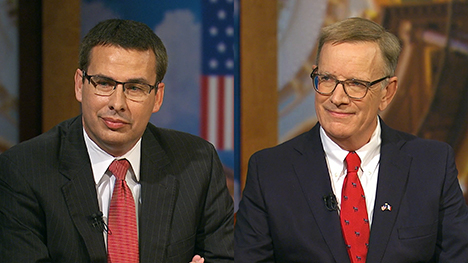
Iowa State Treasurer candidates John Norwood (D-West Des Moines) and Roby Smith (R-Davenport) discuss key issues and policy positions.

Candidates Dave Dawson (D-Lawton) and Chris McGowan (R-Sioux City) will answer questions from reporters and discuss their platforms, concerns and future plans.
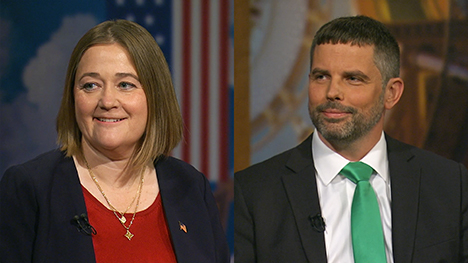
Iowa Attorney General candidates Brenna Bird (R-Dexter) and Nate Willems (D-Mount Vernon) discuss key issues and policy positions.
Lindsay James (D-Dubuque) and Joe Mitchell (R-Clear Lake) answer questions from Iowa reporters and discuss their platforms, concerns and future plans.

Candidates Ashley Hinson (R - Marion) and Josh Turek (D - Council Bluffs) answer questions from reporters and discuss their platforms, concerns and future plans.