Tami Nielsen, president and CEO of the Food Bank of Iowa and Kathy Underhill, CEO of the Des Moines Area Religious Council (DMARC) discuss hunger and food insecurity in Iowa.


On this edition of Iowa Press, Tami Nielsen, president and CEO of the Food Bank of Iowa and Kathy Underhill, CEO of the Des Moines Area Religious Council (DMARC) discuss hunger and food insecurity in Iowa.
Joining moderator Kay Henderson at the Iowa Press table is Erin Murphy, Des Moines bureau chief for The Gazette.
Program support provided by: Associated General Contractors of Iowa and Iowa Bankers Association.
Transcript
[Kay Henderson] As we gather to celebrate the holidays…many Iowans are struggling to put food on the table. We'll talk with two leaders working to fight hunger and food insecurity on this edition of Iowa Press.
[Announcer] Funding for Iowa Press was provided by Friends, the Iowa PBS Foundation.
Iowa Bankers Association — Banking in Iowa goes beyond transactions. Banks work to help people and small businesses succeed. And Iowa banks are committed to building confident banking relationships. Iowa Banks, your partner through it all.
For decades, Iowa Press has brought you political leaders and newsmakers from across Iowa and beyond. Celebrating more than 50 years on statewide Iowa PBS, this is the Friday, December 5 edition of Iowa Press. Here is Kay Henderson.
[Henderson] Food banks and feeding organizations have been headline news over the past couple of months. Our guests today are people who have inside knowledge, can give us context on how those organizations function. Welcome to Tami Nielsen. She is president and CEO of the Food Bank of Iowa. She's worked in various roles at the Food Bank over the last decade. She became the organization's leader this year. Also joining us is Kathy Underhill. She is CEO of the Des Moines Area Religious Council, or DMARC, a leadership role she took over the summer. She spent more than 20 years working on hunger issues within government and nonprofit organizations, most recently in Colorado. Welcome to the Iowa Press table to both of you.
[Tami Nielsen] Thank you.
[Kathy Underhill] Thank you.
[Henderson] Joining our conversation is Erin Murphy of The Gazette in Cedar Rapids.
[Erin Murphy] So speaking of context, we wanted to start by helping our viewers kind of get a full understanding of not just the work you both do, but the people that your organization serves. So, Tami Nielsen, we'll start with you. Kind of describe, if you if you wouldn't mind, the Food Bank of Iowa's service area.
[Nielsen] Well, the Food Bank of Iowa is one of six Feeding America food banks in the state of Iowa. We cover 55 of Iowa's 99 counties, and we have 700 partners across those 55 counties, 14 of which are jointly served by DMARC as well. And we are a large distribution center. We procure food by the truckload. It's our job to bring food in the door, keep it safe, and deliver it directly to the doors of our 700 partners, who then hand the food to people in need.
[Murphy] And Kathy Underhill. Tell us a little bit about DMARC, who you serve, and maybe how your work may vary slightly from the Food Bank of Iowa.
[Underhill] Sure. Yeah. So DMARC is an interfaith organization. It's had a food pantry network for almost 50 years. We have a network of 14 food pantries and work in close partnership with Tami and her organization to distribute food out to people in need.
[Murphy] All right. And I also wanted to just sort of set the scene from both of you here with the need that's out there right now. And, Kathy, I'll start with you on this one. We heard a lot in the news over recent weeks about the need for food assistance in general, and then amplified by the federal government shutdown just November. Recently. How great was the need out there?
[Underhill] It was unbelievable. I mean, I just kept using the word unprecedented and in the truest sense. We broke 50 year records. And we would break a record, and then the next day we would break that record. The number of people pouring into the food pantries was just unreal.
[Murphy] Yeah, Tami, we had a similar show about a year ago with your predecessor, and at that time we were talking about highest rates of needs ever. Did you see the same thing? Where are we breaking those unfortunate records again?
[Nielsen] Absolutely. Kathy is absolutely correct. That and that happened across our 55 county service area. It wasn't something necessarily just a Polk County issue. The need just really surged at a level that we had never seen before. We typically deliver about 100,000 pounds of food to our partners each day. And during that, this last six week period or during that shutdown especially, we were delivering about 160 to 170,000 pounds of food. So it really stretched, you know, our team, our capacity, certainly our trucking capacity. But we got the food out the door to our partners who needed it.
[Murphy] Yeah, it just I guess could you elaborate on that a little bit? Because like I said, it seems like each year we're talking about new highs. Is there one thing that's driving that. And we're going to get into, you know, various details and things that have been going on. But, you know, from a big picture view is what's going on here?
[Nielsen] Well, there are a number of things, but really we have seen a steady increase in need since April of 2022 when those pandemic era benefits stopped. And so the records started at that point, and we were doing the same thing where it was month over month, the need was growing. And you couple that with high prices, you know. There are about 37% of Iowans who don't make enough money to make ends meet. And so that living wage issue and just the cost of living has increased at such a level that wages aren't keeping up, even if you were making ends meet previously. And so there are just a number of factors. And then that government shutdown, you know, created a whole different animal.
[Henderson] Kathy, let's talk about inflated food prices in particular. How has that impacted the people that you serve?
[Underhill] Quite a bit. It impacts two ways. You know, one is they go to the grocery store, their dollar is not stretching as far. It's going to impact the food choices you make. You know, as a mom of kids, are you if you have a dollar to spend, are you going to buy one plum or are you going to buy a box of mac and cheese? If my goal is to have my kids go to bed with a full belly, it doesn't matter what nutrition education I've had, I'm going to pick that box of mac and cheese every time. So it's not just the quantity of food, but it's also the quality of the food that we see.
[Henderson] And Tami, how has it affected the type of food that you're able to procure?
[Nielsen] Well, we're seeing the same things. You know, we deal with wholesalers and manufacturers as we purchase food. You know, right now, purchased food makes up about 57% of our inventory. That's at an all time high as well. USDA food makes up about 10% of our inventory. And typically in a regular normal year, it's 25 to 30% of our inventory. So we're getting less USDA support at a time where we need more food. So we're procuring more food. We buy it by the truckload. But we have to make decisions around, you know, everybody, a lot of our partners ask for ground beef. You know, it's something that us Iowans, we can make about anything with a pound of ground beef. And it is so costly right now that we can procure five truckloads of chicken for what we would cost one truckload of ground beef. And so we make those decisions. We can feed many more people with the chicken than we can with the ground beef. We are a nutrition first food procurement organization, where we look for those things that have the high nutritional value, because if you're living on a budget or you're living in poverty, those making those hard decisions at the grocery store, we have fresh produce. We have milk. We have meat, you know. And so we have a well-rounded inventory so that if you are using SNAP benefits, you can fill in at a pantry with those highly nutritious foods that are expensive.
[Henderson] Tami, how do you get this food? I assume that the Feeding America Network, which the food bank’s a part of, has some sort of gift from a manufacturer, let's say. Then how do you, at the Food Bank of Iowa, get in on getting a piece of that?
[Nielsen] Well, Feeding America, they do a lot of food procurement, you know, at the national level. And so there's a Feeding America grocery portal that our food saucers can order off of. And then we have the food delivered to us at the food bank. And so Feeding America can procure food, you know, they can guarantee a certain number of truckloads that would go out to the 200 Feeding America Food Banks. So we get really good pricing, but we still have to pay the freight to get it here and those kind of things. So even those costs are going up. And so as we look, you know, look forward in our budget, we're spending more monthly right now purchasing food than we did the entire year of 2019. The level has just surged to such a to such a degree that, you know, our purchasing level has tried to meet that demand. And it's quite difficult. But the community has really stepped up and done a lot of, you know, supporting us, especially during this government shutdown period. And so we are able to continue to procure food at a high rate to get it out to our partners, to get it to the folks who need it.
[Henderson] So, Kathy, you run a completely different kind of operation. How do you get the food?
[Underhill] So about a quarter of our food we get through Food Bank of Iowa, which is a really critical piece for us. About a quarter of our food comes directly from community donations, people doing food drives and that kind of thing. And then about 50% we’re purchasing wholesale.
[Henderson] From donations that you get from.
[Underhill] Yes.
[Murphy] Let's dive back a little bit now into the recent shutdown. And I'm wondering, Kathy, I'll start with you are there. Obviously we're out of that now. But are there lingering impacts? You know, how disruptive was that I guess? And then, are you still getting out from underneath the impacts of that?
[Underhill] So I can't, I just cannot underscore enough how profound that impact was. I think, you know, feeding organizations like the ones that Tami and I run and all of our food pantry partners are visible in the community. People see what we're doing. And so I think that they don't understand how much the government does. And Feeding America has a stat that says for every one meal that a charitable food provider provides, SNAP provides nine meals. So about 1 in 9. And it's hard for me to conceptualize that at scale. Like what is 1 in 9 mean? That's about the same occurrence as having red hair. So you think about, you know, if a charitable food meal was a red head, how often you see those versus every other color of hair. So it really I can't underscore how profound of an effect that was. And we are still seeing the impact right now. We've had kind of we were talking about we've had a little bit of a quieter week because people got their benefits late in November and then got them again, but now we're starting to see it ramp right back up.
[Murphy] Yeah. To that Tami, the payments have restarted. Is that showing or is there still like we said, residual effects from the shutdown?
[Nielsen] Well this has been and it typically is in a regular year a little more quiet the week after Thanksgiving. Now Thanksgiving was later this year. So Christmas comes a little quicker. And so I can look in and I see our next week's orders. And they're really high again. And so looking ahead, we know that a lot of people found the charitable food system, pantries or meal sites for the first time when their SNAP benefits were interrupted. And so how many of those folks will continue to come back now that they know that that's an option and that they're served with dignity and welcomed in and, you know, have access to that great nutritious food? And so we anticipate that that has created maybe even more of a need as time goes on. Because folks now are more aware of their options locally and across our 55 county service area. And so we'll just watch, you know, and we'll see what those trends are. But we know that there will be some ripple effects from this. The interruption in SNAP benefits. And we'll just see what that brings.
[Murphy] Yeah. Forgive me. While we're on the topic of the government, I had a couple policy questions I wanted to float by you. And Tami, I'll ask you. This week, USDA Secretary Rollins was talking about the SNAP program and potential changes the federal government might make. Unspecified yet, but she one of the words that I wrote down here that she used, that she talked about the government having an opportunity to deconstruct the program. I'm just kind of curious, your view of the SNAP program and how relevant it is to your work. And, and when you hear about potential changes being made, what you would advocate for or against.
[Nielsen] Well, SNAP works wonderfully. And we saw that during the pandemic when the benefits were raised to maximum levels, our pantries and our meal sites, all of our partners, they saw a decrease in folks visiting their organizations because their needs were filled with that benefit. And as Kathy said, that, you know, for one meal served by the charitable food system, nine are served by SNAP. And that's about $45,000 in the state, or $45 million monthly in the state of Iowa that comes in for food support. So it's not just the folks receiving the benefits that benefit from that. Our grocers, you know, really benefit from that. It helps the economy. For every dollar spent in SNAP benefits, $1.50 goes back into the local economy where it spent. It's a wonderful program, and there is absolutely no way that the charitable food system could fill that gap. You know, as time goes on, we'll see what those what deconstructing that means. But just the changes with the Big Beautiful Bill and other changes that have been made in the SNAP program cause us a lot of concern. It will be a gap that will be impossible to fill.
[Murphy] Yeah, and one of those changes, Kathy, I'll ask you about was the work requirements in SNAP. That people show that they're either working or trying to get a job before they're eligible for SNAP benefits. Is that a what's your thoughts about a policy like that?
[Underhill] Well, I think that generally everybody wants to work. I think that's my mindset is that most people that have the ability to work want to work. And we certainly see that in the data from the DMARC pantries that people are either working or looking for work. I think the populations that were now that used to be excluded from work requirements were veterans, were people experiencing homelessness, were youth aging out of foster care or people over 54. I think that it's really going to put a strain on folks. And of course, refugees are totally out of being able to get the benefit. So I think work requirements overall are a great idea, but I think we have to be careful about how we implement them and who we're implementing it with.
[Murphy] And Kathy, you mentioned the choice, the difficult choice that sometimes families have to make to stretch those food dollars. A state policy change that's coming is requiring that SNAP benefits only be used to purchase healthy food. Certain eliminating some kind of foods for those purchases. It's something that makes sense on the surface, but as always the devil's in the details. So I'm, you know, especially when it comes to those moments like you described. So a good idea? What are your concerns when you talk about that policy at the state level?
[Underhill] I think, again, you know, the aspiration is we want everyone to make great nutrition choices. We want everyone to eat healthy. If you look at the data, it shows us that people using SNAP purchased the same things that people not using SNAP purchased. So we all have about the same diet. I think that I understand, you know, that it was, that this was billed as like no more candy and soda in the program, which I think feels common sense for a lot of people. But again, when you look at the details, and HHS just came out with a guidance this week, it is much more complex than that. For example, I can buy a cut, a cup of cut up fruit, but if it comes with a fork, I cannot. I can buy a granola bar if it contains flour. If it does not contain flour, I cannot buy it. So there's so many rules, so much, you know, minutia in that it's not clear cut like everyone knows what a soda is. That's pretty simple. But the way that this is being constructed, I think it's going to create a lot of confusion and frustration for cashiers and a lot of shame for SNAP recipients.
[Murphy] And Tami, you mentioned the expiration of the pandemic funds, The state of Iowa let those expire and this past summer implemented a new summer food assistance program, especially for kids in low income families. The worry there was about the scope and the reach, and we're still waiting from numbers on that from the state. In the meantime, I wonder if you have any sense anecdotally from what you've seen. Was that program effective? Did it fill the gap of that extra funding that the federal government had offered? Do you have any sense of how effective that program was?
[Nielsen] Well, HHS is still doing some analysis around that, but anecdotally, it was a heavy lift for both the food bank and our partners on the ground doing that work. Food Bank of Iowa had about 125 healthy kids Iowa sites across the state, and some of it worked really well, but there were some capacity issues with our partners that maybe they needed more refrigeration or more staff or more volunteers to really help out with that. We had a pretty quick turnaround to be by the time we learned of the program, and then to get it implemented and running, and so we learned a lot on the go with this. So we made adjustments as we learned. And we know we served a lot of a lot more families for the first time, a lot more kiddos accessing services than, than what our normal pantry partners would see. And so it was effective in that way, too. It's great that the state recognizes the Feeding America food banks as trusted partners to distribute food, but the capacity issue was a tough one for us and tough for our partners. That really trickled down. It was a really hard thing to implement and to really carry, carry out. But more children absolutely were fed through that program.
[Henderson] Kathy, let's talk about who you're serving. Do you have an idea of the age breakout?
[Underhill] Yeah, about 15% of those that we serve are over the age of 60. Most are families with kids. I don't have the exact percentages in my head, but it's generally, again, I think, you know, there's this…can be this perception of us and them, like people that are experiencing hunger are somehow different than us. And really it's just us. So it's who is the teacher's aide in your child's classroom? Who's cutting your hair? Who's delivering your package? Who's tending your baby at childcare? That's who is experiencing hunger in Iowa.
[Henderson] Tami. The numbers that she has, does that sort of correlate with what you see in the 55 counties that you serve?
[Nielsen] Yeah, we know that over 40% of those we serve are children under the age of 18. And then we do have, you know, the group of seniors. And then, you know, just the mid range folks, too. We know that most people are working. They're just not making a livable wage. They could be working 2 or 3 jobs. They don't have any health care benefits. They're still not making ends meet because they're not making a livable wage. But the majority of folks we see are kids, you know.
[Henderson] Many of the people that folks see in a food pantry or at the food bank are volunteers. Are you concerned that the volunteer population of Iowa is aging out, and how do you address that? Either one of you?
[Nielsen] We have a wide range of volunteers. Certainly our daytime volunteers are mostly retired folks. They've got, you know, the time and they want to give back. And they, some of them are working harder than they ever worked when they were employed. So we treasure them. Last year at Food Bank of Iowa, we had 44,000 hours of volunteer hours, which equates to about 21 full time employees doing that work. We're only a team of 51, and so adding those 21 full time employees through volunteerism is what helps us keep our costs down. And so $0.96 of every dollar donated to the Food Bank of Iowa goes directly to feeding people. And it's our volunteers that make that happen. We just poured concrete. We've never been more excited about concrete in our lives. We poured a 120 spot parking lot to accommodate even more volunteers in our building, because we were having waitlists for folks. And so we're grateful for that volunteer force. And we do see lots of different ages, especially in our evening and Saturday shifts.
[Henderson] Kathy, based on your experience in other states and now here, since this summer, it appeared during the pandemic that much of the federal money that was going toward feeding organizations was helping with infrastructure. Refrigeration units, freezer units. What sort of infrastructure needs are there in pantries like the one you are operating and others?
[Underhill] So I think it's the same, but on a smaller scale. So instead of a giant freezer, it's a freezer. But I think cold chain is the biggest thing. Refrigeration and freezers are probably the biggest expense. And just physical space. As the need has grown, a lot of pantries have outgrown their space and are looking at, you know, creative ways to create more space. Yeah.
[Murphy] We're into our home stretch here. Before we run out of time, I wanted to make sure we give folks an opportunity to A, if they're interested in donating and helping out your organization, how do you do that? Or B, if there's someone who's watching who needs some assistance, how do they do that? So Kathy, let's start with you. How would someone who wants to make a donation contact your organization and how someone in need reach your organization?
[Underhill] Sure. So someone in need. On our website we have a find food and there is our 14 pantries. If you need a bigger spread than that, please go to Food Bank of Iowa. They have a find food and it'll cover their whole service area. If someone wants to donate again you can go online. It's DMARCunited.org. And one of the things that I would plug is on our website you can sign up for advocacy alerts. Because that's one of the things we haven't talked a lot about today is policy work. If we want to really change the situation, it's going to come down to policy. So I encourage people to engage in policy.
[Murphy] And just about a minute to go, Tami, what…the same information for Food Bank of Iowa?
[Nielsen] Yeah. So if you go to Food Bank Iowa Dot org, you can go on to our Find Food page. So if you're, you know, if you're in Kossuth County or O'Brien County or wherever you are, you can just type in your ZIP code or your address and it'll tell you the partner nearest you. Same thing to donate directly to the food Bank of Iowa. If you go to Food Bank Iowa dot Org, you can donate to us right there. And as I said, $0.96 of every dollar goes directly into food to our communities.
[Henderson] Kathy, we have about a half a minute left. You are arriving in Iowa with new eyes. What do you see here that you didn't see in Colorado and vice versa? And what should Iowans pay attention to?
[Underhill] I think that what is really profound here, especially in Des Moines, is the sense of community. I think how people pull together, seeing how people pull together during November and the SNAP crisis was quite amazing.
[Henderson] And you're relatively new to being the executive. About 15 seconds, is there something new that you've seen that you didn't expect now that you have the perspective of leading the entire organization?
[Nielsen] Well, there have just been a lot of new and different things that have happened with Healthy Kids Iowa and then the government shutdown. Those were brand new things, new issues that I was grateful that I at least had, you know, the food bank experience behind me to know how to deploy resources and get the teams running to the level that we needed. You know, I'm not surprised by much anymore because we…new things just keep coming our way and somehow we tackle them with that community support and investment in the health and welfare of our Iowans. Yeah.
[Henderson] This may not be a surprise, but we are out of time for this conversation.
[Nielsen] There we go.
[Henderson] Thanks to both of you for being here.
[Nielsen] Yes.
[Underhill] Thank you.
[Henderson] On behalf of everyone at Iowa PBS, thanks for watching today.
[Announcer] Funding for Iowa Press was provided by Friends, the Iowa PBS Foundation.
Iowa Bankers Association — Banking in Iowa goes beyond transactions. Banks work to help people and small businesses succeed. And Iowa banks are committed to building confident banking relationships. Iowa Banks, your partner through it all.
Watch More
Zach Lahn (R-Belle Plaine) and Rob Sand (D-Des Moines) will answer questions from Iowa reporters and discuss their priorities and vision for the state during a 90-minute debate.
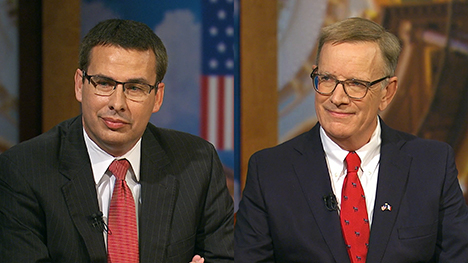
Iowa State Treasurer candidates John Norwood (D-West Des Moines) and Roby Smith (R-Davenport) discuss key issues and policy positions.
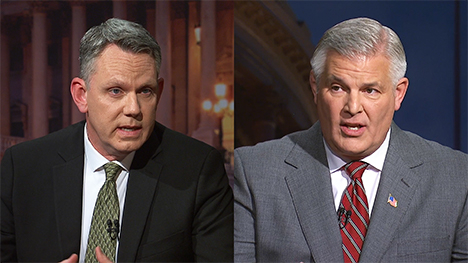
Candidates Dave Dawson (D-Lawton) and Chris McGowan (R-Sioux City) answer questions from reporters and discuss their platforms, concerns and future plans.
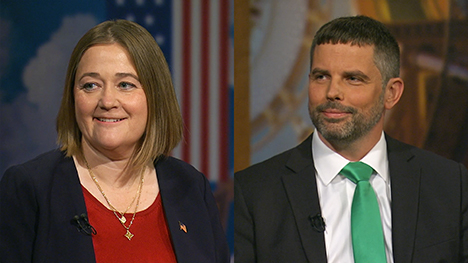
Iowa Attorney General candidates Brenna Bird (R-Dexter) and Nate Willems (D-Mount Vernon) discuss key issues and policy positions.
Lindsay James (D-Dubuque) and Joe Mitchell (R-Clear Lake) answer questions from Iowa reporters and discuss their platforms, concerns and future plans.
Candidates Ashley Hinson (R - Marion) and Josh Turek (D - Council Bluffs) answer questions from reporters and discuss their platforms, concerns and future plans.