Ben Murrey, director of policy and research for Common Sense Institute Iowa, and Mike Owen, senior associate at Common Good Iowa discuss the state budget and other fiscal issues.


On this edition of Iowa Press, Ben Murrey, director of policy and research for Common Sense Institute Iowa, and Mike Owen, senior associate at Common Good Iowa discuss the state budget and other fiscal issues.
Joining moderator Kay Henderson at the Iowa Press table is Stephen Gruber-Miller, Statehouse and politics reporter for The Des Moines Register.
Program support provided by: Associated General Contractors of Iowa and Iowa Bankers Association.
Recorded December 19, 2025
Transcript
[Kay Henderson] Tax cuts increase costs, economic headwinds. What does it all mean for Iowa? We'll discuss the state budget and taxes with two policy analysts on this edition of Iowa Press.
[Announcer] Funding for Iowa Press was provided by Friends, the Iowa PBS Foundation.
Banking in Iowa goes beyond transactions. Banks work to help people and small businesses succeed, and Iowa banks are committed to building confident banking relationships. Iowa banks, your partner through it all.
[Announcer] For decades, Iowa Press has brought you political leaders and newsmakers from across Iowa and beyond. Celebrating more than 50 years on statewide Iowa PBS, this is the Friday, January 2nd edition of Iowa Press. Here is Kay Henderson.
[Henderson] The 2026 legislative session is just around the corner, and our guests today are analysts that can help us sort of sift through some of the budget and tax issues that legislators will be tackling. Let me introduce them. Mike Owen is senior associate at Common Good Iowa. It's a nonpartisan policy and research organization that works on a wide range of issues, from jobs and education to taxes and the environment. Also joining us is Ben Murrey. He is the director of policy and research at Common Sense Institute of Iowa, a nonpartisan research organization that focuses on Iowa's economy. Gentlemen, welcome to Iowa Press.
Thank you.
Thanks for having us, Kay.
[Henderson] Also joining our conversation is Stephen Gruber-Miller of the Des Moines Register.
[Stephen Gruber-Miller] So I want to start with the state budget and give a little context here. So a couple of years ago, Iowa was collecting close to $10 billion in revenue. This year it's going to be just around 8.1 billion. A lot of that has to do with the 3.8% flat tax that lawmakers put into place. Just want to kind of get a little bit of that context out of the way as we talk about it. So, Mike Owen, I'm curious from your perspective, if we're seeing with that drop in revenue effects on state services and if so, what they are.
[Mike Owen] What we're seeing is a change in our ability to fund those those services in the future, because currently there is there have been surpluses that have been built up by setting aside money and those surpluses are being used one time money. And we're going to see that really in earnest in this new budget, because now we're collecting less on an ongoing basis than we are spending. And this was predicted. And we've been, you know, LSA had predicted that there would be about a $2 billion loss of revenue. Well, that has to come from somewhere. Unless you're going to cut services. We never have that discussion in Iowa. We always hear about cutting taxes, but we never get the very important element of that as to what services are going to be affected. Legislators have done a very poor job of engaging that discussion, and they've just pandered to this idea that we can cut taxes and nothing will change.
[Gruber-Miller] So the argument, of course, from Republicans who supported the tax cuts is that revenues will rebound. They're they have some benefits. They're predicting. I'm wondering, Ben Murrey, if you can tell us kind of what you think the impact of the cuts have been. And if there are benefits that we're seeing from them.
[Ben Murrey] Yeah, sure. I mean, we've done some economic forecasting at Common Sense Institute, and you do get some positive macroeconomic effects. But that's not a huge effect. You know, there's some there, but it's not -- when I say it's not a huge effect what I mean is it's not going to recover a $1.3 billion deficit. Right. But it's good to get some positive feedback. But really where that's coming from, those positive knock on effects in the economy are, you know Iowa has a problem. And it's a good problem to have, which is that we have annual surpluses year after year after year for many years. But over time you end up with these reserves that are on the side that aren't going into Iowa's economy. Right. And so with that money sitting on the sidelines, not being spent by government and not being spent by Iowans, right, because it's been taken out of their paycheck. It's been put on the sidelines, not going to work in any way in Iowa's economy. That's a problem. You don't want billions of dollars sitting on the sidelines, above and beyond what's necessary for healthy reserves, right? Because that money is not going to the economy. Now, when you when you put that money back into the economy in whatever way -- in this case, the legislature chose to do it by returning money to Iowans through tax cuts -- when you put money back into the economy, sure, that money works its way through the economy and has positive knock on effects. But, you know, I think what we have to think about when we look at this holistically is, you know, what do we do about this good problem that we have? We've got billions of dollars of surpluses. We don't want it just sitting on the sidelines. How do we return it back into Iowa's economy in a responsible way? Right. And I think that's the problem that the legislature has been trying to address. And it's right that they're trying to do that. I think the conversation is about how do you do that?
[Gruber-Miller] So you both kind of brought up the other aspect of the budget right now, which is that the state this year and presumably the coming year is spending more than it's taking in during that year, and it's making up the difference with some of these surpluses that have been built up. You know, Mike, I know in the past you've kind of warned about this practice, and I'm curious, you know, are we at a point where we should be worried about this spending pattern or, you know, are we going to see our way out of it with the growth of revenue or in other ways?
[Owen] We are past the point where we should be worried about this. This is an imminent threat to Iowa's public services. It again, you know, when you pass a budget, you're not just doing something for one year. That's where the numbers go. But you're actually setting the table for future years. And you're setting a foundation that's going to be undermined by these tax cuts that have happened. The tax cuts are permanent, and the surpluses are one time money. And so when the surpluses go away, there's nothing to fill in. What's happened with those tax cuts and the tax cuts will inevitably, it's just math, will threaten education, environmental quality, workplace safety, child care, you name it. We need to know what those choices are. Now, I think one of the things that's really been missed also in all these budget discussions is we always think of, well, how are we going to protect ourselves from what's happening with these right now? Well, we're already holding education and some of these things way below what's necessary to keep up with inflation, number one. But how are we going to make things better for this state? You know, in past generations, legislators who served in the past, I start I was a reporter covering the legislature in 1981. I mean, back there in those times, we had people who were concerned about setting a future for the state. What we're setting up now is a cliff, and we're rapidly running toward it.
[Gruber-Miller] Ben Murrey, is it a cliff?
[Murrey] No. You know, our forecast, we've done some economic forecasting, and I'm, look, I'm concerned about this sort of thing as a numbers guy. Nothing drives me more crazy than seeing politicians, lawmakers not get their numbers right and spend more money than they have, right. They're supposed to be stewards of of the fiscal ship, so to speak, here in Iowa. But we did our forecasting at Common Sense Institute, and what we found is really I mean, honestly, what lawmakers are saying is, you know, you have years and years of surpluses in order to get that money back into the economy, you have to either spend it into the economy through government spending, or you have to return it to taxpayers. Those are your options. And you know that's not a problem as long as you do it responsibly. Now, what Kansas did infamously a little over a decade ago, is they didn't build up reserves. They relied on rosy, dynamic economic forecasting and said, we're going to get all this positive revenue feedback from tax cuts. It didn't happen. And then they ended up on a true fiscal cliff. Right. And that was a problem. I didn't do that. Right. I had 5 or 6 years of consecutive, you know, large surpluses, oftentimes billion dollar plus surpluses. And they have to if they're going to return that money back into the economy. And maybe you could say, hey, they shouldn't we should just have very, very large reserves. If we hadn't reduced revenue, right, we'd be sitting on coming up in fiscal year ‘27, probably about $15 billion in reserves. So my question would be if we don't return that money to the to to Iowa's economy, either by giving it back to taxpayers or by spending it, you know, and maybe that's part of the answer, right? What do you do with, let's just say, the hypothetical, we hadn't done anything with the tax code, and we had $15 billion in reserves coming into fiscal year ’27. Is that is that reasonable to have $15 billion sitting on the sidelines, not going to work in Iowa's economy? And if not, what should we have done with that $15 billion instead of giving it back to Iowans?
[Owen] If I may interject, I think that what's happening is, is that money was set aside and it's actually filling. It's being used to fill gaps in future years, and it will only last so long. It's not something that will even be there to return to taxpayers. It's being used to fill gaps in the budget.
[Henderson] I'm wondering if we can take a step back and talk about what state spending's impact is on the economic output in Iowa. So we saw during the pandemic that the federal government escalated spending to try to prop up the economy. So, Ben, has your organization sort of come up with an idea of the impact of state spending on economic output in a state level economy?
[Murrey] Yeah, I mean, it's a great question. So we haven't modeled that because that's not what policymakers did. But you could model it. And if you modeled an increase in state spending coming out of these surpluses. So let's say you took these billions of dollars in surplus. I think we're around 6.1 billion right now. We've returned some of that to the economy through some of these revenue reductions through tax cuts. So we've just put it right back into people's pockets, which look it's a political decision. Right? I don't think lawmakers -- I think lawmakers thought it was reasonable to put money directly back into people's pockets at a time when we're dealing with, you know, highest inflation in 40 years just a couple of years ago, right. So not unreasonable. But to your question, Kay, could you have just had the state spend that money back into the economy? Sure. You certainly could have. And would you have gotten economic stimulus? Yes. We didn't run that model because that's what policymakers do. But I can tell you that our model would show economic stimulus if the government had just spent that into the economy. So then it just becomes it's no longer a conversation, right, about about whether there's a fiscal cliff. Right. And I don't think this is what Mike is advocating for, but he talks about a fiscal cliff. If instead of reducing revenues, if we had spent that money in the economy, we'd be in the same fiscal situation, right? If we'd spent the same amount of money into the economy. And so it's no, we don't have a fiscal cliff, and we wouldn't have had a fiscal cliff if we had if the government had increased spending instead of returning money to taxpayers. The point is, is those are political decisions. Those in charge have decided, let's return that money to taxpayers through putting it back into people's pockets. Others might say it would have been better to return that into the economy by the government spending your money for you, and those are both things that could have been stimulative to the economy. But in either case, I think you can do it in a way that doesn't put you in a situation where you have structural deficits, but you might have to run a deficit for a year or two in order to return those surplus. It's like it's like if I've been saving for my kids college tuition for 20 years, and now he goes to college and I've got, you know, $60,000 sitting on the sidelines. Right. And maybe I only make, I don't know, $60,000 a year. Well, each year I'm going to spend, say, I don't know what, $15,000 on his tuition. Right? Well, I might spend more than I make for for four years. Right? Does that mean I have some some fiscal cliff in my household budget? No. It means in order to see the benefit of the money I put on the sidelines today, I have to spend more than I'm earning for four years, and my son is going to be the one seeing the benefit of that. Now that, incidentally, that would actually be more an example of returning that money to the economy through government spending. My analogy. Right. But the point is, is that you have to do something that looks like what the legislature did in order to return those surpluses back to the economy, unless you say, hey, look, we earn we bring in revenue $8.5 billion a year. Without tax cuts, we would have something like a $15 billion surplus going into ‘27. So is it reasonable to earn $60,000 a year as a household and have $120,000 emergency fund? Maybe, but it's probably a larger emergency fund than a house needs that's earning $60,000 a year, right? You see, where I'm kind of going with this is the question is, how do you return those surpluses to the economy? And I think that's a political question.
[Owen] I would say that there is -- we disagree on the question of a fiscal cliff. I mean, I think it's very clear that we have held down investments in education, in child care, in all sorts of things that we have traditionally done as a state and have had bipartisan support in this era of tax cutting. We've held those down. That's what's created these surpluses, along with the tax cuts. Now, if we had not done the tax cuts, we would have had the resources to keep investing properly for these services to be provided. You asked about the question about the impact on the economy, you know, about 1 in 6 workers in this state is a government employee. So we've had we've had politicians in the past, you know, wanting to cut government employment or trying to they've gutted public sector bargaining rights. They've done things that have held down those workers. Well, those workers are a tremendous contributor to these economic survival of this state. And they provide services that in many cases are not going to be able to be provided by the private sector. So what's happened is we cut these taxes and we set up a cliff that's coming down the line because we have we see now the structural deficit of this this year of about $1.3 billion. That means that, yeah, you can fill it this year with those one time surplus funds. But 2 or 3 years out, you're not going to be able to do that anymore. We don't know specifically when that's going to happen, but it is very clear that we are setting ourselves up for a situation where we can't meet, not only not meet the things we have now, but not going to be able to improve them.
[Henderson] Let's shift gears and talk about the property tax debate that's looming. Mike, you have been an observer of Iowa politics for decades. Legislators have talked about property taxes. They've taken on things like financing the court system, financing mental health. Is it realistic that the legislature can dramatically reduce property taxes or merely freeze them?
[Owen] Well, it's realistic politically that they can do that. But there will be a cost, again, in the types of services we're able to offer. One of the points we made last year or last session, when this was discussed, was that we had to tie the questions together about, again, about the public services that we might lose by at the local level. By doing these property tax cuts, and that there needed to be we argued for town meetings around the state that the legislature could do and get some discussion by a lot of people and do this right. Do it thoroughly instead of just passing a bunch of cuts and letting the chips fall, and then try to regroup later. Now I'll give the governor credit for having some meetings of her own that she's had around the state, but there are invitation only meetings. They were secret meetings. They were things that people couldn't engage in. And so I guess as a first step in this process, they may be helpful, but we still need that public involvement. And it's it's really hard to see how we'll be able to do it very well in the crush of one legislative session.
[Gruber-Miller] So I want to ask your views on a couple of specifics that maybe people following the governor's race or some other campaigns might be hearing about. So one is a freeze of property taxes, either for everybody or for seniors. And I just want to get both your views, starting with Ben on on the feasibility and maybe the benefits or drawbacks of a freeze.
[Murrey] You're going to ask me about a specific policy question. Look, I mean, we're a nonpartisan organization. We don't really weigh in a lot on these kind of these partisan issues. And look, when you're talking about something like giving a special benefit to a certain interest group, I'm not comfortable making a policy recommendation on something like that. But what I will say big picture is property taxes, property tax reform is one of the most challenging things to get done politically. And, you know, at the end of the day, you need government services. You need local services. Property taxes are a good, stable source of funding for government services, for local government services. And you have a few options, right? You can whatever you want to do, whether you want to do a freeze for seniors or anything else, you want to do an immediate cuts or whatever you do, the money has to come from somewhere. You can either cut government services, right, local government services, if you want to cut taxes. You can backfill local government services with state funds, which doesn't sound like much of an option right now, considering the state fiscal situation. It's not something politically is probably going to happen. Or what you can do, and this is what we've forecasted at Common Sense Institute is we've said, you know, given the reality as things are, property taxes are what they are, people might not like their property tax bill, but that's where we are. If you try to cut it, tax relief, immediate tax relief, it means picking one of those choices, backfilling or cutting government services. The other option, and I think what's more responsible is to have a policy that reasonably controls the rate of growth in taxes moving forward. Right now, our municipal governments can be thrilled with that. No, our taxpayers are going to be thrilled with that. No, because they want cuts today. But something like that is probably the compromise that you would need. In our view, when we forecast this out, what we looked at at Common Sense Institute is we said, is Iowa really overly burdened with property taxes like we all think we are? But are we really? And we did an analysis and we said, well, what is the property tax liability statewide relative to personal income statewide? So a pretty good metric of our capacity to pay the taxes that we have in Iowa. And we found that we are the 11th most burdened in the country. Right. So if the goal is to become a more median state, sort of middle of the pack on tax burden for property taxes, then you do need to find some way to again, I don't know that I would recommend politically, probably just not going to happen. Cutting taxes. You know, this year, I know taxpayers would love to see that, municipal government would probably hate it, but again, if you control the rate of growth in property taxes, if you have a policy that does that not cut any cutting anything, then you can slowly, over time in a responsible way, move more towards a median burden.
[Gruber-Miller] That's a big overview.
[Owen] I would say that the question of segmenting out people by age, for example, would be a big mistake. Tax equity really demands that you look at where the income is and try to tie your tax policies to more of a means based approach. In Iowa, we have what's called a very regressive overall tax system. It's getting worse because the income tax cuts have happened, but the income tax has previously been the only part of our tax system that taxed higher income people at a greater share of their income than low income people would see. Instead, we've moved to more reliance on sales and property taxes, both of which hit people at lower incomes harder than they do people at higher incomes. So we really need to focus on income. You can have some rich older folks who benefit from a property tax freeze on seniors. Well, they don't need the help. What we do need to know is that those local services, whether you're talking about schools or you're talking about fire and police or you're talking about, you know, other things, you know, just clearing the roads winter time, we've seen the snow already, and somebody has to clean those roads. So, you know, those services need to be provided. How are we going to make sure that those services are provided, and how are we going to make sure that the revenues are raised to provide them?
[Gruber-Miller] Yeah. You both mentioned services. So I want to kind of ask about the the governor has talked a lot about government efficiency and DOGE, and she has said that Iowans should expect maybe services to be delivered differently and that some savings can come from there. That would help property taxes get go down. I'm kind of curious for both of your views on if there are enough efficiencies to be found for it to be a meaningful reduction. Ben?
[Murrey] Yeah, I mean, I think these are political questions, right? Common Sense Institute, we try really hard to to just look at the data, you know, and the data tells me, look, the numbers tell me it can happen. You can provide reform that creates relief over time. Now we are aware of political realities at the Common Sense Institute, even though we're very nonpartisan, we understand that the political reality is that will probably be very difficult to provide immediate cuts in a substantial way. We think politically, you know, you're probably better off controlling the rate of growth that would provide relief over time. What does that mean for government services? I don't know exactly. It depends on where you live. Right. You know, this is a it's interesting because it's property taxes is very much a local issue. And we're looking for a state solution. So you know, maybe maybe that's part of it. Should we be looking for a state solution to a local problem, or should we be more involved in our local governments? But the way I look at it from Common Sense Institute's perspective is the data and the forecasting, the data we've looked at in the forecasting we've done show that you can control the rate of growth and have reform that makes us less burdened on property taxes as a state. And you can do that without cutting services. Now, will you be able to grow services at the rate that maybe some of us want to? Maybe not. Right. And so that's where you get into the political questions of, well, how much am I willing to pay? And for what? Maybe I want a lot of truth of the matter is, most people want all the services and they don't want to pay for it. Right. And these are the political questions we as a state and really even locally, we need to be making I want this, but what am I willing to pay for?
[Henderson] Mike, we have not more than a couple of minutes left. There's a piece of the property tax dynamic here that is getting some attention is called tax increment financing. Local governments use it as a way to attract businesses to an area and finance roads, sewers, water, sorts of things. Do you, as a group, analyze that and look at some excesses there that need to be reined in?
[Owen] We have looked at TIF many times through the years, and it definitely has been abused in many occasions throughout the state. There are some people who argue quite convincingly that we probably just ought to do away with the program because it's it's the system is easily gamed. There are good uses of TIF, I would argue, but the question is, can we keep those and can we actually have some accountability in that area that we have not had before?
[Henderson] New guard rails.
[Owen] Right. I think we shouldn't be under any illusion that reforming TIF is going to solve a big problem or raise the kind of revenue that we need to plug, probably some of the kind of cuts you'd be looking at. The governor raised the issue of should every town have a fire truck, something like that. Well, I suppose if you're in a town that loses a fire truck, you're going to think, well, we want our fire truck. You want it? Response to emergency services to to be there when you need it. So we're reforming TIF is something that is probably necessary as part of property tax reform. Could be part of a study, could be part of the work that would be done through town meetings around the state. But it's not going to be the be all, end all solution.
[Henderson] Well, speaking of ends, we are done with this conversation. Thanks to both of you for being here today.
[Murrey] Absolutely. Thanks for having us.
[Owen] Thank you.
[Henderson] You can watch episodes of Iowa Press at iowapbs.org. For everyone here at Iowa PBS, thanks for watching today.
[Announcer] Funding for Iowa Press was provided by Friends, the Iowa PBS Foundation.
Banking in Iowa goes beyond transactions. Banks work to help people and small businesses succeed, and Iowa banks are committed to building confident banking relationships. Iowa banks, your partner through it all.
Watch More
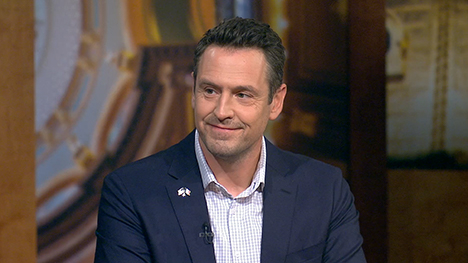
Zach Lahn, a Republican candidate for governor, discusses his campaign and the Republican gubernatorial primary race.
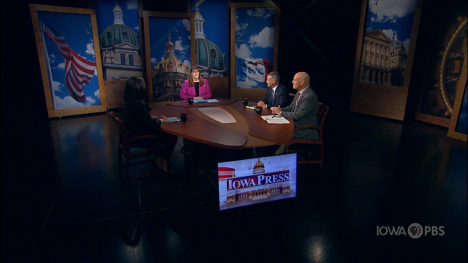
On this edition of Iowa Press we discuss tax policy and proposed property tax reforms.
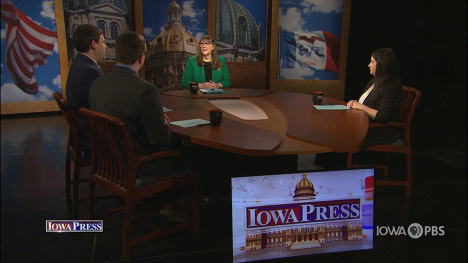
On this edition of Iowa Press, Iowa political journalists gather for a roundtable discussion about the legislative session and 2026 elections.
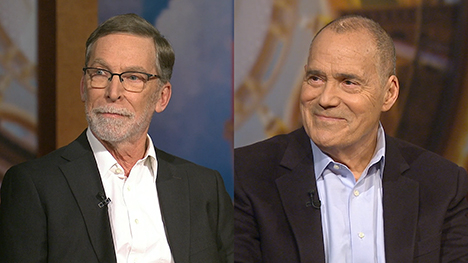
On this edition of Iowa Press, Dr. Richard Deming and Dr. George Weiner speak on the topic of cancer in Iowa.

Marty Martin, president of Drake University in Des Moines, and Mark Putnam, president of Central College in Pella, discuss private higher education in Iowa and the challenges and opportunities for those colleges and universities.
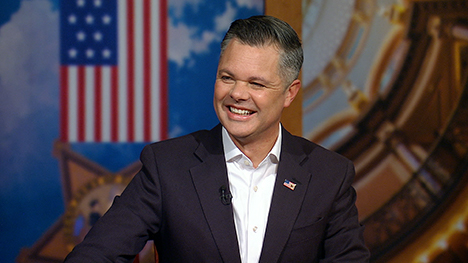
On this edition of Iowa Press, Rep. Zach Nunn (R - Ankeny) discusses his work in the U.S. House.