Juliet Abdel, president and CEO of Cedar Rapids Metro Economic Alliance, and David Leto, president and CEO of Palmer Group, discuss the job market and employment issues and trends in Iowa.


On this edition of Iowa Press, Juliet Abdel, president and CEO of Cedar Rapids Metro Economic Alliance, and David Leto, president and CEO of Palmer Group, discuss the job market and employment issues and trends in Iowa.
Joining moderator Dave Price at the Iowa Press table is Erin Murphy, Des Moines bureau chief for The Gazette.
Program support provided by: Associated General Contractors of Iowa, Iowa Bankers Association and Robert and Doreen Sheppard.
Transcript
[Dave Price] It's difficult for some workers to find new jobs, and some employers are having trouble finding the skilled workers they need. We will discuss the job market with two experts on this edition of Iowa Press.
[Announcer] Funding for Iowa Press was provided by Friends, the Iowa PBS Foundation.
The Bob and Doreen Sheppard family, proud supporters of educational programing seen only on Iowa PBS.
Banking in Iowa goes beyond transactions. Banks work to help people and small businesses succeed, and Iowa banks are committed to building confident banking relationships. Iowa banks, your partner through it all.
[Announcer] For decades, Iowa Press has brought you political leaders and newsmakers from across Iowa and beyond. Celebrating more than 50 years on statewide Iowa PBS, this is the Friday, January 9th edition of Iowa Press. Here is Dave Price.
[Price] Hello. Kay Henderson is off this week. The labor market is now more employer driven than candidate driven. We're going to talk more about that and what it means for job seekers, as well as how businesses are navigating labor market challenges. We are joined by two guests who know a lot about the workforce in this current economy. David Leto is president and CEO of Palmer Group, an employment and talent agency based in West Des Moines, also has offices in Cedar Rapids and Oshkosh, Wisconsin. Hello to you, sir.
[David Leto] Hello.
[Price] And Juliet Abdel is president and CEO of the Cedar Rapids Metro Economic Alliance, a 1200 member organization focused on economic development, workforce, quality of life and more in the Cedar Rapids area. Hello to you as well.
[Juliet Abdel] Thank you for having me.
[Price] And across the table this week, Erin Murphy, Des Moines bureau chief for the Gazette in Cedar Rapids. Erin will start us off.
[Erin Murphy] Yeah. David, I wanted to ask you first because your organization put out a report recently, and Dave alluded to it right at the top, where it the report said, and sort of a flip from where we first came out of COVID, where now the market has shifted from a candidate driven to an employer driven market. Tell us, first of all, a little bit what that means.
[Leto] Well, the hiring market has has slowed over this last year and a half, two years. so we're seeing less job opportunities. Salaries have calmed down. employers are making decisions. Maybe they've they've delayed making, when the market was was high and hot. We were seeing less turnover. And we've seen an increase in layoffs.
[Murphy] Is that what you're seeing in Cedar Rapids?
[Abdel] We're seeing we're definitely seeing that. And, you know, I would preface by saying that COVID was just one piece of the problem in workforce. And workforce has been an issue even more so, not just in Iowa. It's all over. There is no community, this is my fourth state, right, there is no community that's figured out. How do you deal with workforce and the challenges because it's so integrated in economic development, existing industries and those projects that we're trying to bring to the forefront. So COVID was a part of that. Then you combine it in the community or a state like ours with what we call the silver tsunami. Of those that are aging out, are retirees, and you've got this combination of even public policy that impacts our workforce and whether we have individuals that are here legally and able to work, and the backlog on visas and permitting. And so it's all kind of come together to this head of what are the solutions that we're able to provide, and how do you fill existing roles, and how do you also look at bringing in companies that you know are going to require particular skills, particular number of people that are either in that space or in our labor shed or even in the surrounding states.
[Price] Dave, in your salary guide, one of the things you've noticed is this shift. So we had the COVID shift where so many people were allowed to work from home, potentially for the first time. And now things are kind of going the other way. You've got some businesses putting you back in the office full time, some doing some kind of combination. What are you seeing?
[Leto] Yeah, that's that's one of the decisions. I think a lot of companies delayed when the job market was, was high. with, with turnover the quit rate has dropped significantly and employers are more employees are more staying put these days than they were here a few years ago. So that's led to companies making the decision, you know, as the CEO of a company, you really have to decide what's the culture you want in your organization. And I think a lot of companies have missed that collaboration. They've now are feeling that impact of the culture over the many years. You're trying to train and educate new employees without some of your experienced staff around. It's just been a difficult market. So we've seen a lot of companies over this last year, and I know of some companies that are continuing to make those decisions to bring people back more. the hybrid workforce is still popular, but what went from 1 or 2 days in the office is now gone to three to to four. we're also seeing a lot of companies go back five days. They're just just doing it across the board, and we're getting people back in the office and the full remote jobs are just not easy to get anymore.
[Murphy] Did I see a zero in the report for full?
[Leto] Yeah. you know, we see more of the full remote jobs when it comes to it. Or technical talent, or you really have to broaden your horizon in order to get the talent you want. So we're seeing we see still see more remote jobs in the I.T. space. But other than that, there's just very few full remote positions anymore.
[Price] As you’re recruiting folks to come to try to get them to move to Cedar Rapids. What kind of conversations when it comes to this either hybrid situation.
[Abdel] How much of that affects it? Right. So there are a couple of points that I wanted to go ahead and tack on to. When we share that the quit rate has gone down, that's really given permission for those employers that were apprehensive to tell them to come back in, to go ahead and make that decision to. And so we're seeing a lot of them have come back to the office and where the hybrid have mostly stayed is where it's been more competitive, meaning that there are other industry competition and other partners that could potentially poach those employees. And that's traditionally been in our kind of finance or insurance, which as we know, is is pretty predominant here in our state in terms of those projects that are looking to come here. we definitely look at not just in our region that we serve. So Cedar Rapids and within our Cedar Rapids, Iowa City region that we have. But then we expanded out to about 160 miles, which does incorporate to the west, north and south of us. And then we even more so will magnify into even some of the Chicago market. And so you might wonder, what does that how does that play in. How does that affect. Well, some of those companies that are hybrid may only need them in the office a few days out of the week. And so we're not geographically bound when it comes to some of that workforce. They can live in those places and continue to work in our communities. And then other times they could be employed by those companies that are here but continue to work where they are. We? The interesting part about whenever you talk about remote jobs that we have and it's where it's at, zero here, we actually had a job attraction campaign that we had just ended about 60 days back, and the goal was to bring in at least 15 newcomers. So 15 families into the Cedar Rapids region. And we achieved that by going after those individuals that had remote positions. So they did successfully move to our market. And these are six figure salaries that they have, and they retained their jobs in the other states, but now they're living and working in our community. So they're working remotely for another company that's in another state, but directly benefiting us in all the other elements as a resident, as internal tourists into the state of Iowa, and then as someone that benefits from those amenities of quality of life, schools and retail and restaurant.
[Murphy] Juliet, is there an element, is there a generational element to this? Do younger workers feel much more strongly? Yeah, please.
[Abdel] Yes. So the goal was to target those younger professionals. And we generally know that anyone that is starting out a family usually will have a change of heart. If they're in a particular place that may not be safe, may be not as affordable, or may be harder for them to have a backyard for those kids to grow up. And so that's the time that they make a decision of whether or not they want to either boomerang back to Iowa or choose to move to a community that's a little bit lesser of a pace. If they've gone to any of our coasts or any of those other markets. And so we did target those that are between the age ranges of 21 to about 45. And out of those, we did have a percentage of them, about 30% or so that were boomerang. So they came back. They were in some capacity living in Iowa and others that were first time movers into our community. And it is it goes back to the cost of living being incredibly low, having a community. That's the number one place for millennials to home buy. And that we're seventh nationally for being a safe community. I mean, those combinations in themselves are just amazing reasons for someone to want to start a family.
[Price] Dave, I was saying before we started the show that I've been reading your salary guide for years. And your guide is always helpful for me and for some of my friends, especially when it's contract time, and we're trying to think about how much to how much of a raise do we ask the boss? If you look at what this latest report shows, the money that companies were throwing at the workforce when COVID hit, the raises look a lot different now on average, right?
[Leto] They do. Yeah. They have definitely calmed down. you know, we're seeing five plus percent. some remarkable ten, ten, 15%, some to some, some people. But yeah, those have calmed down a lot. You know, that 3 to 4% is still pretty average, you know, to help keep keep up with the cost of inflation. But the 1 to 2% has become more popular as companies have really dialed back dialed back things. And, you know, just going back to your your last question about the work from home situation, you know, I think we need to talk about the flexibility piece. And no matter the work location that flexibility piece, you know, having people in an office five days a week doesn't mean they can't have flexibility. And I think that has helped employers have embraced that. whether it's dropping kids off, you know, in the mornings or in the evenings. And I think some of that, you know, having that flexibility piece and you tie it in with understanding the salaries are going to be a little bit more modest. And when people are interviewing, they're really not expecting the huge increases that they were getting, which I think has lowered the quit rate. So all this stuff just ties together.
[Price] Is it hard? You're also the boss of your company, so your employees see the salary guide, right?
[Leto] They do.
[Price] So that's got to be easy for them when they ask you for a raise. Right?
[Leto] We get a lot of those requests.
[Price] You actually can't lowball them can you?
[Leto] Cannot. No, no. We try to take really good care of our people.
[Price] I'm sure you I'm sure you do. And you have a you got a great staff.
[Leto] Yeah.
[Price] So when you're having conversations with employers, let's talk about pay. Like what's that conversation like. So is it is it similar to what Dave seeing in that employers are thinking maybe more holistically beyond the paycheck?
[Abdel] They absolutely are thinking more holistically. And I think you almost have to be nowadays, because gone is the time that you expect someone to work way past 5:00 or, you know, show up really early to it's just a change of culture, not just generationally, but just the people that are now returning to the workforce after COVID, that disruption, we've returned back to our employment levels. But the culture has changed somewhat. And so to to a lot of Dave's point, there are organizations that have naturally been doing that or nonprofits continue to do that because historically, our payouts to our employees is a little bit lower than our private sector partners. And so we've always been adaptive to the needs of our employees and offered them those opportunities. So it's not uncommon for the for the others to now follow in that respect as well.
[Price] I'm curious how you both counsel employers when you both know empirically, anecdotally everything about what works for that holistic approach. And when you talk to an employer who is kind of the old school mentality about, we expect my email responded to at 5:15 a.m. or 10:30 p.m., or you need to come in early. You need to work weekends outside of your shift, all that kind of stuff. What does that for those who have not embraced the new workplace, is that difficult?
[Abdel] I think, you know, for those that have not embraced, it's not necessarily that they don't want to. There are just some industries that it's going to be a little bit harder for sure to have that right. Like especially when our markets or our economy is made around manufacturing. Right. So that that isn't the traditional office where you come in at 8 to 5 and then you leave. but you are on an assembly line and you may not be able to look at your phone, and you shouldn't want to look at your phone during that time. So it's just a combination of where where their safety concerns those companies do absolutely have every reason to kind of restrict those things. And then where they can be lenient, then then they can allow that, you know, we partner with entities that do produce studies and do have resources and all types of programs and events that we host that are designed to try and educate our businesses on ways that they can assist their employees, but then also to drive their own individual business success.
[Leto] Yeah, there's a I mean, there's a segment of the population that is still really old school and doesn't mind that kind of a work environment. And so it just depends on the talent you want and your expectations that you set when you're hiring. I mean, having those expectations up front when you're bringing an employee in. And so they kind of know what to expect is important. you know, I'm, I'm one of those people that emails at night. But I have had to set the expectation to my team to say I don't expect a response sometimes.
[Price] It’s tough sometimes when you get email from a boss, right, you think, oh, gosh, I need to respond.
[Leto] So I've tried to dial that back. but that's, you know, for me, sitting on a couch watching TV, catching up on email is just a it's an easy thing for me to do. And so but sometimes making sure those, you know, the employees understand the, the leader's expectations are pretty important thing.
[Abdel] Dave, I'll I wanted to piggyback you reminded me of two things. And one is we are completely opposite by the way. So I tell my team, you will never get an email from me after 5 p.m. and it is because of that reason, right? The mental that even if they just see it ping, I don't want them to even think about that when they're in their home. Right. And so I do I end up keeping a little notes tab and doing whatever and so I can send it to them any in the morning. But the other point that you had mentioned actually reminded me of one of the strategies that we do in economic development, which is, you know, there is the traditional of trying to bring in a project for the number of jobs. And our approach is, is does it fit the community that we have? It's kind of smart development, but then we also look at the jobs that they're looking to bring and the types of wages that they come with them. And I can tell you that there are projects that we've turned away because it doesn't necessarily raise or add value to the community that we have. And so we're constantly looking at where are we trying to move the community to, in the region to, and does that fit into that matrix of it?
[Murphy] David, another thing in your report that I wanted to ask you about was the look at employers and whether they look at expanding right now, hiring, more, hiring, I should say specifically versus focused on retaining current employees. And there's kind of an interesting mix there. Tell us what you saw in the numbers.
[Leto] Yeah, the the retention aspect is has been huge. It continues to be huge. it is so costly, as we all know, to to hire a new employee after, you know, you have expertise, walk out the door. So that continues to be top top of mind for all employers. and then then hiring I think the the survey talked about I think it was around 49% of companies are still looking to add add to staff. which is great. they were adding to staff and some companies in large quantities. Now it's it's a lot more strategic. It's it's where where can I hire the expertise? you know, you look at some of the layoffs, extra layoffs. Maybe I can bring in some talent that I wouldn't have had access to before. How can I have them leverage their their skills to leverage our company to the next level? So I think that's a little bit more. That's a little bit more strategic when it comes to the hiring. you know, we saw a slowdown here for a couple of years, and we've seen the tail end of last year. Things start to pick up again. you know, customer service classes are picking up. We're seeing hiring in larger numbers that we hadn't seen in a while. So we're kind of hoping the economy's turning a corner here a little bit. for some positive signs for 26.
[Murphy] Juliet?
[Abdel] I would definitely also add that as as companies are being thoughtful, it also turns back to what makes sense for their strategy and their growth potential. Right. And so when we're looking at existing industries, for example, by Q3 of last year, we had over 145 million in expansions. So if you're expanding your company or your business, you are looking at attracting additional talent or adding into your workforce, coupled with either those new attraction projects, those also demand additional employees. And they might be an existing company in another location, whether it's in Iowa or elsewhere. But then they're also seeking. So it is it's driven more by the need as opposed to trying to just ramp back up to where they were, which is what had happened with that disruption. Yeah.
[Murphy] And then Juliet, for those employers that are especially hiring or maybe to a certain degree, trying to make sure they retain employees too. You touched on this earlier. I wanted to ask you how important is quality of life that you're hearing from?
[Abdel] Yeah, it's super important, particularly if you're trying to attract the demographic that we were looking after for those remote workers. So that was the younger professionals. Younger professionals are going to want to be in a community that's vibrant, that has things to do, where they can enjoy and truly live and still be able to contribute in some way. some of the other jobs that we're also seeing with an uptick in that are project driven have generally turned around and focused around the trades in particular, and those are different type of demographic. So they may not necessarily be as focused on quality of life, but they're definitely focused on the continual workload that would keep them in the community as opposed to staying where they are. So that's one component, the hospital. So those are the two industries. If I'm talking about trades and manufacturing or trades in any of the development projects, that's one area. The other is in our hospitals and our large employers. Being in the medical, they generally are trying to seek specialists or physicians or those that are more experienced, and they're coming from markets that are beautiful and sometimes very lavish. And so you are trying to make it an environment that they not only are able to contribute in the medical space that they're in, which so many enjoy doing, but also be able to see themselves and their family live in.
[Price] We have the legislature will go back into session next week, so that's probably why this is on my mind. But as you're talking to companies about potentially moving here, I bring up we have heard for a while that while we are definitely we have been a slow growth, population wise state for a long time. This kind of mismatch with skills and what we are not cranking out enough of in certain areas, is that something that comes up with you and then maybe specifically what are what do you think we're still missing?
[Abdel] You know, I think one of the ways that we try and and support our existing workforce is by looking at upskilling opportunities and one very great program that the state has that provides funding for it goes toward our community colleges. And that we administer is the job training program that we have. So taking an employee and allowing them to get the experience to then continue in the role that they're in or to move in. So that's one way that we've been able to address that. We've always supported those apprenticeship programs, career pathways to try and essentially adapt to the current demands that we have in the workforce, because those continually change. And so, you know, I think to your point, there are there are individuals that have continued to be in a particular line of work that are looking to transition into something else, and we want them to enter those particular spaces. But we're also trying to protect those existing dollars that support those trainings and programs that allow for that in real time. Being able to create those types of programs for them.
[Price] Dave, Palmer Group, so you're doing temporary positions, contract workers full time, too, and you've done this for a while. What what do we missing? So employers looking for what? That we don't have the skilled people in that sector. What are we missing?
[Leto] Well, a couple areas we don't, you know health care, of course, we don't do a lot in that space. But you hear that across the state. And then, you know, you talked about the skilled trades, the apprenticeship programs are great for the the companies, manufacturing companies. But we I mean, our our biggest area of our business and what we've seen growth in over the last year was, was our technical space, our I.T. space. and that demand is where we're having to pull talent from other states and have them work remotely in order to fill jobs. And for Iowa companies. So that space continues to be hot.
[Price] Even with all the layoffs that some of the big companies?
[Leto] Yeah, we we are, we are we've experienced a lot of growth in our tech space. I think, you know, with some of the AI stuff. And I'm sure you'll get into that. But you're seeing, you know, seeing a little bit less demand for, for developers. you know, AI is doing some of that coding now, but that's, you know, that's switching to cybersecurity and all the fun stuff that the technical folks have to, to protect businesses with. So accounting you know, we're still not producing enough accountants out of our schools to take care of the demand there. I think it's gotten a little bit better, but I think I heard a stat here a year ago that we were graduating one accountant for every six need. So I still think that's going to be a demand. I think with the technical AI stuff that might lessen that. as some of that automation takes hold. But so those are some of the areas I would think of.
[Price] My son has an accounting test today. He's a sophomore. I hope he does well after hearing that. It might be something he wants to stick with.
[Murphy] We're into our last couple minutes here, so maybe just enough time for each of you to address this one. So let's talk about AI and we'll start with you David. You can finish your thoughts there. Sure. I know it's a big question in a short amount of time, but where are you seeing the biggest disruption or maybe where are you seeing a possible opportunities?
[Leto] So opportunities I mean, we're seeing, you know, you're seeing data centers built all over the country. You're seeing a lot of Iowa based companies that are playing in that space, given what we've done around around our state, which has been great, which has helped those companies scale and grow into new markets, which is good for a company like ours because we're following them. So which is going to help our, our company grow and expand into new markets that we had not thought of before. So a lot of opportunities there. Anybody around a data center your mechanical contractors, your technology companies that are focused on on that tech ton of opportunities you know, in that space, the AI, you know, you're seeing the automation of call centers. and I think that's going to the pendulum's going to swing one way. And then I think there may not be a tolerance for it forever. that human interaction just means a lot. So we're going to see some, some changes there. you're seeing it in the hiring space. AI is is now. And I see a lot of complaints when you look at LinkedIn, from applicants that are applying for jobs and they're getting ruled out because they don't match the AI profile, and they're screening candidates out. And that I do think is, is hurting. You know, we had a had a candidate, apply for a job in our engineering division and our recruiter said not not a match, but I'm going to call him anyway. And, and calling him realized that he had sent an old resume and actually had the experience for the job. But if we had not made that call and he got the job if we had not made that call we would have never we would have missed out on a good candidate, and our client would have missed out on a good, a good candidate. So just that human element taking that completely out of scares me a little bit or a lot.
[Abdel] You know, I think most--
[Murphy] Sorry, we’ve just got about 30 seconds.
[Abdel] I think most businesses are adding it, not replacing employees with it. I think really the goal is how can we continue to perform even better and enhance that and leverage the the knowledge and creativity of the employees to feed into the system? So that's kind of how we've been able to to see that and to the point that was being made. You know, the tech sector is a huge cluster for for our community and our region. It's the number three in terms of attraction, because we we do have two larger data center projects, right over 10.1 billion, the largest investment in all of Iowa is directly in Cedar Rapids. And so we have this natural need to build around that ecosystem. And we know not only talent needs to be brought up to speed around it, but also how do you actually see it before it becomes something in these businesses. And so it's it's the devil that you really don't know that you want to embrace and fully capture.
[Price] Juliet, Dave, thank you both very much.
[Leto] Thank you. Thanks for having us.
[Price] We appreciate it. Next week, legislators, as I mentioned, will gavel in for the opening of the 2026 legislative session. Iowa PBS has a full week of coverage we want to tell you about. Tuesday evening we will bring you live coverage of Governor Kim Reynolds Condition of the State Address. That starts at 6:00 pm here on Iowa PBS. Then Wednesday morning at ten Iowa PBS brings you a live stream of the Condition of the Judiciary Address to the legislature. And then Thursday morning, also at ten, we will live stream the Condition of the Guard Address. You can find both of those streams at iowapbs.org. Then next weekend, our Iowa Press guest will be Iowa House Speaker Pat Grassley. You can watch that at our usual broadcast times, 7:30 p.m. Friday or noon on Sunday. You can always find every episode of Iowa Press, plus all the special coverage, at iowapbs.org. For everyone here at Iowa PBS, I'm Dave Price. Thanks for joining us today.
[Announcer] Funding for Iowa Press was provided by Friends, the Iowa PBS Foundation.
The Bob and Doreen Sheppard family, proud supporters of educational programing seen only on Iowa PBS.
Banking in Iowa goes beyond transactions. Banks work to help people and small businesses succeed, and Iowa banks are committed to building confident banking relationships. Iowa banks, your partner through it all.
Watch More

Zach Lahn (R-Belle Plaine) and Rob Sand (D-Des Moines) will answer questions from Iowa reporters and discuss their priorities and vision for the state during a 90-minute debate.

Candidates Dave Dawson (D-Lawton) and Chris McGowan (R-Sioux City) will answer questions from reporters and discuss their platforms, concerns and future plans.

Lindsay James (D-Dubuque) and Joe Mitchell (R-Clear Lake) will answer questions from Iowa reporters and discuss their platforms, concerns and future plans.

Candidates Ashley Hinson (R - Marion) and Josh Turek (D - Council Bluffs) will answer questions from reporters and discuss their platforms, concerns and future plans.
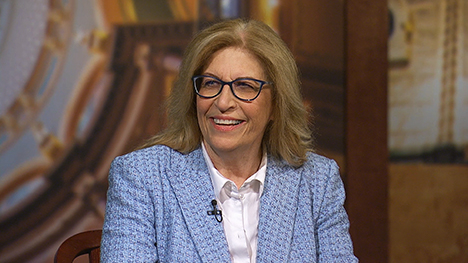
Rita Hart, chair of the Iowa Democratic Party, discusses the 2026 election, key races, and the party's work in the final weeks of the campaign.

Matthew Bormann, James Hepp, and Zack Smith, three northern Iowa farmers known as the Lobe Rangers. The group discusses their efforts to show by example that farmers can have successful crop production while also protecting soil and water quality.