Iowa Senate Majority Leader Sen. Mike Klimesh (R - Spillville) discusses the 2026 legislative session and Senate Republicans’ agenda.


On this edition of Iowa Press, Iowa Senate Majority Leader Sen. Mike Klimesh (R - Spillville) discusses the 2026 legislative session and Senate Republicans’ agenda.
Joining moderator Dave Price at the Iowa Press table is Erin Murphy, Des Moines bureau chief for The Gazette.
Program support provided by: Associated General Contractors of Iowa, Iowa Bankers Association and Robert and Doreen Sheppard.
Transcript
[Dave Price] We just wrapped up the second week of the 2026 legislative session. We'll discuss what Senate Republicans want to accomplish with new majority leader Mike Klimesh on this edition of Iowa Press.
[Announcer] Funding for Iowa Press was provided by Friends, the Iowa PBS Foundation.
The Bob and Doreen Sheppard Family. Proud supporters of educational programing seen only on Iowa PBS.
Banking in Iowa goes beyond transactions. Banks work to help people and small businesses succeed. And Iowa banks are committed to building confident banking relationships. Iowa banks, your partner through it all.
For decades, Iowa Press has brought you political leaders and newsmakers from across Iowa and beyond. Celebrating more than 50 years on statewide Iowa PBS, this is the Friday, January 23rd edition of Iowa Press. Here is Dave Price.
[Dave Price] Hello, Kay Henderson is off this week. Republicans no longer have that supermajority in the Iowa Senate. They're super, super close, but they still have a significant advantage holding 33 seats compared to the Democrats 17. The leader of Senate Republicans is our guest today. He is Mike Klimesh. He is from Spillville, small town in Winneshiek County, northeast Iowa, 400 or so. He has in the past been mayor there for several years. Elected to the Iowa Senate back in 2020 and last week, last fall, his Republican colleagues chose him to be the new Senate majority leader after Jack Whitver stepped down. Senator Mike Klimesh, the former voice of Charles City Radio. Right?
[Mike Klimesh] You bet. Spent some time working in commercial radio after college. Yes.
[Price] Listen to those pipes. Welcome to the conversation.
[Klimesh] Thanks for having me this morning.
[Price] You bet. And on the other side of the table, as per usual, Erin Murphy, Des Moines bureau chief for the Gazette in Cedar Rapids.
[Murphy] Also with some radio background. But that's for another show. Senator Klimesh, wanted to start with eminent domain property rights and carbon pipeline debate. The House Republicans this week passed legislation that would very narrowly determine that eminent domain could not be used for carbon pipeline projects. You have a proposal that seems to attempt to address this issue by allowing a pipeline to be built, while also allowing landowners to make that decision, whether they want the pipeline on their land or not, and avoid eminent domain. Do you feel as you look at this and you see that bill passed by the House, that you are eventually going to have to negotiate on this with the group and the House Republicans that just don't want the pipeline project to happen at all?
[Klimesh] Well, I think, you know, negotiations are a huge part of what we do at the Capitol every day, right? So definitely there'll be a conversation between both chambers. I mean, this has been an issue that's been around for four years now. The Senate's proposal, though, is unique, and my position is Iowa, we've regulated ourselves into this position. Right? We have a notice corridor. Companies building linear infrastructure in the state have to abide by that notice corridor. Other states have taken the approach that either there's no notice corridor or if you run into a landowner that's not interested or willing to enter into a voluntary easement, they have the ability to go around them and stitch together a system of voluntary easements to continue to build infrastructure. But respecting both property owners, those that want the easement and those that don't want the easement. So this proposal does just that. The Senate’s proposal allows pipeline companies to still establish a notice corridor for construction. And if they encounter a property owner that does not wish to engage in a volunteer easement, currently, they can't find a path around. Our bill would give them the ability to find a path around. At the end of the day, we don't want to use them a domain to build infrastructure. I don't think anybody does. And this bill gives us the ability to allow pipeline companies to engage with willing landowners and achieve a very high level, I believe all but eliminate the need to utilize eminent domain. We've seen success in other states, and I feel that's a great path forward for us.
[Murphy] And that's your plan and the differences between the House’s. And so what I'm wondering is where is the common ground that the two chambers can ultimately find? You know, you've described your legislation, they've passed theirs. Where is the middle ground that those two places can reach and avoid what happened last session, which is a bill that got vetoed by the governor?
[Klimesh] That's a great question, right. So historically I look back at you know, what was passed in previous years, what were our conversations like. Right. Two years ago, the House advanced a bill with a 90% threshold. Right. It would have required 90% voluntary easements to be acquired before they could utilize eminent domain. And we had a bill like that introduced in our chamber. And that was that was a solution that they saw value in. But at the end of the day, you're basically saying it's okay to utilize eminent domain in 10% of the folks that are in that in that corridor, right. The bill we introduced in the Senate will allow us to achieve a result much higher than 90% in volunteer easements. So I kind of looked at what the conversations have been over the time and what has changed the nature of our conversation. So I think there's a lot of value in looking historically at what we've done. And I think that will be kind of a basis for our conversations moving forward. And we will negotiate with the House. I mean, we need to negotiate with the House, but looking kind of where ideas were in years previous should give us a path forward.
[Price] You also have a severance tax that is part of this year's proposal, essentially, that would be on the liquid carbon product itself. And it's similar to what some other states have, right? Maybe in the oil and gas business. Where did this idea come from and why is this part of it?
[Klimesh] Well, so, you know, other states have severance taxes, and I'll look at Wyoming, for example. Right. And those states with severance taxes have natural resources like oil and gas. And the severance tax allows those states to get to 0% income tax. Right? The severance tax is charged on every barrel of oil that comes out of the ground. And it's their natural resource. So as we were thinking about solutions for the issue and how we wanted to navigate the path forward, it dawned on me, well, our natural resources, we have the best earth, the best black dirt in the country to grow corn, right? That's our natural resource. It's not below ground, but it's above ground. And, you know, with Iowa farmers growing a record crop last year, 2.77 billion bushels of corn, and with 60% of that crop going into ethanol production, CO2 is a byproduct of the ethanol process. Therefore, it's tied back to our natural resources. So a severance tax idea, you know, not new. Other states are doing it. But it gives us the ability to set the table, to move ourselves to 0% income tax, because the severance tax, the way the bill is structured, puts the proceeds into the taxpayer relief fund.
[Price] How difficult is it to talk to the caucus when you're talking about a tax?
[Klimesh] Yeah, it's very difficult. Republicans don't typically like to tax things. And that's typically not in our nature.
[Price] Sort of a four letter word for you, right.
[Klimesh] It is. But at the end of the day, I mean the value in that is it's a natural resource, right. Other states have similarly done that. Wyoming is a very red state. And so states like Texas and North Dakota all have adopted some sort of a severance tax policy or model on their natural resources. So the conversation revolves around our desire right to continue to lower Iowa income taxes, to continue to put more dollars from hardworking Iowans back in their pockets and leave those dollars in their pockets. So if it allows us to move down that path, I think it's very valuable conversation to have. We have to be aware we landed at 3.8% flat tax. To go to 3.7 - the next move down one tenth of a percent - Iowa has come up with $150 million in revenue. And that path needs to be paved with additional revenue sources. And this is one of those.
[Price] Erin talked earlier in the show about what happened last year with this matter. So in the end, you all, Republican leadership, you weren't in it at the time, but sort of forced to have this vote on the floor as Democrats kind of joined. Some other folks had the vote. Governor ends up vetoing it. You now take over as the leader of the caucus. How are you making sure that you kind of lower the temperature? Clearly there were some bad feelings, maybe more so on the House side. But you have to figure out how to unite your caucus, figure out something that maybe House Republicans will go with, and then ultimately, the governor. That would seem to be a pretty deep test of your leadership skills. How do you do that?
[Klimesh] That's a great question. And I've said, you know, since I've taken over the job of majority leader, I've said multiple times we stopped talking to each other last year. Right? I mean, we reached a point where we had two camps that raised two flags, and communication just broke down between us. And so part of me being a leader and a huge part of that job is to reignite that communication, have those conversations. And so I've been really open with all members of my caucus about, you know, my approach to widen the corridor, the benefit it has other states that have seen success in doing that. And the fact, again, that a couple of years ago, 90% voluntary threshold was an acceptable solution. So we can get north of that. And then we can also recognize the fact that we don't want to just isolate 10% of the folks arbitrarily. So those conversations are ongoing. And based off what happened last year, those conversations, you know. Challenging is probably too strong a word for it. There was a lot of leftover, you know, consternation from the conversations last year. But again, just being honest with my caucus and saying, we need to find a solution, right? We all want to find a solution underneath the dome. We, none of us want to continue this conversation. So let's sit down, roll our sleeves up. Let's continue to talk to each other and let's find a path forward. And they've been receptive.
[Murphy] So one of the decisions before we move on that you'll have to make in this process as leader is who will manage the Senate's bill ultimately. Last year was Senator Bousselot, who has some history with the company that was building the pipeline. Is he going to be the bill manager again in the Senate?
[Klimesh] No, actually, we're going to do something unique the Senate typically doesn't do. I'll be managing that bill myself.
[Murphy] That was going to be my other question.
[Klimesh] From start to finish. I'll be taking it from subcommittee through committee, and I'll be floor managing it. And I think it's essential because to your point, earlier the conversation around House file 639 last year I was heavily involved in the floor debate, and I think for me to show concern in a piece of legislation not bringing forth a solution. It's important for my leadership. It's important for me personally to be part of the solution and to drive that ship. And for my caucus, seeing me willing to take out front the lead on this issue and bring us to a solution.
[Murphy] Well, another topic that I know as a leader, you'll be involved in negotiations with the other chamber is property taxes. This week, House Republicans unveiled their proposal. So we now have everybody's out in the public. You guys introduced yours on I believe it was the second day of session. Governor Reynolds obviously introduced hers with her Condition of the State address. House Democrats also have put one out there. There's some similarities and some differences. I wanted to kind of jump into this by looking at the differences in the way seniors are addressed, and get you to talk about that. Governor Reynolds’ plan has a freeze. Senate or House Republicans has just kind of a broad exemption for the first $25,000 of a house. Your plan would eliminate property taxes for seniors whose home is paid off. So this is just kind of an example of the different plans that are out there. Where do we go from here?
[Klimesh] A conversation, right? So all three plans are out now. The House dropped their bill this week. The governor's was out last week and ours was out in day two. Different approaches. Right. And in the conversations I've had with folks, I mean, I think the Senate's perspective is we have a 40 year old system, right? And we've slapped a lot of Band-Aids on it. We've made a lot of corrective measures throughout the years. And that system now is at a point in time where we see value in the Senate to tear it back down to its chassis, right, to rebuild it from that. And I think, you know, the conversation about seniors over 60 being able to actually, for the first time, own their home outright once their mortgage is paid for, you know, that's important to folks. I mean, I hear it every day. Property taxes are strangling Iowa taxpayers right now. Seniors living on fixed incomes are having a hard time staying in their homes. And I think, you know, this is the Senate's answer to some of those concerns. In a very well thought out process. I mean, so our bill is very comprehensive in its nature, and the other two bills have value and have great aspects to it as well. Now we're going to take those three and sit around a table and have a conversation. And, you know, go through the process and bring out something that we can all live with.
[Murphy] To that, what is the next step logistically? Do you each run your bills for a little bit and then come to the table, or do you start next week with meetings with the governor's office and Speaker Grassley?
[Klimesh] So those meetings are already going on. I mean, I think, you know, the House, the governor's office. You know, Governor Reynolds did a series of town hall tours across the state conversing with folks. We have stakeholders at the table. Senator Dawson has been extremely engaged, having conversations with folks, bringing those people in from the counties, from the cities, listening to their concerns as they as they go through the bill. And those conversations will kind of help us shape what the final product is.
[Price] You used to be mayor of Spillville, and I've talked to you about this before. So if you think more about your time back home, if we pick either a senior freeze or seniors who have their homes paid off, don't pay anything. Plus maybe the House version of nothing on the first 25,000 of assessed value. Those would be, wouldn't those pieces severely limit what you could bring in back home in your housing stock? Do you have older homes primarily, and I don't know where their assessed values are, but would that be a big revenue cut?
[Klimesh] Yeah, for Spillville? You know, I mean, we have some folks that are over 60 in their homes, right? That more than likely own their homes. I know it's the tough part of the conversation now is it's easy to identify folks that are 60. It's more difficult to identify folks that have their homes paid for. Right. And so that's part of the ongoing conversation and trying to gauge the impact of that. But the other provisions in the Senate bill actually help to compensate for that. I think Senator Dawson did an amazing job putting together a complete package. So while we're concerned about, you know, and I've said this publicly, concerned about squeezing a balloon and having some, you know, unintended consequences, you know, befall those small communities, very thoughtful process went into the Senate's bill. And I'm sure the Senate and the House and the governor's office as well. I mean, so but at the end of the day, I think, you know, we'll sit down and we'll find a path forward and making sure we take all those things into consideration.
[Price] The one thing that I, I struggle with a lot of things with property taxes, but if you would compare and not to pick on Spillville but a smaller community versus like Waukee that has a lot, a lot of growth. Dallas County area, how do you possibly come up with a policy that is the same thing for everybody when you have such different dynamics going on?
[Klimesh] That's a great question. I think, you know, the way the way we've looked at House file 718 was our first foray into property taxes two years ago. Right. So that was a learning experience for all of us. I think, you know, that had a hard cap, right. So the Senate's perspective now is let's build a soft cap. Let's allow some adjustment for CPI and inflation. Right. So the communities can react to that. Also in the Senate proposal, we're allowing those communities to take back to the voters the ability to add another half a penny to local option sales tax. Spillville, for example, when we first did the lost revenue, we put all of that into roads and bridges. So that would help the city. You know, it's always difficult for cities to build roads, small cities to build roads, right? You service debt, you build a project, you know, and you hopefully you can stay ahead of it. And an extra half a cent helps us to compensate for that. So there's other measures in place in the Senate's bill, I think, that help to avoid that unintentional squeezing of that balloon.
[Murphy] We've been talking, obviously, about the Republican plans because by virtue of majorities, you all set the agenda. But I did want to ask you about House Democrats plan, because one element of it would offer rebates to property owners in Iowa, and that's something that they talked about. That would be something immediate and tangible to Iowa homeowners versus the Republican plans. You know, it's a maybe a more delayed impact. It may or may not see it in future years in your assessments and your property tax bills. Is there any room for discussion about rebates in the Republican plan?
[Klimesh] To be honest, I've not read the Democrat plan completely. I look at rebates like another band aid. Right? I mean, so I mean, I think it's important for us to take a holistic view of what we currently have for a system, how we reshape that system. I think rebates is, you know, another band aid patched onto that 40 year old system. I mean, the willingness we need to have is to tear that system down to its chassis, again, like I said before, and rebuild it in a way that that benefits Iowa taxpayers, especially property tax folks, doesn't artificially constrain small communities or counties from being able to provide services. And that's a yeoman's task. I'm not going to say it's not. But again, I feel like we're on the right path right now to achieve that.
[Price] We to have fault in the media, I think, are always trying to fast forward to the end of the session to see what the final deal is, and I'm fascinated by what the dynamics of this will be based on what you just told us, that you're going to floor manage this. So are you sort of deal making on the fly? You know what I mean? Because you have that kind of gives you a unique seat, right?
[Klimesh] It does. Yeah. I mean, deal making is always taking place. Right. And so and much to my staff's chagrin, I mean, I'm a policy guy, right? I mean, I spend my five years in the weeds, I love policy, I love running complicated bills. So to just say, you know, here's a hard stop. But again, this is a very complicated issue. And it allows me the flexibility as leader to be able to react to my caucus members and their concerns. Right. It shortens the chain of command on an issue. That's as important to us as the pipeline issue, and eminent domain and finding a solution to that. That gives me the flexibility to be able to react quicker. Right. And yeah, so to your point, yes, we are deal making on the fly.
[Murphy] Move on to the question of water quality. This week, House Democrats introduced a proposal that would triple the funding into the state's nutrient reduction strategy among a few other members. We asked Speaker Grassley about that this week as well, and he said that he believes the proper way forward is to continue what the state's already been doing in addressing water quality, and then also talked about feeling a need to convey that message of what the state has been doing better to the public so Iowans are aware of the steps and the measures and the efforts, programs and funding that have been in place already. Where do you land on what? Either, you know, the level of action that's been taken thus far to address water quality in Iowa versus what more needs to be done moving forward?
[Klimesh] That's a good question. You know, so everybody's concerned about water quality. I mean, we all are. I mean, no question across the state from corner to corner water quality is a concern that we should all be, you know, willing to sit down and have a conversation on. I mean, it's important to recognize the state of Iowa puts over $50 million a year currently into water quality improvement measures. Right. In my part of the state, we've seen the Turkey River watershed initiative take place where we've seen buffer crops, retention ponds, all those things that help slow down that flow of water, remove nutrients, and we'll continue on those. But they take time to develop. I think the position we don't want to find ourselves in is where we find ourselves, you know, acquiring property as a state or overregulating farmers. I mean, the components we have in place right now and have been working on for the last several years are paying us dividends, and the state has obligated millions of dollars a year to this. And I think we continue on that path and continue to make those improvements and continue to see dividends from them.
[Price] Fundamentally. And you're a history guy, so you know this. But fundamentally, the way we grow corn and beans in our state are far different generationally, generically speaking, than they were generation two generations ago. Right? We are very much in the scale for the most part, for these folks who deal with such super tight margins. Sometimes you have to fertilize the heck out of it to get the production you need. That can then cause the challenge with water quality. Same with the large scale hog operations. How do you balance that? For folks who are concerned about what's happening with the water, with runoff, with pesticides, fertilizer, all that kind of stuff, you all are primarily a party of voluntary measures, right? Rather than rather than mandates. But can you tell folks that doing this voluntarily is producing results quickly enough to make sure that our water is as clean as it should be.
[Klimesh] You know, Iowa's adopted a very robust nutrient reduction strategy, and we fund that. And my previous point, you know, we spend north of $50 million a year to to provide incentives. And it's a voluntary program. But based off the number of dollars we expend in those voluntary programs, shows us that there is an uptake in that. Right. There are farmers willing to participate. Again, I'll go back to my part of the state, the Turkey River Watershed Initiative has been extremely successful. Spillville lives on the Turkey River. We flood and we flooded a lot, and we understand that, you know, retention ponds, sloughs, those sorts of things help to slow down that flow and have other protective measures to our water. And we're seeing those things being put in place. Those partnerships are existing right now, and I feel we continue on the path we have continue to focus on, you know, spending dollars in the right place to continue to provide buffer strips, cover crop incentives, retention ponds, silt reduction measures in place, and we will see dividends. We have seen dividends in improvements.
[Murphy] House Republicans have introduced a package of bills that they're calling their tough on crime bills. And I know there was a similar legislation, similar themed at least in the Senate this week. If these bills were to pass, the question I wanted to put to you, presumably would result in more people in Iowa's jails and prisons, which are already overcrowded. Is there a need to if we're going to talk about increasing mandatory minimums and that kind of thing, also supplement that with more funding for DOC to address prison overcrowding, overcrowding in Iowa.
[Klimesh] It's early in the session. There's a lot of conversations going on about how we can improve public safety on both sides of the rotunda. I think at the end of the day, you know, it's important for us to go through our processes on both chambers, filter through which bills will rise to the surface, and we can build consensus around them and then have a conversation. And then I think at that point in time, we'll be able to gauge to your point if there is an impact. We don't know yet. And I think, again, seeing which bills reached the level of consensus make it to the floor and the impact those bills will have would be, you know, very important part of me answering your question.
[Murphy] Okay. And in a tangential theme here, Susan Christensen, the chief justice of the Iowa Supreme Court, in her condition of the judiciary address, raised some alarms about judicial pay. She talked, she gave some examples of judges either having very few applicants for open positions or judges stepping down from the bench to take other jobs that pay better. Do you see a need for increased funding for that justice system budget to help increase judicial pay in the state?
[Klimesh] Well, I think, you know, also, the judicial branch has presented us a creative approach looking at the number of magistrates we have and the workload the magistrates have throughout the state. So the magistrates right now are built, I believe, on a 33% workload. Right. So magistrates have the ability to also keep a private practice. So they have additional income which judges don't have. So their approach is very creative and that will free up around $3.5 million that they intend to use back into, I think, raise judges, judges pay. So those conversations are going on. I mean, it's important to have a talk about, you know, the magistrate level. We have the current workload they have. If there's room for us to improve government efficiency by consolidating, you know, while not affecting services to those counties, because those magistrates serve an important purpose in our judicial system. And I think their approach is very creative, and I'm looking forward to seeing that conversation play out.
[Price] We're within about a minute and a half left, so we'll try to squeeze in what we can. This past week, Ian Roberts, who was the superintendent of the Des Moines Public Schools, confessed, pled guilty that he lied about a bunch of stuff but primarily was weapons and immigration charges that he pleaded guilty to. He had inspired a lot of people when he took the job, but clearly we now know lied about all kinds of stuff. When this all initially happened and the feds took him into custody, there was a push by some Republican members of the legislature saying that it's time for the state to essentially take over running the Des Moines schools. That seems to have died down. And there were concerns about possible liability about state agencies that also allowed him to get his license. Where do you come in on this? Has the, do you just let the legal process take over and kind of step back?
[Klimesh] Yeah. And I was asked that question early on after I took over the majority leader's position. And we have no interest in taking over the Des Moines public schools. Right. I’ve also been asked about engaging government oversight committees. And I think at the end of the day, we're still we're still getting answers to questions every day, right? I mean, you know, we're learning more about what occurred, where we saw the breakdowns in the process. And so at this point in time, I'm going to continue to watch it play out. And then if we feel as Senate Republicans that there's some questions that we haven't had answers to, we'll have a conversation about the next steps look like.
[Murphy] The last few seconds. We have to get out the door. There's also a political aspect to this job. What's your, I know you've buried deep in session, but your early thoughts on the next cycle and trying to keep your majority and perhaps get gain back to that supermajority again.
[Klimesh] Yeah, I mean, you know, we're looking forward to the next campaign cycle. We've got a lot of great candidates. And you know, we'll get out and knock doors, engage with Iowa voters, tell them Iowa Republicans message, which has been growth, lower taxes, and those things have resonated and will continue to resonate for us.
[Price] Senator, appreciate the time. Thanks for coming in.
[Klimesh] Thank you.
[Price] Reminder if you missed any of our conversation with the Senator, or if you want to watch any other previous episodes of Iowa Press, you can find them all at iowapbs.org. I'm Dave Price in for Kay Henderson this week. On behalf of Kay, on behalf of the entire Iowa PBS crew, thanks for joining us this week.
[Announcer] Funding for Iowa Press was provided by Friends, the Iowa PBS Foundation.
The Bob and Doreen Sheppard Family. Proud supporters of educational programing seen only on Iowa PBS.
Banking in Iowa goes beyond transactions. Banks work to help people and small businesses succeed. And Iowa banks are committed to building confident banking relationships. Iowa banks, your partner through it all.
Watch More
John Hall, president and CEO of the Marshalltown Area Chamber of Commerce, and Dustin Miller, executive director of the Iowa Chamber Alliance, discuss the Iowa Chamber Alliance’s annual talent poll, and issues impacting growth and development across the state.
Gov. Kim Reynolds (R) discusses recent political news, the legislative session and what’s ahead for her final months in office.
Iowa State University President David Cook discusses his first few months leading his alma mater and what he hopes to accomplish in the months and years ahead.
Rob Sand, Democratic nominee for governor and current state auditor discusses key issues and the general election campaign ahead.
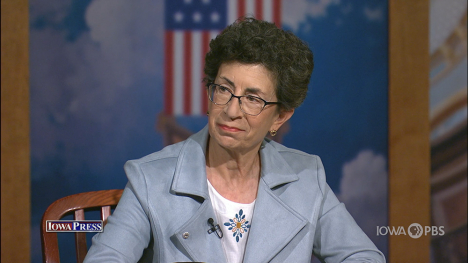
Iowa Senate Democratic Leader Sen. Janice Weiner (D - Iowa City) discusses the 2026 legislative session and the upcoming elections.
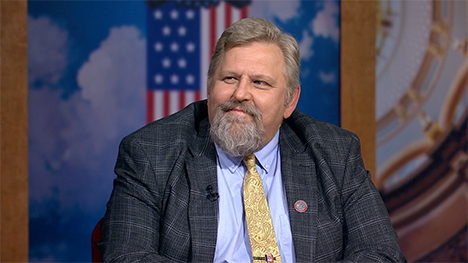
Iowa Senate Majority Leader Sen. Mike Klimesh (R - Spillville) discuss the 2026 legislative session and upcoming elections.