
Transportation
If you've ever hiked through a woods or traveled down a river in one of Iowa's state parks you get an idea of what transportation meant to native Iowans. Even in those early days there were systems of moving goods and people from one place to another.
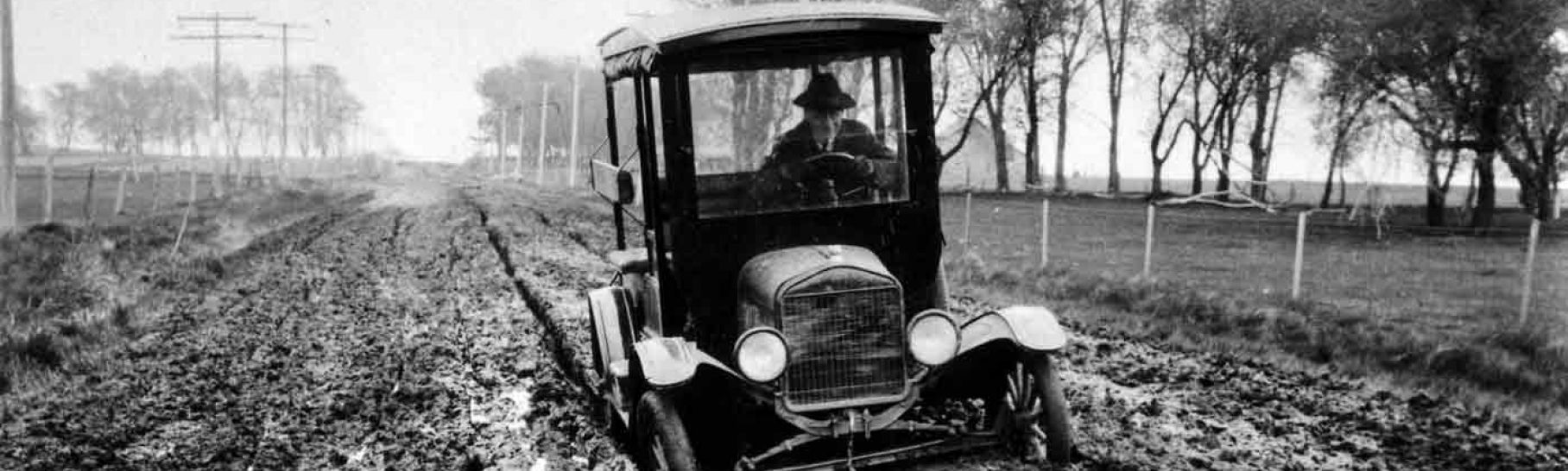
Because rivers form Iowa’s boundaries and flow through the interior of the state, they became a major form of transportation. Flatboats, keelboats, steamboats and barges carried settlers and goods into and out of the state. Railroads replaced rivers as movers of people and goods and are still important today. Electric streetcars carried city dwellers through busy streets. Automobiles depended on good roads, but it took time and money to establish a system of highways. And airplanes have been a major part of Iowa’s transportation story for many years.
From moving goods and people by foot—to modern highways and air travel—Iowa’s transportation continues to change the way we move around.
Pathways
How did each new type of transportation change life and work in Iowa?
Media Artifacts


Investigation Tip:
Don't worry about an unknown pathway. Look for signs along the way to help you out. What question do you have about what you see? Look for a pathway that could take you to the answer.