Chris Robinson weighs crop rallies, China demand and growing pressure on cattle producers.
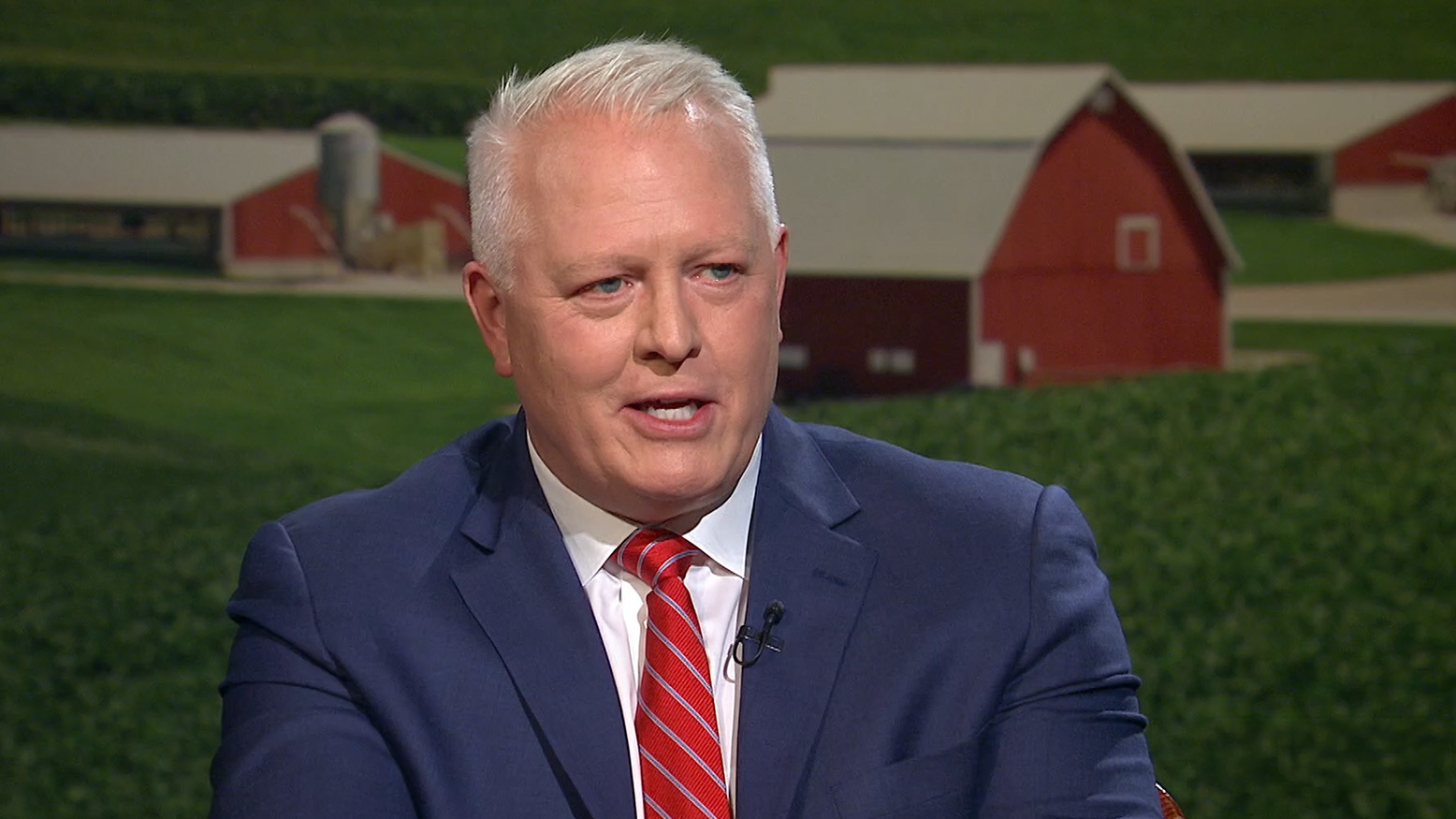
Three Year Highs In Commodities- Market Analysis with Chris Robinson
Share


Corn and soybean prices reach their highest levels in roughly three years as crop-tour results, lower yield expectations and Chinese purchases support the markets. Analyst Chris Robinson discusses whether the rally can continue, marketing opportunities for producers and the risks facing cattle markets following new beef imports and the reopening of cattle crossings along the U.S.- Mexico border.
Transcript
[Paul Yeager] Lack of movement at Black Sea ports along with crop report data indicating a reduced corn crop fueled rallies in the trade. For the trading week ending August 21…
The nearby wheat contract added a dime and the December corn contract gained a quarter.
With China behind the pace to fulfil its purchase obligations, that, along with a smaller crop, dominated the headlines in the soy complex.
The November soybean contract improved 47 cents, and December meal expanded $9.50 per ton.
December cotton added $3.55 per hundredweight.
September Class Three milk futures fell 81 cents.
The livestock complex was lower.
October cattle lost 95 cents. September feeders cut $1.78 and the October lean hog contract declined 87 cents.
In the currency markets, the U.S. dollar index shed 84 ticks.
October crude oil gained $10.17 per barrel.
COMEX gold increased by $248.30 per ounce, and the Goldman Sachs Commodity Index added almost 50 points to settle at 711 - 71.
Here now to lend us his insight on these and other trends is regular market analyst Chris Robinson.
Hello, sir.
[Chris Robinson] Hey, boss.
[Paul Yeager] This week has been very, we could have continued the cattle discussion. Then there's the president's news today. Then we have this crop tour. What's your headline for the commodities this week?
[Chris Robinson] Highest prices in three years for corn and beans. Best recovery we've had going into August. I think this has happened 3 or 4 times historically to have this rally. And if you take where we were last week, this is a great, great recovery. I think it's being fueled by short covering, but also by the data that they came from the crop tour.
[Paul Yeager] : And the three major commodities that we talk about have almost three different stories. Let's start with wheat. Is Black Sea still the main driver of this discussion?
[Chris Robinson] Yeah, absolutely. And you've seen how we'll whipsaw with different headlines. But at the end of the day, I always look at it this way. You know we're near two year highs near contract highs. The reason why can go away tomorrow. So that's the one thing we've seen. And we've had these dollar rallies in 60 cent breaks for now. We've went home this weekend, you know on a strong footing and particularly for next year's wheat. You've got KC Wheat out there at $8. So that's a positive.
[Paul Yeager] : Yeah. KC was kind of the headliner this week. Is there any particular reason why?
[Chris Robinson] Typically it's a higher protein and a little less thinly traded market than Chicago. But at the end of the day, if you want to get long wheat, you go for the higher protein. So they'll usually go after the KC.
[Paul Yeager] : In the corn market. We flip to talking December, first. This week, looking at the field, getting boots on the ground. That wasn't a government survey. I'm not saying that the crop tour from pro farmer is the only mover of the market, but it certainly added fuel to the bulls. Right?
[Chris Robinson] Yeah. It didn't hurt. And I've seen it where they've gone out and they've been bullish. And the market doesn't care. This time it was kind of a perfect storm. And we'll see if it lasts. We'll know in a couple of months when it's all when the rubber hits the road. Like I told all my guys in the last week to rally in eight days, the way we have. I don't care why. Just take advantage of it, guys.
[Paul Yeager] : Okay? That's what I was going to ask. So if you can do that in eight days, what can you do in 16?
[Chris Robinson] Well, we've been here before. Back in May, we were at these same level highs. We had the managed money all along. We were looking forward to the big meeting with Chairman Xi in May. And then it fizzled. And then a month later we dropped, you know, $0.80. So that's what's been hard about this year. We've had a couple really good rallies which have fizzled. We've had 3 or 4 in the beans where we've rallied $0.80 and lost it $0.80 and lost it. So I would say this don't look a gift horse in the mouth. We've seen how fragile these markets can be. Take advantage of it. But fundamentally, you know, once we know the real supply and demand we'll find out. But if the yields aren't there then yeah you're going to have higher prices, which at the end of the day, it's good for the producers.
[Paul Yeager] : We have a question that will follow up to that in Market Plus that I'll get to David's question from Nebraska, but I want to go first to Tim in Iowa, because it's asking what I've already asked just a little bit differently. Can this rally keep prices on a new high, or are we going to give everything back in corn, or are the fundamentals changing?
[Chris Robinson] The fundamentals might be changing. We'll see. When we get the actual yields. If the if we did have do have a smaller crop, you know, there's there's competing analysts out there. There's competing ideas. The USDA is much higher. There's a couple other surveys I'm not going to mention. They're also higher. So I am always a big believer. And you know, eight days ago it looked pretty pretty dismal. It looked pretty dismal. We had soybeans at 1160 at the 100 day moving average. And people were worried about going down to 200, moving average down to 1135. You had December corn at 460 sitting there, and if that level had fallen, we could have gone right back down to 425. So I think that was an impressive recovery. And also to not to get too far in the weeds. Corn was in this big wedge, two trend lines higher or lower. We bounced off the bottom wedge. We took out the top of the wedge. We’ve broken out. So all the computer traders out there and the guys that trade Bitcoin and everything else, and they're like, oh, look at this breakout formation. It's kind of a perfect storm. So it's a good place to be for farmers and producers. And you know, is there another $0.50 to go. We'll see. You know beans will be made in the next 35 days. We'll see. But I mean, I, I'm just tickled pink. I mean, it's great. I mean, ten days ago, I was miserable because I knew I was coming out here. I'm like, please, let's have some better prices.
[Paul Yeager] : Well, and by the way, we have you here to talk about the weeds. And so good. You've kind of tiptoed around beans a little bit here. Is this an independent movement or is this a, hey, corn's doing it. I'm going to go along for the ride.
[Chris Robinson] I think the biggest driver has been the recovery in soybeans for sure. And we've had steady buying from China. Right. They bought a thousand contracts here, a thousand contracts there. That sounds like a lot. But you know, if they're going to buy a billion bushels, that's 200,000 contracts. They've bought about 15, 17% of it. So they still have more to go. That I think is going to be the key to watch because we have a meeting next month. And we'll see how that meeting goes. We know what happened in the last meeting. So that could be another thing too. People are getting pulled up for that meeting.
[Paul Yeager] : Are you more in a hurry to sell beans or to sell corn right now?
[Chris Robinson] I don't think I'd want to actually sell because I want to wait and see what's happening. I've told all my guys to get to at least 50% sold for corn, maybe 60 or 70 in soybeans. These are the highest prices we've had in three, three years, almost three and a half years for soybeans. So you have to look at it that way. But I would be cautiously bullish. But protect, protect, protect. You don't have to spend a lot of money. You can protect $12 beans through harvest for $0.17. You can protect for 80 cents on corn, which is going to look pretty good if we go back down to 425. A 480 put today. I was buying them for guys for 91 days, was $0.12. So why would you do that? Well, you want to sacrifice the $0.12 and hope that corn goes higher. You want to sacrifice the $0.17 and hope that beans rally another dollar. But I can tell you, if we're right back where we were, you know, at the lows, it's going to be really nice to have $12 beans covered. And for 80 corn covered. And that's really what it comes down to. So rather than pound your chest like Tarzan and say, I'm right, defend it. You're a farmer, you're a producer, you're always bet long defend the rally. And again, remember how upsetting it was at 425 corn and, you know, 1150 beans, you know.
[Paul Yeager] : I have to insert quickly on cotton because that too is in this party.
[Chris Robinson] Why they go with the beans and also to cotton has had a lot of money pouring in too, alongside. I think it's in anticipation, partially. You know, we had a very dry summer. So there was some yield issues there. The big technical levels. We got up to 88 and then broke to 70. A lot of people bought that. It was a 62% retracement. So a lot of these computers go towards that. We'll talk about that later. In cattle. The importance of these technical retracements, it's bananas. How important they are. And now it looks like with beans keep going. It'll a rising tide will lift all boats. And you have to remember China is the single biggest producer and the biggest end user of cotton. So. And they like our cotton better because it's higher quality than their cotton. But I think people are getting positioned for, again, the possibility that we can take off.
[Paul Yeager] : Let's get to cattle now. So the president's news about importing beef, not sure who's sourcing it, what retailers going along for the ride. Cattle groups are critical. Senators and representatives who are very supportive of the president, very critical of this. Looking for the consumer or the producer. 217 is that just the beginning of a low side?
[Chris Robinson] For fat cattle life? Cattle? You know, it's interesting. I talk about the big moves back in November. You think the November low to the all time high, this low this 217 area was a 62% retracement. So you've got all the computer people out there watching that. Now, we were here once before when we had the New World Screwworm. And then we had, you know, the border was opening again. We knew the border was opening, you know, two weeks ago. It's supposed to open up on the 24th. I think that's the bigger thing too. We kept all this cattle. Coming on board. So the market had kind of digested that. I think this surprised a lot of people. The only positive I can see out of this is it's only lasting for 90 days. But at the end of the day, it's definitely a blow to producers. We did recover today after the initial sell off, so we finished kind of where we were yesterday, but I would say it's a shot across the bow for guys. Is this 2015 where we peaked out and then had two years of lower prices, grinding, grinding, grinding lower. I don't know if it is. I was talking to guys today. You know, all is not lost. We lost half. Don't you get obligated to lose the other half and go back and look at where we were in November. So protect what you can. This is going to be the next six months. It is going to be dicey.
[Paul Yeager] : 90 days gets us right after the election. All right. On the feeder market, the cattle on feed report came out just before we rolled today on feed 102 placed 89, marketed 93. What do you see there?
[Chris Robinson] No surprises. I checked with my cattle experts. So no surprises there. We're going to be digesting this news piece today.
[Paul Yeager] And I have to interrupt one more time on hogs in 10 seconds. Is this bottom in yet?
[Chris Robinson] You know it broke through key support long term six year bull trend line. There could be some more downside risk there. There's too many animals out there. If you look at that, we're oversupplied worldwide. There's some issues going on there with, you know, China's herd and so on and so forth. So yeah, I would say the same thing: defend, defend, defend.
[Paul Yeager] And we will say goodbye. Goodbye, goodbye. Thanks, Chris. Thanks. Chris Robinson here. And you've been watching the analysis portion of our program. In a moment, we'll continue our discussion in the online only segment that we find. Or you find it by searching Market Plus with Chris Robinson. Wherever you get your podcasts. You can also go to our website at Markettomarket.org. Monday morning is the time that we send you an update on this program, what happened on and off the camera. Subscribe to the Market Insider newsletter. You can go to our website there and get a new edition every Monday morning. Next week, the Mountain West squares off over a shrinking water supply. Thank you so much for watching. Have a great week.
[MUSIC]
[Announcer] Market to market is a production of Iowa PBS, which is solely responsible for its content.
[Announcer] Market to Market is made possible in part by a grant from the Corporation for Public Broadcasting.
[Announcer] Support for Market to Market has been provided by a bequest from Phillip Leitz of Alta, Iowa in recognition of public television's commitment to agricultural programming.
[MUSIC]
[Announcer] (Pioneer) I wouldn't be here without my customers.
[Announcer] Yeah, I'd like to thank the customers. They're. They're very dear to our hearts.
[Announcer] It's about the people that you're working with and the relationships that you have.
[Announcer] Thank you, thank you, thank you.
[Announcer] Thank you from the bottom of my heart.
[MUSIC]
[Announcer] Family owned and operated for more than 60 years. Sukup Manufacturing is a full service provider of grain handling, storage and drying equipment, helping farmers feed and fuel the world.
[Announcer] Tomorrow, for over 100 years, we've worked to help our customers be ready for tomorrow. Trust in tomorrow. Information is available from a Grinnell Mutual agent today.
Trading in futures and options involves substantial risk. No warranty is given or implied by Iowa PBS or the analysts who appear on Market to Market. Past performance is not necessarily indicative of future results.