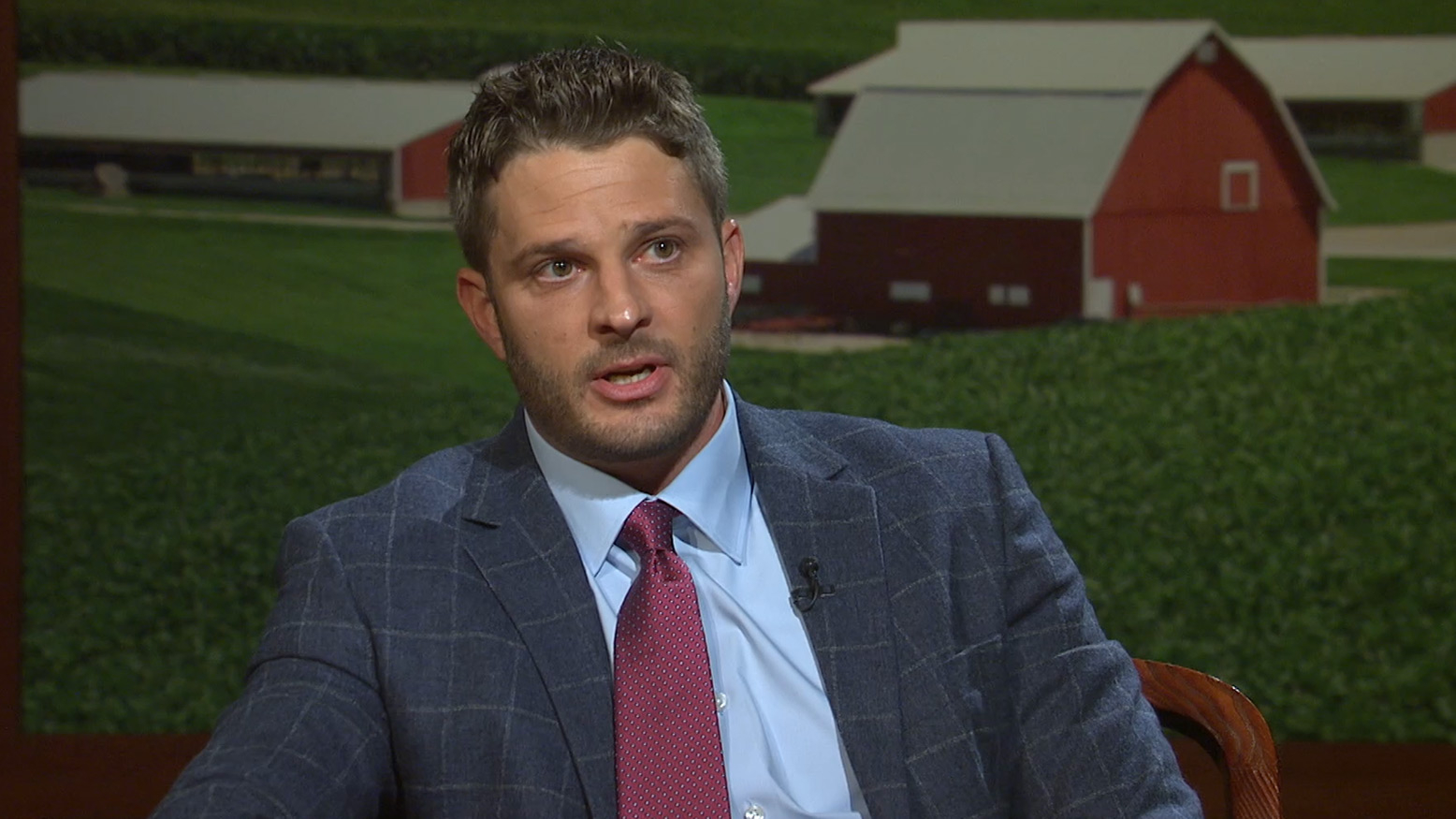
Brad Matthews examines grain rallies, soybean demand and pressure on the cattle market.
Wheat Leads Grain Complex And Corn Matches the Pace
Share


Black Sea attacks send wheat higher as a smaller crop estimate and strong demand support corn. Brad Matthews outlines price targets for corn and soybeans, explains why markets may need to ration demand and examines the effects of rising feed, fuel and fertilizer costs on cattle and hog producers.
Transcript
[YEAGER] Heightened strikes between Russia and Ukraine drove the grains higher, while the prospects of a smaller corn crop boosted that commodity. For the trading week ending August 28th, the nearby wheat contract added 12%, or $0.85, and the December corn contract gained $0.28. China kept working to fill their purchase obligations in the soy complex. The November soybean contract increased $0.49 and December meal put on 2310 per ton. December cotton strengthened 303 per hundredweight. September class three milk futures lost $0.12. The livestock complex was mixed. October cattle fell 620. October feeders cut 712. And the October Lean hog contract improved $1 two. In the currency markets, the US dollar index gained 93 ticks. October crude oil weakened three. 87 per barrel Comex gold declined by one. 7250 per ounce and the Goldman Sachs Commodity Index fell more than five points to settle at 70417. Here now to lend us his insight on these and other trends is market analyst Brad Matthews. Welcome back Brad.
[BRAD MATTHEWS] Thanks for having me back.
[YEAGER] Heck of a week to come back. When you get to talk about what has gone on in wheat last week, it was the strikes. This week it's the strikes again. It seems like we're back to when this war started with the value of this commodity. Is it only tied to these two countries going after each other?
[MATTHEWS] I would say that's definitely the biggest influence. Obviously, we know in the beginning or earlier on in this this year, we had a smaller crop. We priced all that in. Then the market sold off some because they had priced it in and really for about what, four years now, we have ignored a lot of the strikes that have been happening with Russia, Ukraine. And now all of a sudden, because it's getting more significant with the amount of damage being done at the actual ports. I know Odessa, that's a major issue. I think they said Russia is 21% of the world exports for wheat. Ukraine is sick. So, between the two of them, you got 27%. And they're very limited right now in what they can actually ship out. So, these headlines suddenly have become much more important. And then you've got the funds chasing this. And the biggest thing is the funds were short Chicago wheat. And technically, as of Tuesday's close, still are. So, I'm guessing they're long now. But that's a big issue there.
[YEAGER] But Kansas City has been also a big performer. But that's because of a different reason. That's what the crop size. So, with those two factors in sound like, still a rally for or the ingredients for a more of a rally.
[MATTHEWS] We absolutely could. If this continues, it depends on how long it goes on. So, the initial area that I had was 780 to $8 off Chicago December wheat. We hit 790 today. Okay. So that's going to be what we call an equal leg extension of this next leg up. If that area does not hold 868 70 and you it feels like that's kind of where we're heading. We're both completely wrong with the idea that we should keep going up if we get a close below 720, but right now the bias is higher.
[YEAGER] You mentioned percentages. That same region also is about 10% contributing to the world for corn.
[MATTHEWS] Yes.
[YEAGER] So, it took corn for the ride and we were still dealing with the after effects of a crop tour guesstimate that was below the USDA's, which was the bigger weight this week.
[MATTHEWS] Well, it started off obviously with the crop tour. I mean, that was a big surprise. It was way under what anybody was expecting. Most people thought 178 would be friendly. If you got the 176. 175 kind of. Wow. So, the 173.2 definitely pricing it in, but it's pro farmer, not USDA. So, they're not going to take that as gospel, right? The next half of that move definitely was being drug up with the Russia Ukraine situation and the wheat market doing what it's doing. For a numbers perspective, we had five, 24.25 was an equal leg extension. We hit that, we sold off. Then we flew through there. And the reason we flew through there after stopping there initially was because of wheat. And the 1.618 extension is 564 off December corn. So that's the number to watch.
[YEAGER] That number I think would get some people excited.
[MATTHEWS] Absolutely. They should be.
[YEAGER] And how excited could should they be then with percentage of 26 crop.
[MATTHEWS] I would be making sure you take advantage of that price if we get there. I think that's a spot to be buying puts put some protection underneath the market, advance your sales. But I don't want to sit there and say that that's going to be a high. I cannot sit there and say that we can't go to 6 or 650 corn because we have all the ingredients right now as to make that a possibility. You have the situation going on over in Brazil with their ethanol, right? We need them to be a player in the export market so that we can start to ration some of our demand. Problem is in 2017, they did zero corn to make ethanol. It's supposed to go up 14% this year to take them to around 1.3 billion bushels of demand feed supposed to go up by 4%. We also have a El Nino, which means higher risk of crop loss potential in Brazil. So, if they don't have the bushels, it's going to take longer to slow us down in the export market, and we need to start to ration. If pro farmers number is close.
[YEAGER] That's a discussion for the next 32 minutes because that that's an incredible statement right there. But I do want to ask Stephen Wisconsin's question we had four incredible questions on corn this week. We're going to go pick Steve to start. August and September are statistically not a good time to price new crop gains or new crop gain grains. We are seeing some of the best prices for 26. Corn and beans. Can this rally continue through harvest?
[MATTHEWS] Yes it can. Now this is what you call counter seasonal and that's what you have to pay attention to, right? He's right. August, September. That's usually when you're finding your low and you're looking to start to make a rally when you have counter seasonal moves, they are usually vicious and very strong. And that is exactly what we're seeing now. My number one concern about a pullback in this market is the fact that the funds are now 375,000 contracts, net long. That is big. I mean, the largest you ever really see them is maybe 4 to 450. So, they are getting very, very long. I could see a pullback at some point in time. But that doesn't mean that they can't come back in and rebuy those and then push us back up. I will still look for that 464 area or sorry. 564 area like we talked about. And that might be through harvest, but that would be an area to go ahead and get more stuff sold. But to answer the question, yes, we can rally through harvest.
[YEAGER] The heat dome is to return next week. It is late in the growing season. Does that have a bigger impact on corn or this bean crop?
[MATTHEWS] I would have to imagine beans, unless it's drying corn down faster. If anybody wants to talk about maybe a test weight issue, I almost think that we're kind of past the weather at this point in time. Maybe, like you said, a bigger deal for soybeans and pod fill and whatnot. But this is really more about the fact that damage has already been done to a large degree in these crops. And you have good demand, huge demand, stepping up in, in soybeans, and you have these wars around the world Iran us. And then even bigger deal for the grains, the Russia, Ukraine situation.
[YEAGER] What else in beans is grabbing your attention this week?
[MATTHEWS] I think what people really have to pay attention to is, let's say that pro farmers, right? Let's say the yield goes back up because USDA cut it by 3/10 of a bushel. Right? So, we're going to say we raise it by one bushel. That's 86 million bushels gets added to the carryout from where it currently is. Okay. But the White House told us that China was going to buy 25 million metric tons from us. The USDA currently has 16 million metric tons. So, you take that 9 million metric ton difference. That's 332 million bushels. If they buy all 25 million metric tons, which at first it was hard to believe. But now over the last month, we're what, 30% of the way there? There's a meeting at the end of September. And the whole point is they're supposed to continue to be buying going into that to make Trump happy. If they actually buy 25 million metric tons, we got to be a lot higher to ration. Otherwise, we still don't have beans even with a yield that's one bushel higher.
[YEAGER] So that's two commodities. You've used the R word. Do you have a target on -- let's just say that meeting goes average between the U.S. and China -- what's a high range?
[MATTHEWS] So, the first area of the 1.0 that we keep talking about, the Eagle Lake extension, we're almost there. It's 12.97 to $13 off November beans. The next area of a Fibonacci extension is going to be 1370, the area in which we're wrong for being bullish is 1240. We close below 1240. It's no longer bullish. And since I didn't give you that number on corn, it's $5 December corn. We close below there. We're wrong for being bullish.
[YEAGER] Okay let's go to livestock if we could. Because last week the news about ground beef, the news story that we had this week, it is still an impact on this live cattle market. Is it the only story in the cattle market right now?
[MATTHEWS] That definitely helped put a low end because we kind of surged down there. And then it's like, well, is it actually going to happen? Can he do that? And we got a little bit of a bounce. Obviously we had the cattle feed report last Friday, I think to pay attention to that. The placement number that was bullish, but it's more for the deferred, which is why you saw the bear spreads working right. It's later on that they can have a bigger impact. I think what you got to take a look at on cattle is the cash price. Low typically comes right around Labor Day. Okay. And when it comes to changing the charts, we're in a downward rotation to get back into an upward rotation. Bare minimum, we need to see fat cattle close above 214. If they do that, I think they can make a run to 225 feeders. October make a run to around 340, but no questions asked. If you do not have the protection that you need, that or those are the spots, you have to do it.
[YEAGER] Okay, so on that feeder complex, though, I get the sense that there are some looking at potential for lower prices for an opportunity to maybe hedge something that they are maybe upside down on. Now on the other side, are you hearing anything in that nature?
[MATTHEWS] The problem with feeders is that if corn stays bullish, that's going to continue to put pressure on the feeders. And right now, from my understanding too, in the cattle with where corn prices are, with where feeder prices are, even though feeders broke, fats broke, corn rallied, there's still no money really to be made between the inputs going up. Fuel corn feeders broke. But yes, like you said, fats, it's tough to make that pencil out.
[YEAGER] It's been tough to make a pencil out for quite a while.
[MATTHEWS] It has.
[YEAGER] And do you see that changing in the next six months at all?
[MATTHEWS] Because I'm friendly corn in the long term and I don't see a huge break coming to diesel prices, I think it's going to continue to be a struggle, which is why I'm saying they got to be protective on rallies.
[YEAGER] All right. Anything in the hog market that's any different.
[MATTHEWS] So, hogs are basically have been going sideways here trying to consolidate towards the bottom. Seasonally. They're supposed to get a bounce. The funds are short. I think they've added to their shorts. So, you could get that seasonal rally. But I think all protein is going to be somewhat under pressure. Meals going up now too as part of the bean rally. So, I think that's going to also pressure the hog market. So, I think if you can get a rally to December hogs around 77, that would be a spot. I'd throw on some hedges.
[YEAGER] I have a question about fertilizer and Market Plus, but I'm going to ask you about diesel fuel right now since you just mentioned it. Are you encouraging anybody to make purchases right now?
[MATTHEWS] I'm not sure what to tell guys. It's such from what you read right now, it feels like the price risk of higher is still there. But we're also sitting at basically all-time highs, right? So, it's tough to sell. Tell somebody to go rush out and buy a bunch of diesel right now with what's already happened. But I'm afraid in the short term we might not be done.
[YEAGER] Well because again, the geopolitical side of this, the this, what's in reserve, what's out there. A lot of factors to consider. Yes. Okay. All right. I appreciate your time, Brad. Good to see you again. That's a whole lot of numbers. I think people are going to have to go back and watch that one a couple of times. Thank you sir.
[MATTHEWS] I appreciate it.
[YEAGER] Thank you. All right. Brad Matthews everybody. And you have been watching the analysis portion of our program. In a moment, we will continue our discussion in an online only segment that we call Market Plus, which is available wherever you get your podcasts. You can also go to our website at markettomarket.org to listen, as well as read the transcript. We roll out new material on our YouTube channel every week. We put up some regular features from this program. We also have some classic content from our vault. Subscribe now at our YouTube channel. Here's the address youtube.com slash Market to Market. And hit that bell, by the way. So, you're notified at any of those new products next week. The growing danger of extreme heat in rural America. Thank you so much for watching. Have a great week.
Trading in futures and options involves substantial risk. No warranty is given or implied by Iowa PBS or the analysts who appear on Market to Market. Past performance is not necessarily indicative of future results.