During events around this week’s World Economic Forum in Davos, Switzerland, President Donald Trump retracted his latest threat to impose tariffs on eight European nations including Denmark and the United Kingdom.


During events around this week’s World Economic Forum in Davos, Switzerland, President Donald Trump retracted his latest threat to impose tariffs on eight European nations including Denmark and the United Kingdom.
Transcript
[President Donald J. Trump] “I don’t want to use force, I don’t have to use force, I won’t use force. All the United States is asking for is a place called Greenland.”
[Dave Miller] During events around this week’s World Economic Forum in Davos, Switzerland, President Donald Trump retracted his latest threat to impose tariffs on eight European nations including Denmark and the United Kingdom. The move was seen as an attempt to bring European allies to the negotiating table to agree with a U.S. takeover of Greenland.
[President Donald J. Trump] “And all we're asking for is to get Greenland, including right, title and ownership, because you need the ownership to defend it. You can't defend it on a lease.”
[Miller] After the President threatened a 10% duty on all goods from countries opposing his takeover of Greenland, the U.S. stock market and the U.S. dollar index moved lower while the price of gold moved higher. When Trump announced he had negotiated a framework of a deal with the head of NATO, U.S. stocks recovered some of those losses but gold remained slightly higher.
[President Donald J. Trump] "It's a long term deal. It's the ultimate long-term deal. And I think it puts everybody in a really good position, especially as it pertains to security and minerals and everything else.”
[Miller] However, the leaders of Denmark and Greenland still say the sovereignty of Greenland is not negotiable.
[Jens-Frederik Nielsen, Greenland Prime Minister] "As I hear it, the will to have Greenland, to own Greenland, was still a part of the rhetoric yesterday. But as I said, respectful dialogue through the right channels is what we have been seeking from the get-go, and I also feel that's the intention now from the other parties, and I'm happy for that."
[Miller] All of this comes on the heels of a Kiel Institute study analyzing who pays for all the tariffs. According to the whitepaper released this week by the 100 year old Kiel, Germany independent think tank, American importers and consumers paid nearly all of the entire cost of U.S. import tariffs despite Trump Administration statements to the contrary.
Research revealed that foreign exporters absorbed only 4% of the tariff burden while the remaining 96% was passed on to U.S. buyers.
The study used shipment-level data covering over 25 million transactions valued at nearly $4 trillion.
There was also a closer look at what it called “discrete tariff shocks” that included a 50% tax placed on goods from Brazil. The conclusion was that export prices did not decline but trade volumes collapsed instead.
Chinese exporters, despite facing significant new trade barriers, did not cut their prices to maintain market share. Instead, the amount of trade was reduced as fewer Chinese goods entered the United States.
The paper concluded that tariffs function not as a tax on foreign producers, but as a consumption tax on Americans. Kiel Institute researchers found the amount of money in U.S. customs coffers increased by $200 billion and every dollar of tariff revenue was a dollar taken from American businesses and households.
For Market to Market, I’m David Miller.
Contact: [email protected]
Watch More
Shawn Hackett talks how the reoccurring drought in Europe might be enough for a short rally in corn.
The Senate goes to work on Farm Bill 2.0. State and Federal laws collide as the Supreme Court rules in favor of Monsanto. A growing effort to protect farmland from development. And, commodity market analysis with Shawn Hackett.
Super El Nino is part of the discussion in the commodities markets with our Market Analyst Shawn Hackett.
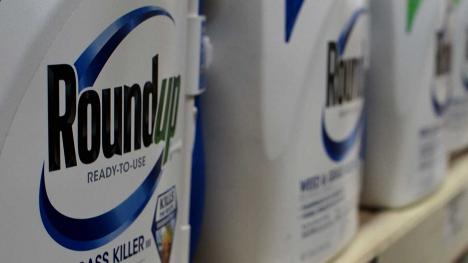
The high court struck down thousands of cases asking for billions of dollars in damage by deciding in favor of herbicide maker Monsanto and its Roundup herbicide.

Fourth-generation cattleman Will Harris of Georgia sits down to talk regenerative farming, closed cow herds, and the structural problems keeping young producers out of the cattle business — even when beef prices are at all-time highs.
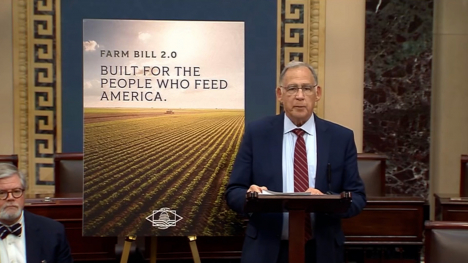
The Senate Agriculture committee introduced its draft of Farm Bill 2.0 this week.