Owners of small and medium size meat processors gather to examine what the future might hold for their industry.
Processing Policy and Legal Changes in the Meat Industry
Share


Owners of small and medium size meat processors from across the country gathered in the Midwest this week to examine what the future might hold for their industry.
Transcript
Owners of small and medium size meat processors from across the country gathered in the Midwest this week to examine what the future might hold for their industry.
Darla Kiesel, Incoming President of American Association of Meat Processors: ”We're struggling with the same things that the big Packers are struggling with.”
Darla Kiesel is the new president of the American Association of Meat Processors, a trade association representing multiple businesses within the meat processing industry. Kiesel notes, confronting labor issues and adapting to changes in government regulations are a different struggle for her association members.
Darla Kiesel, Incoming President of American Association of Meat Processors: “ A lot of times we look at what the JBS’s, and the Tyson's and the National Beef are doing and these are great companies. The problem is that that doesn't always trickle down to the small processor. Our smokehouse is very different than the big boys.And so we have to look at ways with AAMP that we can support our meat processors and help them to fix their situations with the Appendix A and B, which is the cook, cooking and cooling of meat products.
Another subject on the table was how to manage the enormous increase in business during the onset of the pandemic, when larger processors were forced to temporarily close. John Tiefenthaler, co-owner of Tiefenthaler Quality Meats in Holstein, Iowa says while the increase in business has been great, managing the increased volume of new orders has proven stressful.
John Tiefenthaler, co-owner of Tiefenthaler Quality Meats: “ We're a small family company, and we’d have guys call with semi loads full of pigs and think that they could bring them to us and market them through us.And we're not that scale. We're really not. But and the pandemic has continued to push us to this. Everybody wanting to schedule every you know, we're just so limited on capacity. Our building is only so big. We can only roll so many beef and pork through a week that everybody wants to get in today. And unfortunately, we can't take care of everybody.
While the pandemic placed a lot of pressure on small to medium sized meat processors, association members like Tiefenthaler see it as a mixed blessing.
John Tiefenthaler, co-owner of Tiefenthaler Quality Meats: “We were always busy and steadily kept busy. But today I just get so many calls, more people wanting to get in, more people wanting to get in. It's just, it just continues on.”
Attendance at this year’s conference is on track to be the largest in the gathering’s 83 year history. Organizers estimate roughly thirty percent of the attendees represent new processing facilities.
For Market to Market, I’m John Torpy.
Watch More
Shawn Hackett talks how the reoccurring drought in Europe might be enough for a short rally in corn.
The Senate goes to work on Farm Bill 2.0. State and Federal laws collide as the Supreme Court rules in favor of Monsanto. A growing effort to protect farmland from development. And, commodity market analysis with Shawn Hackett.
Super El Nino is part of the discussion in the commodities markets with our Market Analyst Shawn Hackett.
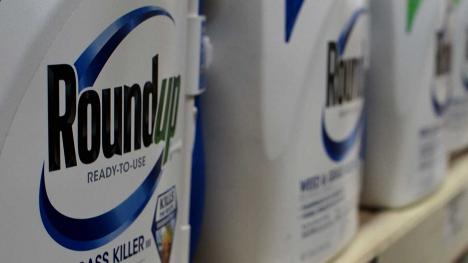
The high court struck down thousands of cases asking for billions of dollars in damage by deciding in favor of herbicide maker Monsanto and its Roundup herbicide.

Fourth-generation cattleman Will Harris of Georgia sits down to talk regenerative farming, closed cow herds, and the structural problems keeping young producers out of the cattle business — even when beef prices are at all-time highs.
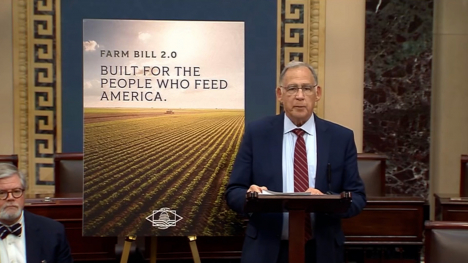
The Senate Agriculture committee introduced its draft of Farm Bill 2.0 this week.