On this edition of Iowa Press, Speaker of the Iowa House Rep. Pat Grassley (R-New Hartford) discusses the 2026 legislative session.


On this edition of Iowa Press, Speaker of the Iowa House Rep. Pat Grassley (R-New Hartford) discusses the 2026 legislative session.
Joining moderator Kay Henderson at the Iowa Press table is Katarina Sostaric, state government reporter for Iowa Public Radio.
Program support provided by: Associated General Contractors of Iowa, Iowa Bankers Association and Robert and Doreen Sheppard.
Transcript
[Kay Henderson] Legislators found a compromise on property taxes before adjourning last weekend. We'll discuss what did and didn't happen in the 2026 session with House Speaker Pat Grassley on this edition of Iowa Press.
[Announcer] Funding for Iowa Press was provided by Friends, the Iowa PBS Foundation.
[Announcer] The Associated General Contractors of Iowa, the public's partner in building Iowa's highway, bridge and municipal utility infrastructure.
[MUSIC]
[Announcer] The Bob and Doreen Sheppard Family, proud supporters of educational programming seen only on Iowa PBS.
[Announcer] Banking in Iowa goes beyond transactions. Banks work to help people and small businesses succeed, and Iowa banks are committed to building confident banking relationships. Iowa banks, your partner through it all.
[MUSIC]
[Announcer] For decades, Iowa Press has brought you political leaders and newsmakers from across Iowa and beyond. Celebrating more than 50 years on statewide Iowa PBS, this is the Friday, May 8th edition of Iowa Press. Here is Kay Henderson.
[Henderson] While you were sleeping, perhaps last weekend, the legislature engaged in a final day of the 2026 legislative session, and that day lasted for 34 hours. Our guest today sort of guided legislation through that marathon. House Speaker Pat Grassley is joining us back at the Iowa Press table. He's a Republican from New Hartford, a farmer. He was first elected in 2006. So, he is nearing the end of his 10th term in the Iowa House. He's been speaker of the House since -- well, House Republicans elected him to be their leader and speaker in late 2019. Welcome back to the program.
[Rep. Pat Grassley] Good to be with you. Guided, that's a nice way of putting it, wrapping up the session, Kay.
[Henderson] There you go. Our other guest today is Katarina Sostaric. She's state government reporter for Iowa Public Radio.
[Katarina Sostaric] So, property tax relief was your top priority going into this session. That was one of the last things that got done at the very end there. It's an estimated $4 billion in relief property tax relief over six years. When will Iowans start seeing the impact on their property tax bills?
[Grassley] And that's one of the pieces that we are trying to look through. And ultimately, some of these decisions are going to be left up to the locals. But I think that the base that we set out and not to take away if there's any further questions, but I think it's important for Iowans to understand what we did. The 2% revenue cap really is going to be what I'd say is kind of the piece that we look back in, the hallmark of this piece of legislation that really limits the growth of new revenue that local governments can take in. When it comes to the things that I think have more of that immediate impact that you're going to see as you move forward in the taxing cycles. I think looking at changing some credits to exemptions, using that money to buy down the uniform. 540 levy, the 540 levy is paid by all classes of property, not just residential. And so, I think that's going to have some significant impacts in the system. Also looking at the save dollars, that's the statewide penny that right now about 7.5% of that is used for property tax over the next few years. That's going to work its way up to 25%. So, I would say the pieces that we built into the bill, and that doesn't even touch on the exemption that we put in place for homeowners for to make sure they're not paying on all the value of their property, even after the rollback. I would say all of those things as far as what that timeline is probably a little hard for me because, you know, some of it is still going to be decisions that local governments. And I don't want us to lose sight of that in this conversation. We feel we've put the mechanism in place to get property taxes more in line to be for the property tax payer. But some of the decisions ultimately are going to have to hold the local governments accountable.
[Sostaric] And that 2% limit on city and county revenue growth, there's some more exceptions to it than were in your original proposal. How did you settle on that limit with the Senate and the governor, and how will that impact growing communities in Iowa?
[Grassley] So just for the growing communities, we are exempting new construction. Excuse me. We're allowing them to collect the value on the new construction. That was one of the concerns of some other bills we passed in the past years. So, we allow them to collect that. So that's for growing communities. Ultimately, we wanted to see that hard revenue cap. But if through negotiations, I think the governor and the House were a little bit more aligned on that. But the Senate wanted kind of some CPI, some fluctuation in that. So, kind of where we settled is get a hard cap in place, which we feel really bends that curve down over the future. And then we recognize there's a few things that communities really express to us as far as here's where their pressures are. We felt that we heard about insurance pensions. So those are two of the things that are exempted for the local governments. Now in the future, if we ever have to come in and look at that because the system is not working, that's a possibility. But I think where we ended was actually a good place. Hard 2% cap, allow local governments to pay those critical services that we expect, but at the same time, make sure we're getting certainty for the taxpayer.
[Sostaric] And two of the ideas that were floated more by the Senate and one by the governor, there was proposals to have specific new relief for seniors in Iowa and also to increase the gas tax, and those did not make it into the final bill. Why not?
[Grassley] Yeah, and I would say so for the senior piece, our, you know, full disclosure, our bill did not have that in there. Our original bill that we started with would be applying to all classes of residential property. That's where we ended up our, our thought was, any time that you're going to exempt any class of property or any group of people within a class of property, whether it's the whether it's the plus 65 crowd, whether it's first-time home buyers, whatever you would do, someone else is going to have to make up that burden, especially in that residential space. So, what we kind of decided to land on and where we wanted to get to was, let's apply it to everyone, make sure everyone has that percentage of their value that is not taxed. At the same time, while we change some residential credits to exemptions, we did keep the senior and veteran and disabled credit in place as an additional benefit when it comes to the gas tax. I think, you know, just looking at the gas pumps right now, I just think the timing was very difficult. I understand why the Senate wanted that as part of the conversation. When we're trying to restrict revenue to the local governments, I think it makes sense for them to be able to fund those critical services like roads and infrastructure. But I think it was more of a timing thing. And I think the mechanisms within it, if we're going to do it, I think we should take a vote on a on a dollar amount or, excuse me, a penny amount, two pennies, whatever that amount would be, versus having a formula. So, if we're going to look at that in the future, I don't think it's I just think the timing was really poor right now.
[Henderson] Rewinding back to January, the House passed a bill that would restrict the use of eminent domain to seize land along the carbon capture pipeline route that's been proposed at the end of the legislative session. That did not clear the Senate. But what did clear the House and the Senate are new guidelines for the extraction of hydrogen from underground and attacks on any hydrogen that would be extracted. Why did one thing happen and the other not?
[Grassley] Yeah. Well, so I would say so from the standpoint of I think we're going to set a consecutive. You've been around just a little longer than I have. We're going to set a consecutive interview streak or a year streak of a legislator asking, answering a question about a topic that we know we're frustrated, we wish we could find a solution to. And that's the pipeline situation. I just remind Iowans, from the standpoint of House Republicans, as we have passed so many different bills out of the House, trying so many different versions of trying to find an accomplish that goal to protect property rights for landowners. And obviously, we recognize that Iowans are frustrated leaving session this year, and we wish we could have done more. The good. The one good thing that's come from that conversation is as we were looking at extraction of hydrogen, which really has some, you know, in the current ag economy, has some really positive benefits potentially for our state in the future. We took a few of our lessons that we learned in the conversation about pipelines and applied them to hydrogen. We didn't pass a hydrogen bill last year because we wanted to take time. We got to this point this year, and two of the things that we added that I've heard from landowners in my district and all across the state when it comes to property rights, that we need to be better at as a state and being proactive at, by the way, which is saying if you want to survey someone's land, you have to have their permission. That's been a big sticking point in any property rights fights that we've had over the last several years. And also, that if you decline to be a part of a project, that you've declined to be a part of the project, and you don't need to continue to be bothered by it. Now, that doesn't mean a new company couldn't come in. That doesn't mean you couldn't reach out. Those were two things we added to that bill that we learned, and I know I was hearing from my constituents. Those were two of the key factors. I think part of why we're here, outside of just the eminent domain piece, but some of that process on how folks were accessing individuals lands. So, we included that in this bill, and I think it really strengthens it and puts us in a good place to look at potential changes to just this, that part of the code anyways.
[Henderson] Put your prognosticator hat on. Now that you've gone multiple years without any action to limit the development of this carbon capture pipeline beyond what current law is, does that mean it's going to get built this fall? And by the time it starts being built, is that sort of negate any opportunity for the legislature to pass any new guidelines?
[Grassley] Yeah. Well, you know, not knowing the inner workings of what the timeline would be looking like. You know, I think I've heard from conversations from people that think maybe doing maybe doing nothing is better than doing a marginal compromise. There's a lot of different opinions on this topic. Ultimately, what I can say is we do need to have more protections. Whether the project moves forward this fall. I mean, whether it ends up in court, whether it does or doesn't. The hydrogen bill, I think, is a perfect example of when we're looking at property rights in the state that we need to be applying. So, I won't speculate on the timeline, but those are the kind of things we have to continue to talk about.
[Sostaric] I'd like to talk about water quality next. At the beginning of the legislative session, you and other Republican leaders were not indicating that you had big plans for new water quality funding. At the very end of the session, you ended up passing what the governor called over $300 million for the next 12 years in water quality funding. What changed?
[Grassley] Well, I think ultimately, through the conversation, you we had. So, the legislature and then the other executives, you know, Secretary Naig really was has always been talking about this as one of the leaders. He kind of houses a lot of these programs. And as we were developing our budget, you know, traditionally the budget comes towards the later parts of session as we were having our budget conversations with myself, with Representative Thompson, who's our ag budget chair, we were talking more like, hey, are there some places where we can make some investments? As we're looking at the budget, those kind of also with what Secretary Naig was working on, kind of were the perfect storm. And in the perfect time, when you're looking at the budget. And so, what was really in that bill that I think is extremely important that we feel like as House Republicans, we had our fingerprints on were not only looking at, you know, continued monitoring, making sure we're having more edge of field practices. But one of the pieces that we added that we wanted to see was making sure our local communities could access, whether it's grant funding, whether it's revolving loan funding, like the bank idea that we put in there in which you can apply to for, for small communities that are that want to use that money at very low to no interest rate, I think 1% is what we put in there. So those were some of the things that we brought to the table in that conversation to make sure the districts that we represent were also going to be able to benefit by anything that we did. And ultimately, we you know, I think it shows actually, I think it's good that we're listening as legislators. I heard more and more about it at my forums, and I probably had leading up to session or in last year's session. So, I would look at it from the standpoint of for Iowans, they know that we're listening to concerns that they have, and working with the governor, working with Secretary Naig to try to bring solutions. And I think this one we have today builds off the last several years of what we've done.
[Sostaric] And when it comes to funding for water quality monitoring, a few years ago, the legislature diverted funding from the University of Iowa's monitoring system. That's kind of considered to be the most robust system for that in the state. Now you're you've put more funding back into monitoring, but sending it to the Department of Natural Resources should the Department of Natural Resources send that money back to the University of Iowa?
[Grassley] Well, I think if I remember right, I think there may be some provisions in there in which they can potentially work together. I'd have to ask President Monson on that. But I think ultimately, we do want to make sure that we're, you know, a state agency that traditionally handles these types of issues. I think that there's and it's a transparent process. I always remind everyone. I think there's some misconception that we monitor. But then we never share that information. Almost all that information is shared publicly. And so, I think within the bill, there may be some ability for them to be able to continue to work together. But the more important part, I think, ultimately, is that we are showing that we're willing to have more monitors, if that's what Iowans expect to see, to show that we're making progress. I think that piece of policy and ag budget does that.
[Henderson] A couple of weeks ago, the House took a unanimous vote and passed a bill that said $3 million is going to be set aside every year for pediatric cancer research for, I guess, treatment options, and to sort of try to define why cancer rates among children are so high. Then the Senate countered with a proposal. Yes, $3 million for pediatric cancer research. But then it's going to be financed with a vape tax, which would be the e-cigarettes and the liquid you put in them to make the vapor. Why did that end up being the final result of the legislative session?
[Grassley] And I think during that entirety of the time, some of the reason why we passed the bill was to show, you know, we were getting a lot of questions from constituents about whether we were going to do something or not. I ultimately made the decision, like whether this is the final package or not. We need to show Iowans that we're serious about doing something. So, we passed that bill knowing we'd have to work with the Senate. And I had been having conversations with Senator Clemens. You know, when some of the drivers behind that bill that are kind of the leads on it, or even his constituents, I think, if I remember right. And so, I just said, hey, I'm going to pass the bill because I want to show we're working in good faith to want to try to accomplish something when it comes to funding pediatric cancer. And, you know, he said this is the route that we're considering going. And I said, we'll take it to the caucus. And if that's how we want to fund it, keep in mind that we what we added, though, from our perspective from the House, is making sure we're funding the first year of it as well. So, we're going to take some of the money that we have in our sports wagering fund, going to put that to the first year until we start collecting the revenue off of the vape tax. And so, I think, you know, I felt comfortable all along if that was the route we wanted to go, the point of, of any of our actions was to show Iowans that we were going to do something before we left.
[Sostaric] Also related to health, you passed the governor's what she calls the Make America Healthy Again bill that included requiring the state to try to continue restrictions on what can be bought with food assistance, trying to keep healthier foods eligible versus unhealthier foods. That's only been in place for a few months in Iowa. Why put that into state law when there's not yet a review of how that has affected Iowans?
[Grassley] I can tell you from my perspective, because this is something that I've been pretty much been pretty involved in. I think, especially when we have and I've talked about this probably whether it's on this show or my other interviews that we all do together in the Capitol, that we have a federal government right now that looks like there's a willingness to want to work with states to give them some level of autonomy. So, while we have an administration out in Washington, D.C., I think we want to be sending clear indications to them. These are the kind of things that our, our, our, our priorities. And so, keep in mind for that. It kind of ties back into a lot of these other issues. And I don't know if you guys are going to ask about it and I'll just kind of walk into it. But, you know, cancer is a big issue that's being discussed. We believe there's multiple different factors and phases of reaction that the legislature should have, this being one of them making sure that Iowans are eating healthier. As a perfect example. And one of the things that we did this year that we weren't able to accomplish the last several years is we put $1 million into double up food bucks, which is a program in which there's more access for similar individuals that are on Snap to be able to access more fresh food. So not only are we putting the regulatory side in place, but I think we're also reacting by making investments so we can try to encourage those kind of behaviors.
[Sostaric] And part of that bill also authorized over-the-counter ivermectin. What do you say to concerns that that kind of gives it the stamp of approval and that, you know, that could lead to more overuse and misuse of ivermectin?
[Grassley] And I've ultimately said this, this is, you know, this has been around since the beginning of session. That's ultimately going to be a decision if Iowans want to use that product. I think that there's, you know, at the same time, I think for some people using it and that's potentially off label as well. I think just making this available to Iowans that want to utilize the product and having to use some other off form of it, I think that's a reasonable position. And it's by no means the legislature saying you should do this. But for those that have been asking for us to do it, I think it's a reasonable position for us to find ourselves in.
[Henderson] One of the things that House Republicans unveiled earlier in the year was a proposal to at least mandatory sentences of some length for habitual offenders when they've been convicted of a third felony, it got scaled back by the Senate. But it has cleared and is on the governor's desk. Are you pleased with the compromise?
[Grassley] Yeah, I think, you know, that was one of we were actually talking about this as a team not too long ago about the or the priorities we laid out and then the things we were able to get done. And we made tremendous progress on a lot of them. This was one of those big pieces, you know, obviously we'd love to see our bill, but that's the way the legislature works. Each chamber always wants the bill as is. But I think strengthening our habitual offender laws, putting in some more may or some Sauer requirements into law, as well as extending some of the periods that would fall under the mandatory, I think is extremely important and puts us in a position where we're going down that path of making sure that career criminals in Iowa, you know, we don't want to be a welcome sign for career criminals. We want one of the things we offer as a state is we have safe streets. We want Iowa, Iowa families to feel safe. So, we feel good about where we were able to get with that. Even though it took us a little longer, we would have liked, and it's something we could work off of in the future if we wanted to do more.
[Henderson] A bill that had been a priority of yours, right to repair. You're a farmer and it's about the ability of farmers to repair their own implements. That may be they have to get software from the manufacturer. Maybe they have to get equipment from the manufacturer, obviously get parts from the manufacturer. That didn't wind up getting to the Senate.
[Grassley] Yeah. I mean, I think ultimately, you know, whether we were able to find an agreement or not, whether we were able to pass the bill out of the House, it was something that we wanted to make an effort towards. Sending a message to Iowa farmers and agriculture. It's something we hear a lot about at home. With the increased cost of inputs, with the increased cost of equipment and repairs giving some autonomy to farmers. You know, I think that there are also potentially some things that the federal government that are hopefully going to happen. It's probably one of those issues that's best solved at the federal level, but gets back into the last question. As states, I think we've really, with this administration, tried to push as much as possible to force the federal government to make decisions.
[Sostaric] Iowans have been seeing more data centers pop up in the state. You did have a bill in the House that would have required some water and energy usage reports, but nothing ended up getting passed on that topic. Is that a priority for next year to try to either further regulate or block more data center construction?
[Grassley] Depends. I mean, I don't want to say sit here and say make a decision a week after wrapping up session. Here's what I can say. I think there will be more conversations around data centers. I know that with the newer technology, there's less water usage. I think there's going to be conversations about energy usage. And what does that look like when it comes to the power that's coming on and off the grid? I think we also need to look at the, you know, something we could potentially look like. So, when we leave here, don't just say, oh, they've already laid out their agenda. But to answer your question, you know, looking at the energy that they're not taxed. I mean, I think there's some things as a legislature, we should at least have conversations around. Now, the states that are just going in and just doing a flat-out ban. You know, I think that you'd have to really weigh, weigh the risks and rewards of doing that. But if you want to look at some topics surrounding it, I think the legislature is open to that.
[Henderson] There was also discussion about some changes for Iowa's 60-year-old community college system, allowing a handful of community colleges to start offering a limited number of four-year degrees that didn't come to fruition. Was it because it would sort of impinge on private institutions that are close to those colleges or why did that fail to get any traction?
[Grassley] I think that played a role in it. You know, I represent a district that has a private college in it, a community college. Within 40 minutes, and a university within 15 minutes. And so, you know, not that I made the decision on that, but my point being, there are other areas of the state like mine, where there are other pressures on that. Ultimately, what kind of where we tried to land on it because it was much broader when we started and probably would have a significant impact on other forms of education. But we're really we're trying to get to what that bill ultimately is, where there are deserts and some certain degrees that can be provided. Is it something that we should look at? Obviously, we were unable to find a level of compromise, but I think we went a long ways towards finding a solution this session with the bill, how it ended in the House.
[Sostaric] One bill that went to the governor's desk restricts the governor's powers related to disasters, public disasters and emergencies like barring the governor from shutting down places of worship or businesses. You know, are you doing this because it's a competitive governor's race this year?
[Grassley] No, I don't think I think that that could be answered. That question could be asked on a lot of things that we passed this year. I think we were in a position where we had worked with the governor we could never find. I'm just going to speak from where I sit with having worked with the governor on a lot of issues, we had never been able to find a level of compromise to go in and kind of target where we felt as a legislature, with hindsight, to look back on things that maybe we would want to do differently. You know, one of the topics in there is looking at elections, for example. So, I think that where we ultimately got to is more of the fact that the governor and the legislature were able to work together to find a solution that didn't completely take away the power of the governor. But at the same time tried to rein in some of that from a legislative perspective. I look at more from the standpoint of a level of compromise than anything else.
[Henderson] A couple of years ago, the House had a rather robust discussion about legislators pay, and you had a legislator who everyone thought was kind of an up and comer say, I can't do this anymore. I need to go earn money for my growing family. At the beginning of this session, House Majority Leader Bobby Kauffman promised there would be a vote on legislators pay. There wasn't. Why not?
[Grassley] I think ultimately we were. So, remember, we took the vote knowing last time when we took the last vote on this. And I just to remind Iowans, it's something that we don't vote on a pay increase for ourselves. We have to go through an election before any increase could happen. We currently make $25,000 a year, another, what, 10 to 12,000 for leadership positions. But let's just base it at 25,000. It's been that way since before I was in the legislature. We are losing good people, whether it's for running for office. And this isn't just Republicans. We tried to put ourselves in a position where if we were going to take the vote again after having taken it one time, knowing it was going nowhere, my position was, if we're going to take the vote, it needs to happen. I think we were in a position where we probably could have made that happen in the House, but until we could reach full agreement with the House, the Senate, the governor and make sure we were making the right decision, I just wasn't ready to pull the trigger on that. But I will say to Iowans, like, if you want to have good people serving, so you don't just have wealthy individuals and retirees and activists and nothing wrong with any of them. But if that's what the legislature is going to start to look at, because it really is getting to the point where this is a full-time job and it's taking away people from their other business and their family, that it is harder and harder to keep good candidates for both parties.
[Sostaric] More than 400,000 people have their pension managed by IPERS, and we recently learned that the CEO of IPERS has resigned, and another official was fired after both being investigated for misconduct allegations. When were you briefed about that situation? And what do you know that you can share?
[Grassley] Oh, timelines are -- I'll bear with my timelines. Here's what the most recent conversation that I've had with anyone that would give me any feedback was from the standpoint of when it comes to the health of the fund and making sure that this is nothing that has to do with the fund, that there is no concerns. So ultimately, from my position, that was, you know, as far as managing of HR matters, who's in what departments and all that stuff is really not anything that I'm involved with. But more what I was concerned about is the health of the fund. And my understanding is it doesn't have any sort of bearing on impacting, making sure that Iowans continue to get their retirement benefits.
[Henderson] Are you concerned about the management of the fund? I the way that I mean, there is a misconduct among the people at the top, sort of a culture.
[Grassley] Yeah. I my again, my understanding is that we have nothing to be concerned about. I will say ultimately, and I've said this for, well, I've been since I was appropriations chair, you know, whenever we need to make sure that the fund stays very healthy and stays solvent and we're doing our responsibility to our constituents. At the same time, any time we've ever tried to make sure that's happening, it looks like it's some sort of an attack, and that's not what it really has ever been. And so, from our perspective, we have confidence that there's health in the fund. And if there isn't, then the legislature should stand ready to act. But from what I'm aware of, I'm not I don't think any of that is in jeopardy.
[Henderson] Just about 20 seconds left. How difficult will it be to raise money for your candidates running for the Iowa House in a year when you have a U.S. Senate race and a governor's race that are going to draw a lot of attention?
[Grassley] Well, I mean, whether it's difficulty of raising money, I mean, money is always difficult to raise, regardless of the other races. But I think our record speaks for itself, and we've had a great track record, myself and others in our caucus of raising a tremendous amount of money to make sure we're getting our message out amongst Iowans. So, I have confidence we'll be able to do that again and move towards the fall with a strong election campaign.
[Henderson] I have to move to end our conversation because we're out of time. Thanks for being here today.
[Grassley] I was just getting started today. Thanks, Kay.
[Henderson] You may watch other episodes of Iowa Press at iowapbs.org. For everyone here at Iowa PBS, thanks for watching today.
[MUSIC]
[Announcer] Funding for Iowa Press was provided by Friends, the Iowa PBS Foundation.
[Announcer] The Associated General Contractors of Iowa, the public's partner in building Iowa's highway, bridge and municipal utility infrastructure.
[MUSIC]
[Announcer] The Bob and Doreen Sheppard Family, proud supporters of educational programming seen only on Iowa PBS.
[Announcer] Banking in Iowa goes beyond transactions. Banks work to help people and small businesses succeed, and Iowa banks are committed to building confident banking relationships. Iowa banks, your partner through it all.
Watch More
Zach Lahn (R-Belle Plaine) and Rob Sand (D-Des Moines) will answer questions from Iowa reporters and discuss their priorities and vision for the state during a 90-minute debate.
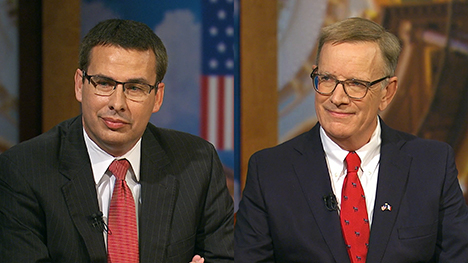
Iowa State Treasurer candidates John Norwood (D-West Des Moines) and Roby Smith (R-Davenport) discuss key issues and policy positions.

Candidates Dave Dawson (D-Lawton) and Chris McGowan (R-Sioux City) will answer questions from reporters and discuss their platforms, concerns and future plans.
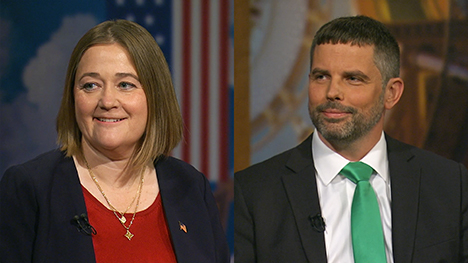
Iowa Attorney General candidates Brenna Bird (R-Dexter) and Nate Willems (D-Mount Vernon) discuss key issues and policy positions.
Lindsay James (D-Dubuque) and Joe Mitchell (R-Clear Lake) answer questions from Iowa reporters and discuss their platforms, concerns and future plans.
Candidates Ashley Hinson (R - Marion) and Josh Turek (D - Council Bluffs) answer questions from reporters and discuss their platforms, concerns and future plans.