Iowa House Democratic Leader Rep. Brian Meyer (D - Des Moines) discusses the 2026 legislative session and how House Democrats will campaign this year.


On this edition of Iowa Press, Iowa House Democratic Leader Rep. Brian Meyer (D - Des Moines) discusses the 2026 legislative session and how House Democrats will campaign this year.
Joining moderator Kay Henderson at the Iowa Press table is Erin Murphy, Des Moines bureau chief for The Gazette.
Program support provided by: Associated General Contractors of Iowa, Iowa Bankers Association and Robert and Doreen Sheppard.
Transcript
[Kay Henderson] When Brian Meyer became House minority leader, he said democrats would focus on economic issues. One year in, we'll sit down with Meyer to see how that's going on this edition of Iowa Press.
[Announcer] Funding for Iowa Press was provided by Friends, the Iowa PBS Foundation.
[Announcer] The Associated General Contractors of Iowa, the public's partner in building Iowa's highway, bridge and municipal utility infrastructure.
[MUSIC]
[Announcer] The Bob and Doreen Sheppard Family, proud supporters of educational programming seen only on Iowa PBS.
[Announcer] Banking in Iowa goes beyond transactions. Banks work to help people and small businesses succeed, and Iowa banks are committed to building confident banking relationships. Iowa banks, your partner through it all.
[MUSIC]
[Announcer] For decades, Iowa Press has brought you political leaders and newsmakers from across Iowa and beyond. Celebrating more than 50 years on statewide Iowa PBS, this is the Friday, May 15th edition of Iowa Press. Here is Kay Henderson.
[Henderson] For members of the Iowa House of Representatives, the 2026 legislative session ended about 6 p.m. on Sunday, May 3rd. Our guest was on the floor of the Iowa House when that happened. He's here today to sort of give a rundown on what happened during the session. Representative Brian Meyer is a Democrat from Des Moines. He won a special election to the House in 2013, making this his seventh term. He is wrapping up his first year as leader of House Democrats. Welcome back to Iowa Press.
[Rep. Brian Meyer] Thank you.
[Henderson] Joining our conversation today, Erin Murphy. He is Des Moines bureau chief for the Gazette in Cedar Rapids.
[Erin Murphy] Representative Meyer, one thing that didn't happen during the session was more eminent domain legislation. I wanted to ask you, sort of framed by this past week, we heard news from the summit pipeline that they have proposed changing their route, sort of reducing the scope of it without legislation that sort of impacted that project in any way. And this amended route, they have time now through the summer and fall to get shovels in the ground. Is this issue out of the legislature's hand, in your view now?
[Meyer] Well, first off, they're doing the right thing. And I think that's going to be successful for them. This is a project that I've supported in the past. I continue to support. I think it's very much needed for rural Iowa. I think it will create some jobs in rural Iowa and maintain jobs in rural Iowa, as well as construction jobs. And so, I will tell you this, that I don't think any more legislation is needed. I think it's going to happen, and I'm glad that it's going to happen.
[Murphy] Okay. You don't feel the legislation is needed. What's your suspicion about your Republican colleagues and whether there will still be bills, even if the project is underway, by the time you reconvene in next January?
[Meyer] Well, I think they had an opportunity this year. And my concern from day one was that this whole thing in the house was a show. It was performative. They were never going to pass it in the Senate. And, and the route to getting something done to both protect landowners and build the pipeline was to negotiate and work with leader in the Senate. And I think that was the right route to go.
[Murphy] Yeah. You had advocated for that bill on this show earlier this year. You still feel like that was the vehicle that was the most likely. And for those who hadn't followed it, it was a proposal that, you know, protected eminent domain and property rights, but also allowed pipeline companies to alter their route if it enabled them to reach more voluntary easements.
[Meyer] Absolutely. I thought that was the right way to go. And now they've redirected the route by themselves, Summit has. And I think it's a very good thing.
[Henderson] The guest on Iowa Press last week was House Speaker Pat Grassley. He labeled the property tax plan that cleared the legislature and is awaiting the governor's signature as the hallmark of the session. It includes a 2% general limitation on tax revenue that can be raised by cities and county governments around the state. You have said it's kind of meh. Why?
[Meyer] The reason I said that is because I don't think it will actually lower property taxes. I think that it will have an effect in terms of future tax growth. But we had a plan that would rebate everybody $1,000 this year, immediate relief because we need it now. And then we had a plan that would put some of the similar caps on, but also, you know, my concern with that bill largely was the fact that there was no public input on it, given the fact that we had a 34-hour last day session, which this was passed in the 33rd hour. And so, my concern was and the reason I voted against it was because of the fact that there was actually no input from the public, and they didn't have the opportunity to come in and speak about it.
[Henderson] But weren't all of the elements in it sort of out in the atmosphere throughout the past four months? Because the elements in it had been in either the Senate Republicans plan, the House Republicans plan, or the governor's plan.
[Meyer] I think that's correct. But I think you have to look at how everything works together within a bill like that, because it all affects -- one part, affects the other part that affects this part. And I think that when you look at it as a whole, there's a lot of concern with cities. You look at just the TIFF language, right? And so, for the city of Des Moines or other cities, the TIFF language is problematic.
[Henderson] So, explain without requiring college credit for this little Ted talk, what is TiIFF and why is it a big deal?
[Meyer] Well, TIFF is tax increment financing. And so very briefly, it just is that as you build onto property and you expand and develop property, any new money that would be collected as taxes goes back into the project happens all the time in Des Moines, where I'm from happens in a lot of cities across the state. That's the one thing that I've heard back from developers and from city people and, and county people that they're concerned about. Also, there's this concern about our concern as House Democrats was that how do we protect essential services, police and fire? And I'm not sure that was fully vetted out. So, I hope it has the desired effect of lowering taxes. I'm just very skeptical that it will have a long-term effect.
[Murphy] We learned recently about issues in leadership in the IPERS program, the public retirement program here in the state. The CEO, former CEO has now resigned, and the and forgive me, the title is escaping me now, but another leader --
[Henderson] The number two.
[Meyer] The CFO.
[Murphy] Yeah, is on leave --
[Henderson] Well, he was fired.
[Murphy] Sorry. Forgive me. There we go. Anyways, the discussion has been do there need to be more oversight of the program? Do there need to be changes in the way those leaders are nominated and confirmed? Does there need to be Senate confirmation? Basically, should the legislature be more involved in IPERS leadership? How do you see that as needed? Or was this just a case of there were some bad actors in the system, and that's to some degree unavoidable.
[Meyer] Well, and I think that's why we have a government oversight committee, and hopefully we'll be able to figure out what exactly happened. I know it's probably an HR issue to some degree. Our concern is that the fund is sound and is able to perform as it is needed moving forward, and whoever is at the helm is really just a name. But we really need to make sure that the fund is sound. And but I think having more oversight is always good. You know, I think that that's a concern that we have when something like this happens and we didn't know about it or that it may have been going on for a long time.
[Murphy] Do you want to see that oversight committee? Can that wait until next year when you're all back in January or would you like to see that oversight committee meet in the interim here to learn more about what went on?
[Meyer] I would like to see it meeting the interim to learn more about it. And I have been trying to ask people about what exactly happened, and I think it's more of an HR issue than it is anything else. I don't think there was any problems with the fund, and that's what I'm concerned about. And so, if it's an HR issue, I'm less concerned. I mean, obviously I'm concerned about HR issues, but I'm less concerned because it doesn't affect the fund.
[Henderson] There's also a lawsuit of a fired employee said he was fired because he was a whistleblower about some amplification of investment returns. Can the House Oversight Committee convene and have a hearing while there is this pending lawsuit?
[Meyer] I think that's a sticky wicket, and I think, however, that we need to investigate it. And if we can do it sooner rather than later and get to the bottom of what's going on, that would be ideal.
[Henderson] Let's talk about cancer and the cancer fight, the cancer debate, cancer research, all the discussion that's been going on and the legislature for the past couple of years. Last year, the legislature set aside $1 million for the University of Iowa to sort of research causes what's happening. Why is Iowa's cancer rates so concerning this year? Legislators passed and sent to the governor a bill that says $3 million will be set aside for pediatric cancer research. If Democrats had been running the show, which you're not, what would you have done?
[Meyer] Well, I think that's a great question. And, you know, we have some people in our caucus that feel very strongly about this. And there's always a need to do more research. And I think both on the federal level and on the local level and the state level, I think from our perspective, in terms of trying to figure out why we have such a high cancer rate is where we need to begin, and we've done a little bit of that. I think that there's more to do, but in terms of curing cancer and things like that on a national level, that's probably where the money is best used. Although we can certainly do research here. The concern that I have is that we just sometimes don't know what actually causes the high rate of cancer here in Iowa, although we are starting to understand, and I think suspicions are being confirmed about what's in our water.
[Henderson] So connected to the bill that would send $3 million to the University of Iowa for pediatric cancer research is a new tax on vape products, E-cigarette pens and the liquid that goes in them to make the vapor. Democrats said that was not an appropriate level of taxation. What would have been the appropriate level?
[Meyer] Well, I think what we're mostly talking about is that there needs to be a raise in the cigarette tax. And I think that even the Republican, was it Representative Barker had a bill to raise the cigarette tax $1.50. And I think that we certainly can look at raising more revenue. I believe that this was probably a compromise and an industry compromise to do the vape tax, and that's concerning. But a lot of us felt like this is the best we can do at this time. And so, we need to double back and look at how we can reduce the use of vaping and cigarettes and things like that, so that we have a balance where we're actually affecting people's use of these products versus just trying to raise money for projects.
[Murphy] To that, you hear anti-cancer advocates talk about the need to, like you said, increase it high enough to just discourage the behavior. Why is that a difficult thing to do? Is it just as simple as Republicans don't want to do tax increases or is there something more to it?
[Meyer] Well, I think that I think that's a great question. And I you know, I can't speak for their caucus. I have no idea why it was such a problem. I know there's some members of their caucus that want to do it. Certainly, probably a lot of members of my caucus -- we never talked about it because it never came up -- but most of my caucus would be very much in favor of raising the cigarette tax. And to, again, discourage that behavior. When I was a kid, you could roll into the gas station and buy a pack of Marlboro Lights for $1.50. You know, nobody ever questioned you when you're 16. Not saying I did it. I'm saying it happened and I witnessed it. But what I'm suggesting is that.
[Murphy] I have a follow up question but go ahead.
[Meyer] Right. What I'm suggesting is that we'll reduce the, in effect, the behavior of young people to start smoking.
[Murphy] Yeah. Did you?
[Meyer] Absolutely.
[Murphy] Okay.
[Meyer] Should I have. Absolutely not.
[Murphy] I suspected. Okay, water quality was something that was addressed in the final days of the session. Republicans and with the governor found $300 million for different projects. Some of that's new money. Some of it's reallocated current state funds that were in other programs. I'm just curious, broadly speaking, obviously, this is something that democrats have wanted to see action on. How significant is the proposal, the package that got approved here at the end of the year?
[Meyer] Well, I think it's a great start as Representative Austin Baeth said, it's a drop in the bucket, but it's better than a dry bucket. And what we propose -- and I went and I looked back and I kind of put a timeline in my head on how this all came about -- we had proposed in the fall to do a significant investment in water quality, I think tripling the water nutrient reduction plan and, and going that route with tax credits for farmers. And I said, I think on this show probably that we need to work with farmers to help. Is there a way that we can help you reduce the nutrient and nitrate runoff into streams and that sort of thing? And so, for months and months and months, you heard nothing about this from the Republicans. And then all of a sudden, Rozenboom Senator Rozenboom comes out and says, there's not a problem. And I think Representative Grassley, at the beginning of the session said, we're doing enough already. And because of the Iowa House Democrats proposal, and I think they can read polls, I think we pushed them in a way to actually do something. Is it enough? No. Is it a start? Yes.
[Murphy] Adjacent to water quality, there's a discussion of growing in the state about data centers and the role that they play and encouraging them to be in Iowa. Are they using too much water? Are tax incentives appropriate for those? We've even heard discussion around? Should there be a moratorium on new data center data centers? Let me start there. Do you think we need to put a pause on encouraging more of these kinds of businesses in the state?
[Meyer] I wouldn't say a pause yet, but I think we need to evaluate the use of energy. That is my main concern. My main concern is the use o9f water and the use of energy and these things and I think they're becoming more water efficient and energy efficient as we move them forward. It's just a reality of the world we live in. I mean, somebody's got to power TikToks, right? So, at the end of the day, you have to really kind of gauge what is the best route forward for this stuff. They should be paying for this energy use in a way that perhaps a consumer, a residential consumer doesn't have to pay for the energy that they're using. And so, we have to really kind of look at that. I think in Cedar Rapids, at the nuclear plant, they're going to the reason they're pulling forward or moving forward with that one is because that they expect energy consumption because of data centers, whether it's Google or Facebook or whatever, to be exponentially more in the future. And my concern is what the effect of that will have on residential rates, utility rates.
[Murphy] That's the oh, I'm sorry, real quick. That's the energy consumption side of it. Real quick I'm curious your perspective on the economic development side of it. There's some people who say it's not worth the state offering incentives because they come in here and there's very few actual jobs required in these facilities.
[Meyer] But those are good paying jobs. And as Representative Gosa in Davenport says, he's made a living off of temporary jobs. So, I think we have to look at it, but I'm not sure we should cut it completely loose.
[Henderson] The legislature did pass a bill that would provide a sales tax break for development of small nuclear reactors, and the recommissioning of the Duane Arnold plant that you just mentioned in Palo, which is near Cedar Rapids. Was that the right move?
[Meyer] I think it was the right move. And I think the reason for that is, is that we are going to have to have more energy moving forward because of things like these data centers. And my concern again, is the rates. And when you look at what we did, it was basically a sales tax, TIFF, which is a tax increment financing, meaning that when they buy the equipment, only after they buy the equipment will they not have to pay taxes on it. So, if they didn't build it, we wouldn't be getting the taxes anyways. And so, the sales tax TIFF would allow them to get a break on actually building it out.
[Henderson] You have often uttered the phrase that the state budget is in a fiscal death spiral. In the next budgeting year, the plan is for the state to withdraw at least well over $1 billion from funds that have been set aside to cover the hole in the state budget. Won't that continue -- and your argument, as Democrats has been we need to stop spending money on the education savings accounts, which cover private school tuition -- that's a maybe a third of what the hole is.
[Meyer] Well, I think the concern is, is that at some point, the Taxpayer Relief Fund is going to be dry. And the concern is that that what do we do after that is gone? And their whole theory is a trickledown economics theory from the 1980s. They tried it in Kansas 20 years ago, 15 years ago, and it just simply does not work. So, we are trying to sound the alarm and say, hey, we've got to figure something out here before these actually dry up and affect essential services. These reserve funds dry up and affect essential services. And yes, I have used the term fiscal death spiral is because how do you pull out of this when there's no longer going to be those reserve funds available? And by the way, they have used that term on the House floor, and they're very sensitive to it.
[Henderson] So, what do you do? Do you raise taxes?
[Meyer] I don't know what we need to do. And that's part of the problem, right? I mean, there's two options here for them. They're in charge. I don't have to govern. They're in charge. They and I'm just simply pointing it out that you've cut to the bone here on some of these taxes. And I would say raise corporate taxes. That's the first thing you got to do, right? Because I don't think we should be raising individual taxes. But at the same time, something has to give and it's better to deal with it at some point now than it is to run out of money in 2 to 3 years. And I think everybody recognizes it, but nobody's saying it. The only other person talking about it is Rob Sand, who calls it a fiscal time bomb.
[Murphy] Well, to that, that's a perfect segue to we wanted to ask some election politics related questions. Let me follow up and create a transition here. You're you've laid it out accurately about the situation, but there could be a democratic governor next year in Rob Sand, if they were to if he were to come to you next year and say, I'm putting together my first budget, what would you recommend to him? Is it the corporate side because you're right, the only way to fix that is either revenue has to increase or spending has to decrease before those reserves run out? What would you advise a Governor Rob Sand?
[Meyer] I think, you know, that's somewhat of a hypothetical that, you know, I don't want to get into too deeply. He's going to have to deal with that when he comes into office, and he will be the next governor.
[Murphy] But doesn't sound very hypothetical then if you're so sure.
[Meyer] You are correct, Erin that is correct. I shouldn't have used that term. So yes, he will be the next governor and he is going to have to come into office, dig deep into the budget and work with whoever is in charge to deal with it. Obviously, from our perspective, the first thing we have to do is put a cap on the voucher program, and the first thing that you do is you say, is it fair to a taxpayer in Fairbanks, Iowa, that's going to be paying for a doctor in West Des Moines to send his kids to a private school? And we would say that is unfair. Public money should be used for public schools. And so, the first thing we have to do is stop the exponential increase in the voucher program to really kind of dig in and say, where, where else can we look to find the money that's going to be needed in the next couple of years? I don't, you know, I just don't want to get into in three years, there's going to be this deficit, whatever. Hopefully the economy recovers. I'm a little skeptical given the farm economy and everything that's going to that is happening on the national level.
[Murphy] And so, I want to get to a couple of elections related questions here in our last few minutes. There's a primary election coming up. First, I'm curious if you have any thoughts on what you're hoping to see turnout wise. There's a couple of competitive Democratic primaries that will give you optimism looking ahead to November. What are you hoping to see as far as Democratic turnout on June 2nd?
[Meyer] Well, I think Democrats are enthusiastic and they're ready to go vote. And the first opportunity to do that is going to be in that statewide Senate primary. And I think that this is a great opportunity to show that Democrats are excited, and I think they will get out the vote.
[Murphy] How much is that top of the ticket important to you for when you're working to elect members to the House? And to that question, do you hope that that's Zach Wahls or Josh Turek?
[Meyer] Well, you know, I haven't made a decision on who -- I don't even know who I'm going to vote for at this point. But I really, truly believe that our top of the ticket is going to be fantastic, not only with the Senate candidate, whoever that may be. And I saw that the SDEC is going to spend some money here after the primary, and but we also have Rob Sand, who's a fantastic candidate. And I think it's going to be very similar to what we saw in 2018. A lot of times when you have a fantastic candidate, they can pull the rest of the ticket up. And I think that as we are moving forward, we will have great opportunities in the state of Iowa to elect more democrats.
[Henderson] Rob Sand has said there should be open primaries where anyone can vote. You don't have to be a registered Republican or a registered Democrat. Do you agree?
[Meyer] I don't have an opinion on that. I mean, I'd be completely fine with it, but I mean, having given it two seconds of thought.
[Murphy] There's a lot of news nationally in our last two minutes here about elections laws and redistricting. Some states are scrambling now with some Supreme Court rulings to redraw their boundaries. Iowa’s system is held up as a model of being nonpartisan. Is it insulated from this kind of thing or is Iowa's law, in your view, in danger of change if people want to be opportunistic?
[Meyer] I'm very concerned because of what's happening nationally. We are not immune from that conversation. We are not insulated from that conversation. It is entirely possible that if we elect, which I think we will, three democratic Congress people in the state of Iowa next in November, that they're going to come back and that they're going to try and redistrict them out. And I'm very concerned about that. It's entirely possible that that does happen. There's no prohibition on it, even though we have a great system now, they could really mess with it.
[Henderson] The Iowa courts helped set up the law that governs redistricting. How would the Iowa courts, in your view, react, if at all?
[Meyer] I have no idea.
[Henderson] I mean, isn't that part of the insulation -- in that in the 70s, the Iowa Supreme Court made a ruling that a 1972 plan was not sufficient, and that's why they got involved.
[Meyer] Absolutely. And I don't disagree that they would be involved, but I don't want to speak for the court or speculate on how they would go about analyzing what is presented to them without actually seeing it.
[Henderson] Finally, Rob Sand has said it's time to tax marijuana and treat it like alcohol. Is that a winning message and a unifying message for Democrats heading into the general?
[Meyer] Well, I think it is time to do that. And I think it is a message as you look around the state and compare it to, say, Illinois or something else, that it is time to do that because we're losing tax dollars.
[Henderson] Well, time we're out of it for this conversation. Thanks for joining us on Iowa Press. You may watch other episodes at Iowa Press at iowapbs.org. For everyone here at Iowa PBS, thanks for watching today.
[MUSIC]
[Announcer] Funding for Iowa Press was provided by Friends, the Iowa PBS Foundation.
[Announcer] The Associated General Contractors of Iowa, the public's partner in building Iowa's highway, bridge and municipal utility infrastructure.
[MUSIC]
[Announcer] The Bob and Doreen Sheppard Family, proud supporters of educational programming seen only on Iowa PBS.
[Announcer] Banking in Iowa goes beyond transactions. Banks work to help people and small businesses succeed, and Iowa banks are committed to building confident banking relationships. Iowa banks, your partner through it all.
Watch More
Zach Lahn (R-Belle Plaine) and Rob Sand (D-Des Moines) will answer questions from Iowa reporters and discuss their priorities and vision for the state during a 90-minute debate.
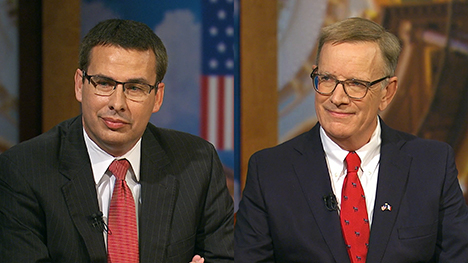
Iowa State Treasurer candidates John Norwood (D-West Des Moines) and Roby Smith (R-Davenport) discuss key issues and policy positions.

Candidates Dave Dawson (D-Lawton) and Chris McGowan (R-Sioux City) will answer questions from reporters and discuss their platforms, concerns and future plans.
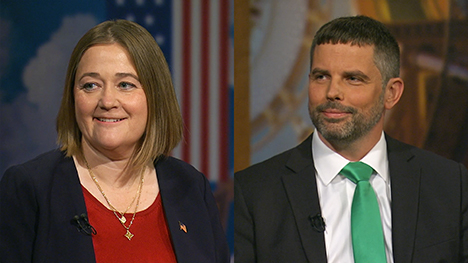
Iowa Attorney General candidates Brenna Bird (R-Dexter) and Nate Willems (D-Mount Vernon) discuss key issues and policy positions.
Lindsay James (D-Dubuque) and Joe Mitchell (R-Clear Lake) answer questions from Iowa reporters and discuss their platforms, concerns and future plans.
Candidates Ashley Hinson (R - Marion) and Josh Turek (D - Council Bluffs) answer questions from reporters and discuss their platforms, concerns and future plans.