On this edition of Iowa Press, we discuss issues impacting Iowa’s corn and soybean growers and the agriculture industry.


On this edition of Iowa Press, Mark Mueller, a farmer from Waverly and president of the Iowa Corn Growers Association, and Dave Walton, a farmer from Wilton and vice president of the American Soybean Association, discuss issues impacting Iowa’s corn and soybean growers and the agriculture industry.
Joining moderator Kay Henderson at the Iowa Press table is Donnelle Eller, agriculture, environment and energy reporter for The Des Moines Register.
Program support provided by: Associated General Contractors of Iowa, Iowa Bankers Association and Robert and Doreen Sheppard.
Transcript
[Kay Henderson] From tariffs and fuel prices to eminent domain and the farm bill, it all impacts Iowa farmers. We'll talk with two leaders of corn and soybean growers on this edition of Iowa Press.
[Announcer] Funding for Iowa Press was provided by Friends, the Iowa PBS Foundation.
[Announcer] The Associated General Contractors of Iowa, the public's partner in building Iowa's highway, bridge and municipal utility infrastructure.
[Announcer] The Bob and Doreen Sheppard Family -- proud supporters of educational programming seen only on Iowa PBS.
[Announcer] Banking in Iowa goes beyond transactions. Banks work to help people and small businesses succeed, and Iowa banks are committed to building confident banking relationships. Iowa banks, your partner through it all.
[MUSIC]
[Announcer] For decades, Iowa Press has brought you political leaders and newsmakers from across Iowa and beyond. Celebrating more than 50 years on statewide Iowa PBS, this is the Friday, April 24th edition of Iowa Press. Here is Kay Henderson.
[Henderson] According to the 2022 U.S. Census of Agriculture, there are about 154,000 Iowans who are actively engaged in a farming operation. We have two gentlemen here who are elected leaders of associations who represent tens of thousands of farmers. They may be a little nervous to be here on this Friday morning because they're not in the field planting, but we like to welcome them to the Iowa Press table at this time. They are Mark Mueller. He farms near Waverly. He is president of the Iowa Corn Growers Association. He produces no till corn, soybeans, alfalfa, specialty beans, forage, rye and corn for silage. Also joining us is Dave Walton. He farms near Wilton. He is vice president of the American Soybean Association and is on the Iowa Biodiesel Board. He grows soybeans, corn, alfalfa and raises beef, cattle and sheep. Welcome to Iowa Press.
[Dave Walton] Thank you.
[Mark Mueller] Yeah. Thanks for having us.
[Henderson] Joining our conversation today is Donnelle Eller. She is the agriculture, environment and energy reporter for the Des Moines Register.
[Donnelle Eller] Hi, gentlemen. We've heard a lot about fertilizer prices spiking because of the war in Iran. For our non-farming viewers, could you explain when farmers apply fertilizer and why?
[Walton] Sure. There's various times of the year we apply fertilizer depending on what it's used for. We start usually in the fall with phosphorus and potassium. Sometimes we put nitrogen on the fall. Spring is another opportunity to put fertilizer on, but it's really plant food. So, we apply it to fields to feed the crop that we're going to grow. Or just about to put in the ground here. So, we apply that fertilizer ahead of the crop so that it's there to feed that crop.
[Eller] So, we've heard that many Iowa farmers apply in the fall. Why do some farmers wait into this spring?
[Mueller] I'll answer that one. I put it on in the spring. Nitrogen fertilizer in particular. The other fertilizers, phosphorus and potassium. I could put those on in the fall and they'll just sit there in the ground. They're granular. They'll sit there until the following spring. Nitrogen fertilizer I can get in many different forms, liquid, solid or gas. I choose to put on nitrogen fertilizer as anhydrous ammonia. My nitrogen fertilizer is in the form of anhydrous ammonia. I put that on in the spring so it's closer to the time the plant needs it. I will come back in the middle of the summer and side dress, put on nitrogen in a different form, because that's when the plant really needs it. Some people would put it on in the fall because of timing or price. As long as the ground is cold, the nitrogen is not going to go anywhere. But for a lot of people, it's just when is the supply available? When is the labor available? We don't we don't do the same thing two years in a row. But we do try to get it on as close as to when the plant needs it.
[Eller] So are some farmers waiting, did they wait till spring maybe when they might typically apply it in the fall, but wait till spring because there were cash strapped, and maybe hoping to get some of those bridge payments to help them through?
[Mueller] I believe that's the case in some scenarios. I paid this spring a pretty high price for my nitrogen fertilizer.
[Eller] How much more was that?
[Mueller] Well, okay, I paid a little under $800 a ton for anhydrous ammonia in January. In the beginning of March. March 2nd, my supplier called me up and said, if you need any more nitrogen fertilizer, it's going to be $850 a ton. So, it had gone up by more than $50. Three days later, he sent me an email saying, it's going to be $950 a ton. And then by March 11th or 12th, he sent me an email saying, sorry, we can't even price it because we're not sure we can get it. And then about two weeks later, in late March, he said, we can get it, but it's going to be almost $1,100 a ton. So, when I paid $795 a ton for anhydrous ammonia in January, I thought, boy, I'm getting ripped off. Now it looks like I made a smart move. No planning on my part. It was just the effect of the war on fertilizer supplies.
[Eller] Dave, are you concerned about fertilizer next year? Both price and availability?
[Walton] Yeah, I think that concern continues on because as this conflict continues, we're going to have a disruption in the market. So, where we used to get phosphorus, potassium and natural gas, which goes into the anhydrous ammonia supply out through the Strait of Hormuz, it's not flowing now. So, we've had to change kind of the supply route. So, I really do feel like this pricing issue, if things stay the same, is going to continue on through late 2026 and into early ‘27. So, I don't I don't see much relief right now.
[Henderson] Dave, another operating cost for farmers is the price of diesel. How are farmers handling that in terms of cash flow?
[Walton] You know, I think we had a little bit of an indication something was going to happen. So, a lot of us called up our suppliers and said, look, fill my tanks, contract fuel. But at that, when that supply runs out, I think we're just going to run hand to mouth and wait on that price to come back down again. We're not going to put in more than we need in the immediate term. Diesel will come down. It's just a matter of time. And it's, you know, kind of a waiting game until it happens.
[Henderson] Let's talk about the other end of the price equation here. And trade, which impacts what you get for the commodities that you both are raising. Are you optimistic or pessimistic, Mark, about corn and its ability to be sold in countries other than the United States of America?
[Mueller] Yes. Now exports have been going up. That's like the one area that's still growing our corn that's consumed by livestock or our corn that's used for ethanol has been pretty flat. But corn going for exports has been growing. Having said that, we're not doing ourselves any favors by picking trade fights with our closest neighbors and our biggest trading partners, Canada and Mexico in particular. Canada is by far the largest ethanol export market we have, and Mexico is pretty big as far as either meat or the grain that feeds that meat. Why are we picking these fights? It makes me want to slap my head thinking, what are we doing? Why pick a fight with your customer? We're growing. Corn exports are growing. But they could perhaps grow even faster if we didn't have tariffs. And we weren't having these trade spats that I think are just. We're shooting ourselves in the foot.
[Henderson] Let's shift to beans. We've heard a lot about Brazil's crop. How is that impacting international trade and the ability of U.S. Soybeans to make their way to other countries?
[Walton] Yeah. So, the Brazilian producers have done a really, really good job of expanding into the marketplace and, and selling their products to some of who are our largest competitors. And let's be honest here, China was our largest purchaser of soybeans. Brazil has taken over that market for a lot of different reasons. But, you know, we're continuing to look at other markets around the world to replace some of the China supply. But the other bright spot in this is we have an administration now that has started to recognize that we need to build more domestic demand. And so, biofuels and particularly biodiesel has been kind of that bright spot that's going to take up some of that lost market share to some of our foreign export markets. We saw recently released our renewable volume obligation. So those volumes have gone up significantly. That's going to help take away probably 20% of what we used to send to China to use here domestically. So, there are some bright spots even though there are challenges.
[Henderson] One last question about trade. You know, Mexico and GMOs. How is that going to turn out?
[Mueller] I believe that cooler heads have prevailed in Mexico. The previous president, Amlo, was against contaminating the birthplace of corn with biotechnology, but the private sector in Mexico, that feeds a huge amount of grain was saying, listen, we can't grow enough corn ourselves. We can't even grow a fourth of what we need in this country. We need to work with the United States. And frankly, if you want to pay for it, you could get some non-GMO corn, but nobody wants to pay for it. They want to get the grain as cheap as possible. And that's genetically modified corn, which we've had for 30 years. We end up the cooler heads, the center heads in the room prevailed, but it took a visit from the various NGOs like the U.S. Grains Council or some other entities to speak to the ag officials. There saying, listen, you got to let our U.S. corn come in. We have poultry farms that were within like two days of running out of corn, and chickens don't last very long without corn.
[Eller] I guess this is a question for both of you, but maybe to start with you, Dave. The Iowa farmers, U.S. Farmers have been pretty patient in the first term of President Trump with tariffs, and, you know, temporary reduced trade. Do you feel like farmers that you talk with, are they still hanging in there thinking that the president is going to get them some maybe some better deals?
[Walton] Yeah, I think there's a there's a long-term view of a lot of that. You know, in the short term, yeah, it hurts. There's some things that are going on that has affected the farm economy directly. But I think most of the farmers that I'm talking to are still taking sort of this longer-term view that that some of our trading partners weren't exactly being fair with us. And so, what they're trying to do is sort of reset the balance here and get us into a better position down the road. And I think there's still some patience there. It's not quite the focus that it used to be. As far in farmers minds, it's more immediate things. But I think there's still some patience there to let it work.
[Eller] Do you see people starting to get a little impatient?
[Mueller] I would say people are getting impatient. They would like to see these trade deals, have some details to them. We've had frequent announcements of, you know, here's a new trade framework. We're having these discussions, but you need manpower and time and no trade deals get negotiated overnight. Usually they take months or a few years, and there's hundreds of people working at them. We haven't got that many people that are on the government staff to be able to get those details hammered out. And yeah, I'd love to see some teeth in some of the existing laws we have, and I would love to see some new trade deals go through. I will say that I'm not happy with how this administration is handling it, but I would also say that the last administration wasn't doing anything either. You'd have to go back to George W. Bush before you found a president that actually was actively out there pursuing trade deals. But after Obama, after Trump won, after Obama, Biden, you know, you didn't have anything happen. And now there's some movement, but it's not moving very fast.
[Eller] Speaking of impatience, maybe there's an amendment now to the farm bill on year-round access to E15 gasoline with 15% ethanol. Are you feeling optimistic that I think your group said 15 years you've been waiting for this? Do you think it's actually going to happen now?
[Mueller] I thought it was going to happen so many times before, because if ever there was a no brainer, this would be one of those things. E15 would not, year-round E15 would not cost the government anything. It would be better for the environment. It would be a great win for the farmers. It's made in America, which is what this administration has been pushing for years, and yet we still don't have E15 year-round across the country. It would be a much-needed win for farmers. But you have a group of refiners that don't want to give up another 5% of the gas tank, and that's what it comes down to, not the big refiners, the small ones that are saying, well, we might go broke if we'll go out of business if this happens. But how many of them have gone out of business during every E15 exemption we've had over the last several years going back a couple of administrations?
[Eller] Dave, you mentioned that the renewable fuels standard is set some really good, strong blending requirements. Biodiesel has struggled the past couple of years. Do you think that those will be strong enough to give them a turning point, you know, so they can start seeing some profits?
[Walton] Yeah, I really do. I mean, what has happened is we've signaled certainty. So, over the last couple of years, we did not have a new RVO 45Z was still kind of up in the air, the tax credit. So, the refiners that I've talked to really didn't know where they were going to be at economically. And a large majority of them in ‘25 either ran or reduced capacity or just basically shut down because they couldn't make any money at it. What I'm hearing today is that the things that are put in place with the higher RVO 45Z is a little bit more certain. Those guys are looking at profitability again. So, they're going to turn back on and they really need to meet that volume obligation. We need to have those plants running at full capacity to meet that 5.61-billion-gallon RVO for biodiesel. So yeah, I think it's certainty more than anything else, getting those policies in place.
[Eller] And soybean growers need that added demand.
[Walton] We do. We need that added demand because as we as we mentioned, our export markets have been a little bit disjointed lately. And so, by adding certainty here domestically, you know, we're sending a signal to crush plants. We need to crush more soybeans. We need to expand those crushed plants. And that pulls in demand from the soybean side. We have a new market for soybeans that we didn't have 12 months ago. So those things are all going to add to the bottom line of soybean farmers particularly.
[Henderson] Mark, you as head of the Iowa Corn Growers Association, are head of an association that has been a strong voice in support of the carbon capture pipeline proposed by Summit Carbon Solutions. There's been a big debate at the Iowa Legislature for several years now about the use of eminent domain to take property along the pipeline route from landowners who haven't yet agreed to an easement to let that pipeline go through their property. What's your view of what's happening at the Statehouse this year?
[Mueller] I can't address that because they're working quietly behind closed doors. I don't have a clue as to how this is going to turn out. I would say that if nothing happens at the legislature this year, the pipeline will probably get built under existing laws that as soon as the legislature this fall, for example, Summit could start digging on the parts that are already approved. And once they start construction, you really can't stop it. They'd have a pretty good lawsuit on their hands. So, whether or not it takes place because of something that the legislature does, or if the legislature does nothing, it will happen.
[Henderson] And they're under a time crunch to start construction because the federal credits go away at some point, if they don't start construction. Right?
[Mueller] Yeah, the economics of -- Iowa Corn commissioned a study to see what the economics were as far as the impact of a pipeline, a CO2 pipeline that would take the carbon dioxide out of our state. They also calculated that an ethanol plant could be in an ethanol plant in Iowa, could be disassembled and literally put back up in Nebraska, which does have a pipeline. And the 45Z tax credits would help them recoup their investment in as little as 18 months. Now, I don't see the ethanol plant near me being disassembled anytime soon, but I would also say, why would any future growth happen in Iowa if we're not open to at least updating what we have right now?
[Eller] Well, if you say the pipeline would be built, I think a big question would be where would it go to? I mean, it can't get through South Dakota.
[Mueller] That I'm not certain either of. But I do think they would find a way to go around South Dakota and get up to Wyoming or I think most recently it was announced that they could be using it in assisting --
[Eller] Enhanced fracking.
[Mueller] Yeah, enhanced oil recovery so they could go through Nebraska and then go north or south once they got past.
[Eller] Dave, you grow corn too. So, I'll ask you this question. Do you think that sustainable aviation fuel market or the marine fuel market, will that be there with the current president's focus on drilling for oil? And, you know, everything sort of focused on that?
[Walton] Yeah, I think it really it plays into his domestic energy focus. You know, we can drill for oil or we can grow the crop that produces the fuel here. And I think I think he understands that. So those two markets you mentioned sustainable aviation fuel and marine, marine is really kind of a focus of the soybean industry as well. You know, we see that as a growth opportunity for our fuel, probably marine first and then SAF second. But we see both of those as potential huge new markets. And we've already started talking to the EPA for this next reset or the next volume obligation to really consider those markets when they set the new RVO. So, they need to look at that as a growth target as opposed to a baseline. And I think that it's been well received by them because it's domestic energy demand.
[Henderson] Gentlemen, many Iowans have seen Iowa's cancer rates and they're stunned and sort of very concerned about how high it is relative to the rest of the country. And some critics are pointing the finger at farmers and say it's because of all that fertilizer that they apply. Mark, what do you say to people that make that argument?
[Mueller] I would say they are grasping at anything. Cancer is not something that we know. one thing causes cancer all the time. Unless you're next to a some sort of radioactive thing. It's one of those things where people see something and it's like, oh, they're doing something there. I don't understand, it must cause cancer. The study that was so frequently cited as a government report on cancer was a study in Europe by a commission that just said, here's a list of things that might cause cancer. And they included, I think, hot water on that list. Bacon was on that list. Roundup was on that list as a number of things that might cause cancer. I would say this anything used in excess or extreme could probably cause cancer. But no, it's just some commission said, well, this might do it. And everybody seized on that. I will say that the court cases that happened that I think Bayer, Monsanto had to pay out damages. It's not publicized that Bayer, Monsanto, I think, has won over half of those cases. And they've all taken place in a civil court, not a criminal court, where the burden of proof is so much lower. There's not science that's gone into those statements.
[Henderson] So, what about the level of nitrates that people are seeing at certain points during the year in their drinking water, which is a concern?
[Mueller] Yeah. Farmers are taking steps, we're not moving the needle fast enough, but we're moving the needle through our practices. I use cover crops on my farm, and I am a no till farmer. Those things help keep the soil in place and help keep the nutrients in place. Cover crops in particular, tie up the nitrates. It's a practice that's growing. It's just not growing fast enough. But farmers are very much preoccupied with trying to reduce the amount of fertilizers we use, or at least not using any more than necessary. That's probably what doesn't get seen, is that we're not dumping tons of chemicals on there. Probably the amount of Roundup I put on an acre of ground is not much more than this coffee cup, but ignorance is probably making a lot of those statements. There's not science behind all those.
[Henderson] Dave, you've been shaking your head.
[Walton] You know, I think I think society is asking us to be better. And I think we've all taken that to heart. You know, we live in that same environment. We drink that same water. We don't want to put ourselves in harm's way, nor do we want to put anyone else in harm's way. As Mark mentioned, we're doing a lot of the practices that are trying to reduce nitrates in the water. No till cover crops. I also do the same thing. We also are looking at reducing nitrogen rates. So, in my corn operation, I'm using less nitrogen now to grow the same size crop that I did probably ten years ago. Just by being smarter about how I apply it. And those are the kinds of things. But we also have to ask society to remember we can't just flip a switch and make this happen overnight. This is a long-term thing that the practices that I put in place today may not show an effect for some years down the road. So, you got to have a little bit of a lead time to go from where we are to where we want to be.
[Eller] How do you get farmers to do stuff that you guys are doing? Because it has been, you know, like what, at least a decade since the Iowa nutrient reduction strategy was adopted.
[Mueller] A lot of it's going to take public money and Iowa corn. And I think probably most commodity organizations support the IWILL -
[Eller] The Iowa Trust Fund.
[Mueller] But for example, about 4 or 5 years ago, I put in a wetlands on my farm to help clean up the water. That's nature's way of cleaning up water. But that wetlands, which drains 400 acres, cost about $200,000 and almost $300,000 to build. If I had to use my own money, that would never have gotten built. It was a combination of working with state and county and federal money that went into that. I had to make some commitments also, but it's going to be a public park, public private partnership to help clean up the water because, frankly, the water that leaves my farm is going to be cleaner, but it's going to benefit somebody that might be 100 years in the future or 100 years down the, 100 miles down the road. It's going to take a big effort on everybody's part. And farmers are doing their part, but it's not going to be cheap.
[Henderson] My part at this point is to tell you fellas that we're out of time for this conversation. Thanks for being here today.
[Mueller] Thank you for having us.
[Walton] Thanks for having us both.
[Henderson] You may watch this episode and other episodes of Iowa Press at iowapbs.org. For everyone here at Iowa PBS, thanks for watching today.
[MUSIC]
[Announcer] Funding for Iowa Press was provided by Friends, the Iowa PBS Foundation.
[Announcer] The Associated General Contractors of Iowa, the public's partner in building Iowa's highway, bridge and municipal utility infrastructure.
[Announcer] The Bob and Doreen Sheppard Family -- proud supporters of educational programming seen only on Iowa PBS.
[Announcer] Banking in Iowa goes beyond transactions. Banks work to help people and small businesses succeed, and Iowa banks are committed to building confident banking relationships. Iowa banks, your partner through it all.
Watch More

Zach Lahn (R-Belle Plaine) and Rob Sand (D-Des Moines) will answer questions from Iowa reporters and discuss their priorities and vision for the state during a 90-minute debate.
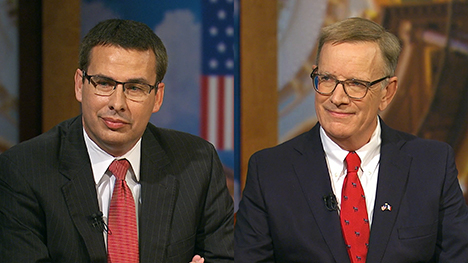
Iowa State Treasurer candidates John Norwood (D-West Des Moines) and Roby Smith (R-Davenport) discuss key issues and policy positions.

Candidates Dave Dawson (D-Lawton) and Chris McGowan (R-Sioux City) will answer questions from reporters and discuss their platforms, concerns and future plans.
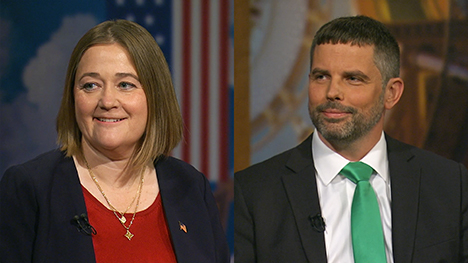
Iowa Attorney General candidates Brenna Bird (R-Dexter) and Nate Willems (D-Mount Vernon) discuss key issues and policy positions.

Lindsay James (D-Dubuque) and Joe Mitchell (R-Clear Lake) answer questions from Iowa reporters and discuss their platforms, concerns and future plans.

Candidates Ashley Hinson (R - Marion) and Josh Turek (D - Council Bluffs) answer questions from reporters and discuss their platforms, concerns and future plans.