John Hall, president and CEO of the Marshalltown Area Chamber of Commerce, and Dustin Miller, executive director of the Iowa Chamber Alliance, discuss the Iowa Chamber Alliance’s annual talent poll, and issues impacting growth and development across the state.
Chamber Leaders Discuss Talent, Growth and Economic Development
Share


On this edition of Iowa Press, John Hall, president and CEO of the Marshalltown Area Chamber of Commerce, and Dustin Miller, executive director of the Iowa Chamber Alliance, discuss the Iowa Chamber Alliance’s annual talent poll, and issues impacting growth and development across the state.
Joining moderator Kay Henderson at the Iowa Press table is Erin Murphy, Des Moines bureau chief for The Gazette.
Program support provided by: Associated General Contractors of Iowa, Iowa Bankers Association and Robert and Doreen Sheppard.
Transcript
♪♪
[KAY HENDERSON] Brain drain and slow growth, two trends chambers of commerce across the state are trying to change. We'll talk about the challenges with two chamber leaders on this edition of Iowa Press.
♪♪
[ANNOUNCER] Funding for Iowa Press was provided by Friends, the Iowa PBS Foundation.
♪♪
[ANNOUNCER] The Bob and Doreen Sheppard Family, proud supporters of educational programming seen only on Iowa PBS.
♪♪
[ANNOUNCER] Banking in Iowa goes beyond transactions. Banks work to help people and small businesses succeed, and Iowa banks are committed to building confident banking relationships. Iowa banks, your partner through it all.
♪♪
[ANNOUNCER] For decades, Iowa Press has brought you political leaders and newsmakers from across Iowa and beyond. Celebrating more than 50 years on statewide Iowa PBS, this is the Friday, June 26th edition of Iowa Press. Here is Kay Henderson.
[HENDERSON] Since 1900, Iowa has had the slowest population growth of any state in the Union. Four years ago, a group representing 14 chambers of commerce around the state of Iowa decided to conduct a survey of Iowans who are in the workforce today to try to find out why they stayed and what recommendations they would have for attracting people to come back or move to Iowa. The 2026 Talent Survey from the Iowa Chamber of Commerce is out, and our guests today are here to talk about it. They are Dustin Miller. He's a native of Lacona and executive director of the Iowa Chamber Alliance. He's also a lawyer and a lobbyist with experience in a wide range of public policy issues. Welcome.
[DUSTIN MILLER] Thanks for having me.
[HENDERSON] Also joining us is John Hall. He is president and CEO of the Marshalltown Area Chamber of Commerce. Before this role, he was vice president of the Ames Chamber of Commerce. Welcome here.
[JOHN HALL] Well, thank you for having me.
[HENDERSON] Also joining the conversation, Erin Murphy of the Gazette in Cedar Rapids.
[ERIN MURPHY] So, gentlemen, let's start by talking about that report. And Dustin Miller will start with you, hear from each of you. What was maybe one top thing you learned from the results of that survey?
[MILLER] I think it might be helpful to just go back and the purpose of it, starting in 2019, was to really get a sense of what do people like, push pull factors. And the whole purpose of it to do it in a successive fashion was for it to be iterative so that we once we learned something -- so to your question of what did we learn this year -- the great part of it is the base level part of the survey is we get to see what we learned in previous years. And what I would tell you, the number one thing really quickly that I think is most important is for our future workforce. From a generational standpoint, we have to get post millennials, we have to get Gen Z and millennials. And in that space, Iowa is better suited than anybody I could tell you for how people perceive the state to attract those people in particular.
[MURPHY] John Hall?
[HALL] You know, I think when we kind of first dove into putting this together at the Iowa Chamber Alliance, I think there was an expectation from us that we were going to see a lot more like big social issues, you know, those hot button issues that that spark their way into the news, especially early on in session, that those were going to be the things that we saw really popping into the survey results. But what we saw, which is great for us, is we saw a lot of the pragmatic and necessary things that it takes to, you know, have a successful career, raise a family, be part of a community that really are stand out for, for folks that are in that age demographic of working Iowans. And those are the important things. Those are the things that matter to them.
[MURPHY] John, this is not a new problem as, as the report itself notes, I was population growth has been slow since literally 1900. Is there anything in the data and the results that's suggest that this can be fixed?
[HALL] Well, I think the entirety of the data gives us insights into what are the limiting factors for us. I mean, I think the number one thing that we see is opportunities, job growth opportunities, career growth opportunities. They feel lackluster. They feel like there's not really that upward mobility opportunity. And so that continues to reiterate to myself and to my peers about how important it is to spend time working in the economic development space, working to attract and retain really incredible employers and continue to beat that drum of the opportunities that we've got here that in a lot of ways, we just don't tell our story well, you know, that happens even in the local communities we don't tell our story well. We don't tell young people what job opportunities exist in their community as they're growing up. You know, there's usually 1 or 2 large employers that everybody's parents work for. But, you know, beyond that, we don't we don't have those conversations enough. And I think that's the important thing for us to keep.
[MILLER] And you brought up, John, the purpose of this in looking -- you brought up the worst growth rate since 1900 -- I think it's very easy to say weather and beaches and things like that. However, just our neighbor to the north -- you know, this is not intended to be a political poll. Now, there are certainly things that people will pull from it. And honestly, the purpose of it is for stakeholders. But honestly, some of it is a self-reflection on our communities. But it's really easy to say beaches and weather, but yet our neighbor to the north, historically, over the past 3 or 4 censuses is growing by 40,000 people per year. We're growing at 15,000 people. And that's a problem because economic growth also includes population growth.
[HENDERSON] The survey asks, what would you suggest Iowa do to attract new people and retain current residents? And the number one response from 18.6% was address taxes and cost of living. I wanted to probe that a little. Since 2018, Dustin, the Iowa Legislature and Republican Governor Kim Reynolds have been focused on reducing taxes. So, is that not breaking through?
[HALL] It's a that's a great question. So, if you look in the cross tabs, we have actually seen movement in the tax discussion. We've actually seen since the 2017, where in 2018 times where we saw the income tax go down, the rates come down. We've seen that the priority of taxation being an issue has gone down 10%. So again, this is a snapshot in time. But we have seen that moving. Interestingly enough, we had asked the large base question of where is lowering taxes on your priority? This year, knowing that property taxes was going to be a huge priority, we differentiated between income tax and property taxes and actually saw property taxes jump ahead of where lowering taxes was generally. So, we are able to, because of the iterative nature of this, keep the same base level of questions and get to see if some of those things are breaking through in the process.
[HENDERSON] The other thing these folks mentioned, cost of living, it's relatively inexpensive to live here as compared to New York or Los Angeles. Why is that continually being something cited?
[HALL] Well, and I think that this is going to be the fascinating component of the iterative process. You know, we started this in 2019. Since then, we've seen, you know, significant inflation, periods of inflation and periods of challenge for people's pocketbooks. And so, as we, you know, cast a vision out over, you know, the next ten, 15, 20 years, it'll be interesting to see if that is reflected from national conversations or national implications beyond just inside the state of Iowa, because you're absolutely right from a cost-of-living perspective, we're a great state to be in. And that's often something we tout when we're talking to folks that are outside the state. You know, that's probably one of the number one attractors for folks that came from Iowa that, that moved away and are thinking about coming back is they know the cost of living is much more affordable here, but it's a perception of those that are here, that it's still too high.
[MILLER] And there are some there's some real cognitive dissonance, I think, in this conversation. We have people that perceive that cost of living is lower. We have people that perceive in this, in 73% perceive that they are very secure in their jobs. Yet we are seeing a growing nature of people looking to move elsewhere. And I think that's the really challenging aspect of this, is we can only control, once we get this information ourselves and can control what we can, Give you an example that we've seen repeatedly each year is people saying, well, I don't think I can achieve my career goals in in Iowa. That's on us. That's not on policymakers, that's on our communities coming together, making sure that somebody who's responding to that, we find and say there's opportunities not only for you and your community, there's opportunities in this state for you to stay. That's on us. Because I think, again, sometimes people look at this and say, this is for legislators or stakeholders. Some of it's a self-reflection on our communities.
[HENDERSON] We'll return to property taxes a bit later, but I wanted to ask about two concerns that were identified, tariffs and AI. Is there another state group of chambers of commerce doing similar surveys? Because we're finding that is a concern nationwide. Is there anything unique to the number of people who identify AI as a major concern in Iowa compared to other states?
[MILLER] Yeah, I don't think it necessarily is bigger than any other state. I think we're one of the few. This is where I want to give a shout out to the pollster firm that helps us do this is Signal. They have been an incredible partner for us each year. They are a very well-established conservative pollster firm. They are excited about doing this and like the idea and in fact, what's been really fun is each year they come to us with ideas that those two questions were something that they brought to us. And again, those weren't in those initial conversations. Very similar, inflation was not one of our biggest concerns. And then we added in 2021 and boom, it was the number one. So yeah, we put those in kind of thinking, this is where it would land. But in the end, you know, we'll constantly mold this to fit those times. I think we would love to see other chambers do this, but again, it's what we can control as far as finding what Iowans feel.
[MURPHY] John, you touched on something earlier that I had in my notes I wanted to circle back on, and because we at the Statehouse hear a lot about this, too, about the role that politics in the state play in whether people choose to live here, to stay here. Democrats have claimed for a number of years now that the conservative policy, a number of conservative policies are what's keeping young Iowans from staying here after they graduate. For example, just 1%, just over 1% listed that as a reason in this survey. And that question, and it sounds like your conclusion you're drawing from that that it's not a major role in that decision making. Am I hearing you right?
[HALL] I think when it comes to the overall reality of why people make the decisions, they do that it's not the driving factor. I think, you know, certainly it's part of any conversation. It's part of conversations that people have at their houses and, you know, as they're making those, having those conversations, making those decisions. But it's not the overwhelming factor, but it certainly eats up a lot of the time and attention, especially early on in the session. And, you know, my job day in and day out is representing the business community in Marshalltown. And what I often reflect with policymakers is the best thing that the business community can ask for is stability. I mean, that's what they're looking for. You know, we can do all of the other pieces. But at the end of the day, if we just had stability, that would be really great in order to, you know, know the rules, play by the rules and go through with it. And I think that's the same for workforce too, is that, you know, a lot of these issues are thrown out there, especially early in session, knowing that they're there to create a conversation, but not likely to get picked up and actually move forward. But it's that instability, that uncertainty that creates the chaos for individuals in the workforce that we’re trying to keep here.
[MILLER] I would say when we started this, that the base level that you started off with, Erin, Iowa has not been good at growing, right. And it's very easy to throw things out. And as you're saying, you know, whether something's unwelcoming, there's certainly things out there that aren't helpful. What we try and focus on are what can we do in our community to make sure that what goes on in Des Moines doesn't necessarily mean this is how Dubuque feels about things. And what I would say is when I go out and kind of give the stump speech on this around the communities, I say this poll is kind of an equal opportunity offender because there are things, you know, right now, you guys have read it, you know, the sentiments around cost of living and right direction have been trending down, which, you know, people on the right probably don't like. But I will tell you just as much after we got back from Covid and we asked a question about child care, and people perceive that their child care was coming from their schools. You know, we were able to go back to folks on the left say, this is why it was popular to get kids back in school. And again, we're just the facts. And that's the importance of this. We're not good at growing. This is a complicated issue. There are multiple things going into it, and we have to control what we can.
[MURPHY] This question was sort of generated out of that specific discussion, but I think it applies more broadly to Dustin. I'm curious, so this surveys current workers, correct, to people who are here, have chosen to stay here. Does the Chamber Alliance think it would be a valuable at some point to try and get the perspectives of Iowans who have left the state, or maybe and why did you leave, why did you choose not to be here? Or soon to be college graduates, juniors and seniors about to make that decision about whether to stay here?
[MILLER] Great question. And we started off in this process of, okay, who do we ask? Are we going to go target communities where we know we're drawing people from and ask them, what do you like? Really again, controlling what we could control we went out to 1200, 1400 Iowans, depending upon the year, and asked them about it. And it being working age, that was really the focus so that again, each year, this iterative nature, we could stand behind from a from a math and statistics standpoint. But to your point, we've talked about, you know, right now it's 18 to 60. All statistically valid. You know, we don't hide any of the information or the bones of it, but we've talked about going further down because I will tell you this, one of the stats that I always throw out there is, you know, those high school kids that will also be out there are just as important. The U.S. Census will tell you, 60% of people in this country live within five miles of where they grew up. 80% of people in this country live within 100 miles of where they grew up. So, while this is a complicated dynamic, a big portion of this is making sure that we are doing everything we can to keep people in place. And then also coming up with strategies to attract people.
[HALL] Well and to build on that, you know, economic development, we talk about this all the time, you know, the first thing that we focus on, the most important thing is retention. I mean, that's how we strategize is around retention. And that's the same case here is that we want to make sure that we are setting the stage well for retaining the folks that we've got. Because if we can't do that, then what's the point of working to attract new.
[HENDERSON] I want to shift the discussion to the 2026 legislative session. Your group had some priority issues heading in, but one of the outcomes of the 2026 legislative session, Dustin, was a property tax plan. There have been some cities around the state who are discussing pulling back on some of the tax incentives to lure businesses to stay or to have people build homes. Is that a concern?
[MILLER] I think certainly change is going to be met by different people differently. And so, I will tell you this, working closely with a lot of communities, it's difficult to know how all the pieces are getting put together. We are a little bit different of an organization in the sense that you guys have the experience up there, we're not really ideological. We try and almost bridge the gap between kind of our local government partners and private business, commercial business and homeowners, because ultimately you have to have appropriately funded communities in order for economic growth to occur. That said, you know, as our priorities in this pop up, property tax is one of those components. So, I think anybody pulling back, I hope it's simply just a looking at the future as to how things will play out, because I think ultimately, one thing that would concern me if I was in those communities is making sure I'm not creating a scarlet letter situation where I'm going to drive investment somewhere else, where somebody wants to be more accepting. But yeah, it's challenging to understand how it will all be pieced together. But those that I think meet that challenge and come up with creative solutions will thrive.
[HENDERSON] Erin.
[MURPHY] One of the other policies that the Chamber Alliance has put together is pitching a redesign of state incentives, kind of broadly speaking, there. Another one Kay talked about, data centers. The state recently passed a sales tax break for nuclear facilities. John, just what's your kind of view of the system of state incentives and where do you what direction do you think state policymakers need to take that?
[HALL] Well, and far be it for me to tell the state exactly what to do with the state incentives, because at the end of the day, the state's incentives are set up to be the door open for our local communities to work to attract projects. You know, at the end of the day, it's about so much more than incentives on the local level. You know, from an economic development perspective, and this is what I spend my day, day in and day out doing is, you know, understanding what utility infrastructure and land availability and workforce development and all of these components come together to make a project happen and bring it to fruition. But having the local flexibility related to those incentives is the piece that that allows us to overcome the hurdles or the challenges of the items that we're, we're not meeting. And that's often how I, how I talk to projects, whether that be, you know, industrial projects, commercial development projects, housing development or redevelopment projects, it's, you know, show me what the delta is like. Let's open the books. Let's have a conversation about, you know, where it's at and where it needs to get to in order for this project to be successful. And that's the place where I can be the most effective at solving something is building a unique package from a local resource to do that. However, what I'll say is I think that that's part of the challenge is that, you know, how are cities going to navigate it with the new property tax legislation? Are we going to have the same flexibility and tools that we need to accomplish those things?
[MURPHY] Is that a concern? I was going to ask you that because that got changed in this.
[HALL] So, I'll say there's a few things that are of concern. That being said, there are also some really positive things that came out of it. The positives on it, the flexibility with housing and tax increment financing gives us a whole new set of tools to work into housing development and affordable housing development. The carving out growth or allowing cities to capture growth, previous property tax legislation limited the overall increase in property tax percentage, but didn't allow growth to be a factor in there. Allowing growth in gives us something to work towards and something to work on. The limitation that the 60% cap on some of the perpetual TIFFs, and I'll say probably specifically confined to downtowns in Marshalltown's case specifically is going to be a challenge in limiting factor. You know, you look back to 2018 with the tornado, 2020 with the derecho, we lost a lot of our downtown buildings, a lot of our downtown value. So, our TIFF is fully maxed out. And now what we've been told from the legislature is, hey, you guys are done doing projects downtown until you get down to under 60%, because we know that the cost of development down there is expensive. So, there are some challenges with it. But you know, it's always a balance and we'll figure out how to navigate with the tools that we've got.
[HENDERSON] We've got about four minutes left. Dustin, if a person goes on the Iowa Chamber Alliance website, they see a little bit about you would like the gas tax to be distributed differently. Of course, there was a tiny little bit of a gas tax increase debate that didn't come to fruition in 2026. What are you talking about there?
[MILLER] Yeah, that's funny enough. Great lead in here, Kay. That's actually what created the Iowa Chamber Alliance, interestingly enough, was about 25 years ago, Dave Roederer, who you've had on this show, and director Debi Durham, some of those folks created this to really talk about the distribution formula, which I would say, and this is actually a reflection on how our communities have changed, those early stages felt more of a rural urban schism and felt that more was being distributed on the rural side than urban. At that time, most of our chambers were city chambers. I will tell you now, most of our chamber communities have now become regional chambers, and understanding that their labor sheds now drift over. So certainly, any of those discussions, you know, I think we've seen rural, you know, focus on rural for economic development incentives. We don't think anybody should be excluded. But we want to make sure that if there are growth engines out there, that the tools are directed to where the growth can occur.
[MURPHY] Just a couple of minutes left, admittedly, a kind of a big question, John, but I'm just curious, what's the general mood out there right now in, you know, summer of 2026 with the business and economic development? We hear about on an individual level about in cost-of-living concerns and that kind of thing. What's the what's the general mood in the business and economic development community?
[HALL] Well, in Marshalltown, I don't think things have really ever been better. I mean, certainly our businesses are seeing ups and downs as part of their regular business activity. But from a community perspective, we're seeing big things take place and big things come to fruition that have taken a lot of years to put together. You know, we've got a major mall redevelopment that is undergoing renovation and seeing stores open. Of course, we're welcoming RAGBRAI this July and excited to have folks through the community. We're doing downtown infrastructure redevelopment. And I think that's pretty indicative of what we're seeing across the state from my peer communities too is there's a lot of good things that we've been able to put in the pipeline. We want to continue that. We want to keep that momentum moving forward and not slow down, because these are the things that are necessary if we're going to grow our communities.
[HENDERSON] Dustin, last half minute to you. And now for something completely different. The Chamber Alliance is sponsoring a Civics
Bee. What are you doing?
[MILLER] Yeah, the statewide Civics Bee is just as it sounds, like a spelling bee. And thank you so much for asking. We've actually been sponsors of it every year that the state one has occurred. The first ever regional Civics Bee was put forward by the U.S. Chamber Foundation and was in Mason City. And we're very proud of that. And it grew slightly. And then eventually we are now into a state Civics Bee. It'll be hosted next week, June 30th at 1:00 at Cowles Library at Drake University if anybody wants to come. And you'll get to see some exceptional six through eighth graders and it funnels up to the National. And we had a young man win second place a few years ago and got to meet with Speaker Grassley and some others and found out that he won as much cash money as the legislators make per year.
[LAUGHTER]
[HENDERSON] Well, thank you both for being here and sharing your views with our listeners and viewers.
[MILLER] Thank you.
[HALL] Appreciate it.
[HENDERSON] You may watch other episodes of Iowa Press at iowapbs.org. For everyone here at Iowa PBS, thanks for watching today.
♪♪
[ANNOUNCER] Funding for Iowa Press was provided by Friends, the Iowa PBS Foundation.
♪♪
[ANNOUNCER] The Bob and Doreen Sheppard Family, proud supporters of educational programming seen only on Iowa PBS.
♪♪
[ANNOUNCER] Banking in Iowa goes beyond transactions. Banks work to help people and small businesses succeed, and Iowa banks are committed to building confident banking relationships. Iowa banks, your partner through it all.
Watch More
Zach Lahn (R-Belle Plaine) and Rob Sand (D-Des Moines) will answer questions from Iowa reporters and discuss their priorities and vision for the state during a 90-minute debate.
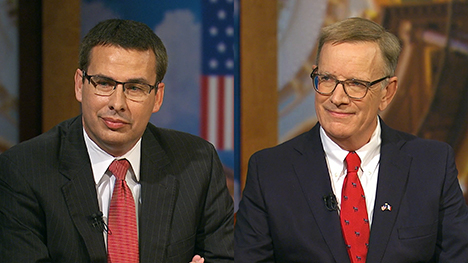
Iowa State Treasurer candidates John Norwood (D-West Des Moines) and Roby Smith (R-Davenport) discuss key issues and policy positions.

Candidates Dave Dawson (D-Lawton) and Chris McGowan (R-Sioux City) will answer questions from reporters and discuss their platforms, concerns and future plans.
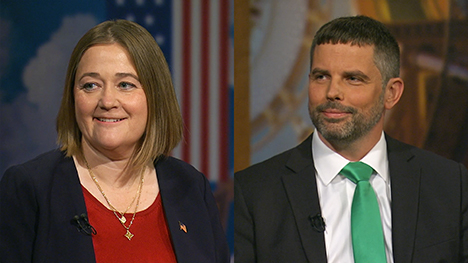
Iowa Attorney General candidates Brenna Bird (R-Dexter) and Nate Willems (D-Mount Vernon) discuss key issues and policy positions.
Lindsay James (D-Dubuque) and Joe Mitchell (R-Clear Lake) answer questions from Iowa reporters and discuss their platforms, concerns and future plans.
Candidates Ashley Hinson (R - Marion) and Josh Turek (D - Council Bluffs) answer questions from reporters and discuss their platforms, concerns and future plans.