Iowa Secretary of State candidates Paul Pate (R-Cedar Rapids) and Ryan Peterman (D-Davenport) discuss key issues and policy positions.
Iowa Secretary of State Candidates Paul Pate & Ryan Peterman
Share


On this edition of Iowa Press, Iowa Secretary of State candidates Paul Pate (R-Cedar Rapids) and Ryan Peterman (D-Davenport) discuss key issues and policy positions.
Joining moderator Kay Henderson at the Iowa Press table is Stephen Gruber-Miller, Capitol bureau chief for The Des Moines Register.
Program support provided by: Iowa Bankers Association, and Robert and Doreen Sheppard.
Transcript
♪♪
[KAY HENDERSON] The state official most involved in Iowa's elections is the Secretary of State. We'll talk to the two candidates running for that job on this edition of Iowa Press.
[ANNOUNCER] Funding for Iowa Press was provided by Friends, the Iowa PBS Foundation.
♪♪
[ANNOUNCER] The Bob and Doreen Sheppard Family, proud supporters of educational programming seen only on Iowa PBS.
♪♪
[ANNOUNCER] Banking in Iowa goes beyond transactions. Banks work to help people and small businesses succeed, and Iowa banks are committed to building confident banking relationships. Iowa banks, your partner through it all.
♪♪
[ANNOUNCER] For decades, Iowa Press has brought you political leaders and newsmakers from across Iowa and beyond. Celebrating more than 50 years on statewide Iowa PBS, this is the Friday, October 23rd edition of Iowa Press. Here is Kay Henderson.
[HENDERSON] The Secretary of State is Iowa's Commissioner of elections. The office manages voter registration and candidate nomination filings. It works with county auditors to ensure elections run smoothly in the state. The office also handles business and nonprofit registrations. Our two guests on this edition of Iowa Press want to be Iowa's Secretary of State for the next four years. Let me introduce them. Paul Pate is a Republican and the current secretary of state. He's running for a fifth term. He's a business owner, and he served in the Iowa Legislature, and he served as mayor of Cedar Rapids. Welcome back.
[PAUL PATE] It's great to be here.
[HENDERSON] Ryan Peterman, a native of the Quad Cities, is the Democratic nominee. He's a former naval officer who served 15 years in uniform as a helicopter pilot. He was a defense fellow in the U.S. Senate and in education in the Naval Academy. Welcome to you as well.
[RYAN PETERMAN] Thank you for having me.
[HENDERSON] Joining our conversation, Stephen Gruber-Miller Capitol bureau chief for The Des Moines Register.
[STEPHEN GRUBER-MILLER] Paul Pate, Iowans following this campaign may have heard some discussion between the two of you about your decision to turn over Iowa's voter registration database to the federal government including driver's license numbers, partial Social security numbers. Tell us why you made the decision to do that.
[PATE] Well, that was a tough decision at a time when we had to weigh out the facts that we were presented to us. I spent a serious amount of conversation with our legal experts and some of my peers in other states, and it appeared we were obligated to give that list. Monday morning quarterbacking later, we might have reconsidered and taken other options. But at that time, when we were being pressed for the information, it was information that the federal government presented a case that it was something we were obligated to give to them. It is information that, quite frankly, is most of it's available to the public right now. If you want voter registration lists, the Republican Party, Democrat Party and candidates alike can get that information from us. But I did take it very seriously and continue to kind of monitor those situations and try to do the best we can.
[GRUBER-MILLER] And are you confident that Iowans information that has been given to the federal government is being kept secure?
[PATE] Well, I was pretty focused on that point when I did not sign the Department of Justice's MOU agreement. I specifically gave them my conditions, if you will, and reminded them of their obligations and the Department of Justice deals with sensitive legal information every single day. And I'm hoping that they will follow that obligation to the letter as they do what they do with that information, to make sure only legal citizens are the ones who are voting.
[GRUBER-MILLER] Yeah. Ryan Peterman, you've been critical of Secretary Pate for this decision. To what extent would you cooperate with federal government requests if you're elected secretary of state?
[PETERMAN] You know, my opponent here used the analogy of Monday morning quarterbacking. I think that is kind of missing the point, in my view. That was the wrong decision. We need a secretary of state who has the judgment at the time the decision needs to be made, not after the fact. And someone who takes seriously their obligation to protect Iowans personal information. You know, we needed a secretary of state who's not caving to outside kind of partisan political pressure, but is standing up for Iowans, particularly when it comes to protecting some of our most sensitive information here in Iowa. And I know since you've used the analogy of Monday morning quarterbacking, and you mentioned this briefly, but are you willing to admit that that was the wrong decision or that was a mistake now?
[PATE] Well, I think now that we see some of the court cases, it would have been a factor in our decision.
[PETERMAN] I think it just goes to show, we need someone that is willing to make the decision that's best for Iowans at the time that decision needs to be made.
[GRUBER-MILLER] So how would you weigh those requests for cooperation if you're elected?
[PETERMAN] I would not have complied. And I think, you know, looking at the fact that the DOJ came to all 50 states, 30 of them said no. They pushed back and stood up for their constituents. The DOJ sued all 30 of those states. They haven't won a single lawsuit. I think it's pretty clear secretaries of state across the country were not required to comply with those requests.
[HENDERSON] Let's turn to the voting process that Iowans are engaged in right now. Ryan Peterman, are you recommending that Iowans who are casting early votes do so in person or use mail in ballots?
[PETERMAN] I think voting early in person is the preferred method if it's something you can do. I recognize at the same time, there are many Iowans across the state for whom it's difficult to get out and vote in person. That's why I've been such a big proponent of vote by mail. It's for folks like that. And you know, I'm someone that voted by mail myself while I served in the Navy. But if you can, I encourage folks to get out, vote early in person. It's easy. The lines are typically short. So, if you can do that, please do.
[HENDERSON] Iowa's early voting period used to be 40 days. Now it's 20 days. What sort of early voting period, Ryan Peterman, do you think is appropriate?
[PETERMAN] I'd like to see us expand it. At one point, as you mentioned, it used to be 40 days. We've cut that in half. It gives our county auditors the same amount of work to do, and half the amount of time. And there are a lot of parts of the state right now, places where mail service has been increasingly slow, increasingly unreliable. If it takes you over a week to get your ballot, you might not be in town. There might not be enough time for you to reliably return that ballot through the mail. And again, you shouldn't have to jump through hoops just to make your voice heard, just to have a say in choosing the leaders who shaped the future of Iowa and the future of our country.
[HENDERSON] Paul Pate Iowa law says that an absentee ballot that's mailed has to be in the county auditor's office when the election polls close on Election Day, which will be November 3rd this year. What's your advice to Iowans who are weighing whether to mail in that ballot or to actually cast an early vote in person?
[PATE] Well, I think it's imperative people have a plan when it comes to voting so they can be successful. They have a lot of options. I'm very proud of the fact that Iowa's got the gold standard when we talk about elections and your choices, and whether you want to vote early in person or vote early with ballot or if you want to do a traditional on Election Day. But if you're going to mail it, you've got to allow yourself the time for that mail to be successfully delivered. And I made sure we have a tracking system in our office. So, when you request an absentee ballot, you can go online and you can see when that request was received by the auditor's office. You can see when the auditor mailed it to you. And you'll see when that was received back to the auditor's office as well. That way, if for some reason it hasn't been delivered back to the auditor, you have time to rectify it whether that means going down to the auditor's office and voting in person, or voting traditionally on Election Day. I think it's imperative people have those choices.
[HENDERSON] What are your thoughts on the early voting period, which used to be 40 and is now 20?
[PATE] Well, I think it's too short. I've advocated expanding it back. I'm working with the county auditors on a bipartisan basis, both Democrats and Republicans, to add an additional five days, because there's some prep time that needs to be done on the auditor's side to be able to get those ready and be sure they're out in the mail in time so people can be successful. One of the. Jobs as secretary of state is you are the administrator of the laws that the legislature passes. Yes, you get to get a chance to consult you, and you try to guide them and give them good advice. But at the end of the day, they're the ones who write the laws. And it's our job to administer them to the best of our abilities. And we've got a great team. 99 county auditors, Democrats and Republicans working side by side to get the job done.
[GRUBER-MILLER] Over the summer, the Republican National Committee filed a lawsuit to reinstate signature matching requirements that were included with Iowa's original voter ID law, but then were later blocked in court. What's your view on those efforts? Are you supportive of reinstating those signature matching requirements?
[PATE] Well, I think it's an interesting issue and we're going to have to really roll our sleeves up if that's ends up happening as to how it might be implemented. There's some new technologies available out there, but it shouldn't be the determining factor. We have voter ID in Iowa. I fought hard for that, and I think it's something that Iowans wanted. And that's, to me, the real gold standard, if you will, of assuring of the integrity of who you are, who you are when it comes to voting. And that's what we lean in to hear.
[GRUBER-MILLER] Ryan Peterman, are you supportive of Iowa's current voter ID law as it stands, or are there any changes you think would be necessary?
[PETERMAN] I am a supporter of voter ID. I think it's a common sense policy. It makes sense that you show you are who you say you are when you show up to vote. So, I want to be clear with folks, I do support voter ID.
[HENDERSON] Paul Pate, you've referred some cases of potential election fraud to the attorney general for prosecution. So far, only one of those cases that has been prosecuted has resulted in a conviction. Why is it so hard to prove election fraud?
[PATE] Well, that's a concerning issue, and I think that's something the attorney general is trying to determine and the legislature will probably be revisiting some of that. My role, as I said earlier, is to enforce and administer the laws that the legislature passes and it's imperative only eligible voters are the ones voting. And that's what we do. And making sure we have the cleanest and most up to date voter registration rolls. That's why we make sure that we have the voter ID in place to make sure Iowans have confidence that we're doing just that. So, if there are bad actors out there who are abusing that, I think it is the law enforcement side job to enforce it and do what's right. Every vote counts. I mean, we had a congressional race a few years ago, won by six votes. So yes, we do need to be very focused on the integrity component.
[HENDERSON] Ryan Peterman at this table of recently, the Democrat running for Attorney General, Nate Willems, said election integrity is important and only one vote that's fraudulent should be prosecuted. Do you agree?
[PETERMAN] I agree it is illegal for noncitizens to vote in our election. And as Secretary of State, I will hold anyone accountable who tries to do so. It's wrong. But I also want to mention this is a topic that gets discussed a lot. And I think about the rationale behind that. I think it's because so many folks in power like being in power. They like having power. They've used it to enrich themselves and their friends, and they don't want us talking about the other issues that are impacting Iowans on a day to day basis. The cost of living here has skyrocketed due to tariffs, due to an unnecessary war in Iran. It's a part of the world that I served in. We're seeing health care clinics close across the country, and our water quality is giving so many Iowans cancer. We need to address these real problems here. And so, I think a lot of that is a distraction. I do think we need to make sure that every single eligible voter has an opportunity to vote, and also that no ineligible voters can cast a ballot in our elections. We have to have security and accessibility. We can have both of those things. And I commit to Iowans that we will have both of those things. They are not mutually exclusive.
[HENDERSON] Paul Pate, did you wish to respond?
[PATE] Well, it sounds like you're running for Congress.
[PATE] [LAUGHS]
[PATE] My job as Commissioner of Elections, I look at the job as making sure we balance out. Participation and integrity. They're not mutually exclusive. But the office of Secretary of State is more than just elections. There are multifaceted. We have business services in here with a portal, if you will, for successful businesses in Iowa, over 300,000 of these businesses are counting on our office to be what they do. That, combined with the elections and the work we've been doing to help victims of domestic violence and sexual offenses, those are all part of what the Secretary of State's job is, and I apply myself to those very seriously.
[HENDERSON] Two years ago, in October, you sent county auditors a list of potential non-citizens to flag in voter registration rolls. You haven't done that this year. Why?
[PATE] Well, because I don't have to now. I had the challenge of President Biden resisting us and not sharing the list, the save list of folks who were non-citizens. So, I had to work with the list that we had available. And as I mentioned earlier, it's imperative that only eligible voters are the ones voting. Now, we were very careful when we put that list together because we did not wish for anyone to be disenfranchised. That is why we emphasize provisional ballots. That's why we emphasized that this was not a scarlet letter that we wished to put on anybody. We wanted to make sure we were trusting or giving the trust to the system that voters expected. But it was very frustrating when the Biden White House would not give us the list, and we were forced to have to do it the hard way. And I think now that we've got that list, it's made it much easier for us to offer the cleanest voter registration list we can.
[HENDERSON] Ryan Peterman in concert with county attorneys, the state commissioner of elections sort of maintains the voter registration rolls. How would you approach that?
[PETERMAN] Well, I don't think purges like what we saw in 2024, the kind of thing that should be coming down the pipe at the last minute. I also want to address something Secretary Pate said about sounding like I'm running for Congress. That makes it seem like voters don't have a role in the process. They don't have a role in solving the problems that are facing us here in Iowa. We absolutely do. As voters we may not write laws and change laws ourselves, but we send people to office to do that on our behalf. And when they're not getting the job done, when they're not solving the problems that are facing us, it's our job to hold them accountable. And we need a secretary of state who understands it's their job to make sure we can always do that, no matter what our circumstances here in Iowa.
[GRUBER-MILLER] Paul Pate, there have been concerns around the country this year that ICE agents could show up to polling places. Are you seeing that happening in Iowa at early voting? Are you concerned about it? And what's your message to the federal government about that?
[PATE] No, we're not seeing that in Iowa. I would underscore there's a lot of misinformation and disinformation put out there. That's been probably one of the biggest challenges I have had to combat as Secretary of State, we spend a significant amount of time, what I call building a choir of giving people the facts so they understand how we do it in Iowa to provide them the transparency and the process. Iowa is respected across the country. We know how to run our elections here, and I think it's imperative Iowans know that they will have every opportunity to be successful in voting. That's why we spend the time sharing with them all their options, whether they want to be early voting or they want to vote early in person, whether they want to vote absentee or on a traditional process. But I work closely with law enforcement. In fact, yesterday I did a meeting in Linn County with law enforcement talking about how to be prepared to make sure people are successful in voting on Election Day. So, it's something we have to work on every day.
[GRUBER-MILLER] Yeah. Ryan Peterman what are your thoughts on people's ability to show up and cast those votes?
[PETERMAN] It's unfortunate that we've heard a lot of rhetoric and disinformation about voter intimidation. I think a lot of it is just that voter intimidation and scare tactics designed to dissuade people from exercising our most fundamental right in a democracy, the right to vote. So, I've been talking to everyone I see about the need to get out and make your voice heard, no matter what rhetoric you hear this is, it's very important that we start electing folks that are serious about making Iowa as good as it can be, and that involves all of us getting out to the polling places and making our voice heard.
[HENDERSON] Rob Sand, the Democrat who's running for governor, has become an advocate of open primaries in Iowa, which would mean that you wouldn't have to be a registered Republican to vote in the Republican primary. You wouldn't have to be a registered Democrat to vote in a Democratic primary. He's also called for something called approval voting in the general election. Ryan Peterman, are these changes that you think Iowa should make?
[PETERMAN] Well, I think we need to make sure our process is open as it can be, but I think we should also be cautious about how we implement an open primary, making sure we're not doing something like the state of California does, you know, so I think there's a discussion that we need to have with voters. But my number one concern is access to the ballot box and security and how we administer our elections. I think that's a question that needs to be debated in the legislature. As far as if we look at something like an open primary, as long as it's not exclusionary and we look at something like approval voting, like I know you mentioned, Rob has talked about. But the important thing for me is accessibility and security.
[HENDERSON] Paul Pate what are your thoughts on open primaries and approval voting?
[PATE] That's just another term for ranked choice voting. And it's something that's been resisted across the country. My peers, if you talk to secretaries who run the elections and in the 50 states, have not been a big fan of it because it's a very challenging process. It takes a lot of time to calculate the winners. And there's a lot of technical components to it. And it's been resisted on the grassroots level in most jurisdictions. And the legislature has debated that and had discussions on it and they've indicated it's not something they want to see in Iowa at this time, but it's something we have to always consider in the sense that elections will evolve and there will be different options being put on the table as we go forward just as Iowa is still discussing whether we're going to be first in the nation for caucuses. It's something Republicans have fought hard for, and we hope to keep in the future. But it's an evolution that we'll be monitoring. But I happen to think the process we have right now works pretty good.
[HENDERSON] What about evolving to open primaries?
[PATE] I don't think it's something that we're ready for today. But again, those discussions will be held, I'm sure, in the future, and we'll listen to those closely.
[GRUBER-MILLER] We've asked you both today about concerns about the election process in various ways, but overall, Paul Pate, how secure do you feel that Iowa's election system is? Are there any concerns that voters should have in mind?
[PATE] Well, I feel very good about it. And again, we have the gold standard. Over 90% of Iowans have confidence in our election system. I think that speaks volumes for the work we've been doing. We have a layered approach to how we approach our elections here, whether it's voter ID that I fought very hard for in this state. And it's unfortunate on the national level, the Democrat Party opposes it. The fact that we have the paper ballots, something that Iowans expect and want public pre-testing of our tabulators, post-election audits. And I talk about our secret weapon. That's our poll workers, our friends and neighbors who are right there on the front line. That's how I sleep better at night, knowing we have all those things in place to give them the integrity. But let's not forget we have cyber right now. Cyber protection is so crucial. That's a whole new arena. I was in a top secret briefing just the other day, because we have bad actors out there from Iran and from other countries who are constantly trying to manipulate us. So, we have to be on guard to protect ourselves so that Iowans have the kind of elections they expect. So, yes, I tell Iowans, I look them in the eye and say, we've got it down for you, and we're going to keep doing that for you every single day.
[GRUBER-MILLER] Ryan Peterman, how would you maintain the security of Iowa's election system if you're elected?
[PETERMAN] Security is an ongoing challenge. It's an ongoing problem that we always need to stay up to date on. As you mentioned, I spent a decade as a naval officer. I was a Navy pilot. I think a big piece of being a pilot it's not the stick and rudder skills. It's about making decisions about risk. It's about being able to analyze, identify, mitigate, and then make decisions surrounding risk. And I think those are all skills I've built throughout my career that will serve me well. And that goes for physical security as well as cyber security. These are threats that I faced in the Navy and the threats that we face here in Iowa. I think it's imperative that we always stay up to date on whatever new threats as they arise, and make sure we're making decisions that keep our elections secure from cyber threats, from any kind of ill intent actors. But at the same time, we have to balance that with the accessibility piece.
[HENDERSON] Ryan Peterman, let's turn our attention to election recounts. You know, sometimes Election Day is not the end of the election. Do you think that the fixes that the legislature has made in Iowa's recount law after the 2020 congressional recount in the first district are adequate? Would you seek more changes in the recount law?
[PETERMAN] So, I've talked to county auditors across the state, and most of them have had positive experience with the changes we've made to recount law here in Iowa. I also want to note that as Secretary of State, I'm required to be nonpartisan when it comes to the administration or the execution of my duties, and that's something I have a lot of experience in as a decade long naval officer, being nonpartisan, and we need to take that incredibly seriously here in Iowa. And that means, however the votes land, whoever the winner is, we certify that we make sure that it's the people of Iowa that choose our leaders, and we push back against any kind of partisan influence, would seek to overturn the will of the people.
[HENDERSON] Paul Pate, some of the polling that Iowans are seeing in the news suggests that some of our statewide races may be terribly close. Are you and your staff prepared for a statewide recount?
[PATE] Yes, we are, and I think US election officials, whether it's county auditors or my office, we prefer landslides that way we don't have to have that situation. But we work very closely on a bipartisan basis to come up with the best process for those recounts. And I think we're ready for that, as Mr. Peterman mentioned, this job does require you to be bipartisan. And I've said this for years that you don't get to wear a team jersey. You're the referee, and you have to rise above that. But let's not let's not forget that there's a lot of passion involved in elections. You have people out there who are rooting for their candidate. So, for them, they can't quite comprehend why their candidate wasn't the winner because they supported them. So, we have to make sure that they have full transparency or they understand the process all the way down the line, so they have confidence in what those results are, because we need, at the end of the day, for people to look at our elections in Iowa and go, whether we like the results or not, that is the winner, and that will be our governor, or that will be our next U.S. Senator.
[HENDERSON] You expressed some concern in the past few years about the need for poll workers on Election Day. Should the Secretary of State be in charge of raising pay for poll workers?
[PATE] Well, I would encourage it, and I have been encouraging it, but I don't think it's the pay that's the issue here. I think it's the long hours. This is a pretty significant commitment to people when you're talking about an election day. So, one of the things we try to do is make sure we're providing the resources to our auditors to make that even easier for them, in the sense of making sure the training material is there, encouraging them to have a bigger pool of people to draw upon so that maybe they can consider a second shift, if you will, on Election Day. But yes, I think looking at the pay is something that's worthy of doing. And in many counties are doing just that.
[GRUBER-MILLER] Ryan Peterman, there are some counties where it's difficult to recruit enough poll workers. What are your thoughts in finding these people who are crucial to the way elections are run?
[PETERMAN] Yeah. Throughout the course of this campaign, I've been to all of Iowa's 99 counties, and that's a consistent piece of feedback I've heard from our county auditors and from other folks that do the great work of working our polls. It's hard to find poll workers in a lot of parts of the state. One thing I think we should be seriously considering, and I will be the number one advocate for, is making Election Day a holiday. One, it makes it easier for thousands of Iowans to get out and vote on Election Day. But it also frees up thousands of Iowans who can now serve as poll workers. And as the Secretary mentioned, that is a long, often thankless day. But it is an essential service that we need to find folks who can enable our democracy to function. And that's a problem we need to get serious about solving.
[HENDERSON] Thumbs up or thumbs down on holiday November 3rd.
[PATE] I don't think we have to have a holiday. I think Iowans are pretty committed to voting. We have one of the highest voter turnouts in the country.
[GRUBER-MILLER] We've got about a minute left, and I want to get both of your thoughts, because it's been a difficult few years, maybe to be an election official. You know, they're sort of been tossed around as punching bags. I want to understand from each of you why it's important for you to do this job and how you deal with those challenges.
[PATE] We're at a significant crossroads right now with the polarization in elections, the hostility that's out there. I think it's imperative to have a referee who is making sure that we're keeping the eye on the ball, that we're making sure we provide the transparency so folks understand how we do our elections. And again, Iowa has got the gold standard, and we want to make sure we keep just that and give everyone an opportunity to be successful. So, we're going to keep doing that every single day.
[GRUBER-MILLER] Ryan Peterman why are you trying to sign up for this job?
[PETERMAN] I'm someone that spent my life in public service, and that was the biggest lesson I learned from my family and community growing up was serving your community, serving your country, serving some cause that's bigger than yourself. And I'm grateful to have had the opportunity to do that in the Navy as a nonpartisan naval officer, a Navy pilot. And I intend to continue serving here because we are facing a lot of problems in Iowa right now. And addressing these problems starts with getting people in office who are serious about solving them, who are serious about public service, who are serious about making life better for all of us here in Iowa. And when it comes to election administration I think one of the biggest issues I have with it right now, and one of the biggest issues I've seen is the influence of partisanship in our elections. I take my responsibility to be nonpartisan very seriously. In fact, I'm not a lifelong Democrat. I grew up as a Republican. I knocked doors for McCain in 2008. The party's left me more than I've left the party, and we need folks that care more about democracy, that care more about Iowa than they care about taking sides or picking winners and losers.
[HENDERSON] I have to end our conversation here because we are out of time on this edition of Iowa Press. Thanks to both of you candidates for being here.
[PATE] Thank you.
[PETERMAN] Thank you so much.
[HENDERSON] This is part of a series of conversations that we've had with statewide executive office candidates here at the Iowa Press table. You can watch them online at iowapbs.org. We have also had live candidate debates for the U.S. Senate for the Second Congressional District, and the fourth Congressional District here at this table. You can watch those online as well. For everyone here at Iowa PBS, thanks for watching today.
♪♪
[ANNOUNCER] Funding for Iowa Press was provided by Friends, the Iowa PBS Foundation.
♪♪
[ANNOUNCER] The Bob and Doreen Sheppard Family, proud supporters of educational programming seen only on Iowa PBS.
♪♪
[ANNOUNCER] Banking in Iowa goes beyond transactions. Banks work to help people and small businesses succeed, and Iowa banks are committed to building confident banking relationships. Iowa banks, your partner through it all.
Watch More
State Auditor candidates Chris Cournoyer (R-LeClaire) and Taylor Wettach (D-Muscatine) discuss key issues and policy positions.
Iowa State Treasurer candidates John Norwood (D-West Des Moines) and Roby Smith (R-Davenport) discuss key issues and policy positions.
Candidates Dave Dawson (D-Lawton) and Chris McGowan (R-Sioux City) answer questions from reporters and discuss their platforms, concerns and future plans.
Iowa Attorney General candidates Brenna Bird (R-Dexter) and Nate Willems (D-Mount Vernon) discuss key issues and policy positions.
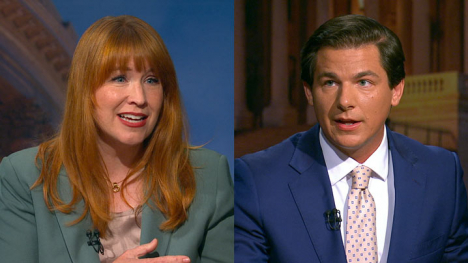
Lindsay James (D-Dubuque) and Joe Mitchell (R-Clear Lake) answer questions from Iowa reporters and discuss their platforms, concerns and future plans.
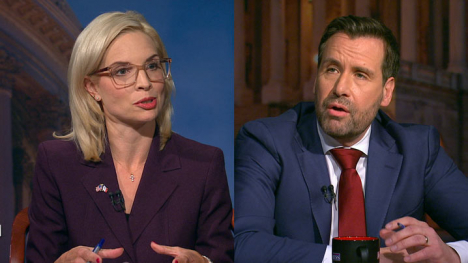
Candidates Ashley Hinson (R - Marion) and Josh Turek (D - Council Bluffs) answer questions from reporters and discuss their platforms, concerns and future plans.