Trade talk as China nears soybean goal, food pantries face holiday demand, family rebuilds its bogs.
U.S.-China Talk Farm Trade, Stocking Rural Food Pantries and Improving the Cranberry Harvest
Share


President Trump presses China to buy more U.S. farm goods. In Idaho, a food pantry counts on a borrowed supply of groceries and an aging truck as Thanksgiving approaches. In Massachusetts, two brothers tear out cranberry vines to keep their family farming. Brooke Kohlsdorf looks at the grain selloff and volatile cattle prices with Dan Hueber.
Recorded: November 19, 2026
Transcript
[Brooke Kohlsdorf] Coming up on Market to Market. Trump and Putin meet in a historic summit with tariffs on the table. Food banks work to fill the gap as the holiday season approaches. One family's effort to renovate the land and keep the cranberry harvest coming. And commodity market analysis with Dan Hueber. Next.
[Announcer] (Pioneer) I wouldn't be here without my customers.
[Announcer] Yeah, I'd like to thank the customers. They're. They're very dear to our hearts.
[Announcer] It's about the people that you're working with and the relationships that you have.
[Announcer] Thank you, thank you, thank you.
[Announcer] Thank you from the bottom of my heart.
[Music]
[Announcer] Support for Market to Market has been provided by a bequest from Phillip Leitz of Alta, Iowa in recognition of public television's commitment to agricultural programming.
[MUSIC]
[Announcer] Market to Market is made possible in part by a grant from the Corporation for Public Broadcasting.
[Announcer] This is the. Friday, November 20th edition of Market to Market, the weekly Journal of Rural America.
[Brooke Kohlsdorf] An historic meeting between some of the world’s top super powers took place in China this week. Trade was on the list of topics for discussion and several things were rumored to be on the table from soybeans to petroleum to microchips.Before the meetup, Trump talked trade with Mexico’s President Claudia Scheinbaum and Canada’s PM Mark Carney on the sidelines. But the main focus was on the high profile bilateral and trilateral talks. Colleen Bradford Krantz has the report.
[Colleen Bradford Krantz]The world watched this week as the leaders of the three most powerful nations gathered alongside others in China for the Asia-Pacific Economic Cooperation forum, or APEC.
President Donald Trump, China’s Xi Jinping and Russia’s Vladimir Putin gathered to discuss everything from global trade to military conflicts, marking the first time in decades when the leaders of all three nations had met together.
Wang Huiyao, Center of China and Globalization: “Last time when China, U.S. and Russian leaders got together, that was 80-some years ago. That was Yalta, right? I mean, that was really quite a long time ago. Now we are at another turning point; we are at a more fragmented world, we are getting to a multi-polar world, and the world is lacking strong directions.”
The White House said the leaders committed to reforming the UN, increasing production and supply of petroleum products, and reducing the risk and proliferation of nuclear weapons.
Before adding Putin to the mix Thursday, Xi and Trump met with Trump saying he would push China to buy more U.S. agricultural products. China is close to meeting its soybean pledge but well behind on the broader farm-goods pledge. They also discussed Taiwan, trade and energy security, including the importance of keeping oil shipments through the Strait of Hormuz flowing.
For Market to Market, I’m Colleen Bradford Krantz. Krantz.
[Brooke Kohlsdorf] Thanksgiving is next week and it’s the first holiday in a series over the next six weeks. Consumers have started to gear up for big family dinners and, eventually, packages filled with mostly welcome surprises. Early purchases for the holiday season are showing up in retail sales figures. The index increased 0.2 percent over last month making it nearly 7 percent higher over the last 12 months. Creighton University’s Rural Mainstreet Index sank below growth neutral for the eighth time this year. Bankers in the 10-state survey believe there should be an interest rate hike but opinions vary on how much. The Fed governors have already indicated there will be a rate hike in December and it’s only a matter of deciding how much.
This year’s Thanksgiving dinner will cost 6 percent more than last year according to the Farm Bureau. Even at the cost of $5.86 per plate, it’s out of reach for some families.
USDA data shows 1 in 8 families in the U.S. are food insecure with limited access to adequate food considered safe and nutritious. Eighty-five percent of the highest levels of hunger are found in rural counties. Food banks and food pantries often fill the gap. Mountain West Bureau Chief Tammy Scardino has more on how food pantries keep the shelves stocked no matter what the season.
[Tammy Scardino] For some, higher fuel costs mean spending less money on wants. For others, it means spending less on basic needs.
Stacey Rosecrans is the executive director of the nonprofit Gem County Recovery Community Center in Emmett, Idaho. The center also houses a food pantry in the same small town of 8,900 people.
Stacey Rosecrans, GCRCC Executive Director, Bridge Outreach Food Pantry: “We have a number of people who can afford to live here, and then they work in Boise but can't necessarily afford to live in Boise…. If there isn't money left over for groceries or for enough groceries, then food insecurity exists and that can be in any family, to any extent.”
[Tammy Scardino] The number of people accessing the food pantry this year is on the rise when compared to last year. Currently, there are over 3,500 households signed up for food pantry services.
Here at the Idaho Foodbank warehouse, a group of volunteers are busy preparing boxes for distribution to the organization’s community partners. Statewide, the Foodbank serves over 200,000 people every month.
Satisfying their goal to provide nutritious food to Idahoans is made possible through local donations and trade with other food banks across the Pacific Northwest.
Morgan Wilson, Chief External Relations Officer, Idaho Foodbank: “We do very little all on our own. It's all about, you know, the community groups putting together those food drives or fund drives, our donors making those monetary gifts, and of course, our farmers, our manufacturers coming in with those large scale food donations.”
[Tammy Scardino] Back at Gem County, Rosecrans is concerned about lack of supply. She relies on the overstock from a neighboring town with a delivery truck that’s hard to keep up and running. She doesn’t want to turn anyone away because there isn’t enough food.
Stacey Rosecrans, GCRCC Executive Director, Bridge Outreach Food Pantry: “We'll find the path that we need to continue to serve our community, at least to the level that we do now, if not an even greater level.”
[Tammy Scardino] For Market to Market, I’m Tammy Scardino.
[Brooke Kohlsdorf] Cranberries are a proud staple of Massachusetts agriculture, with roots dating back centuries. Today, growers face rising costs, changing weather patterns, and tough markets. In the southeastern part of the state, one multi-generational family is rethinking how they farm and have joined an industry-wide push to modernize. Producer Laurel Bower has the details in this week’s Cover Story.
[Laurel Bower] Cranberries have been grown in Massachusetts for centuries, generating nearly $1.7 billion in annual state revenue and supporting more than 6,000 jobs. Today, tighter margins and unpredictable weather are forcing Bay State farmers to adapt. In Carver, one family is reimagining how they work the land with help from an industry-wide push to modernize.
James Rhodes, Edgewood Bogs - Carver, Massachusetts: "Edgewood bogs started, actually started from a lumber company, actually. They were buying land for the lumber on it and discovered cranberries on the land after they cleared the lumber and then started cultivating the cranberries. and From there, we grew into a pretty large company. and in the late or early 2000, we downsized and consolidated everything here."
[Laurel Bower]To gain more control over fruit prices, the Rhodes family consolidated their bogs into one area, streamlined daily operations, and planted higher-yielding varieties. Those efficiencies helped pay down debt and launched their own frozen cranberry brand, Cape Cod Select.
Jarrod Rhodes, Edgewood Bogs - Carver, Massachusetts: “Cape Cod Select for us was about controlling some of our own destiny and making cranberries available in grocery stores year round. We do about 30% of our own fruit and the rest goes out to independent buyers that make juice and other food service products.”
[Laurel Bower] Discovering the bogs weren’t as efficient as they’d like them to be, the brothers launched a massive bog renovation project—a process Jarrod is quick to distinguish from bog restoration.
Jarrod Rhodes, Edgewood Bogs - Carver, Massachusetts: “Renovation is reviving the bog and making it produce better and helping sustain the business and evolve the market. And restoration is putting things back to the way they maybe were before they were farmed.”
[Laurel Bower] Renovation meant starting from scratch. Crews stripped old vines, divided large beds into smaller squares, and used laser-guided equipment to level the ground. While cranberries grow in dry sandy soil, they are harvested in flooded fields, making level ground critical for water distribution.
James Rhodes, Edgewood Bogs - Carver, Massachusetts: "Some of the old, older bogs. You'll have to put six feet of water in some places to get three inches of water in other places. Here, as you can see, the bogs are nice and level. You put four inches somewhere, it's four inches somewhere else. That’s a huge benefit to the renovation."
[Laurel Bower] Once flat, Edgewood Bogs installed automated irrigation pumps and replanted with modern cranberry varieties. These new vines produce two to three times more fruit while cutting back on water, chemicals, and labor.
Jarrod Rhodes, Edgewood Bogs - Carver, Massachusetts: "So we've been trying to kind of square off the bogs and, you know, make them more efficient and plant varieties that are higher producing to kind of, you know, sustain being in the industry. I think the biggest thing with renovation is water preservation. and, you know, an efficient irrigation system."
[Laurel Bower] This push for efficiency is happening statewide. Brian Wick is executive director of the Cape Cod Cranberry Growers Association.
Brian Wick, Cape Cod Cranberry Growers Association: "So the economics is certainly one of the biggest challenges that we're facing. The climate is changing as well. So the growing season on average tends to be longer. We have more frequent droughts. So when you have drought, the growers are running their pumps more. That costs money because of the fuel. So there's a lot of challenges all intermingled together. The marketplace has its challenges. So it's a tough environment right now."
[Laurel Bower] Renovation is expensive, costing up to $75,000 an acre, taking three years for a good crop, and up to a decade to see a return on investment. About ten years ago, the association successfully advocated for the state’s Cranberry Renovation and Enhancement Program to help growers.
Brian Wick, Cape Cod Cranberry Growers Association: "So the state stepped in with this grant program, and that provided enough of a stimulus to help growers with some money so that they could then start to renovate the current bogs. And it really just snowballed from there. where again, each year they've been able to apply, and we've had more than 500 acres of cranberry bogs now renovated.”
[Laurel Bower] Wick says boosting yields is the only way Massachusetts growers can survive flat fruit prices.
Brian Wick, Cape Cod Cranberry Growers Association: "If you're growing a 100 barrel crop or a 500 barrel crop, your input costs are both the same. But if you can get that much more yield, that's where you're going to make the difference."
[Laurel Bower] While some farmers are retiring old bogs into wetlands, the Rhodes family has chosen renovation to protect their livelihood.
Brian Wick, Cape Cod Cranberry Growers Association: “You’re taking a chance whenever you do something on your property, on your bog. That leap can be very daunting. And so having growers that are willing to take that chance to try things out, prove that it works, that allows other growers to follow suit. They’re one of our leaders in the innovation of cranberry production.”
[Laurel Bower] Rebuilding from the sand up isn't just about preserving a century-old tradition. For the Rhodes, it's how they're securing their family’s future.
Jarrod Rhodes, Edgewood Bogs - Carver, Massachusetts: "Well, we're farmers and we want to remain farmers. Our family's been doing it for a long time, and without renovation, we wouldn't be profitable. We wouldn't be able to keep doing what we're doing. So I think that's the main reason that we're doing it."
[Laurel Bower] For Market to Market, I'm Laurel Bower.
[Announcer] Next, the Market to Market report.
[Brooke Kohlsdorf] The effect of the apex summit and a trade deal with Thailand were balanced against managed money, tapping the brakes on investment. The slowdown comes in the wake of fed governors talking about an interest rate hike of up to 50 basis points. One note we are recording this program on Thursday, November 19th, when the commodity markets were mixed. The nearby wheat contract fell $0.16 and the December corn contract lost $0.08. Meal was the only bright spot in the soy complex as it stayed in the green for the second week in a row. The January soybean contract dropped $0.23 and December meal added $3.70 per ton. March Cotton lost $3.04 per hundred weight. December class three milk futures cut $0.13. The livestock complex was mixed. February cattle gained $2.42. January feeders put on $0.15 and the February Lean hog contract declined $6.83. In the currency market, the U.S. Dollar Index added 55 ticks. December. Crude oil dropped $4.44 per barrel. Comex gold fell $206.60 per ounce, and the Goldman Sachs Commodity Index shrank by more than 33 points to settle at 6.5674. And here now to lend us his insight on these and other trends is our regular market analyst, Dan Hueber. Good to see you Dan.
[Dan Hueber] Nice to see you. Thank you.
[Brooke Kohlsdorf] So the grain markets got hammered on Wednesday, is how I saw one analyst put it. What happened?
[Dan Hueber] Well the you know part of it was a little disappointment I guess, that leading into this, this summit meeting, once again. It's, it's almost comical, I guess, that markets kind of get excited. We're going to have the summit. We're going to talk about tariff relief and export business. And then all of a sudden they realize, well, nothing really is happening. So it's, it's kind of that old adage, you know, fool me once, shame on you, fool me twice or 3 or 4 or 5 or 6 times. Shame on me. So markets keep getting fooled that something's really going to materialize out of this. You know, I kind of tend to think this is a final give up to the downside. You know, there's not really a great reason to continue to press prices lower at this point in time. You're not going to stimulate that much more demand. So so it's probably a little bit of a holiday lull. Get me out. We're going to exit before the Thanksgiving period and maybe not come back until January at that point in time.
[Brooke Kohlsdorf] So okay, so a lot of nothing for a while.
[Dan Hueber] Exactly. Unfortunately. Yes. Yes.
[Brooke Kohlsdorf] So wheat was the biggest loser. What would it take then with what you've said, to see wheat go a little higher?
[Dan Hueber] Well, you know, actually when you look at wheat corn close second in there, you know, we're really just back down to levels we were at at the end of June. So we've, we've totally erased the summer rally. And, you know, again, that's probably enough at that point in time. But yes, we need to see some demand redevelop in there. But interestingly enough, you know, there's an old theory, I should say theory. There's an old adage about called the voice of the tomb. And it's really an old seasonal story. You you should buy wheat on this date, sell it on another date. Up until now, it's actually been quite, quite accurate this year. I mean, the last time you should have bought wheat was, was the the end of June and then said, I think it said sell it on the 10th of September, which would have been quite good. Now the, the next move on that is buy wheat at the end of November. So, you know, maybe that's going to hold true again this time. So it's hopefully bring a few bright spots back into this market again. So.
[Brooke Kohlsdorf] Well, what about corn. Is it going to hit summer lows.
[Dan Hueber] Oh I think, you know again we've, we've pretty much come down to those same lows. I mean within 3 or $0.04 I think we reached down to yesterday. Prices did try to rebound some here today. So yes I think it's more of a you know we're just squeezing out the last of the longs. I'm not sure where, the where those longs are now, but they're, they're pretty well getting squeezed out of this market at this point in time. We know the managed money crowd is has definitely shifted over from a very long position at the beginning of September to a short position now, you know, have probably pushed that as far as we need to go. And like I say, I think it's going to be difficult to, for them to sustain these moves further to the downside. So they'll tend to start wanting to look for greener pastures elsewhere. How do we invest money somewhere else for a better return? So I think we're on the cusp of that happening here.
[Brooke Kohlsdorf] So, so what could unstuck corn then? Or is there anything?
[Dan Hueber] Well, you know, I say as much as, you know, granted, up until yesterday, it looked like we had really started to build the foundation which we could rally from yesterday, kind of pushed that to a little more extreme. But like I say, today's market has rebounded some. So I think, you know, again, here in corn two, usually by the time you get to late November, early December, you know, we've, we factored all the supply issues in there. Now we have to talk about demand. And, you know, this time of the year, be it corn or soybeans, you know, we're, we're the market for the world. South America is, is of course, in the planning, planning, progress, development progress. So if anybody needs products, they basically have to come to the US. So I think that should be enough to start showing prices up as we move out into the new year. Now granted, come in, come in January. We'll get that final crop production number. I still think a lot of people think there'll be yield reductions for the corn yet. Maybe not so much for soybeans, but you know, those type of little changes sometimes are enough to spark psychologically a change in attitude in the market.
[Brooke Kohlsdorf] You kind of alluded to this earlier about the meeting between President Trump and President Xi. We haven't heard a lot of specifics about that. Is that kind of what the, the soy complex is waiting for right now is just something specific to get the market moving?
[Dan Hueber] You know, granted, maybe hoping something specific will come out, which I think is probably real other than maybe promises. And again, that's usually what you get out of meetings like this. I mean, certainly China would love to see tariffs reduced. And they have stated, you know, weeks ahead of this meeting that, you know, we will be reciprocal. If you want to reduce tariffs, we'll reduce tariffs. We'll buy more product. You know, are they going to do anything more than the promises they've made already. I think that that's highly unlikely. But at the same token it's you know again any any any better news in there would maybe help stimulate or at least stem the declines right now. So maybe market. Yes. It's back down a little bit here this week, but it's the one that seems to be holding in the best. So I think there is a the the attitude of one. Yes, demand is going to probably stay respectable here for the next 6 to 8 weeks. And number two, we've got a risk of growing a crop in South America, you know. So there's no guarantee that. Yes. I mean, planning has gone well so far in South America. But that certainly doesn't put a crop in the bin either.
[Brooke Kohlsdorf] So you sort of answered my next question. We haven't really talked. I could read your mind. You could. So yeah. Any weather concerns there right now.
[Dan Hueber] You know, it's been, it's been a good season. Last I saw. I mean they're probably pushing 85% planted on soybeans at this point in time. Yeah. A little bit of concerns of some dryness in the northern regions. But you know that's a difficult thing about getting a weather issue in Brazil. And regardless if it's El Nino or not, such a huge geographical territory north to south, you know, so you might have pockets here and there that have issues. So I mean, that's not saying a weather can't deteriorate. And again, if you go back traditionally with El Nino years, you know, they tend to get get dry. And Brazil and northern Argentina, so far that hasn't been the case. In fact, if anything, southern, southern Brazil has been a little bit excessively wet. But you know, great start to a couple percentage ahead of last year and planning question on probably more so for corn. Not as much in soybeans is, you know, what's going to happen with the safrinha crop or the safrinha Cornyn, which of course is planted, you know, after the early soybeans come out, there is some discussion that the there could be a little less acreage. There might go over to more cotton, could go over to Sesame, I think was one of the crops that they were, they were targeting down there. But, you know, probably a little bit too early to tell. And certainly, you know, something maybe, maybe we'll tap on to later. The Dow has been rallying. That is good for Brazilian farmers. And Brazilian farmers have definitely been selling into this rally. So it's you know that that product is going to come to market.
[Brooke Kohlsdorf] So our next question is going to come from social media. So this is Matt from South Dakota. Had a question about our producers not setting futures, but rather holding on to an abnormally large basis position at the elevator. Or is the crop just not out there. So nobody was forced to sell off the combine.
[Dan Hueber] You know, on, on soybeans, I would say, you know, farmers have tended what wasn't forward contracted, you know, and of course we'll work through that. Yeah, we've probably not moved as much as normal. There was capacity for to put a crop in there on soybeans. I, you know, granted every area is a little bit different. South Dakota could be one of those different ones. Most places I've talked to soybean yields were pretty substantial. So it's, it shouldn't have been a, an issue that we had a lot of empty bins that needed to fill space that could have been more so in the corn arena where yields are a little bit reduced from where they've been over the last year or two. But but, you know, I think a typical year, I mean, processors will try to buy all the soybeans they can at this point in time. Crush margins remain good. The monthly crush figures have have continued to be very solid. So I mean, as long as they make money, they're going to try to buy beans at at. Is that going to pull them back out of the bins? I would say cash flow is probably going to be your biggest determinant on when farmers move product back out of the bins at this point.
[Brooke Kohlsdorf] So okay, well, let's move on to meats. We haven't gotten there yet. So there's been some volatility in the cattle market. What's, what's happening there?
[Dan Hueber] Well you know, certainly a combination as is always the case, a combination of factors historic rise. You know, you want to get even with the crash we've seen in the cattle market over the last few months. You know, we're still historically very high level, still above $200 a a 100 weight here in the beef market. So it's not that we've gone into disastrous situations, but, you know, for somebody with some high priced feeders in the feedlot that made it not be a comfortable situation. But, you know, between the combination of the economy slowing down, higher interest rates, import of more beef, you know, it really kind of took, the took the edge off of that market. And then combined that with the, the crash we've seen in the hog market, you know, it's a lot of competition at that retail counter right now. So I think beef beef is coming at the short end of the stick.
[Brooke Kohlsdorf] What about the feeder market?
[Dan Hueber] Feeder market you want, again, I mean it's going to have to fit in there as well. I mean if a producer cannot see profitability by putting some cattle on the feedlot, you know, it makes it pretty difficult for, to sell those feeders or keep feeder prices up there. Granted, inventory numbers are certainly not huge in this country, as you know, as compared to historical standards. But here again, if they're if we're not seeing the demand at the at the far other end of the spectrum, you know, it's going to be pretty challenging to think that we're going to put a lot of cattle in feedlots. I traveled through South Dakota here about two weeks ago, and I was a little bit surprised on how how limited the number of cattle seemed to be in some of the feedlots out through there. So it's like I say, I think I think producers are pretty hesitant to spend that money right now and take that risk.
[Brooke Kohlsdorf] So you talked about hogs, and we'll get to that in Market Plus because we, we're running out of time, but we'll discuss that a little more. Poor hogs. All right. Thanks, Dan.
[Dan Hueber] Thank you.
[Brooke Kohlsdorf] Well you've been watching our market analysis. And if you are watching online or on the PBS app, we are going to stay here and continue this discussion in Market Plus, our online only segment. You can find it wherever you get your podcasts or at Market to Market .org, where you can watch, listen, or read. We have a new feature on our YouTube channel playlists involving many of the topics we cover on the program, and you can check out the stories grouped on technology, crops, trade and policy, just to name a few. You can check us out at YouTube.com slash Market to Market. Next week, join us for our annual Thanksgiving Kitchen table meet up on the state of rural economy. Thanks so much for watching us and have a great week.
[MUSIC]
[Announcer] Market to Market is a production of Iowa PBS, which is solely responsible for its content.
[MUSIC]
[Announcer] I wouldn't be here without my customers.
[Announcer] Yeah, I'd like to thank the customers there. They're very dear to our hearts.
[Announcer] It's about the people that you're working with and the relationships that you have.
[Announcer] Thank you, thank you, thank you.
[Announcer] Thank you from the bottom of my heart.
[Announcer] Support for Market to Market has been provided by a bequest from Philip Leeds of Alta, Iowa, in recognition of public television's commitment to agricultural programing.
[Announcer] Market to market is made possible in part by a grant from the Corporation for Public Broadcasting.
Trading in futures and options involves substantial risk. No warranty is given or implied by Iowa PBS or the analysts who appear on Market to Market. Past performance is not necessarily indicative of future results.
Watch More
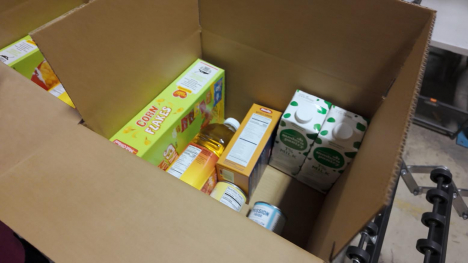
More than 3,500 households have signed up at a food pantry in Emmett, Idaho, ahead of the holidays.
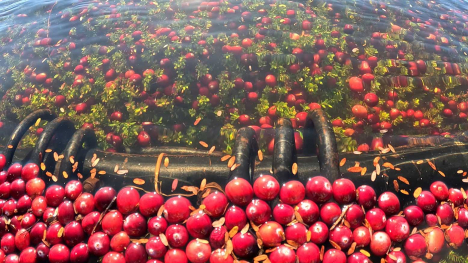
At Edgewood Bogs, the Rhodes family are renovating their bogs for higher production. New vines can take up to three years to produce a good crop.
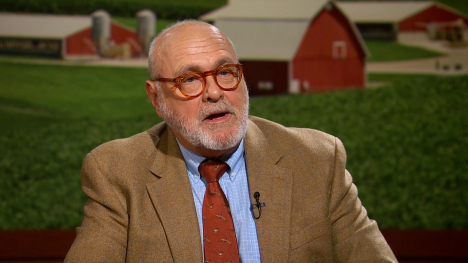
Dan Hueber weighs what could lift corn and wheat as soybean traders wait for news from China.

China is close to meeting its U.S. soybean pledge but trails its broader farm purchase target.
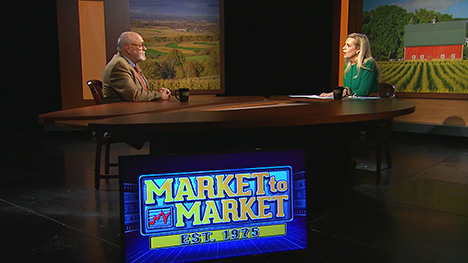
Dan Hueber fields growers’ questions on selling stored corn and choosing corn or soybeans for 2027.

Eric Hunt explores El Niño's impact on winter storms, drought relief and spring planting in 2027.