At Edgewood Bogs, the Rhodes family are renovating their bogs for higher production. New vines can take up to three years to produce a good crop.
Massachusetts Family Renovates Cranberry Bogs to Keep the Farm Producing
Share


In Carver, Massachusetts, James and Jarrod Rhodes strip out old cranberry vines, laser-level the beds and install automated irrigation before planting higher-yielding varieties. It can take up to a decade for the family to earn back the cost of renovating a bog.
Transcript
Cranberries have been grown in Massachusetts for centuries, generating nearly $1.7 billion in annual state revenue and supporting more than 6,000 jobs. Today, tighter margins and unpredictable weather are forcing Bay State farmers to adapt. In Carver, one family is reimagining how they work the land with help from an industry-wide push to modernize.
James Rhodes, Edgewood Bogs - Carver, Massachusetts: "Edgewood bogs started, actually started from a lumber company, actually. They were buying land for the lumber on it and discovered cranberries on the land after they cleared the lumber and then started cultivating the cranberries. and From there, we grew into a pretty large company. and in the late or early 2000, we downsized and consolidated everything here."
To gain more control over fruit prices, the Rhodes family consolidated their bogs into one area, streamlined daily operations, and planted higher-yielding varieties. Those efficiencies helped pay down debt and launched their own frozen cranberry brand, Cape Cod Select.
Jarrod Rhodes, Edgewood Bogs - Carver, Massachusetts: “Cape Cod Select for us was about controlling some of our own destiny and making cranberries available in grocery stores year round. We do about 30% of our own fruit and the rest goes out to independent buyers that make juice and other food service products.”
Discovering the bogs weren’t as efficient as they’d like them to be, the brothers launched a massive bog renovation project—a process Jarrod is quick to distinguish from bog restoration.
Jarrod Rhodes, Edgewood Bogs - Carver, Massachusetts: “Renovation is reviving the bog and making it produce better and helping sustain the business and evolve the market. And restoration is putting things back to the way they maybe were before they were farmed.”
Renovation meant starting from scratch. Crews stripped old vines, divided large beds into smaller squares, and used laser-guided equipment to level the ground. While cranberries grow in dry sandy soil, they are harvested in flooded fields, making level ground critical for water distribution.
James Rhodes, Edgewood Bogs - Carver, Massachusetts: "Some of the old, older bogs. You'll have to put six feet of water in some places to get three inches of water in other places. Here, as you can see, the bogs are nice and level. You put four inches somewhere, it's four inches somewhere else. That’s a huge benefit to the renovation."
Once flat, Edgewood Bogs installed automated irrigation pumps and replanted with modern cranberry varieties. These new vines produce two to three times more fruit while cutting back on water, chemicals, and labor.
Jarrod Rhodes, Edgewood Bogs - Carver, Massachusetts: "So we've been trying to kind of square off the bogs and, you know, make them more efficient and plant varieties that are higher producing to kind of, you know, sustain being in the industry. I think the biggest thing with renovation is water preservation. and, you know, an efficient irrigation system."
This push for efficiency is happening statewide. Brian Wick is executive director of the Cape Cod Cranberry Growers Association.
Brian Wick, Cape Cod Cranberry Growers Association: "So the economics is certainly one of the biggest challenges that we're facing. The climate is changing as well. So the growing season on average tends to be longer. We have more frequent droughts. So when you have drought, the growers are running their pumps more. That costs money because of the fuel. So there's a lot of challenges all intermingled together. The marketplace has its challenges. So it's a tough environment right now."
Renovation is expensive, costing up to $75,000 an acre, taking three years for a good crop, and up to a decade to see a return on investment. About ten years ago, the association successfully advocated for the state’s Cranberry Renovation and Enhancement Program to help growers.
Brian Wick, Cape Cod Cranberry Growers Association: "So the state stepped in with this grant program, and that provided enough of a stimulus to help growers with some money so that they could then start to renovate the current bogs. And it really just snowballed from there. where again, each year they've been able to apply, and we've had more than 500 acres of cranberry bogs now renovated.”
Wick says boosting yields is the only way Massachusetts growers can survive flat fruit prices.
Brian Wick, Cape Cod Cranberry Growers Association: "If you're growing a 100 barrel crop or a 500 barrel crop, your input costs are both the same. But if you can get that much more yield, that's where you're going to make the difference."
While some farmers are retiring old bogs into wetlands, the Rhodes family has chosen renovation to protect their livelihood.
Brian Wick, Cape Cod Cranberry Growers Association: “You’re taking a chance whenever you do something on your property, on your bog. That leap can be very daunting. And so having growers that are willing to take that chance to try things out, prove that it works, that allows other growers to follow suit. They’re one of our leaders in the innovation of cranberry production.”
Rebuilding from the sand up isn't just about preserving a century-old tradition. For the Rhodes, it's how they're securing their family’s future.
Jarrod Rhodes, Edgewood Bogs - Carver, Massachusetts: "Well, we're farmers and we want to remain farmers. Our family's been doing it for a long time, and without renovation, we wouldn't be profitable. We wouldn't be able to keep doing what we're doing. So I think that's the main reason that we're doing it."
For Market to Market, I'm Laurel Bower.
Watch More

Dan Hueber fields growers’ questions on selling stored corn and choosing corn or soybeans for 2027.

Trade talk as China nears soybean goal, food pantries face holiday demand, family rebuilds its bogs.

China is close to meeting its U.S. soybean pledge but trails its broader farm purchase target.

Dan Hueber weighs what could lift corn and wheat as soybean traders wait for news from China.
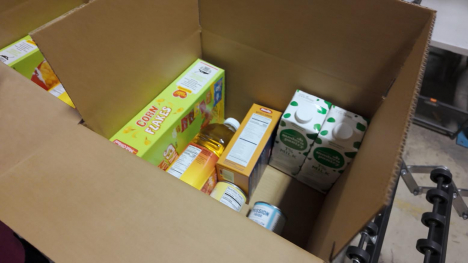
More than 3,500 households have signed up at a food pantry in Emmett, Idaho, ahead of the holidays.

Eric Hunt explores El Niño's impact on winter storms, drought relief and spring planting in 2027.