Super El Nino is part of the discussion in the commodities markets with our Market Analyst Shawn Hackett.
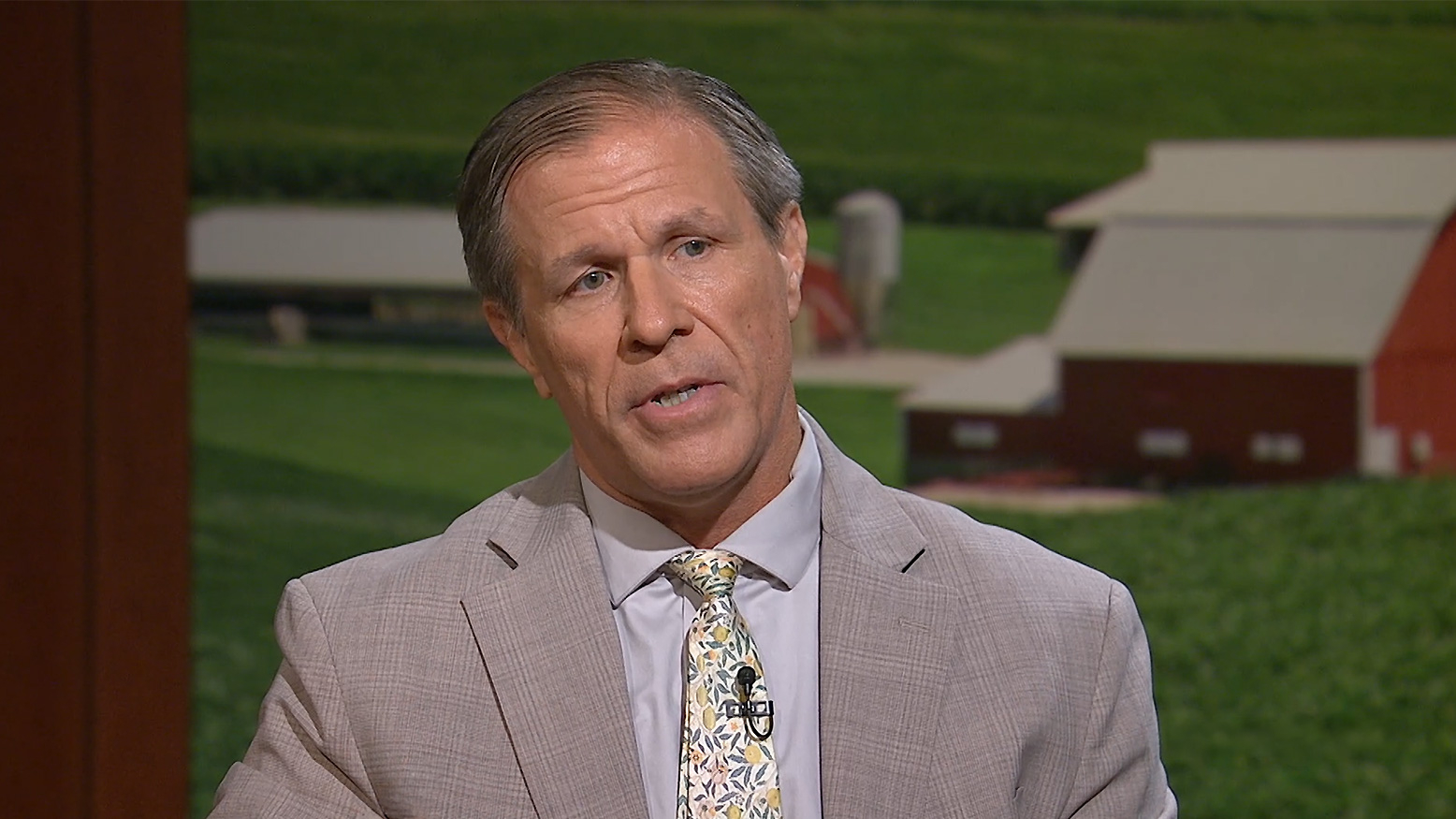


Our Market Analyst Shawn Hackett talks the impact of El Nino weather in the coming weeks. And, he also covers the cattle market.
Transcript
[YEAGER] USDA's Acreage and Stocks reports are due next week. Traders lined up positions while factoring in extended heat that's scheduled to return to the. The Corn Belt for the trading week that's ending June 26th. The nearby wheat contract sold off $0.24 in the September corn contract lost $0.04. China's absence was made up for by a potential strike in Argentina, impacting the export market and the soy complex. The August soybean contract gained $0.08, while August meal put on two. 90. December cotton lost $3.63 per hundredweight. July class three milk futures shed $0.54. The livestock market was mixed. August cattle decreased $0.80. August feeders put on three. 25. And the August lean hog contract lost $0.15. In the currency markets, the U.S. Dollar Index added 51 ticks. August crude oil sold off five. 52 per barrel. Comex gold was down by one. 59 $0.60 per ounce, and the Goldman Sachs Commodity Index cut more than 30 points to settle at six 1710. Here now to lend us his insight on these and other trends as regular market analyst. Shawn Hackett. Hello, sir.
[SHAWN HACKETT] Hey, Paul. Always better to be here during the summertime than the winter time.
[YEAGER] See us next week and see if you would say that. Same impact. The heat is a story. It's been dry. It's been hot in the wheat belt. But come Friday, we had yet another round of sell offs. What is driving it?
[HACKETT] I mean, when I look at an El Nino weather pattern, a lot of the dry areas that people were worried about, they've gotten rains. The temperatures haven't been too hot. The key to the U.S. Crop, it's got to be hot daytime temperatures and dry. We've had some dryness easing back, and we are still anticipating a very good July. Super El ninos have never not delivered a good July weather, even though some heat might come into the equation next week.
[YEAGER] I know we're going to. That's easily on the bingo card many, many times for this discussion. We'll get to El Nino and a couple other things, but I've got something global that I want you to answer. Dan in Nebraska hit us up with a whole bunch of great questions. This is the one we picked, so it's small, but I'll read for you. You often emphasize that global liquidity factors and currency fluctuations drive individual commodity markets more than standard technical tools. With ongoing geopolitical shifts and volatility in the US dollar. Which specific global currency trend do you think will have the most disruptive impact on U.S. Agriculture exports over the next six months? Why did you want to talk about this with wheat?
[HACKETT] Well, because wheat is grown and traded almost everywhere in the world. So, when you have the dollar moving up or down significantly, it alters the price differentials and the arbitrage between U.S. Prices and those prices. And so, there's just the most overall impact where soybeans, it's Brazil and us in corn, it's Brazil in US and maybe China a little bit. But, you know, I mean, it's a more of a, a bipolar type of a market wheat. It's a world market. And so, the dollar always, always a bigger impact. And so, a strong dollar is not good for U.S. Wheat prices historically.
[YEAGER] Let us can keep that export market thinking here for the old crop of corn. Mexico had been buying a lot. There's this discussion that begins supposed to begin on Wednesday. The review of the USMCA. What's that going to do with this old crop story? Is it even an impact?
[HACKETT] You know, I have to assume we're going to solve and make an agreement that's going to work for everybody. I can't imagine Trump ahead of a midterm elections is not going to deliver something for agriculture. So, I'm not too concerned that we're not going to develop an appropriate extension of that agreement. And corn exports have been good. I expect they will continue to be good, especially with prices as undervalued and cheap as they are today.
[YEAGER] Let's talk about this El Nino then with the new crop story, because we've got people in certain pockets who watch this program saying it is yellow. It is not healthy. We've got others who are about to be in an amazing heat wave. What's the biggest driver in this new crop story?
[HACKETT] If you're going to get the weather market going, if you're going to get everyone excited about a weather problem in July, you need to have hot, dry weather, not just for a week, like into the middle late July time frame. We have not had that since 2012. That's how long it's been Super El Ninos. We've had six since 1950. Not a single one has ever produced an enduring ridge. In July. Everyone has delivered timely rains and reduced high daytime temperatures overall, and I don't see anything that I see from our work that suggests we're not going to have a very good weather in July, and it's the future that counts. The problems of the past have already been traded.
[YEAGER] The problems of the future. Okay, but let's talk about the current. Then in July, you talk about this ridge. Tell me the thinking. If I am someone holding the crop, growing the crop, battling the forecasts of this super El Nino, is there anything I can do to prepare?
[HACKETT] Well, I mean, the only thing that I can say is if you're someone that's sitting there saying, I got too much old crop corn left from last year or I haven't, I have corn that I know I need to sell at harvest time. I'm not exactly where I need to be. You need to look for any kind of short covering rally on this temporary ridge that's coming. And if you get a bump, if you get some short covering in these markets, you want to take advantage of that because historically it typically means in a year, a retest of the lows in August. And that's the time that we could look for a more enduring low.
[YEAGER] And real quickly, we even have this one of the biggest market reports we have coming this week on acreage with corn. Why is corn going to drive this discussion as well?
[HACKETT] Well, I mean, there's a big debate out there. Usually when you plant quickly, you add some more corn acres from the planting intentions report. Of course, this was not a normal year. We do believe our work suggests, because of the dryness that you talked about in late spring time, those fringe acres got pulled back. And we still think we can get a reduction of maybe a million acres below planting intentions so that while not a game changer, every little bit helps. And it would certainly tighten up the balance sheet a little bit for next year.
[YEAGER] In the bean market, the old crop, we're still trying to get rid of it. We're China's not calling. There was a few sales. Can they come in and save this market?
[HACKETT] You know, we certainly hope that they can. I just I'm not sure what to think about this whole agreement that we supposedly made between the meeting and all and the 17 billion of commodities and the 25 million metric tons are supposed to buy. I don't know what's going on with the chess match here, other than to say domestic crush is strong. The crush margins are still good. That's what's holding the market from really caving in when China is going to strike. If they're going to strike, I would think it would be August, not now.
[YEAGER] The new crop story. Does the weather impact this at all yet?
[HACKETT] If we're going to get a weather reaction, it's going to be next week because we're going to --
[YEAGER] It would be this early because normally you think of beans being later, not as around the July 4th.
[HACKETT] Yeah. I still think you would get a reaction in the in the soybean market, once we get past this temporary ridge and we go back to kind of where we were, I don't see an opportunity in August for beans to catch a weather market. Super El Ninos, this is the most aggressive super El Nino we've seen since 1950. Just does not bode well for a weather related, sustainable weather-related rallies any time soon.
[YEAGER] Live cattle came back and showed that they still are serious, but had losses at the end of the week. What happened?
[HACKETT] I just think the cattle market is stuck in suspended animation. We're not going to import animals across the border anytime soon. Now that we have screwworm detected, we're not rebuilding the herd any time soon, which we just know is a is a mathematical equation. We know grilling demand is there and it has to finish out. At the same time, beef prices are the same price today on the beef cutout as it was a year ago. We're importing low quality beef, but haven't imported high quality beef from anybody. So, we're just stuck. Paul. We're stuck. And I think we're just getting caught by the whims of the winds of the market any given week, back and forth. But I don't really see that changing.
[YEAGER] And we're not retaining heifers either. On the feeder side.
[HACKETT] No.
[YEAGER] Is that something that nothing's indicating that that's going to happen anytime soon?
[HACKETT] Right. I don't see it. I don't see any indication that's going to happen anytime soon. And so, it comes down to can we import higher cuts from somebody else. Brazil is making a play for that. You know, and what's really ultimately going to happen here is that Mexico is building their own infrastructure to sell beef to us. At some point, they're going to be able to do that. And that whole, you know, buying feeders across the border is going to be gone forever. I really don't know what to say about cattle other than consumers are not going to chase beef prices any higher. At the same time, the supply isn't there and the packers aren't making money.
[YEAGER] But they're not doing it to the hog market either.
[HACKETT] No, they're not. The hog market's been very, very disappointing. I'm very surprised. I've been sort of more constructive on it. And it's kind of caved in. We have a kind of a flat animal type of situation with supply. We have been getting good exports, especially to Mexico. But it's just we've not been able to get the domestic demand strong enough to overwhelm the market. And it's been quite disappointing. What I will say, however, commitment of traders, capital flows, something we talk about a lot. We've seen some of the most wild buying in Co two in the last 3 or 4 weeks that we've seen in a very long time. Usually when we see that kind of sudden purchases in the COT market, in a particular market, it means maybe this market's overdone it to the downside. We'd be looking for some technical action to reverse higher here.
[YEAGER] So a whole lot going on. And guess what. We're just getting started. Shawn, thank you for your time. Shawn Hackett everyone. And you've been watching the analysis portion of our program. In a moment, we'll continue our discussion in an online only segment. Find it by searching Market Plus with Shawn Hackett wherever you get your podcasts, you can also go to our website of Markettomarket.org to listen. We are close to another milestone on our YouTube channel because of you subscribing. Now those thousands who are already there know the channel is full of all the video from the program, the episodes, the Market Plus, the stories, and the MtoM podcast. Subscribe [email protected] slash Market to Market. Next week, a mid-year review of the economic picture in rural America. Thank you so much for watching. Have a great week.
Trading in futures and options involves substantial risk. No warranty is given or implied by Iowa PBS or the analysts who appear on Market to Market. Past performance is not necessarily indicative of future results.