Market Analysis with Arlan Suderman as we talk wheat, corn, soybeans, cattle and hogs.
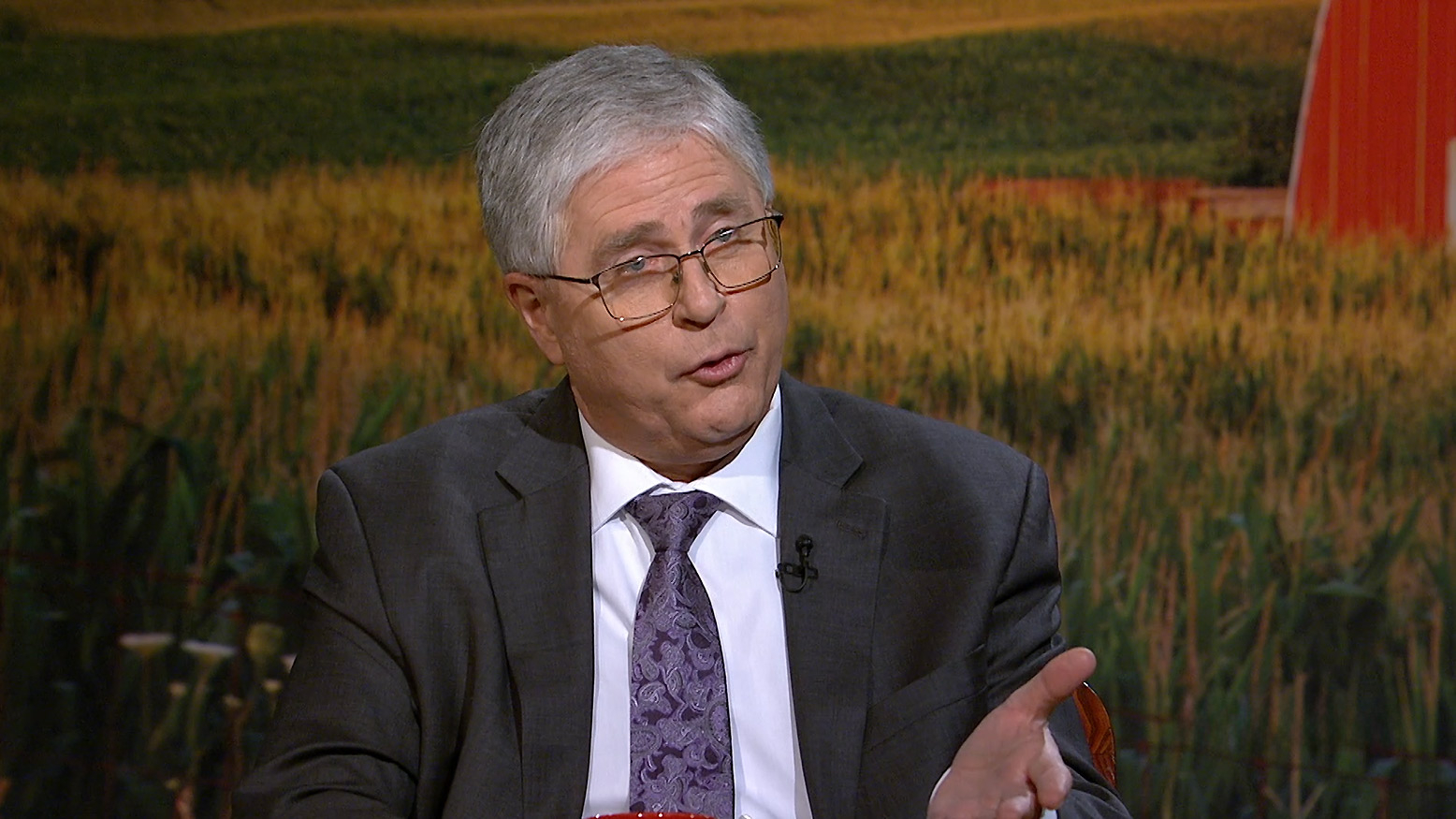


Market Analysis with Arlan Suderman as we talk wheat, corn, soybeans, cattle and hogs.
Transcript
[Yeager] Grains tested both sides of major moving averages as large supplies held one commodity back and foreign buying impacted another for the week. The nearby wheat contract lost $0.20, and the March corn contract added $0.03. China is buying U.S. soybeans, but the delivery side of the equation kept the cautious lid on the soy complex. The January soybean contract fell $0.28, while January meal cut 4.9 per ton. March cotton shrank by $0.08 per hundredweight. Over in the dairy parlor. January class three milk futures declined by $0.24. The livestock market was mixed as February. Cattle added $1. 25th January. Feeders put on 6.50, and the February lean hog contract was off by $0.03. In the currency markets, U.S. dollar index was higher by 29 ticks. January crude oil lost $0.83 per barrel. Comex gold found 53. 30 per ounce, and the Goldman Sachs Commodity Index was down by almost 12 points to settle at five 4020. Here now, to lend us his insight on these and other trends is one of our regular market analysts. Arlan Suderman. Hello, sir.
[Arlan Suderman] Good to be back.
[Yeager] You know, usually when we record, when we get done, there's been something that happens. This time there was news right before we recorded that is of significance to I'll just guess wheat is the biggest story. It involves Russia and Ukraine. I'll let you pick it up from here.
[Suderman] I would say wheat fertilizer and crude oil. Remember back when the war started was nearly five years ago now? Yeah. That commodity prices just exploded higher. And it was all because of the worry that the war would stop shipment out of that commodity rich area. The world's biggest area for exporting commodities. And as time went, we saw that both sides were going to allow the shipments to continue to go on and not mess with food and fuel for the world. And so, we saw the prices then trend lower, multi-year lows, et cetera. now that risk is going up again as both sides are positioning, as negotiations are going on, but also getting more and more frustrated. Russia's running low on bodies, Ukraine is running low on resources and losing some territory. And so, they're getting more weapons from the West now with longer range on them. And they're getting more aggressive in those strikes. And they've been attacking some ships in the Black Sea region, causing insurance rates to go up, causing shippers to think twice about going. But stuff still flowing well today. The report is that a black shadow freighter carrying crude oil from Russia. On trying to get around the sanctions the U.S. has on them, was struck not in the Black Sea but in the Mediterranean near Libya. And that really takes it to the next level. That's going to certainly anger Putin as we look at the port facilities where most of the wheat and other grains is loaded out of Ukraine, they're operating at about 20, 25% capacity now because of Russian strikes there. But we're, I think, striking at the ships, which is becoming greater frequency now is kind of a game changer. And that really risks us starting to see a shutdown or something in the Black Sea region, wheat would be big, crude oil would be big. The passes through there, a big portion of the world supplies. And then today Ukraine struck Russia's largest nitrogen ammonia plant. It's the plant that supplied the ammonia that went through the pipeline that goes through Ukraine. Previously previous to the war. But they'd been finding other ways to get export it. And so, we immediately saw ammonia prices surge higher. So, it's now starting to affect commodities a little bit more. And any funds that are short in the market are certainly taking notice.
[Yeager] Well, your colleague Josh Linville and I had a conversation a couple of weeks ago, and he had alerted about a couple of things going out of China. And he says, always keep watching that region. So, if I'm in wheat Country in the United States and I'm watching this program or in Canada, what do I do? Thinking, knowing that the volatility might be back big time in this market.
[Suderman] Is it enough to hold off marketing? I'm reluctant to say that because we may go on like we've been going on for years now, with nothing coming out or even get a peace agreement, and then everything would fall apart. But it does. It does warrant learning about the tools that are out there. Maybe for some ownership, for things you did previously already. Cell the opportunities for ownership. If that were to happen. And also, being ready if we get that kind of a rally, which would be considered to be a really fast rally like we had in war started, and being ready to sell into the hardest thing to do is sell into a rally because you think, how high might it go? I got to get the top. Being ready to accept prices that will guarantee you'll still be in business another year or two.
[Yeager] Yeah. And at the lows that we've been having, really the only way to possibly go is higher in this market. We need to move to corn because this is a trade that continues to test resistance and support very quickly. But it's not moving by much, which means that range is not much from the 100 to the 200-day moving average. What's that telling you?
[Suderman] Yeah, I'm really surprised how well it has held. And I think that's good, the resiliency of it. But that doesn't mean it will continue to hold. Certainly, whenever we get up to the top of that range, we see end users back away. We see speculators turn from long to short. When we get to the bottom range, end users jump in and speculators flip from short to long, and they're just trading that range back and forth. And so, I think it's good that we're holding the range right now. If we go higher than that, we start rationing demand and we have too big A supplies to ration demand. As much as producers really like to have higher prices, we got to get rid of these supplies, which the export market is working very hard to do right now. If we get below that, will we will we reduce production this coming year? Well, that's contingent on what soybeans do. We're going to plant corn and soybeans in the Midwest. We're going to keep our rotations for the most part in the Midwest, it would mostly affect acreage outside of the Midwest, in the South, in the Plains, et cetera.
[Yeager] Do I have to take action here? In the last few days of December, or is this a story that I can kind of sit on until the first of the year?
[Suderman] You know, I think the good news is, is when we got the rally that was fueled by the China trade agreement talk in October, in the first half of November, a lot of farmers did a very good job of selling, and those who did a good job have bought themselves some time with the rest of it. And that's the good news, because farmers are really undersold. Prior to that, that was a gift.
[Yeager] All right. The story in soybeans, there's headlines that say we have sales. But to me, and I think you're about to say to you, the big story is when China actually takes delivery, is that why the market is moving lower? Because we haven't seen those deliveries happen yet.
[Suderman] Well, first of all, our evidence would suggest that China, when they signed the deal, went ahead and bought what they needed on the board. And that was part of the rally up covered the sales. So now it's a basis and spread type of a story and getting the physical commodity. And we need to see it shipped because there's always a skepticism of China. Will they take shipment? When I was speaking to the Washington Wheat Growers in November, China bought a couple of cargoes of white wheat. They were glad to see that. Now it's been canceled, and we've saw that roll back. The same thing can happen with soybeans, or they could be rolled to the next marketing year type of a thing. We estimate that they've purchased about actually physical commodity, about 8.5 million metric tons of at this point. That's about twice what USDA has confirmed. But our cash sources would say that it's up there, and we expect them to be at about 10 million metric tons by the end of December, and then purchase the next 2 million metric tons over the next couple of months. I'm more optimistic about that than I was a month ago. But shipment, they just simply don't have room. I think that's going to drag out. They've been trying to auction off older supplies, to Crushers to make room for these soybeans. They're buying from us, and crushers saying we don't need them. They're offering about 20 million bushels per week. The first week they sold 80% of it. The second week, 63% of it the third week. This past week, they sold just a third of it. The Crushers don't need it. They're backing up supplies of Soymeal. The crushed margins are poor. Feeding margins are poor, and the demand is not there. So, I think it could be eight months or longer it takes to ship all those soybeans.
[Yeager] Well, I think I know the answer to the question I'm about to ask from Mitch in Iowa to you, Ireland, because what will it take to bring back a bullish market for soybeans? Do you feel that it's likely? No. Is that the easy answer here?
[Suderman] What it will take at this point is China following through. That's foundational on the commitment of the 12 million metric tons. But then getting a strong biofuel program from EPA and sooner than later, now, EPA said, we'll get to you sometime in the first quarter of 2026. Well, if they wait till the end of the quarter, we've lost a quarter of the year. And so, we need it as early as possible in 2026. We're optimistic, but they didn't call us up and ask what you want. We've just been studying what they've been doing and we think what they're going to do is going to be positive. But we don't know that for a fact. And so, we think that we're going to get a strong offset of the SREs, the small refinery exemptions, adding it to the total. We do think they'll compromise and take away the 50% rent credit and move it up closer to 100% on imported feedstocks. But you add everything together. It could end up taking our overall RVO from 7.12 billion Rins up to 8.8 billion Rins or something in between. We think it's going to be strong for feedstock. We think it will be positive, but you've got to get it sooner rather than later.
[Yeager] We have to move to livestock very quickly because of the cattle on feed today on feed November 1st, 98% placed 89%, fed cattle market at 88%. What number stood out to you?
[Suderman] Well, the placements for fourth ten year low that we've seen for the month in the last six months. That's a trend. The numbers aren't there. Ironically, there's two different markets out there. There's the cattle market and there's the beef market. We've got plenty of beef that may be high priced, but we have plenty of beef because prices are high enough that we're importing record amounts. And until recently we had record carcass weights. We got a little more current the last couple of weeks, but we've got a lot of beef, up about 1% from last year's levels. Fortunately, beef isn't good demand proteins in strong demand. Consumers buying, but the cattle market is hurting because the board. Does tend to lead cash markets lower. For those who have hedged, taken advantage of basis.
[Yeager] And in 30 seconds, the hog market.
[Suderman] Hog market, the ham market really crashed this last week. I guess the seasonal demand is there. It's not that big of the overall composite, but it's an indication of some softness there. We are seeing some disease problems in the herd, just like last year, cutting down our numbers. But overall, we should have to work through the supply here over the next coming weeks and hopefully work our way out of it.
[Yeager] When I look at that chart that we just showed, that trend looks higher. When you talk about reading the charts. Yeah. Is that the way you read it?
[Suderman] That's the hope. And that's the expectation. Yeah.
[Yeager] All right. And then quickly cattle like you mentioned the cattle on feed. Do we expect this to be viewed as a bullish report a neutral report?
[Suderman] I think it's priced in expected. I think the bigger thing right now is funds are looking at the charts. And until we can go back and take out the recent high, they're going to say that charts signals a negative.
[Yeager] All right. Well, it signals that we are done. Arlen good to see you. Thank you so very much for your time.
[Suderman] Thank you.
[Yeager] Arlan Suderman. And you have been watching the analysis segment. And in a moment we will continue our discussion in an online only segment, search Market Plus with Arlan Suderman. Wherever you get your podcasts to hear that conversation, or go to our website of markettomarket.org. Tis the season for listening to something to keep you busy. Going from place to place. Podcasts. We have three of them to go on that journey with you. Market Analysis, Market Plus and the MtoM. Each week a new episode is released right into your pocket. Subscribe wherever you get your podcasts. Next week we look at the state of the economy with a panel discussion. Thank you so much for watching. Have a great week!
Trading in futures and options involves substantial risk. No warranty is given or implied by Iowa PBS or the analysts who appear on Market to Market. Past performance is not necessarily indicative of future results.
Watch More
Agriculture gets sorted to the side during high-stakes negotiations with China. The yeas have it - E15 is approved in the House but not without some pushback. Revving up fans, drivers, and rural communities on the dirt track. And, commodity market analysis with Naomi Blohm.

Tariffs. Input costs. Brazil. Elections. Uncertainty. These are more than buzzwords in today's farm economy as producers face what is actively reshaping how American farmers see their future. Purdue University's Michael Langemeier gives us the inside look at the monthly AG Economy Barometer survey and what it's been telling us about the state of rural America.
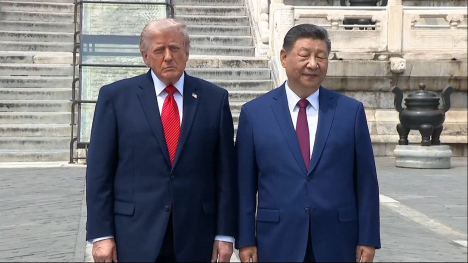
President Trump met with Chinese President Xi this week in a highly anticipated two-day summit.
Oil, fertilizer, and protein join the discussion for our Market Plus with Naomi Blohm along with corn, soybeans and weather.
One wet blanket hangs over the corn market in our Market Analysis with Naomi Blohm. We also cover cheese and soybean demand as part of the commodity story.
The U.S. House approved the sale of year-round E15. The bill now goes to the U.S. Senate.