Market Analysis with Don Roose
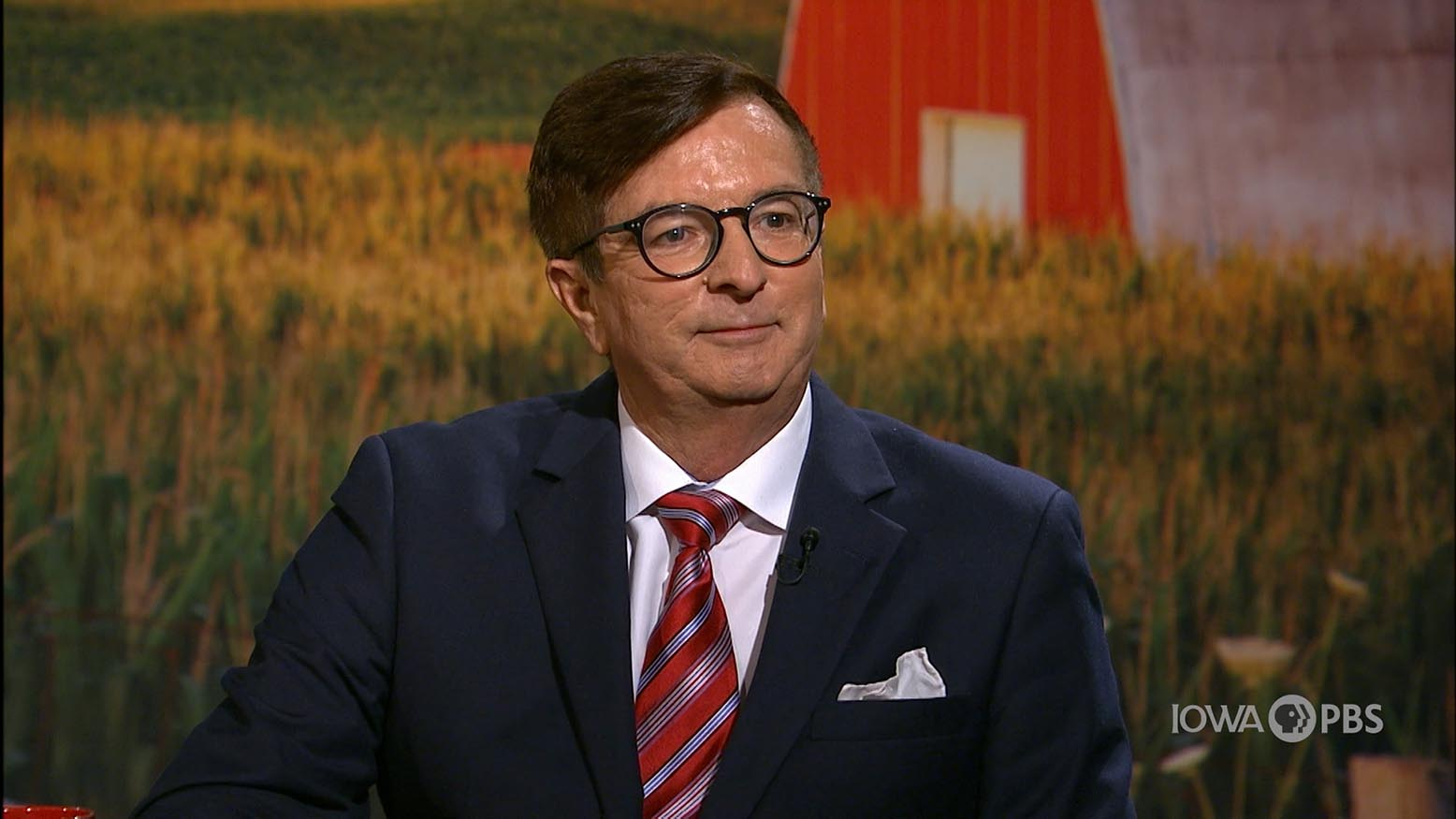


Don Roose discusses the economic and commodity markets including wheat, corn, soybeans, cattle, dairy, feeders, hogs and global trade.
Transcript
[Yeager] We are again recording early this week ahead of the New Year's holiday. These closes are a weekly look from Tuesday the 23rd to Tuesday the 30th for the week. The nearby wheat contract lost $0.06 and the March corn contract fell $0.07. Favorable weather in Brazil is partnering with weak export demand to keep pressure applied in the soy complex. The March soybean contract fell $0.02, while March meal cut 7.50 per ton. March cotton expanded by $0.29 per hundredweight. Over in the dairy parlor. January class three milk futures declined by a penny. The livestock market was mixed. February cattle added $0.48. March feeders put on 5.58, and the February lean hog contract was off by $0.53. In the currency markets, U.S. dollar index was higher by 26 ticks. February. Crude oil lost $0.34 per barrel. Comex gold sold off $138.60 per ounce, and the Goldman Sachs Commodity Index was up by just over two points to settle at five 5575. Here, now, to lend us his insight on these and other trends is one of our regular market analysts, Don Rose. Hello, Don.
[Don Roose] Glad to be back, Paul.
[Yeager] You know, this week of the this time of year, each year is slower traditionally, but we really seem to be slow this week. Why?
[Roose] Well, you know, you're right. We usually say during the holidays it's slower and lower. And, you know, I think that's kind of what happened. But, you know, I think when you look at the market, we're just there's a lot of uncertainty out here. You know the funds are sitting long. Soybeans, which is unusual sit in short corn. And I think we're just waiting for what's going to happen with the January crop report on the grain market.
[Yeager] The one market that you didn't mention that had the most potential for news was wheat. We had Russia, Ukraine. We had Ukraine's president in Florida. We had discussions that an end is coming, but then we don't. So, are we out of the geopolitical business impacting wheat right now?
[Roose] No, I don't think so. But I think when you look at the wheat market, the big problem is there's just too much wheat in the world. You know, this was a week where we were watching some of the talks between Russia, Ukraine, but also then the grain minister for Russia came out and upped their wheat crop. They're the largest wheat exporter, largest wheat producer in the world. So, the wheat market rallied $0.21 at a time, short order, but pulled right back to almost the lows again around that just above 504. So just can't go any place. Paul.
[Yeager] What are you hearing? Are you hearing this thing moving up a little higher?
[Roose] On the wheat market?
[Yeager] On the wheat market.
[Roose] You know, I don't think so. I think, you know, we try to add sometimes a little more premium, you know, Australia, Argentina had record wheat crops. You know, that's coming at us. I think it's fair to say that for the market to have a substantial move to the upside, get out of the doldrums, it's probably going to have to take some North America weather problems.
[Yeager] Well, let's talk about corn. And we have this report coming up in January. And Gary in Wisconsin has a specific question for you, Mr. Rose. He says we keep hearing these bullish corn sentiment things about the January 12th USDA report. We have we've had great corn exports, yet the market keeps going down. The usually bullish Christmas market bypassed us. What miracle do we need to see for corn prices to rise?
[Roose] Well, we did have a Santa Claus rally. We rallied up to that 453 on nearby wheat. That's the top end of the range that we had so far since the end of October. You know, what do we need to move up out of here? I think he's right. We're going to need something like we had last year. Lower yields. Last year we went down 2.8 bushels. I think it's going to have to go down more than that. But then I think you're also going to need some weather problems. Argentina is just done planning. They're about done planning their corn crop, the Brazil corn crop starts to gets planted when the beans come off. So, I think it's fair to say maybe a lower yield in this report, but probably realistically it's going to take some weather problems in South America.
[Yeager] And the only weather problem, you kind of talked a little bit about Argentina is the one that's hot and dry right now. Is that what you're hearing?
[Roose] Yeah, it's a La Nina year. So, where we're at is in those years, southern Brazil, Argentina is supposed to be warmer and drier. Now La Nina is more neutral, but it is south and central Argentina that's turning dry.
[Yeager] Sentiment here on the show. The last couple of weeks has been about more corn acres in 26. What's that due to new crop right now for you?
[Roose] Well, you know, I think when you look at it right now, I think what we're really looking at is probably soybean acres go up 4 to 5 million, and probably the corn acres go down 4 to 5 million. Just because last year, you know, we upped the corn acres. So, I think what it means is when, when soybeans were up around over that $11 mark, 1130 look pretty, look like some pretty early sales. We saw some people tackle. But, you know, the corn market might have a little better fundamentals than it had this last year. Paul with lower acres.
[Yeager] And Corn has performed quite well the last few months, despite all the headwinds that could be impacting it. Is there any one reason that stands out to you?
[Roose] Well, I think the number one thing is the producer in the U.S., when you look at their breakevens and the prices, there just hasn't been a rush to sell stuff. You know, it's been kind of a sputter type of sell. I think it's going to be key. What happens after the first of the year?
[Yeager] And as the grain, the binder gets welded shut at the at the New Year celebration. And that's a maybe that's the wrong family I'm discussing in public. I shouldn't do that. Let's talk about soybeans. But before we do, you were watching our we report on the metals. There's one metal in particular that we need to be. Gold has been on a sell off. I mean, gold was running high. But tell me about silver and its impact on commodities.
[Roose] Well, the silver market this week on Monday had the largest trading range in silver in history. But if you go back to the I've been around this thing a while, if you go back to the late 70s, early 80s, almost every day when you came in, you watched the direction of silver, to a lesser degree, gold to see what the soybean market and corn market was going to do. In other words, if silver is going to be up $0.20, soybean calls would be up 1 to 2. So, some of that was the inflationary time frame back there. A flight to some real assets. And I think that's what's going on right now. But we followed it sometimes on the silver here this week, but sometimes not so far not a real connect like we had back then. Paul.
[Yeager] Any movement that stood out to you in soybeans when we talked about good weather in South America, we've had weaker export demand. China still has to, you know, complete the process to take the U.S. Bean. What's the biggest factor for you this week?
[Roose] Well, I think the one thing that you ask, I mean, the fundamentals on soybeans aren't that great. You have to use your imagination. You've got a huge crop coming at you from Brazil, 6.6 billion bushels. We're going to have 4.3 billion. But when you say that and you look at that, the funds are sitting here and they've been consistently long. Soybeans like 140, 50,000 contracts. Now why I mean, what's underneath this market that gives them the desire to stay long. So, there's some kind of a supportive element under soybeans. Maybe it's the acres, you know, next year in the U.S., maybe it's concern about weather that we're going to have. Maybe it's the 45 Z program that the government comes out and announces something positive for biofuels. But for whatever reason, the charts we rally to $1.40 from the end of November up until December. And then we broke $1.16. But we're back at support, trying to see if we can hold here. Paul.
[Yeager] What's the bigger story for you next year in soybeans? Is it is it China's involvement or is it a large South American crop?
[Roose] Well, I think, you know, you take them one at a time. I think, first of all, it's the big South American crop. How does that get digested into the market then? I think, what do we see for a biofuel programs out of the administration that can give us some support. And then I think we're going to look at the acres March 31st, see what we get for soybean acres. You know, are they going to be how much I think they're going to be up. And then I think we quickly look at the weather. So, I think it's one, two, three going down the road. Paul.
[Yeager] I didn't hear you say yield though on beans. We always talk about that corn yield we think is going to be lower in January because that's the trend that we've been doing. What do you think the bean yield -- is it going to follow corn?
[Roose] Well, you know the soybeans feel like we know a little bit more about the soybeans than we do the corn just because of their earlier harvest. But, you know, soybean yield I think if it goes down it's just mildly I don't see it going up.
[Yeager] Okay. Let's go to livestock for a minute. One of the biggest stories for years has been the rise in this cattle market. And I have not family, friends asking me about this market. What's what are you asked at the dinner table here at Christmas about what's going on with cattle? What are people what's on their mind?
[Roose] Well, you know, I think the big thing going forward is we know the supplies are going to be tight next year, but is the demand going to hold up? So, I mean, is the disposable income going to push over to beef or continue with beef, or do we buy protein down? And then I think you have to ask yourself, Paul, last time we had a cattle cycle like this was 14 2014, 2015 bullish fundamentals all the way into 15. And we dropped 30% from 14 to 15. So, we had a 62% retracement on these cattle from their big $46 drop in February. So, we've kind of pulled back up measuring what's going to happen going forward.
[Yeager] Well, the chart we just showed that that that sell off at the end of November, that was kind of all right here we go. This is 14 and 15 again. The waves talk to me through the technical side of this cattle trade.
[Roose] Yeah I mean I think that's it. I mean if you're a big what we call Elliott wave trader, you know, you follow some of these wave counts. We've just retraced back up. And I think the question mark is do we stall here and start, you know, two steps down, one up or do we go make new highs. You know, past this 250 mark. So, I think a lot of it boils down to demand, Paul I think that's where we're really at.
[Yeager] Well, and that's consumer demand that you're referring to is, I don't know, January historically is January 1st of those months. We're not grilling. It's not the spring. It's not the summer. So, is that lack is that going to be enough to force a lack of demand to push this higher?
[Yeager] Lower I mean.
[Roose] Well, we went through the holiday time frame and that's usually a strong period for beef. The beef didn't move that well. The Packers lose about $250 a head. Right now. He's ultimately the guy that consumes. But the beef in cold storage was down 3.4% at the end of November versus last year. So still tight numbers.
[Yeager] Cattle retention. We're starting to hear maybe a starting to happen. Is that what you're hearing?
[Roose] I think so just a little bit, you know, but not anything. The ranchers, you know, a little bit older. And so, we're seeing, you know, some people getting out. So, it does it seems like it's Sputtery Paul.
[Yeager] Anything else in the feeder market that's to pay attention to here as we flip into 26.
[Roose] Well, I think for the, you know, the feedlots I think you have to be very careful. Cash feeders are still very expensive. So, I think the number one thing is guard the bottom line, Paul, because there's a lot of air under this market. If this is a market that's cyclical topping.
[Yeager] We've had I won't say indicators but whispers of this is maybe now the time to sell. Are you hearing things like that too about this feeder market?
[Roose] Well, I think cow calf guys, you know, in the driver's seat. So, you know no doubt you know, there's a lot of money being made. So, he's the guy that's getting the reward.
[Yeager] And that's and that has been what the story is. I was looking at some Dr. Peel from Oklahoma State commentary from the year. He said the exact same thing. Cow calf has been the one in in charge of this for a while. Let's flip to hogs if we could. There was something that was kind of interesting. You know, we don't get a ton of news on hogs, let alone this week. A we've seen U.S. pork demand at a six-month high. And we're also seeing July and August contracts with new contract highs. What is going on?
[Roose] Well, we had a bearish hog and pig report neutral to bearish. And we've gone up ever since. I think part of it is the export piece is record. It's strong. We're the largest pork exporter in the world. And I think on top of that the you know the consumer demand is strong for pork. So, but you're right. We went back up to this 104 area on summer months.
That's a big resistance area. Most of the time. So, you got to be a little careful up at these levels. But we're definitely reacting positive to negative news, Paul. That's a good sign.
[Yeager] We talked a little bit about renewables. The price of gasoline at the pump for the consumer below $2 in Iowa in some other in some spots we're seeing the national average tick down. We're seeing oil. Is this just the extension of lower crude oil prices and just OPEC putting so much onto the market? And where does renewables and ethanol play into this discussion right now as we look at some of these other commodities and their movement towards the end of 25?
[Roose] Well, definitely, I think our expansion area, I think in the grain business, when we look at South America and you see, you know, they're continuing to up their production, no doubt we need to continue to look at biofuels. That's our growth area. And, you know, as far as the energy values, we're producing a lot of energy here in the U.S. now, self-sufficient exporter. So, I think that's part of it. You know, good value for the consumer. Back to the beef. So maybe he has more money to buy beef.
[Yeager] Are things more intertwined. You know you talked about your years of experience. Are they more intertwined than they ever have been? Or is this just we're paying attention to everything that's intertwined.
[Roose] I think it's the media that we have. I mean, we can you can get news almost anywhere 24/7. So, I think that's part of it. Paul. So, I think the, you know, news is out there and it's easier to track.
[Yeager] This can be just a couple of word answer. Which commodity surprised you the most in 25?
[Roose] Silver.
[Yeager] Which one do you think will give us the biggest surprise in 26?
[Roose] I think it will probably be probably the stock market. If I had to say.
[Yeager] Higher or lower.
[Roose] I think probably lower.
[Yeager] Yeah, maybe due for a correction. All right. Don Roose good to see you. Happy New Year to you. Thank you, as always for making time.
[Roose] Happy New Year to you and all your listeners, Paul.
[Yeager] All right. Don Roose, everyone. And you have been watching the analysis segment in a moment. Don and I are going to continue our discussion in an online only segment, search Market Plus with Don Rose. That's our wherever you get your podcasts to hear that conversation, or go to our website at Markettomarket.org. New Year and New You with learning. January is the perfect time to dive into our Market to Market classroom project. We have modules perfect for covering the content that we discuss here and that many of you live each and every day. Head to Markettomarket.org. Next week we will see you for a story about squid squabble in Oregon. Thanks for watching. Goodbye.
Trading in futures and options involves substantial risk. No warranty is given or implied by Iowa PBS or the analysts who appear on Market to Market. Past performance is not necessarily indicative of future results.