We discuss soy exports, inelastic demand and a possibly tight carryover.
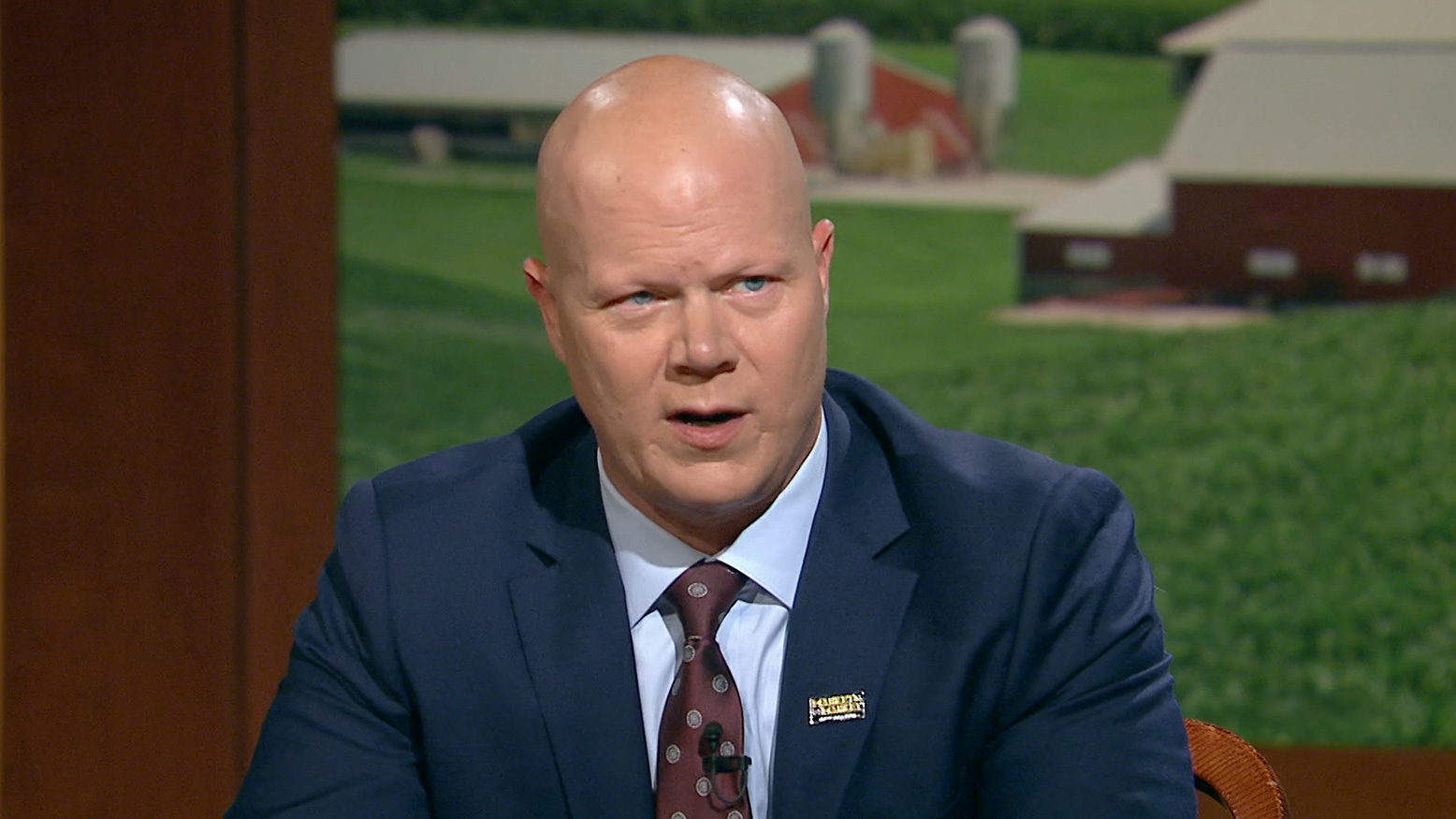


This week, Ted Seifried talks about a “massive potential powder keg”, Black Sea shipping, a bullish report, stocks and yields, China, specs, interest rates, and a return of the corn hat.
Transcript
[Yeager] The early week trading was influenced before turning attention to position ahead of Friday’s USDA report which was neutral. However, a report out of Russia sent the wheat market higher Friday…
The early week trading was influenced by weather before turning attention to positioning ahead of Friday’s USDA report which was neutral. However, a report out of Russia sent the wheat market higher Friday…
For the trading week ending July 10…
The nearby wheat contract gained 41 cents and the September corn contract was up 17 cents.
China did return to the U.S. market and made some purchases boosting the soy complex.
The August soybean contract improved 56 cents, while August meal put on $14.90.
December cotton expanded $4.42 per hundredweight.
August Class Three milk futures increased 58 cents.
The livestock market was mixed. August cattle sold off $3.83. August feeders cut $6.20 and the August lean hog contract added 40 cents.
In the currency markets, the U.S. dollar index gained 11 ticks.
August crude oil gained $2.93 per barrel.
COMEX gold was down by $20.10 per ounce, and the Goldman Sachs Commodity Index improved almost 23 points to settle at 639 - 95.
Here now to lend us his insight on these and other trends as regular market analyst. Ted Seifried. Hello, sir.
[Ted Seifried] Hi, Paul.
[Yeager] Going into Friday morning before this USDA report, wheat was already on a tear. The geopolitical story. Then the USDA report. That's a one two combo. How high can this wheat market go?
[Seifried] Yep. And before the report came out on Friday, I was jokingly checking with my team. What's limit up in wheat? We didn't get we didn't get the report to get us there. It was not a shockingly bullish report for wheat. I felt like some of the buying in front of the report on Friday was because we were looking at the production number, thinking that the average trade guess was maybe too high and that it could come in lower. It didn't. The USDA ended up raising wheat yield, and so therefore wheat. The wheat report. It was pretty neutral, slightly bearish ending stocks came in a little bit above expectations. Production came in a little bit above expectations. But it was not this big bullish report that I think some of us thought could have happened on Friday. But the fireworks were really happening before that report even came out. And it started on Thursday when there was a massive Ukrainian drone attack attack on Russia. Russian ports in particular, and then the announcement from Russia that they are suspending exports out of the channel of what Don Azov and therefore.
[Yeager] The Kerch Strait and the Sea of Azov.
[Seifried] Yep. And so that's just. Well, and they didn't give a time frame of when that might reopen. That can actually have a fairly large impact on Russia's Russia's wheat exports. We have, I think, collectively gotten a little bit jaded about the news coming out of the Black Sea. This has been going on for a very long time now, and for the most part, hasn't really affected exports coming from either Ukraine or Russia. This one, though, does have the potential to do that. And that's where the reaction in wheat came from.
[Yeager] We've had it last couple of weeks going into the weekend. It's a long weekend. It's going to be a long weekend. Where are we at on Monday morning with wheat? What are we advising people here?
[Seifried] Yeah. Great question because the report in and of itself was not that bullish. And when you look at the ending stocks for wheat, while their domestic ending stocks for wheat, while they are tighter than they've been in the last few years, you're still at almost a 40% stocks to usage ratio. That is not that's not bullish by itself. You have to have these global disruptions from a lasting perspective to really get us going. And if that if if that channel opens back up, by the time we get to Monday, that's going to take a lot of the bullish enthusiasm that we had at the end of the week this week. The bigger question, though, I think, is what happens with row crops, because that was really coming from well, I think the report and whether.
[Yeager] Well, yeah, I've been putting it off, but corn is kind of a big deal for you right now.
[Seifried] I, I'm really happy with the report that we saw on Thursday. In fact, you know what? Let's do it. Here we go. Corn hat. All right. Yes. Look, I think this corn report was rather bullish for a number of reasons. One, we saw old crop ending stocks drop 125 million bushels. That's including them taking away 25 million bushels from ethanol, which I think they really had to do. They increased feed and residual by 150 million bushels. That is a direct reflection of the quarterly grain stocks report that we saw, what, ten days ago? And corn stocks were lower than expected. That means that feed and residual number is higher. Now, I've seen on Twitter, some people say that the feed and residual number statistically is an anomaly. It's too high and it cannot be justified. That's just plain not correct. It's just inaccurate, Paul, because if you look at the feed, residual statistically from a percentage of production, it's just a little bit of a 37% of of overall production. Typically, the five year average is just under 40%. In fact, this is a seven year low for the percentage of production of that feed residual category. It is well within the bounds of where it should be on a USDA report. And so it's not saying that quarterly grain stocks report is not saying, at least not outwardly saying that we didn't have a 17 billion bushel crop last year. I think everything all the signs are that we did have a 17 billion bushel crop last year. And by the way, that's not bearish. Having a 17 billion bushel crop last year and yet having to lower ending stocks because we have such strong demand, that's actually even more bullish than having a smaller crop. So that's great. And then you look at the new crop.
[Yeager] Well yeah, I was going to ask you we're going to get to that in a minute because this is the opportunity. I say I know you get to keep it, but I want to have you. I'm so distracted by you right now. I haven't heard.
[Seifried] I don't care. I'm not done talking.
[Yeager] You're not done.
[Seifried] I'm not.
[Yeager] Okay. So let's talk about this new crop because that's that's the weather story that we had. Many people ask about. Does that put you've got a phrase, I don't want to take it that we're setting up for something here in new crop.
[Seifried] Yeah. So the new crop balance sheet is a powder keg potentially, right. It is very rare that the USDA lowers supply production bumped up just a tad because of the acreage. And it's just a rounding thing. But lower beginning stocks. So lower supply yet they increased demand. That is a very rare thing. They increase exports for corn. So now you have a carryover that's below 1.8 billion bushel carryover. That's at a 183 national average yield. If you start taking away from that national average yield, let's take it down to 180, which by the way, Paul, a 180 national average yield is a fantastic corn crop. But at 180, we're potentially sub 1.5 billion bushel carryover for corn. That gets really tight. Now it doesn't happen necessarily that way because when you take away production, generally speaking, we find ways of taking away demand. But that's a function of higher prices. So corn has the potential for a massive weather powder keg. If we start to feel like that 18183 national average isn't going to happen. And if we start talking about something below a 180 at some point, and I'm not saying we have any justification for that right now, but if at any point we start talking below a 180 national average yield, things could get extremely interesting for corn.
[Yeager] Let's talk about beans for a minute. I know, I know, I know.
[Seifried] You're distracted.
[Yeager] It's fine, I am. Well, I want to see your eyes. I don't know. You'll go back and see. You couldn't see your eyes as much. What did USDA they are. Did USDA's report do the same? Set the stage for beans like it did for corn.
[Seifried] The stage for beans has kind of been set for a little while, in the sense that, you know, at a 310 million bushel carryover for new crop, it's not a massive carryover. It doesn't leave a whole lot of room for error as far as production is concerned. And the same thing, same math applies to beans, a 53 national average yield. If you take that down to 50, we're talking 140 million bushel carryover. If you don't do anything on the demand side of the equation, the powder keg is there for beans. It has been there for beans. The question is, are we going to see that these exports to China, the 25 million metric tons that have been talked about, and we're starting to see that. Paul, it's good to see if you if you look at the the the export sales explicitly to China that we've seen so far on either weekly export sales or on the daily flash sales, that's including this week. Obviously, it's a little over a million metric tons. And then if I go digging around in the unknown destination category, I could say that China's maybe bought 2 to 2, well, 1.8 to maybe two and a half tops, million metric tons of corn so far. That's 10% of that 25 million metric tons. That's a good start. But we're a long way from getting that finish line. So a lot of it's really going to depend on that. But if China does buy that 25 million metric tons and that demand side of the equation is inelastic because of it, because crush is probably going to be pretty inelastic. And if those exports again, China buys a 25 million metric tons, it's going to be hard to cut that export number down. Wow. Like I said, you cut off that. You cut anything off that yield. We start to get really rather tight in soybeans. So soybeans are a powder keg as well potentially as well.
[Yeager] We have a couple of great questions about beans that we'll have to get to in Market Plus, but I cannot ignore the livestock complex. And what happened this week, especially with live cattle, the stress of what is driving this market lower.
[Seifried] Anytime you have a government or an administration that is actively talking about or trying to influence prices, it makes speculators very nervous. And in the case of the live cattle complex, you have speculators that have been very long and continue to be very long. I think the uncertainty of what the effects of taking the major retailers and having them cut their prices below what, what fair value would be, what that effect might have. Overall, I think that creates uncertainty and it makes them want to maybe step a little bit more towards the sidelines. I think that's a big part of it. Longer term, we have concerns about the economy, especially in the sense that we've been talking about inflation for a long time, Paul, but now we're starting to talk about deflation in the form of higher interest rates. It's been said that the fed could raise interest rates, possibly three times between now and the end of the year. They are very, very at ends or at odds about whether that happens or not. The fed, the the fed voters in particular, or by themselves, they're, they're not agreeing. We haven't seen them agree yet. But if we start raising interest rates, then we start worrying about what that does for stock market, what it does for overall economy, what it does for our buying power, and then high priced beef does become a bit more of a problem. So yeah, I think that uncertainty overall of where demand might be going. And also, you know, what's going on with government intervention. That's been the problem. Now we did come we bounced back.
[Yeager] Off.
[Seifried] Hold sideways in this range that we've been in August live cattle for some time. But you keep knocking on that door. Eventually it might open.
[Yeager] Feeders didn't quite do the same reaction like live cattle did. Or for that matter.
[Seifried] Came off the lows, but not quite as much. But also feeders haven't come off the highs quite as much. I mean, the feeder chart doesn't look quite as perilous as the live cattle chart does quite yet. Right. So yeah, the feeders are the leaders we generally say. But I think in this, in this, in this scenario right now, to me it looks more like live cattle at the leaders.
[Yeager] And a few seconds on hogs.
[Seifried] Wow. You know, we had a massive day on Tuesday, October hogs traded the highest. They've traded since November 10th or it's the was the biggest update that we had seen since November 10th of 25. The funds have been very, very short. Hogs at open interest was down about 8000 contracts on that day. So we're finally getting the funds to cover their short position a little bit. I don't know if there's a big bullish underlying fundamental there that keeps this going, but it's been nice to see us pick up off the lows. And that might be a longer term low.
[Yeager] Thank you Ted. Great to see you as always. A lot of information.
[Seifried] Thank you. Pleasure's mine Paul. Thanks for having me.
[Yeager] Ted Seifried you've been watching the analysis portion of our program. In a moment, Ted and I are going to continue that discussion in an online only segment. Find it by searching Market Plus with Ted Seifried wherever you get your podcasts. You can also go to our website at Markettomarket.org to listen to last week's knee high corn pictures were fantastic. Thank you to those of you who submitted them. Check them [email protected] slash markettomarket.org to see those images and other items we've been posting this week. Next week, a look at a rural veterinarian shortage. Thank you so much for watching. Have a great week.
[Announcer] Market to market is a production of Iowa PBS, which is solely responsible for its content.
[Announcer] Market to Market is made possible in part by a grant from the Corporation for Public Broadcasting.
[Announcer] Support for Market to Market has been provided by a bequest from Phillip Leitz of Alta, Iowa in recognition of public television's commitment to agricultural programming.
[MUSIC]
[Announcer] (Pioneer) I wouldn't be here without my customers.
[Announcer] Yeah, I'd like to thank the customers. They're. They're very dear to our hearts.
[Announcer] It's about the people that you're working with and the relationships that you have.
[Announcer] Thank you, thank you, thank you.
[Announcer] Thank you from the bottom of my heart.
MUSIC]
[Announcer] Tomorrow, for over 100 years, we've worked to help our customers be ready for tomorrow. Trust in tomorrow. Information is available from a Grinnell Mutual agent today.
Trading in futures and options involves substantial risk. No warranty is given or implied by Iowa PBS or the analysts who appear on Market to Market. Past performance is not necessarily indicative of future results.