Wheat stalls, corn struggles and cattle turns cautious, according to Kristi Van Ahn-Kjeseth in our Market Analysis segment.
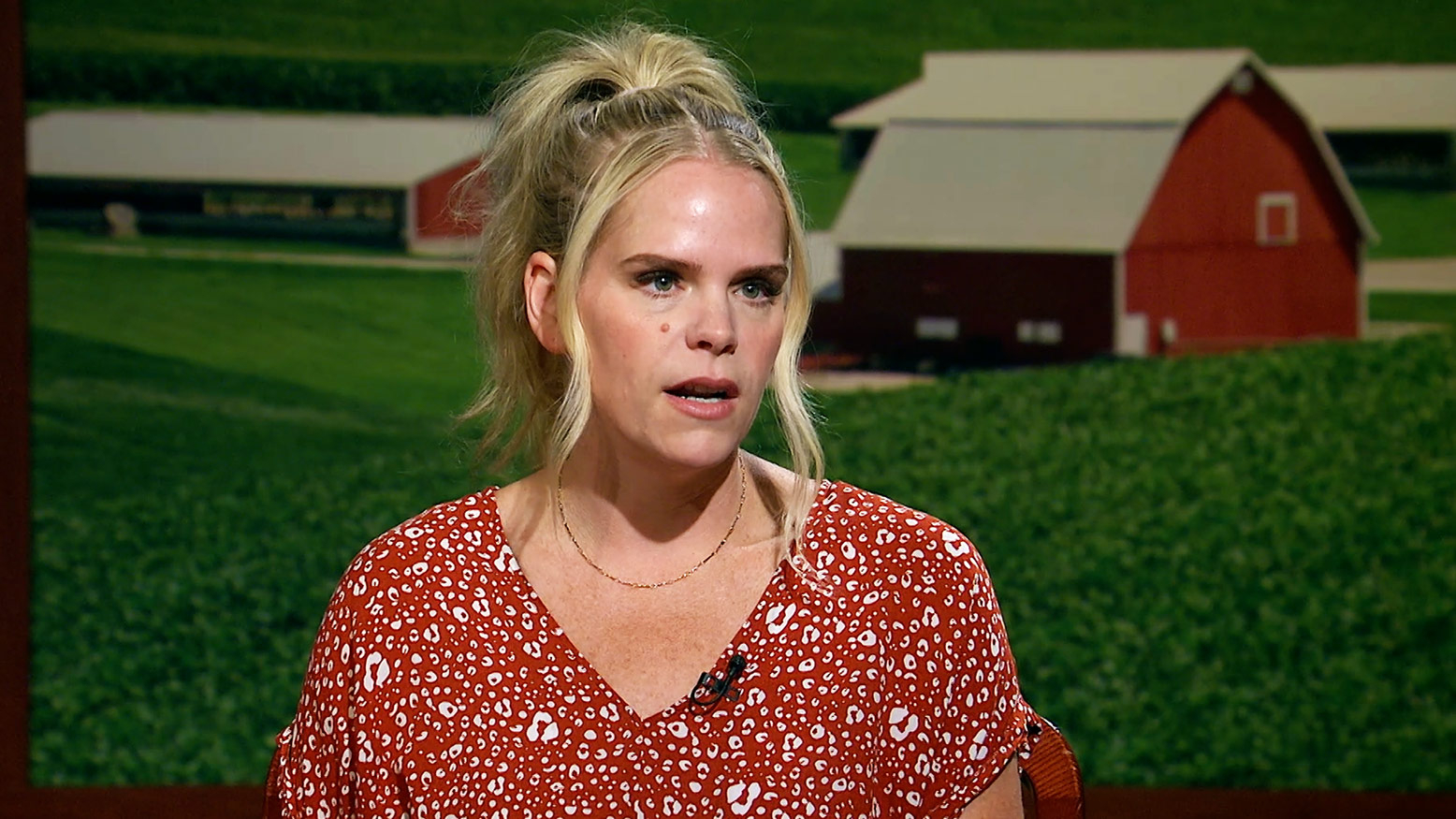
Wheat And Corn Market Stuck in Neutral — Market Analysis with Kristi Van Ahn-Kjeseth
Share


Wheat is stuck without a catalyst, and old crop corn and soybeans offer little upside this late in the season. New crop weather is setting a floor rather than driving a rally, while China remains the bigger story for soybeans. Cattle markets are showing a risk-off feel amid border reopening and fund liquidation. Kristi Van Ahn-Kjeseth has our Market Analysis.
Transcript
Next the Market to Market report.
[YEAGER] The weather is still influencing the market, but it's most common gear this week appeared to be neutral for the trading week ending August 7th. The nearby week contract added a penny and the September corn contract lost $0.02. Strong demand is hanging over the soy complex. The November soybean contract dropped by $0.11 and September meal fell $6 per ton. December cotton improved 2.61 per hundredweight. August Class three milk futures fell $0.33. The livestock complex was mixed. October cattle lost $1.97. September feeders put on one. 45. And the October Lean Hog contract sold off 262. In the currency markets, the US dollar index fell 35 ticks. September crude oil dropped 6.84 per barrel. Comex gold surged higher by 2.93 $0.60 per ounce, and the Goldman Sachs Commodity Index fell almost 26 points to settle at 66223. Here now to lend us her insight on these and other trends, is regular market analyst Kristi Van Ahn-Kjeseth. Hello, Christie.
[KRISTI VAN AHN-KJESETH] Hey, Paul.
[YEAGER] You know, this wheat market has given us something to talk about early summer. Now that we get to the end, does the market just done with whatever's going around the world and just is just stuck? There's nothing moving this market. Why?
[VAN AHN-KJESETH] Yeah it is. It is stuck. I think today, you know, for example, or this whole week, for example, one day it was double digits higher, one day it was double digits lower. It was like a flip of the coin. What you wanted to do with it with no news moving it. So, I think there's a lack of people wanting to participate. I think you're also, you know, the old logic, you need to feed the bull. I think you're struggling with that. And we know that the crop was very poor in the US. We know that there are serious concerns throughout the world for growing production throughout Europe. And then also just black seas issues. So, you know, you have these problems, but there's nothing really going above and beyond saying we need to take this market and blow it up.
[YEAGER] So, if it's following, how does one take advantage of something that's not moving?
[VAN AHN-KJESETH] Yeah. I honestly think wheat falls in line with soybeans and corn right now, that it is pretty much mid zone. I don't think it's a buy. I don't think it's a sell. It's kind of stuck in a little bit of rut. And it just needs some time before it really proves that there's something you want to do with it.
[YEAGER] Let's flip over to the old crop corn story because it looks like, again, we've run out of that demand story. We're all kind of focused ahead on this new crop. But walk me through the next couple of months on this old crop.
[VAN AHN-KJESETH] Yeah, I don't want to be mean, but it's really hard for me to talk about old crop corn at this point, or old crop soybeans at this point of the season. I think there's been multiple opportunities to be able to do stuff with that crop and the crop that's in the bin. And so, it's really hard for me to talk about this because you you're asking for a very short amount of time and pleading for something to happen to the crop. And no matter what you say, it's not going to be the right decision because you can wait forever and you never see that. Rally and bases continues to widen out, or you can sell it in some rare accident happens. Freak thing happens around the world and the market blows up and you're mad. And so, it's really this is always that prime example of sticking to a marketing plan. No matter what your marketing plan is and sticking to it and know that it's really difficult. And the probability is very low that holding grain this long will pay out for you.
[YEAGER] Yeah. You've been reading online a lot because that's a lot of what the sentiment I have read this week, a lot of second guessing of whoever sat in that chair, whatnot. Let's talk about the new crop story, though, is the weather window still open in your eyes.
[VAN AHN-KJESETH] Are to a degree, yeah. I think when you look at the weather window, it's more of setting the floor versus really blowing this market a ton higher. I think that, you know, driving down here just reiterated the crop looks really good. And that is coming from somebody that's in a drier area around us. We're very dry throughout the Dakotas. You're really dry. You do not have to drive far from my hometown to find some pretty poor looking crops, but I think that that amount of crop that looks poor is limited. And you know, you're talking about whole states. Yes. But as far as a production percentage, it is. And I think back to 2021, it's the only year I went on Pro Farmer Crop Tour. And I was very excited because we were so dry in the west and the East was having this great year. So is that separation. I feel like this is one of those similar years, except for the fact that the West is just not as bad as that year. And that year we ended up with a 176 yield for corn. And so, I'm struggling to say that it could get that much worse. I also think you look back at that year and there was pockets of Iowa that were pretty poor as well. Southern Minnesota was poor in that year. And I just don't think you're seeing that as much this year compared to then.
[YEAGER] Well, we do have a question that's similar to what you're asking. Holds View Farms and Iowa. Thank you for the question. By the way, we always ask you on Wednesday and Thursday to participate in the program. Here's their question. With the really dry conditions and really wet flooded areas, why aren't the markets responding more favorably?
[VAN AHN-KJESETH] Yeah, I just think that it didn't materialize in a big enough way. And honestly, you're going to you're not going to know the full extent to it for six months down the road. When you start to really put the numbers together. But I think it didn't run its course long enough to extend itself and create that really big story.
[YEAGER] All right, old crop beans, are you feeling the same way about them as you do corn?
[VAN AHN-KJESETH] To a degree? I think the difference is for old crop beans. Crush has been so strong, continues to be such a golden child for the US. Being able to really produce that. We are so fortunate that we have the crush facilities that we have, and you continue to put that demand in there for the U.S. Farmer. So that has really kept basis alive in so many areas. So, it's a much different situation than really the corn is for me. That being said, I'm not telling people to hold on to old crop beans. You are going to have harvest before you know it.
[YEAGER] Speaking of harvest with beans. I it's easy to ask the weather question which is a bigger pull right now for the new crop beans story. Is it the weather or is it what that China buying could be?
[VAN AHN-KJESETH] I think weather is the one that gets the short-term attention. But I think overall, the bigger picture for beans, if it can extend itself, has to come on the back of China. It's not going to come on the back of a weather story.
[YEAGER] And does that mean it has to? Is there a window when that needs to happen?
[VAN AHN-KJESETH] I don't know, you look at like last year and it really drug out forever and ended up being favorable to soybeans. So, I don't know about that. Obviously, I think weather at this point has a much greater impact for soybeans than it does corn. But you look at the last couple years, you know, the eastern Corn Belt had dry finishes the last couple of years to the crop. And I think it really hurt the beans. You look at the extended forecast, I'm not talking about Dakotas and parts of Minnesota because we know those are dry. We know those have been warm. But everywhere else is looking to cool down and have those chances of precipitation. And that's going to go really far for soybeans.
[YEAGER] Well, we're about to come into the state fair season and I'll get asked quite often how good is this crop? How bad is this crop? Whatever it is, the post promoting your appearance this week, when I said it's green around us, and then the responses that quickly came in that says, oh gosh, we haven't had rain in and everybody drops that again, like the corn story does the beans story, if it dries out in August, is it a shoulder shrug?
[VAN AHN-KJESETH] Yeah. So, we have been so dry around our neck of the woods. Very limited moisture throughout central Minnesota into the Dakotas. And I am shocked how well beans are holding on. That is actually really surprising me. Obviously you're going to, you know, from the road, you can't tell it like you can for corn, right? Or are the pods filling? It's a much different situation for soybeans, but I am very surprised how well they look.
[YEAGER] Which will get soon with crop tours and, and those stories. And I'll get your take on Wednesday's reports at our Market Plus. So, let's move to livestock, shall we? Perfect. Cattle has been a story that has a lot wondering is this finally a change? A turn of the page, a change in seasons? What is it?
[VAN AHN-KJESETH] Yeah, I think you have thrown a lot of scary information at the cattle markets right now. Right? You started to open up the border. You're looking at how heavy the weights are. You had very dry conditions throughout a lot of the cattle pastures. So, you just kind of force them up a little bit sooner. There's serious questions about demand, which have been around for a while. That's nothing new. But I think all of those stories together are starting to give a little risk off feel to the cattle markets, and maybe just saying your upper targets aren't quite as high as you they were previously, and you need to be aware of that. Also, manage money plays such a large role in how these markets can move. I cannot stress that enough. And we've seen them liquidate about half of their holdings of cattle. And that plays a role into these markets. And so, I just think that when you put all of that information at once at a market, it's going to have some longer-term ramifications.
[YEAGER] And that's a great segue and a tease to Market Plus, because we have a couple of questions that are asking you very specific questions and wondering why that's not playing on the market. Is there any impact on the feeder market then on some of those same situations?
[VAN AHN-KJESETH] Yeah, I think it is. And I think when you look at feeders as a whole, I mean, the profitability there is very scary. I mean, when you're looking at that and you're saying, how am I going to make money on this situation? Those are real numbers. And I think they play a real role into some decisions being made. And it makes it kind of a scary situation. So, feeders, when you look at it, try desperately to get through some key areas on a chart and couldn't do it. And I just think that overall, when you're looking at the chart, when you're looking at cattle, you really need to be aware because it feels scary and you're not towards the bottom end of the range. When you look at the charts overall, you're kind of consolidating towards that middle to maybe 1.2 standard deviations from linear regression. So, you're at these levels that are very important levels that need to hold. And if they do not hold, that's just another reason to be a little bit concerned.
[YEAGER] Maybe look at the hog market for of what could happen, because those lower levels aren't holding and we just keep moving lower.
[VAN AHN-KJESETH] Yeah. Hog market you look at it on chart it is we like to call it like top and bottom bun. And when you look at kind of the hog market's absolutely near that bottom bun and two standard deviations from linear regression. And a lot of activity doesn't happen beyond that. However, it just does not seem like hogs can catch a break here. And so, you're looking at it and you're like, are these levels going to hold? And there's been a couple longer tails left on the bottom. But overall, you know, hogs need something here to help them out. And I'm just not sure what they're going to get.
[YEAGER] I know what we are going to get at the end of the program. Thanks, Kristi. Thank you. Great to see you as always. We'll talk to you in a minute. You've been watching the analysis portion of our program. In a moment, we will continue this discussion in the online only segment. Find it by searching Market Plus with Kristi Van Ahn-Kjeseth wherever you get your podcasts. You can also go to our website at Markettomarket.org to listen. The Market Insider Newsletter is approaching its second birthday. That means you can get in on the ground floor of the behind-the-scenes information from this program and other events that happen around the production of Market to Market. Subscribe now on our website of markettomarket.org. A new edition comes out every Monday morning. Next week we bring two analysts to the table for an in-depth look at the commodity and livestock markets. Thank you so much for watching. Have a great week.
[MUSIC]
[ANNOUNCER] Market to Market is a production of Iowa PBS, which is solely responsible for its content.
[ANNOUNCER] Market to Market is made possible in part by a grant from the Corporation for Public Broadcasting.
[ANNOUNCER] Support for Market to Market has been provided by a bequest from Philip Lietz of Alta, Iowa in recognition of public television's commitment to agricultural programing.
[MUSIC]
[ANNOUNCER] Family owned and operated for more than 60 years, Sukup Manufacturing is a full-service provider of grain handling, storage and drying equipment, helping farmers feed and fuel the world.
[ANNOUNCER] I wouldn't be here without my customers.
Yeah, I'd like to thank the customers. They're very dear to our hearts.
It's about the people that you're working with and the relationships that you have.
Thank you, thank you, thank you.
Thank you from the bottom of my heart.
[MUSIC]
[ANNOUNCER] Tomorrow., for over 100 years, we've worked to help our customers be ready for tomorrow.
[MUSIC]
[ANNOUNCER] Trust in tomorrow. Information is available from a Grinnell Mutual agent today.
Trading in futures and options involves substantial risk. No warranty is given or implied by Iowa PBS or the analysts who appear on Market to Market. Past performance is not necessarily indicative of future results.
Watch More
Wednesday's USDA report traditionally is quiet on yield, but risk is in the air according to Kristi Van Ahn-Kjeseth.
The Farm Bill fails to make it out of the Senate Agriculture committee.
Iran casts a shadow over the jobs report.
A grocery store keeps a community from turning into a food desert
And commodity market analysis with Kristi Van Ahn-Kjeseth.
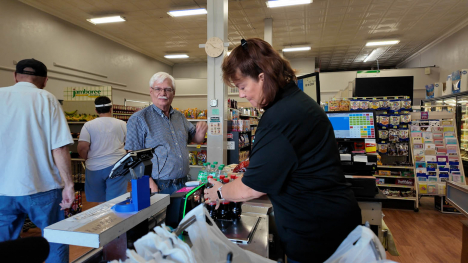
Facing closure, Gowrie's only grocery store was saved by 60 residents and $250,000.
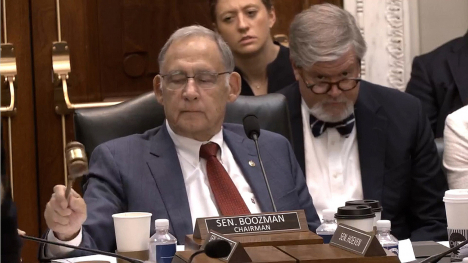
A battle over SNAP kept the Senate Farm Bill from advancing before August recess.
The weather’s influence on the market may be closing soon, according to Dan Hueber in Market Plus.
Each commodity took a turn as a market leader, according to Dan Hueber in our Market Analysis segment