Ted Seifried examines corn’s strongest August in 50 years as grains rally and cattle futures fall.
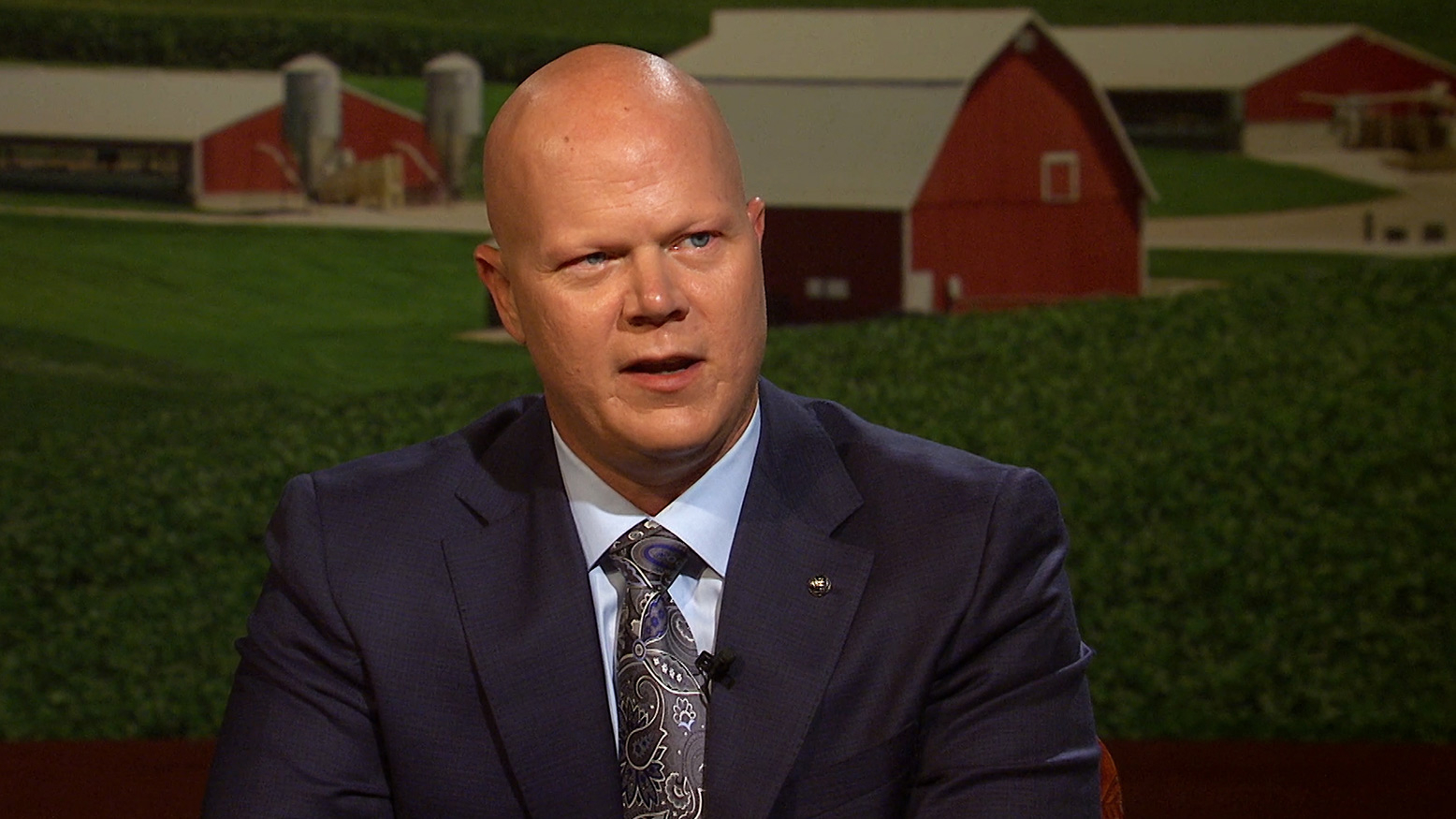
From Powder Keg to Fireworks: Ted Seifried on Corn’s Historic Rally
Share


December corn posted its strongest August gain in more than 50 years. Market analyst Ted Seifried explains what fueled the historic corn rally and examines sharp weekly movement in wheat and soybeans, renewed commodity market volatility and pressure on live cattle and feeder cattle futures.
Transcript
[YEAGER] One prospect of peace appeared to be the sinker of the grain rally, which returned to volatile trading patterns midweek. The nearby wheat contract fell $0.50 and the December corn contract was even. Hot and dry weather still loomed over the soy complex. The November soybean contract added $0.22 and December meal gained 620 per ton. December cotton weakened 505 per hundredweight. October Class three milk futures lost $0.63. The livestock complex was higher. October cattle found one 22nd October feeders put on 362 and October lean hogs improved $0.40 in the currency markets. U.S. Dollar index fell 53 ticks. October. Crude oil surged higher by 7.57 per barrel. Comex gold lost $48.90 per ounce and the Goldman Sachs Commodity Index added almost 33 points to settle at 73713. Here now to lend us his insight on these and other trends is regular market analyst Ted Seifried. Hello, sir.
[TED SEIFRIED] Hey, Paul. How's it going?
[YEAGER] You know, a week ago, two weeks ago, we were talking one headline dominating wheat. That headline changed dramatically. Early part of the day changed middle of the day. Why is wheat so susceptible to what's going on with the Black Sea between Ukraine and Russia still?
[SEIFRIED] Well, I mean, Russia is the number one wheat exporter of the world, and Ukraine is 2 or 3. So obviously, we're going to be very sensitive to that. We have been sensitive to it since the war started, but we hadn't really seen any real infrastructure damage or any real disruption of exports from those two countries. Recently, we have been seeing that, you know, there's some reports that one of the Russian ports is going to be at least four months before it's fully operational again. I don't know for sure, but the fact that there are actual disruptions occurring at this point, now, we really have what we've always thought was, was a possibility from when this thing started. Now we have an issue where we might start seeing wheat shipments having to be displaced to other countries, and we've already seen that France signed a deal with Egypt. Egypt usually goes to Russia, right. And France, given their drought issues, doesn't have a whole lot. So that that we know that that tank is, is, is not going to last very long. So yeah, now we have some actual structural issues. And that's what's really creating the, the drama in the wheat market. But not only that, I mean, every day you hear, oh, well, maybe we're going to have peace talks again. And then there's some more attacks. And then what? Maybe we'll have peace talks. So, it's really back and forth. You've seen crazy volatility in the wheat market. And we are hanging on the headlines.
[YEAGER] And has that spilled over to other commodities.
[SEIFRIED] Well absolutely. Corn. You know corn is the big one for Ukraine, right. I mean, that is well, the big one that we care about really. But yeah, I mean, Ukraine exports a whole lot of corn. And that's really, really slowed down dramatically in the last few weeks. If it stays like that, oh boy. Then, you know I know you're going to bring it up. But you know, the term I use for corn a couple of months ago was a potential powder keg. Well, we've seen the first act of that in corn, but the second coming of that could be global corn exporters having issues pushing more business to us. If that is going to be the case. Well, this is now going I mean, that furthers on the idea of the potential powder keg.
[YEAGER] I was going to bring it up, but might as well get it out on the table now. Why not? You saw a lot of this coming and a lot of these factors kind of all aligned. Are we still in alignment even after this week? And what do you see getting us off track?
[SEIFRIED] Yeah. You know, I think the new analogy that I'm using is this is kind of like a fireworks show, right? Where you open the show with a big hurrah, and then it kind of simmers down a little bit. And then you get into the finale. I think we've seen the big initial hurrah opening of the show. I think we're kind of we're going to kind of get into the time frame where it might slow down a little bit. The Second coming in my mind, is going to happen in the winter time into the early part of 2027. The reason I say that is we just saw the largest rally in the month of August that we've seen in over 50 years. Okay. That is the market. A late season rally that is adjusting for lower yield, lower production. I think at this point, we've got that mostly factored in. That really depends on what the USDA has to say next Friday. But I think for the most part, we've really factored that in at this point. And now you have funds that are record long for this time of year, second longest, second biggest long position that they've ever had in corn. And you have your natural seller, the US producer, that I think still has a fair amount of old crop of that 17 billion bushel crop that we had from last year. That is probably going to go to town before we really get into the bulk of harvest. And you've got a whole lot of sales out there that should be happening for new crop. Guys have really taken a back seat on that because with corn had been, you know, higher every day really through the month of August. You wait, you know, you don't sell into strength like that. I'm not saying you shouldn't sell into strength like that. I'm just saying that's the mentality. If it's going to be up another $0.10 tomorrow, why would I sell today? So, the natural seller and the fund that is extended about as far as they've ever been before, makes me worry that we could see a pretty significant pullback in the corn market at some point in the relatively near future. Now, that being said, the super El Nino for South America, the lack of fertilizer there, fertilizer inputs are down over 11% year on year. The issues that were in the EU, France in particular. Were going to have to pick up a lot of that business because the French corn crop, which is I mean, they export 40% of their crop to the rest of the EU. They're not going to be able to do that this year. So, we'll have that business potential. Picking up Ukrainian business. And the big wild card is does China start buying as part of its $17 billion of US ag and ag related products, all of that. These are the next stories that perpetuate the powder keg or that finale to the fireworks show. But that might not happen until we get further into the fall, into the winter, or especially into the early part of the next calendar year.
[YEAGER] Harvest may be here quicker in the soybean area because of this heat this week. Did this heat do anything to move this market more than token and or did it significantly pull off some extra top bushels?
[SEIFRIED] I think it did pull off some top bushels, although we did have a better start to August this year than we've had in the last couple of years. Soybeans do everything they can to sacrifice, sacrifice themselves, sacrifice the plant to put as much moisture as they can into pods. But the heat. Yeah, I mean, we dry down very, very quickly. So, I do think we took the absolute top end off of the soybean yield. We're still, though, in the process of determining soybean yield. We're much further along in that process for corn. And we had that rally in August. Soybeans were still trying to figure that out. We are very, very curious to see what the USDA has to say on that next Friday. What their fields say, what their test fields say. I don't know, you know, I sit somewhere still in the mid 50 twos for soybean yield because we had that better finish at the beginning of August, even though we had lower pod counts when we were out on crop tours. But I don't know, you know, I could see that number swinging into bushel. Well, two bushel in either direction, but more so possibly the downside.
[YEAGER] I know you talked about old crop corn a little bit, some who might have some leftover. If anybody has any leftover beans, have they missed the boat and getting rid of anything.
[SEIFRIED] Right. No, I don't know about yet that I'd be more I'd be more concerned about the old crop corn. I think there's more of it out there. Old crop beans. Yeah. I think you can kind of afford yourself some time with that. The thing about beans is that the demand side of the equation is very inelastic when it comes to if China's going to buy 25 million metric tons of soybeans, no matter what, no matter what the price is just for political reasons, that means the rest of the world business that the USDA has on their balance sheet is at 13 year lows. There's not a lot of fat to trim off the bone there. The other thing is crush. Crush isn't that dependent on flat priced soybeans. Crush is dependent on crush margins, which are really, really good because of soybean oil mostly. Although meal has really picked up the pace recently. And so, if you're not rationing crush, you've got export demand to countries not named China. At 13 year's lows, there's not much to ration there. And you absolutely just can't ration the 25 million metric tons unless there's a change. Change in the political tide, man, that demand side of the soybean balance sheet is pretty much there. So, if you start cutting into production, you can't ration demand or it becomes a lot harder to ration demand. Well, that is now the new powder keg.
[YEAGER] Speaking of political issues, country of origin, an executive order by the president signed just before we started to roll. What does that mean for the livestock market right now? We only have like 90s.
[SEIFRIED] Yeah. Talk about breaking news, right? I read this three times right before we started talking. And from what I can tell, this is entering into a 90 day period of a review from the U.S. Secretary of Agriculture and the Trade Representative's representative to see if it's even something that we can do and what the economic impact of it would be at the end of that 90 days. That's when we decide they decide if they're going to move forward, forward with it or not. So, for me, from what I read very briefly before we came on here, it's not a certainty that that is going to be a thing. It's in a review process. That's how the government works.
[YEAGER] And the markets didn't have much reaction to it when it started leaking out late this morning. But quickly on feeders or cattle, which one do you want to give us a little insight on the market this week?
[SEIFRIED] Either way, we had a kind of a knee jerk reaction lower. And then we kind of came back. You know, we've been in a downtrend. We are in this downward trending channel. And we came up and we tested the upward end of this channel and then kind of backed off of it here today. It looked like at the end of the day, Thursday we could break out to the upside, but we didn't do it here on Friday. There's still a potential to do that though, because we didn't make a new lower low. So, it does look like there is possibility that we're trying to bottom the cattle complex here at this point. But it's too early, too early to tell.
[YEAGER] Yeah, that one was the big part where you kind of thought maybe we'd hit that. Hogs, though, finally put on a positive week. Is this a sign of better things ahead for them?
[SEIFRIED] Could be. I mean, yeah, hogs do look better on a chart. They had gotten very oversold at the very least. I think they're due for some sort of corrective move.
[YEAGER] All right. And as before we leave you saw the story on retention. You also saw the story on diesel fuel. Are you confident that the high is in on diesel yet?
[SEIFRIED] No, no. I mean look, nothing has changed with the issues in the Middle East. And I don't know if that'll happen anytime soon. We also have a tendency to overshoot fair value in either direction. I don't think we've done that yet for the diesel fuel. Unfortunately, there could be more upside.
[YEAGER] Ted. I have about 15 questions of my own, let alone all the ones I've submitted. We'll get to them in Market Plus. Great to see you as always.
[SEIFRIED] Always a pleasure, Paul. Thanks for having me.
[YEAGER] Ted Seifried everyone. You've been watching the analysis portion of our program. In a moment, we'll continue our discussion in an online only segment that we call Market Plus, which is available wherever you get your podcasts. You can also go to our website at markettomarket.org .org to listen. We roll out new material on our YouTube channel every week. We put up some regular features on this program, as well as some classic content from our vault. Subscribe [email protected] slash Market to Market. Next week we look at issues facing Congress as they head back to Washington ahead of the midterms. Thank you so much for watching. Have a great week.
Trading in futures and options involves substantial risk. No warranty is given or implied by Iowa PBS or the analysts who appear on Market to Market. Past performance is not necessarily indicative of future results.
Watch More

Global supply disruptions keep fertilizer markets volatile heading into 2027.
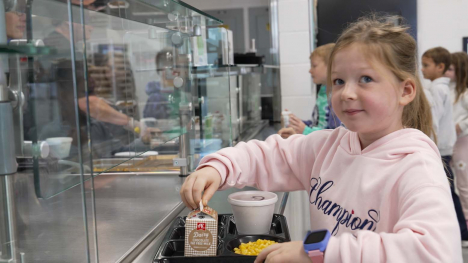
An Iowa school district connects local farms, food hubs and students through the lunch tray.
Naomi Blohm and Ted Seifried question USDA’s corn yield surprise and weigh China’s soybean demand.
Higher USDA yields pressure grain. Plus, opportunities/costs of putting local food on school trays.
How grain prices rally this winter w/Naomi Blohm & Ted Seifried on USDA, China demand & S. America.

Farmers rarely seek mental health help. Farm Dog offers care from people who know farm life.