Farmers rarely seek mental health help. Farm Dog offers care from people who know farm life.
A Trusted Ear: Why Farm Dog Is Helping Farmer Mental Health
Share


The dog in the buddy seat of the tractor or combine hears things nobody else does as the farmer's guard drops. That's the idea behind Farm Dog, which was launched by a group of volunteers as a nonprofit that fully funds mental health care for farmers and farm family members. Founding member Easton Kuboushek talks about the "rub the dirt on it" mentality, why resilience can come at the expense of self-care, and why he wants fewer people saying "I had no idea" at the visitation. Farm Dog wants its care providers to be that same trusted ear — professionals who understand family land transition, operating loans and cash flow challenges in agriculture. Learn more at atrustedear.org.
Transcript
[Paul Yeager]
Today's MtoM podcast is brought to you in part by the Iowa Economic Development Authority, creating opportunity for business in Iowa by connecting companies, entrepreneurs and communities with the resources to thrive. Learn more at Business Iowa. This is one of those serious episodes that we're going to have today, but extremely important whether you are on the farm, off the farm, know somebody who is involved in agriculture in any capacity. I want you to listen to at least the first few minutes of this episode, and I really hope you get to the end.
We are going to talk about the stress that farmers are under. Not news. Nothing new here. It's no longer Suicide Prevention Month. But that doesn't mean we stop talking about the topic of helping farmers and their mental health. And it's going to be done, at least the entry point, through your four-legged friend. The dog, farm dog, is the topic today of the podcast on the MtoM.
I'm Paul Yeager. We are produced at Iowa PBS in the Market to Market TV show. We're going to talk about this new program. This new organization is probably a more accurate way to call it, called Farm Dog. It's a nonprofit. It's agnostic, meaning not one ag commodity or organization owns and operates it, but a collective of groups aimed at starting that conversation with the farmer about your mental health.
And it's not just, again, the farmer, but anybody associated. You could be the relative. You could be a family member that is directly still on the farm and involved in that operation. You know somebody that needs help. So we're talking to Easton Kuboushek. He is a farmer kid himself from northeast Iowa. He works now with an organization that helps farmers in other ways.
But he had a strong passion and a very important story to tell about his own life that can maybe help and assist. If you only knew — if you've ever said that to someone at a funeral or a visitation, if we only knew, we would have done something else — I want you to keep listening to this MtoM podcast. One other item: there is a QR code, and we have put it in this episode description, and also ways to assist. Easton, the easy way to start is what we did before we started rolling.
Talking about northeast Iowa, you grew up in a county, gorgeous part of the state. Tell me about growing up. Is that on a farm, and what's your connection to agriculture?
[Easton Kuboushek]
Yeah. Thanks, Paul. Roots are just outside of Spillville, Iowa. Ridgeway, Iowa, address in Winneshiek County, and grew up on a dairy farm, row crop, corn, soybeans, hay. And I joke that we picked a lot of rock growing up because it is bluff country. I didn't know Iowa was flat until I, you know, left for high school athletics.
But yeah, beautiful part of the state, deep roots in Iowa agriculture. And then my full-time job is actually at the Iowa Soybean Association.
[Paul Yeager]
Just, this is my home farm here in Jesup in Buchanan County. We also grew rocks. Maybe not as many as you. Go down here, it's this strange phenomenon. They're like, what? Oh, yeah, we had to pick up rock all the time.
[Easton Kuboushek]
It's really tough having, you know, six feet of black topsoil to farm in all the time. But come up there and you can get a sense of what it's like.
[Paul Yeager]
Which job do you miss more, picking rock or walking beans?
[Easton Kuboushek]
Oh gosh. I think I miss milking cows with my grandma the most, but probably picking rock and milking cows.
[Paul Yeager]
Yeah, yeah.
[Easton Kuboushek]
And chasing. Ever since grandma said you had to go to college and, you know, get a real job. There's more to life than milking cows. And she was, you know, she's probably not wrong, but I've been chasing it ever since.
[Paul Yeager]
Still involved with agriculture. You said you work with the Iowa Soybean Association, and that has allowed you to stay absolutely rooted and connected to agriculture. But tell me how Farm Dog entered your life.
[Easton Kuboushek]
Yeah. So you're exactly right. Lead operations for the Iowa Soybean Association, work for Iowa soybean farmers and U.S. farmers in a number of ways. Project Farm Dog came as a passion project and in a volunteer capacity here in the last six months. But really, you know, the passion started when my family was trying to help my dad.
He's a lifelong farmer, an amazing father, but had some struggles with farm stress and ultimately complications to alcoholism. Took his life. He was [age unclear in audio] years old, and we lost him about a year and a half ago. And so, you know, as we looked through that experience and tried to support him, tried to support my mother, you know, this passion of like, we really need to solve this farm stress problem.
We need to figure out solutions that can help farm families. And then I shared my story. And of course, I'm certain, Paul, you have a similar story. And every time I share it, it quickly revealed that it's not that uncommon. It's just uncommon to talk about it. And so I share that openly. Right. So it's okay to talk about. These are real challenges for Iowa farm families, for American farm families.
And then in my role, I, you know, I try to build things and solve problems for farmers. And this was a problem I just couldn't not try to tackle. And so gathered some like-minded ag colleagues and we got to work and started this nonprofit. So Farm Dog is officially launched now in September. We began incorporating everything officially last March.
So it's been a labor of love and a lot of hard work by passionate volunteers in Iowa agriculture and now national agriculture.
[Paul Yeager]
We'll get into the organization in just a minute, but I want to open up with the farmers and the talking. You and I both know farmers aren't necessarily — yes, they will talk to each other about I need rain or I need, you know, that type of thing. But they're not openly saying I need someone to talk to or I need assistance for my own sanity, in whatever the sense of the word is.
So in that sense, were you interested in this prior to what your father had gone through, in terms of understanding that, yes, farmers are under a lot of stress and we have to treat them like we do everyone else?
[Easton Kuboushek]
I think, absolutely. You know, I was interested in it. I maybe wasn't conscious of how interested I was. It was coming from us trying to help Dad. But everyone, you know, everyone knows a farmer and we all care for farmers. And you're exactly right. They like talking to other farmers first and foremost. But those conversations are about operations and weather and politics and those kinds of things.
I think there's this deep, long-standing kind of stigma that that side is, you know, less okay to talk about, or not as normal to talk about. And I think most folks would agree with that. And I'm not really sure why. Right. And I know farmers are tough. Right. They are resilient. They are, you know, it's this rub-the-dirt-on-it mentality.
And that's great. Except when that resiliency comes at the expense of your self-care. And so, long answer to your question. But always been passionate about it, obviously was not an expert in the space, but yeah, it's just an important topic. I think we as agriculture need to take more seriously.
[Paul Yeager]
We'll get into a little more of the farm psychoses here, I guess. I didn't realize we were actually going to put on our coats here, but I want to talk about the organization Farm Dog. You said nonprofit. So clearly you can't do this alone. There's somebody else that also had a vision to start this organization.
[Easton Kuboushek]
Yeah, absolutely. So it's a collaborative effort. It's all volunteer driven. Now we have a number of great partners and growing partners: Iowa Soybean, Iowa Corn Growers Association, Landus and Iowa Institute for Cooperatives. So we're, you know, we're young, but we're really getting a lot of traction around this. So there's a tremendous amount of coordinated support.
I think one of the issues that we kind of found was everyone was trying to solve it themselves. This is a problem that agriculture should really solve together. And so that's the team behind it. It's about 25 or so volunteers and a number of ag organizations. What we do, if I could jump right into it, Paul, is we fully fund care for farmers.
And that's important because we want to remove all the barriers. It's already a difficult conversation. And we started talking about, there's a number of other barriers. We know cost. We know insurance, we know access to care, just, you know, the local clinic or a virtual. And so we try to remove all of those barriers. And so any farmer or farm family member can go to A Trusted Ear, our website, and get access to this care.
So that's fundamentally what we do. There's a number of other promotional strategies and things in that, just to make this a more normal conversation. But at the end of the day, what we've made is farmer-focused care for that difficult time, for taking care of farmers and their family members.
[Paul Yeager]
And your name is both literal and just as a setting a picture, right? I mean, there really are dogs involved in this, right?
[Easton Kuboushek]
Oh, absolutely. I mean, the Farm Dog name is fun, but you're trying to figure out what we call this project. And a lot of times one of the barriers is just, like, it's clinical. All of this help and stress and anxiety and these tough topics, right, around suicide and substance abuse, that's not fun to talk about.
It's very difficult to open that conversation with the farmers. So the Farm Dog name is leaning into a trusted relationship between a farmer and their dog. We have one of our volunteers is a photographer, actually took the photos behind me. And as she travels the state, you know, she can't help it. If there's a dog, there's going to be a photo of that dog for sure.
But the inspiration behind it was really that when that dog comes up, the farmer's guard drops, right? It's jumping into the side-by-side. It's tugging at their pant leg. It's, you know, that trusted ear that they'll talk to, and they won't talk to anyone else. So yeah, that's clever. And then, you know, more practically, works good in social media.
And you'll take a picture of your dog, but you're not going to take a selfie. So we kind of wanted to, you know what I mean, get that off the ground.
[Paul Yeager]
So, but the dog is the perfect entrance to the conversation. You just kind of set it right there: oh, jumps into the buddy seat, there it goes. But the dog, just the dog alone — if you just did a program where it was just about putting a dog with a farmer, yep, you would have a successful program, at least from where I stand.
But it is so much more than that. But I guess let's focus on the animal first, and what that canine friend can mean to someone.
[Easton Kuboushek]
Yeah, I'm a huge dog guy, if you can tell. There is just a special relationship, again, between a farmer and their dog. And you know, I'll use my dad again as an example. He wouldn't maybe even be honest with himself about the stress and the challenges he was facing. But that dog was always the conduit for him, or always that safe space to talk about something that was tough to talk about.
And so in the case of Farm Dog, as we're talking today, is our services and our nonprofit. We really want to emulate the trusted ear that you see in your farm dog. It's actually the same experience you're going to have talking to, in our case, a professional, someone who cares about you, someone who can give you the tools to support you, to help build the relationship and resilience for when that difficult season is inevitably going to come.
So that really is — you can think of Farm Dog in our case here, Farm Dog as a nonprofit, as the same person, the same friend and trusted relationship that's in the buddy seat in the combine. Right? If you're talking to that dog about something tough, it's probably the same time you should be talking to, in this case, a trusted ear at Farm Dog.
[Paul Yeager]
In the conversation is what I've heard before, in conversations like this I've had about farmer mental health and farmer stress and putting the two together. It's the "talk to someone." The conversation is such a first step to so much more. Yeah. Can you pick up when — I mean, you can't obviously have that conversation with the dog to find out, well, hey, what did the farmer tell you?
But you know that. How do you follow up then, to get to that next step?
[Easton Kuboushek]
Yeah. Well, you're exactly right. It's a conversation. It's a conduit to a conversation. And it opens the conversation. Right. So if you're talking to your farm dog about something serious, talk to Farm Dog about that same thing. But to your point, the reason that it's so important is we have amazing services. I think I have a decal here somewhere, like the Iowa Concern hotline.
You have crisis services that exist or serving that function. One thing that we're trying to do differently is get away from — we want to be preventative, right? You don't want the combine going down in the worst time of year, right? So you do your preventative maintenance to make sure it's up to — it's tuned up, it's ready to go.
It's ready to make it through the season without any downtime. So let's apply that same principle to you, the farmer. Right. You, the person. If you want to be resilient through a difficult season, which I think we can all agree is inevitable, whether it's a death in the family, whether it's $7 diesel — right, biodiesel, a subtle plug there — or whatever it might be.
We don't know what that stress is, but we know it's going to come, right, for a farmer. And one of the things, we just have to get away from thinking that we're different or that it's just going to be okay, right? We can accept and prepare for that, and then we have to do it proactively. So my invitation is to the farmer: give it a shot.
Right. First of all, please put all preconceived notions aside. This is a farmer-focused service. It should feel like a normal conversation with your farm dog. And then second would be give it one shot, but then try to make it part of your operations plan. Do it one hour a month for a year.
Right. Dedicate one hour a month. Because when that difficult season comes, you're going to have the relationship. You're going to have the rapport and the contact with someone you trust, and it'll be that call. And not in a state of crisis, but in a state of comfort, in a state of transition, a state of moving through and navigating with someone who knows your situation.
Right. But that's very difficult if it's already 3 a.m. and you're already stressed and you're thinking or having a difficult time, right? So the work has to happen just as you're getting ready for harvest, right? All the things you're doing in this current monsoon season in Iowa, right, to be ready for harvest, is the same logic you have to apply to taking care of yourself and building that resiliency and relationship early.
[Paul Yeager]
This current month is something I did want to talk about. Well, first, September is a month that is about farmer mental health and mental health in general, right? Suicide Prevention Month of September. We're recording this still in September, but this isn't just one month out of the year. But let's talk specifically about this September. It has caused a whole lot of stress. You mentioned the fuel.
You mentioned the rain. Not saying it's too late already to do that preventative. So what do we do right now if we're already going, "Seriously, at some point I've got to be able to get out there"?
[Easton Kuboushek]
Yeah, well, the services are alive and well right now. And if you're, you know, in the combine passing time and, you know, cutting beans, then you can set up a session and take care of that right there. So it is designed to be preventative, and I encourage folks to do that long term. But if you go to A Trusted Ear, there's a form, there's a phone number, there's an email.
However you want to reach out, you can call, text or fill that out, and we'll take care of you, you know, right now. So yeah, there's no need to wait. And to your point, that's one of the things we're not doing well, is it's, of course, Farm Safety Month or Week. It's Suicide Awareness and Prevention Month.
And then we'll get around to May and it'll be Mental Health Awareness Month. And what we're trying to be — we're not trying to be the one-off, you know, the twice-a-year reminder. We're trying to be a culture change. We're trying to enable ag businesses to surround the farmer with that care and support, trying to make this as normal as, you know, marketing grain and checking on finances and planning ahead.
So yeah, big month, important month, not taking away from that. This just has to be an ongoing priority in our, you know, farm families.
[Paul Yeager]
Easton, you and I, our ages are a little different. But is there a difference in age in who is responding to calls for therapy? I hear from generations of my son and older that are like, yeah, I do therapy, and they're much more open, which is kind of the polar opposite to the farmers you and I knew of growing up, that could easily be in a picture behind you, of that chiseled, hardened outer core.
[Easton Kuboushek]
Yeah. I think there's obvious generational differences. I'm hoping that we can look beyond that, because that's part of the stigma problem or the bias problem that we have. So that's part of why we were so intentional about who is going to answer the call. So I would say — I won't say your generation, but I'll say that hard —
You know, that hard, hard-shell farmer, right? That resilient, fix-it-yourself and manage-yourself and keep-things-quiet farmer. When you make a phone call to Farm Dog — and part of why I'm so confident that you'll be impressed that this is different is it's not — you said therapy, right? We're not even calling this therapy, but you're getting a professional, that person.
So the folks that have gone through, I'll give you a couple of examples of that. They're impressed that the care provider understands the challenges with family land transition and dynamics. Huge stressor. Yeah, they're very familiar with operating loans and farm financial and cash flow challenges. They're familiar with — again, I mentioned $7 diesel. But that is so important for them to understand in context, because just any generic, you know, service, or even perhaps your local clinic, not applying this, you know, too generally.
But if they go in and they say, well, why don't you try to remove some of the stress in your life — like, well, my friend, the nature of farming is stress, unfortunately. And that can discredit them or reinforce that hard, you know, stigma or shell. So we've been really, really intentional. And this is our commitment and our promise moving forward, is that when you call, that person is uniquely trained to care for farmers.
It's not a generic service. It is a farmer-first pathway to care.
[Paul Yeager]
Generality doesn't help the credibility. You're saying the credibility is in, A, the name, and B, what you are doing with that name and what it invokes with people. Do I get that right?
[Easton Kuboushek]
Absolutely. It is through and through designed for farmers, built by people passionate about farmers and caring for our rural communities and farm families. So yeah, and maybe this would be a good opportunity to say this isn't just for the farmer, right? It's for the spouses. It's for the children. It's for those so essential to the success of the family farm.
This is a service available to you too. And, you know, maybe there is a generational barrier. I hope someone proves me wrong, right? But to those kids that are more open, and to the spouses trying to support — you know, really run the — let's not make any mistake, right, wives run the farm half the time.
This is a resource for you, and I strongly encourage you to give it a go. And then maybe you can speak to it on behalf of your spouse or on behalf of your family. So yeah, it is a very tailored, intentional experience just for Iowa, or for farm families.
[Paul Yeager]
Because the stress isn't necessarily just for the one whose equipment breaks down or it doesn't rain. There's the financial and the juggling of getting parts timed and books paid and checks — not necessarily floated, but checks, yep, moving to keep the doors open, I mean. So yes, it does know all. Is there an ideal person that should be calling or seeking service?
[Easton Kuboushek]
No, I don't think there's an ideal person.
I'll pick on myself a little bit. Right, Paul, do I strike you as someone that suffers from high anxiety or stress, or as a — I don't know how to say this — as a weak person or a feeble person? I hope I don't, right, and I say that to be an example of, like, I started therapy, right?
I'll be vulnerable and speak to my experience. I started actually out of curiosity. I started in the position that I was just explaining: hey, Dad needs help. I have no idea what I'm doing, right? And so I went out of curiosity, learned a lot, and then it kind of transitioned.
A couple months in, I was like, oh, wait a minute. This is actually for me. I'm the one benefiting from this. And over time, it has become so essential to my life. Right. It's made me a better professional. It's made me a better father, made me a better husband. It's made me more resilient through the stressors in life that I'm talking about.
And so to answer your question, there isn't an ideal person, and it's most importantly not a sick person that should be seeking this. The time to prepare is the time of normalcy, right? You don't want the point of crisis to be the final motivator. You want, when you're having the good day and the good time, to be preparing for the bad — the harder day and the harder time.
So, not where I was planning to go, but you got it out of me, Paul. And I think it's a good example, right? There isn't a stereotypical person. It's not a "this is for you and not for you." It's actually, I think, a practice we should be adopting as farmers and farm families, consistently and proactively.
[Paul Yeager]
And I think that's part of — again, I wasn't trying to get you to say any of that, but it puts a face on, hey, it's anyone, it's anybody. It's not just gray hair. It's not just no hair, or a kid, a baby. Stress knows no age discrimination, no job type, and how you internalize and how you handle it.
Let's go back to the part where you talk about you were trying to help your father. Someone who's listening to this or watching this, who might be trying to help someone — you say that, yes, this is a service that you should take advantage of. But what's the opening question or the first step, besides just filling out the form and getting a callback?
[Easton Kuboushek]
Yeah. That's a great question. We're also working on this training and this conversation guide. Part of what we're doing is — I'm going to take a side step, and then I'll answer the question a little bit more directly. Part of what we're trying to do is not only enable the family member, the child, the spouse.
We're really trying to be a service that enables all of agribusiness, right? We're trying to be an agnostic solution. This isn't Iowa Corn's thing or Landus's thing or Iowa Soybean's thing. This is a strategy that any ag business and anyone surrounding the farmer family, or service or sales, can identify and start that conversation.
We're doing that in a couple of ways. I always forget what sleeve I have it on. This is a tag. Really easy tactic, right? But what's nice about it is on the back of that tag, and to your question here, is just a simple QR code that connects them to the services we're talking about today.
And so one example — maybe it's not always easy to have that conversation, and we recognize that. So it can be as simple as, hey Paul, you know, I just noticed something that's a little bit off and you're having a tough day. You talked to me about it. I've heard of this thing called Farm Dog. And if at any point, you know, you really want to talk to someone there, this is what it's designed to do. And that's usually — the conversation before Farm Dog, I think, is like, hey, there's a list of resources on this website.
And it's like, well, you just gave me another chore. Thanks, Paul. Yeah, another gray hair. Exactly. And so the idea here is a spouse, child, banker, seed guy, machinery guy, trucker, whatever it is, the guy — get this tag on your desk, get it on your apparel. Go and support the nonprofit by purchasing apparel on the website with the QR code on it, because it signals that you care.
And then it also connects that farmer to care when they're ready and you're ready to have that conversation. So this is a really important strategy. My dream, if I'm being really honest, is this QR code and this tag is sewn in every seed bag. It's a decal on every pro box. It's a, you know, a sticker on all the co-op trucks.
And we wrap our, you know, sprayers and fertilizer applicators in it. Right. Because then it's just shared and ubiquitous support for the farmer. It's not, back to our earlier conversation, a press release on Suicide Awareness Month or Prevention Month and a list of resources that say we care in May. Right. So yeah. And then I think just showing you care about the person goes a long way.
So you don't have to be perfect at this conversation. It will be uncomfortable. Right. And that doesn't mean it doesn't need to happen. I would argue it's better to have that uncomfortable conversation than the sad conversation after tragedy strikes. If you want some motivation, right — I can't tell you how many times I hear after a funeral of a neighbor who, you know, took their life, after my dad's funeral, how many people came up and said, I had no idea.
Maybe you've heard that in your life, Paul. But if you've heard that in your life, you're listening to this like, I had no idea. Well, part of the time it's because you probably noticed something, but you didn't have a place to point them. And it was an uncomfortable conversation. And so you didn't ask. You don't have to be perfect, you just have to care.
And so I'm giving you a lot of long-winded answers today, Paul. But if you can't tell, I'm passionate about it. And that's what, you know, folks really need to understand. You don't have to be perfect. You just have to put them in the right direction. And in this case, we have professionals ready to go.
[Paul Yeager]
I'm not going to make it about me, but that's kind of what we do in this podcast more times than not, is try to help people in those uncomfortable conversations. You mentioned already the land transition. I've tried to have several of those. I'm like, you know what, if you don't want to talk about it directly, listen to this and then go call this person, and maybe they'll help you out.
Yeah. If I'm struggling with the farmer who's on the tractor that's out for eight hours, and that's their therapy, is to just sit there and think with their own thoughts while they're driving, like in the picture behind you, because it looks a lot like the old 856 without the cab behind you. It is. I know that's [inaudible] six, but okay. 756, that's usually the one that didn't have the cab. But I'm not always the best on numbers, but I know that there's been farmers who have been on that machine, and that's how they think life through, is they need that alone time. And that's — we all — that's a self-meditation. Those are signals. Those are pickups. Those are all part of this conversation.
So I'm going to give a long-winded question to get around to your question. Best-case scenario here, as we get towards the end of this conversation, that you want to see happen with Farm Dog. You mentioned that you want to see that QR code everywhere. You'd love to see it in seed bags and chemicals and wraps and things like that. What else?
[Easton Kuboushek]
I have a really simple, low bar of success, and that's if we help one person, it will have been worth it. So if you're that one person in need of help, give us a call. A couple of areas that we're really trying to solve this problem — and I mentioned this before, and this is a call to action for ag business.
Let's stop trying to solve this individually. Let's turn our good intentions into coordinated care and really just focus back on the farmer. So I'd really welcome the support and coordination with ag partners. Every indication we've had so far is this is truly different, and the apparel strategy is really important and unique.
If you're an ag business, let us help you. Let us help you connect and care for farmers. Please join us.
You know, there's other more tangible metrics. If we really succeed over time — the rate of farmer suicide is about 3.5 [times?] the general population. We want to see that go down. We want to see that far below. Same for substance, you know, pain management, those kinds of things that we're just predisposed to by the nature of our industry and the nature of our work.
So I want to chip away at those long term. Those are much tougher to manage, or to really, you know, impact.
[Paul Yeager]
We are in election season, but we're also still trying to craft a farm bill at the time that we were recording this. You mentioned the agnostic setup of the group. It is the commodity groups and other associations that are helping with this. Is this something that should be included in bills like the farm bill?
Is this something that the government or politics need to address to offer support to what you've been able to do on your own?
[Easton Kuboushek]
Yeah, absolutely. But I can't speak to it because I haven't had a chance to sit down, and we're trying to get a farm bill passed, not just, you know, this being important, and I believe there are items in there that are included. But on the policy side, one of the other things we're trying to do is work on solving this problem long term.
Again, Iowa as an example: Iowa ranks about 45th in mental health infrastructure. And our experts tell us it's going to get worse as care providers age out. And so part of our goal is to solve that as well. We're trying to endow a scholarship that gets more care providers, more students that are passionate about agriculture, in this space and caring for farmers.
So that's a long-term play. And then on the policy side, one of the things I believe we can do is on the tail end — we get the student and educator, we get them practicing — I think we can offer loan forgiveness-type strategies for care providers who take a role in a high-need area.
There are other, you know, financial incentives and things that we can build in. Perhaps the farm bill's the vehicle at a national scale. I think there's local solutions, state by state, that we can continue to build on as well.
[Paul Yeager]
Well, it goes back to, I think, one of the things you said, of the professional that understands what's going on. You can't just do a wide swath for everyone to include it in the farm bill, but very detailed and focused assistance can actually make the biggest difference.
All right, Easton, close with me. Final pitch for this organization. And is it just Iowa? I know we're both based in Iowa, but it is not. You were at the Farm Progress Show, which is a world thing. So this isn't just in the state.
[Easton Kuboushek]
No, we started in Iowa because we had to start somewhere. We really wanted to make sure we got it right, and I think we really have. But it has always been and is still now growing into a national effort. So we're courting our national ag partners, and that's going extremely well. Again, part of our problem today is everyone has disparate efforts.
Everyone's trying to do it a little bit differently. Because we're a telehealth service, we can offer care anywhere. We can have that tough conversation and be that trusted ear anywhere. So the final pitch is we need support to continue growing this nonprofit. Support comes from our ag partners being a part of this, and also to anyone — you know, maybe you're not the farmer, but maybe you care about this topic.
There's a merch store, and all the sales and revenue from that go directly to funding care for farmers. So get your Farm Dog merch and show you care and help fund care. And then the last pitch would really be to the farming families, to the farmers themselves, to the spouses and children. We built this for you, and we built it so you can take care and navigate these tough times and start that path before the tough times come.
So give it a shot, right? Take an hour of your day to connect with wonderful Jane or wonderful Carissa and the team behind Farm Dog, because they know your world and they are ready to care for you. And it'll be as easy as talking to your trusted ear on the farm.
[Paul Yeager]
What was your first dog's name?
[Easton Kuboushek]
My first dog's name that I got — his name was Hunter, and he was a black lab, and he was a troublemaker. So.
[Paul Yeager]
And what's your current dog's name?
[Easton Kuboushek]
My current dog — I have two springer spaniels. I have Margot and then Muffin. So to all the young dads out there, if you've watched Bluey, Muffin is from Bluey, and Muffin is the quintessential troublemaker cousin that we're still trying to help grow up a little bit. But she was a great dog. Beautiful dogs. So thanks for asking.
[Paul Yeager]
Easton, I appreciate the conversation. Thank you so very much.
[Easton Kuboushek]
Thanks, Paul.
[Paul Yeager]
Appreciate it. Today's MtoM podcast was brought to you in part by the Iowa Economic Development Authority, creating opportunity for businesses in Iowa by connecting companies, entrepreneurs and communities with the resources to thrive. Learn more at Business Iowa.
We are produced at Iowa PBS. Our production supervisor is Sean Ingrassia. His crew is Reid Denker, Kevin Rivers, Julie Knutson, Neal Kyer and David Feingold. The executive producer of Market to Market is David Miller. I'm Paul Yeager. We'll see you next time.
Watch More
Wet fields threaten harvest delays, diesel raises farm costs and rural population growth is uneven.
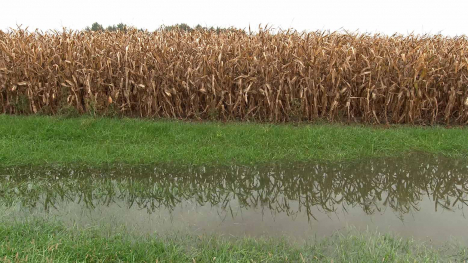
Heavy rain leaves western Corn Belt fields soaked, threatening harvest delays and crop quality.
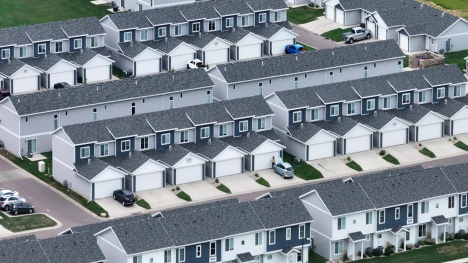
Midwest population growth brings opportunities near cities, while remote farm towns lose residents.
Sue Martin examines grain stocks, harvest risks, soybean demand, energy costs and livestock markets.
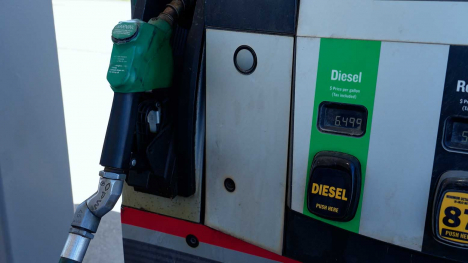
Rising diesel and freight costs squeeze farm margins and could reshape plans for the 2027 crop.
Trade frustration is muting the weather rally, according to Sue Martin in our Market Plus segment.