Corn's yield cut wasn't as deep as feared, but bean acres and the '27 outlook loom large, according to Matt Bennett in our Market Analysis.

Corn Crop Comes in Smaller on Report, Bean Yield Grows Sending Trade Lower According to Matt Bennett
Share


In our Market Analysis, Matt Bennett talks how he's more friendly on corn and he sees reasons to be supportive of this market. He also says to be cautious about sitting on too many bushels of wheat when there's a rally to support sales.
Transcript
[YEAGER] The WASDE and Crop Production reports prompted vastly different and immediate reactions in the markets. USDA lowering the size of the corn crop was one of the headlines for the trading week ending September 11th. The nearby wheat contract fell $0.09 and the December corn contract was $0.07 lower. Increased yield predictions drove the soy complex down. In the post report trade Friday. The November soybean contract sold off $0.13 and December meal lost 230 per ton. December cotton weakened $0.27 per hundredweight. October class three milk futures declined by $0.20. The livestock complex was mixed. October cattle gained 673. October feeders put on 1235 and the October lean hog contract fell by $0.77. In the currency markets, U.S. Dollar index was even October. Crude oil surged again by nearly 10%, or $8.66 per barrel. Comex gold shed 62. 20 per ounce and the Goldman Sachs Commodity Index added more than 33 points to settle at seven 7025. Here now to lend us his insight on these and other trends as regular market analyst Matt Bennett. Hello, sir.
[MATT BENNETT] Hey, Paul.
[YEAGER] Let's do this report headline off the top. If we could. The way it looked from my seat. Yes. Smaller corn crop, not as small as what the trade had been thinking, but that been. What's the headline to you?
[MATT BENNETT] Well, I mean, you look at bean acres going up just a shade first of all, and then production up 0.1. I mean, in all honesty, Paul, you had to expect that you would go up maybe a little bit from August, given the August weather. Okay. The thing that is the headline for me, I think moving forward though, is we planted 5.8 million more acres of soybeans this year. You know, and you, you took care out from 3.25 down to 3.10. And to me, that tells you moving forward. Yes, you've got enough beans to get by for the time being. We know that these exports have been incredible. We're estimating China's maybe halfway there to that 25 million metric ton. So that's been really good. That's been a good thing for us. But I think moving forward, you got to ask, where are the acres going to come from next year. I think you need more bean acres, but I don't know where you're going to find them.
[YEAGER] Well, are you going to find them in wheat at the prices that we've been having here?
[MATT BENNETT] I mean, when KC last week, KC wheat goes to 8.60. Chicago soft red July goes to 8.06. You've got to assume I mean, I know there was hedging done there. First of all. Second of all, even right here pushing 7.50 on Chicago, that's a heck of a lot better than what we've seen the last couple three years. And so yes, wheat acres were down significantly. We've just continued to lose them. I think you're going to pick up anywhere from one and a half to 3 million acres for next year.
[YEAGER] That sounds like price did its job to incentivize the acres so long term. If I'm sitting with some stock right now, I'm still looking at Black Sea headlines trying to decide what do I do? Am I selling right now with what wheat I have left?
[MATT BENNETT] I mean, it all depends on what percentage you have left. But by all means, if you have a large percentage, we've seen the wheat market do wheat market things before, and I would be very cautious as to sit on too many bushels. These are great prices. Could it get even more exciting? Absolutely. No question about it. But I still am a big fan of whenever you have a rally step in and rewarding that rally.
[YEAGER] How many people rewarded that corn rally last week?
[MATT BENNETT] You know, I do think there was people that were coming into harvest, went out. And just from our conversations, saw what they had coming and decided to step forward with a few more sales. One thing that I saw that I really liked is that there was a little bit of hedging of risk on 27, as people were buying fertilizer. It's a drum that I beat every year, but this year's ratio of corn to fertilizer is a heck of a lot better than what it was a year ago. Yes, fertilizer is still high, but that was a good reason for people to step in and hedge off risk.
[YEAGER] I think people know what you want to talk about or do talk about in the past, because our questions line up with a lot of the drum beats that you hit when you're here. Let's talk December corn for a minute on the crop size. So, there's been this theory for the last 4 to 6 weeks that this crop is smaller markets maybe been trading that it's smaller than what USDA thinks it is. Where do you think it is?
[MATT BENNETT] I mean, the average trade guess was one 78.5. That's where it came in one 78.5. I do think last month's pro farmer tour being seven bushel below USDA. That made the trade automatically think, hey, we're definitely going to a sub 10% stocks to use ratio. And that's why we got the demand rationing rally you typically get with a sub ten. It already occurred for the. I'm not saying we're not going to go even higher, but that's essentially what has happened here. I do believe the trade was probably trading something a little lower than where we were. But the initial reaction was positive for the report. Paul, part of the reason for the initial reaction being positive is that it is a supportive in nature situation that you're drawing any stocks down another 90 million bushels, first of all. Second of all, you're looking out into the future, wondering once again where are the acres going to come from?
[YEAGER] Let's go back to that statement about initially because yeah, initially it was green. Then all of a sudden it went red. What happened? What changed?
[MATT BENNETT] Beans are down $0.30.
[YEAGER] Well, we know that part. But I mean is that was that the spillover for corn.
[MATT BENNETT] I think that that that was part of it. That and clearly a lot of folks yesterday came into this, bought it probably some short term profit taking. In all honesty, the market has been elevated versus, you know, recent months. In all honesty, I don't necessarily see this corn market as being too high or too low right now. I feel like you came into some sort of an equilibrium. You're going into the weekend, but long term, Paul, I do think there's reasons to be very supportive here. I don't know that I want to say bullish because that to me gets people to where they don't want to sell anything, you know, and so I'm supportive this market. But at the same time, I'm rewarding it on rallies.
[YEAGER] Real quick before we depart. There was a storm that rolled through at least this part. And I saw a couple of pictures of empty grain bins, and people were having flashbacks to 2020. Is there maybe not as much corn on the farm as we thought?
[MATT BENNETT] That's the thing, is that basis levels have gotten a whole lot better, and a lot of places other than still in the, you know, the Dakotas, for instance, some of those basis levels haven't looked all that great. But you've had basis actually appreciate here the ending of the marketing year being so strong on export sales, that certainly contributed to it. And we saw that in the report going up another 25 million bushel.
[YEAGER] Well, let's talk about storage if we could. Paul in Illinois wants to know, Matt. He has limited on farm storage. Should I put corn or beans in the bin?
[MATT BENNETT] Most farmers like putting corn in the bin. First of all, we all know that if you have a bin storage system that you can keep the moisture content for beans, you know, around 13% not lose. I'd be okay storing some. But personally, I really like store and corn. I do think corn's got a story moving forward. Demand has been fantastic. We know that. Not to mention stocks to use ratio under 10% tells me that we're probably not done in running price, up enough to curb demand. So yeah, I'm a big fan of storing corn.
[YEAGER] Do we have the harvest high in for beans right now?
[MATT BENNETT] I mean, you've got to assume that.
[YEAGER] I'm sorry, Pre-harvest we're about to start.
[MATT BENNETT] You've got you've got to assume that that potential exists. Clearly, we're going to have a lot of hedge pressure coming forward. In its historic that farmers will typically come in across the scale with beans they haven't sold yet and just sell them, especially with the price levels we're looking at, Paul. So, I think there'll be a lot of hedge pressure here coming forward. Now, there's a lot that can happen here. We know this September 24th date. President Trump and Xi meeting. You know, if good news comes out of that or status quo. Status quo has been pretty good, then you've got to assume that beans have a potential to go on up. If you end up with weather issues in South America, this El Nino is still something that we have to keep an eye on. It's the strongest one we've ever seen. And so historically, it can cause production issues. It doesn't every time. But with it being this strong, you don't want to discount it.
[YEAGER] I know you didn't want to say bullish with corn. Are you rosy on beans in 27?
[MATT BENNETT] Not as much relatively speaking. Not as much so as on corn. On corn. I look at this. Let's throw them together. You had 183.5 million acres this year. Okay. If we gobble up a couple million of those, let's just say you even get it down to 180. That's not enough for the two of them. It just simply is not. And so, I probably a little more friendly corn. Part of it is just the farmer in me, if you will, but I do think you can. You've got reason to have some optimism on both sides of things. With that being said, we've already sold a little bit of 27. Part of it is because, again, I can lock in really strong net income. I haven't been able to do in the last 3 or 4 years on a small percentage, I think incrementally you've got to reward these types of markets.
[YEAGER] How are you feeling about the live cattle market right now? I mean, it did rebound rebound this week a little bit.
[MATT BENNETT] Yeah. I mean we're pushing almost $10 off the lows. You know and I heard some folks say in 224 is getting passed up. You know by you're probably going to be trading 225 to start the week. No doubt that cash cattle trade has rebounded somewhat. Feeders concern me. They're very high priced. We know that. We haven't been able to get a deal on feeders in quite some time. Those that are stepping out and buying them at the price levels that we're seeing, you know, they're stepping out on a pretty big limb of faith. It's really tough to find black ink anywhere, especially if you're not walking the corn off the farm. If you are, you've probably got a fighting chance, but you've got to be banking on these type fundamentals. We all know they're there, that they're going to be able to get the funds interested in maybe pushing back somewhere close to the old highs that we saw, or at least a ten, $15 rally. That's probably what you need to make these folks feel better. But it's a gamble, boy.
[YEAGER] And you know, the news stories after story, is that contributing at all to this story, either in the live cattle or the feeder market?
[MATT BENNETT] Well, I mean, I feel like you broke the funds down at some point. You know, food inflation is a big issue for this administration. Clearly, you know, and they've thrown a lot of things at this beef situation. I would say cattle market because the cattle market has definitely been impacted. But trying to curb the price of beef. And I think at some point you just lose interest and say, hey, at some point they're really going to throw something at this. And that's why we saw funds exit cattle to an extent. I mean, they're still long, but overall, you lose interest at some point. I've been long for a long time. We know that. And fundamentals are still very bullish. But you know what. Whenever you have outside market influences trying to affect prices, you lose your appetite for keeping a position because it's unpredictable, even more so than normal.
[YEAGER] And in the hog market, the shorts look like they have the hold on it right now. Is that right?
[MATT BENNETT] Yeah. I mean, in all honesty, this hog market is just I mean, we've run up, then we've run back down. I mean it over the long period. It's actually been somewhat sideways. But yeah, it doesn't look pretty in all honesty. But it's tough. This hog situation is still tough. I think if cattle take off and go up, then I think that you'll see that substitution effect again. I think hogs will stay fairly strong.
[YEAGER] The Illini win more games, the same amount of games or less games this year on the football field.
[MATT BENNETT] I mean, as a fan, I'm going to say the same amount of games I went to their initial game and it. I was very concerned about certain aspects of the game. But we're going to hold out hope that they're going to do pretty good again this year.
[YEAGER] All right. Optimism continues for Matt Bennett. Good to see you sir.
[MATT BENNETT] Absolutely.
[YEAGER] All right everyone. You've been watching the analysis portion of our program. In a moment we'll continue our discussion in an online only segment that we call Market Plus, which is available wherever you get your podcasts. You can also go to our website at markettomarket.org to listen. Our Facebook page has been a hotbed of activity on a couple of our story posts lately, so let's see what others are talking about. Weigh in with your thoughts at facebook.com/markettomarket.org. You can also give us a like when you're there next week. The thrill and tradition of dirt track racing. Thank you so much for watching. Have a great week.
Trading in futures and options involves substantial risk. No warranty is given or implied by Iowa PBS or the analysts who appear on Market to Market. Past performance is not necessarily indicative of future results.
Watch More
Global supply disruptions keep fertilizer markets volatile heading into 2027.
Naomi Blohm and Ted Seifried question USDA’s corn yield surprise and weigh China’s soybean demand.
Higher USDA yields pressure grain. Plus, opportunities/costs of putting local food on school trays.
How grain prices rally this winter w/Naomi Blohm & Ted Seifried on USDA, China demand & S. America.
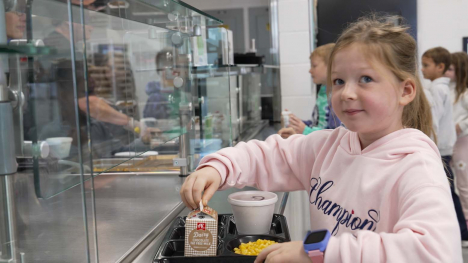
An Iowa school district connects local farms, food hubs and students through the lunch tray.

Farmers rarely seek mental health help. Farm Dog offers care from people who know farm life.