Ernie Goss explains weak equipment sales. Chris Robinson tracks wheat’s slide and six-year hog lows.
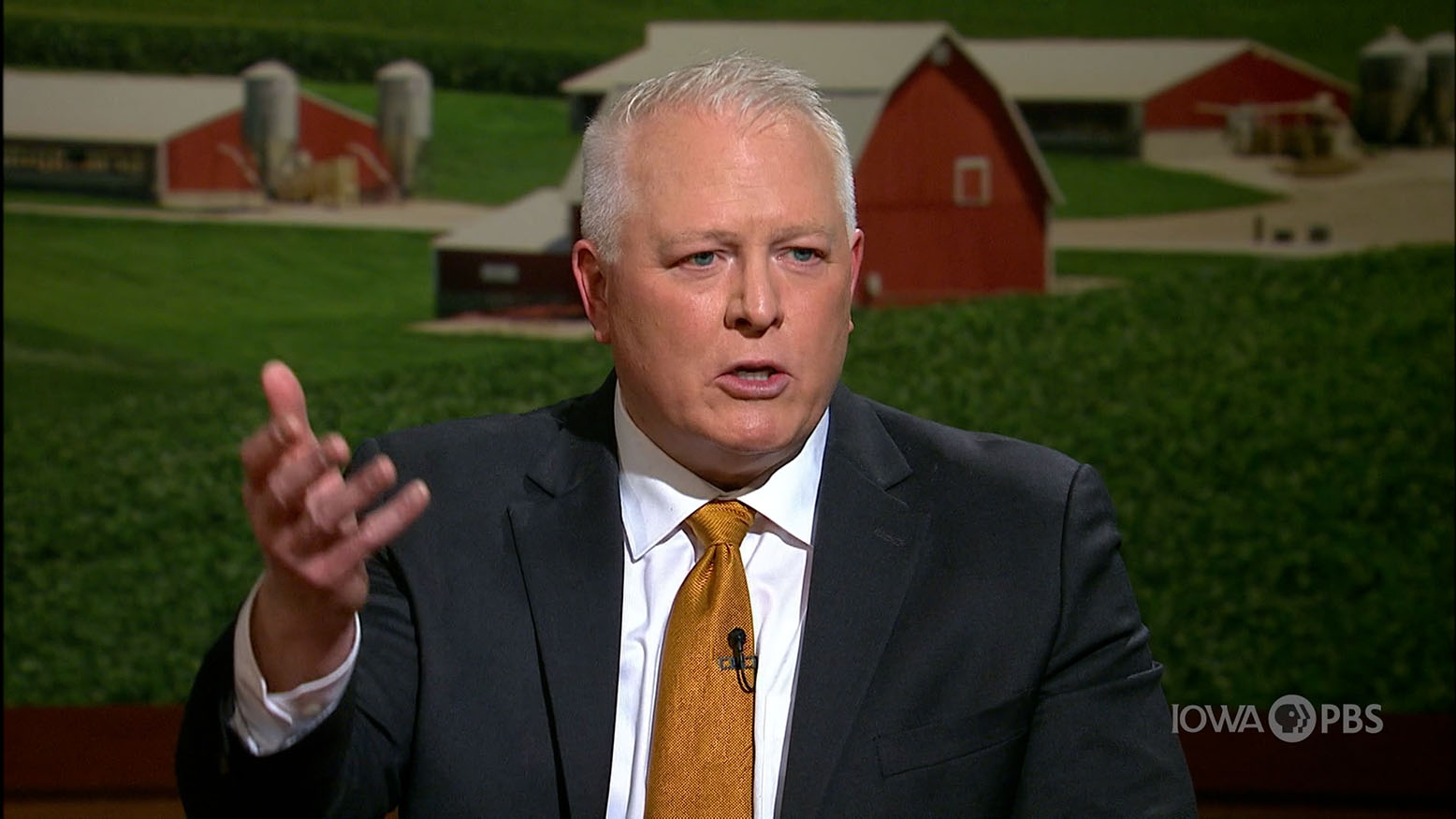
Farm Equipment Sales Slow and Wheat Slides With Ernie Goss and Chris Robinson
Share


Rural bankers report that farm credit is holding up even as equipment dealers struggle. Ernie Goss explains how tariffs and a stronger dollar weigh on exports and why he expects slower growth in 2027. Brooke Kohlsdorf examines wheat’s fall from three-year highs, the outlook for corn and soybeans, support for cattle and six-year lows in lean hogs with Chris Robinson.
Transcript
[Brooke Kohlsdorf] Stockbrokers looking for a sale on Wall Street. In the wake of last week's correction, sent the stock market higher and pulled commodity prices along for the ride. One note we are recording this program on Tuesday, November 24th, when the commodity markets were mixed. The nearby wheat contract lost a penny and the March corn contract gained 2 cents. Abundant rain in Brazil and a profit motivated soybean crush helped push the soy complex higher. The January soybean contract added 18 cents and January meal added $10.20 per ton. March Cotton advanced $2.96 per hundredweight. January class three milk futures were even. The protein complex was mixed. February cattle put on $2.13. January feeders cut $1.88 and the February Lean Hog contract declined 43 cents. In the currency markets, the U.S. Dollar index lost 43 ticks. December. Crude oil dropped $1.77 per barrel. Comex gold added $56.60 per ounce. And the Goldman Sachs Commodity Index shrank by more than 12 points to settle at 644.85. Here again are Chris and Ernie Goss. And Chris, we've got plenty of questions for you. We're going to start, I guess, more big picture with you first, Ernie. So the real headline last week for the commodity markets was, of course, President Trump's trip to China. And it was a big headline, but we never really got any specifics this week. He said there was a deal, but we haven't heard anything new about it. How does that impact the rural economy and what you study?
[Ernie Goss] Well, right now it's volatility produces volatility. Not knowing what's ahead. It'd be best, in my judgment, to figure out what is going on, because tariffs and we economists are pretty much in agreement. They have negative impacts. And they, in this case it's retaliation. In other words if we raise tariffs on China China retaliates. And we've seen it right. For example, right now the region that we survey and the nation in terms of agricultural goods and livestock, we're not back to 2024 levels in terms of exports to China. That's just one example. And right now we're faced with another challenge, which is the dollar is getting stronger, has been getting stronger for quite some time, six months or so. And that makes our export goods, particularly agricultural livestock, manufactured goods, more expensive. And that's what we're seeing. And that's pushing it's, it's pushing the economy into slower growth. When we saw 3.4% growth in the, in the third quarter. Well, we're in the fourth quarter right now. The U.S. Economy and tariffs that we don't, in my judgment, we don't want to go there because of the possibility and the probability of of retaliation either from China, Mexico or China or our other trading partners. So that's a real big issue and certainly something we don't want to see, particularly in our survey at Creighton University, we survey manufacturers and we survey bankers in rural areas of ten states. We're getting the same message that this things are slowing down a bit. Now manufacturing not as much as agriculture and livestock, but nonetheless the rural communities are having some difficulties right now.
[Brooke Kohlsdorf] Yeah, that's tariffs. Chris, what about you. How does the news or lack of news impact the commodity markets moving forward?
[Chris Robinson] Well these, all these markets have been almost gamified. I mean you talked about the whipsaw we saw in the stock market. We had one from all time highs to a 12% correction. And then the news came out with Nvidia. And then we were up 8% in the next day, the Nasdaq broke 20%, was in a bear market. And then after the weekend, we've come back nine, 10%. So all this volatility is in all these markets and it flows through everything else from silver and gold, which are under pressure. He mentioned the dollar rallying. So it's all intertwined. And the commodities corn wheat and beans are they're riding this wave. And as the markets move up they reprice. And a lot of times it happens in the middle of the night when everybody's asleep. It's a it's been very, very difficult year. Very, very volatile. Two months ago we were at three year highs in prices, you know, and just we've actually, you know, just gotten pummeled here in the last two months, which is it's been a difficult experience for a lot of producers because you were just starting to get friendly, just starting to feel like, okay, we've got a handle on this. And these volatile markets are really impact everybody.
[Ernie Goss] On the cost side as well.
[Chris Robinson] Oh yeah. And we saw, you know, the crude oil spike right before the election. Diesel was at all times, almost all time highs over five bucks on the futures. Now this, it's been, what, two weeks since the election. We're under 375 now. So we've had this big correction. Now hopefully that flows through. And that will help producers. But that spike came just as a lot of guys were finishing harvesting. So it didn't help. Now they're going to get, you know, a check from the government for that. The diesel. But it's still it makes life more difficult. It makes things more stressful. And to watch corn go from 460 to 550. And now we're back down to almost 460. Again, it's very upsetting, you know, and it makes it very, very difficult for the average farmer. Most people don't want to be sitting in front of a screen all day. They want to be taking care of their farm and taking care of their family. So it's, it's been stressful.
[Brooke Kohlsdorf] Yeah. As we talked about this volatile ride, as we drill in and look at wheat specifically, was there something else that's pressuring it, though to get so well?
[Ernie Goss] Well, we I think we had the big spike again. We had a tremendous rally to three year highs. And wheat has dropped over two bucks. And we're back down to almost where we were one year lows last year. Now is there more downside risk? Yes, sadly there is. If you look at the long term charts, there's probably another 50, 60 cents where if we don't catch a floor and a lot of that was driven by what's been going on in Russia, because that was a big premium. And then we again, you go to bed at night, there's some news there. We have a little bit of a rally. I think the other thing that's really kind of hampered our exports is our wheat exports are, I believe, they're at the lowest they've been in 40 years, you know, compared to where they were. So there's not a whole lot interest in our wheat. The rest of the world has had pretty good wheat crop. So that's another thing. But yeah, the wheat market is absolutely, positively under stress here right now. And again, it comes on the heels after we had really good pricing opportunities. They were just so short lived. A lot of people, I don't think took advantage of them because we were literally there for about a month. So it's been very, very volatile. But we'll see if they can get the situation straightened out. And you know the two wars, right? You've got Ukraine and then you've got also what's going on in Iran. If you can get that straightened out, that would calm a lot of things down.
[Brooke Kohlsdorf] Yeah. What about with corn and beans? So with corn, I mean, the harvest is all but but complete pretty much in the Midwest. So have we reached those lows yet? Post harvest lows.
[Chris Robinson] A lot of people thought we were there on the last USDA report. We kind of bottomed out. We had a really good rally in soybeans. Since then, soybeans have been very, very volatile since then. A nice rally today. If I'll say this. I mean, we're 10 cents away from the contract lows. So, and long term, if you look at the long term charts, we're probably 30 cents from real long term support. So as the worst behind us, I sure do hope so. If you look at 2027 prices, there are some positive things out there, especially in soybeans. Soybeans have actually caught a bit out there. We've found a little bit of, a little bit of support. The one thing that has also been a driver, we talk about the commoditization of these markets. Money flow. You know, one week they were long massively corn, wheat and beans. You know, the month later they flipped and they're still long beans, but they're short wheat and they're short corn. So that puts pressure on these prices. If we can sort of shake out those short positions and build a little bit of a support, the next thing we're going to start looking at if you're bullish, it's got to be are we going to get this El Nino. The super El Nino. Is it going to affect South American weather? So far it hasn't. But that's what people are going to be looking at, especially between I think once we're done with Christmas and the January, February, March, we're going to be watching South American weather very, very carefully.
[Brooke Kohlsdorf] And will the bean markets. They'll let you know when there's something going on in South America. Right?
[Chris Robinson] Right. And, and we talked about the dollar, the dollar rallied so much. It also put pressure on the riyal, which made a lot of the farmers down there want to sell their grain because they're worried about their prices. So again, it's, I say it's the commoditization of everything. You've got the stock market here, you've got the dollar doing this. And it's not like we were, you know, 20 or 30 years ago, things didn't move so fast. The stuff that used to take 2 or 3 months, it's happening in two, three days now. And that's just, you know, it's the, the way of the world right now with electronic trading and things change so, so much. Just take a look at what happened in the stock market over the weekend.
[Brooke Kohlsdorf] Just driven by headlines. Really.
[Chris Robinson] Yeah, absolutely. And then if you're in great, but if you missed it, you know, and there used to be, there was a lag time. Now the lag times are so short. It's there's really two different games there. Your average person is playing a one game and these hyper frequency traders, they're, they're playing a completely different game. And again, it just makes things more difficult, more stressful for the average farmer who's really. They just want to figure out, you know, are we going to make money at this price? Are we going to get more than five minutes at this price to, to take care of it? It makes it very challenging.
[Brooke Kohlsdorf] Yeah. Ernie, I want to ask you this question that actually comes from social media, but I think it's on the minds of a lot of farmers and producers. So this comes from Tim in Minnesota and he says, ‘what will the flip in the House and the Senate mean as far as agricultural policy in the next couple of years?’
[Ernie Goss] Well, the policy overall, we're going to have, not gridlock, but we're probably going to have an agreement which is worse than gridlock. By that, I mean, you have a Republican. The president wants to spend 300 to $350 billion more on defense. He will probably get that. But as to get that, he's going to the Democrats are asking for more spending. And we have two parties that believe in one thing, and that's spending more. And that's what we're going to see. And I think in terms of what it does to agriculture, it's going to mean higher interest rates. So farmers and all of us need to look out for higher interest rates and back to what Chris was talking about, the you mentioned the three F's, fuel, fertilizer and feed on the both, all those sides we talk about. We talk about the prices. But what about availability? In other words, we've got to be concerned about will there be available fuel, and diesel, particularly in this part of the country? So anyway, we're looking at higher inflation, higher interest rates. And of course, that in our surveys of bank CEOs in rural areas of ten states at Creighton University, we've already found that purchasing agricultural equipment is just not there right now in these communities. And what we're seeing across the community is bankers are reporting, on that is the agricultural dealers. It's not just the producers. What about the dealers in these communities? They're just not selling the equipment. They were selling, the farmer actually, at least according to our surveys, in reasonably good position, particularly in terms of credit. But it's the communities that depend on the farmers that are having more difficulties right now, particularly the dealers of agricultural equipment, the retailers. We're coming up on the holiday seasons this week. In fact, spending there and just pulling back there and the farmers again, the financial position of the farmers is pretty good right now in terms of credit conditions, in terms of borrowing, in terms of farm loan delinquencies, not there. So it's not quite as bad as sometimes I've portrayed it and we've portrayed it at Creighton University. But the communities, there are some real issues and and how much, you know, in terms of we look to, to DC for help looking for DC to help. We're at $40 trillion, 40 plus trillion dollar debt. And we're talking about a deficit. My, my bet is we're going to run. We did this year, we did $2 trillion this fiscal year, we'll probably do $3 trillion deficit next year. That's going to push up. Of course, interest rates and Federal Reserve meets again on December the 8th and ninth. They're going to raise interest rates, I think, by a quarter percent, not a half, as suggested by Waller, a governor of the Federal Reserve. So we're going to see higher interest rates, and they'll probably have to raise. Again, they're raising it, and they'll probably have to raise again in the first part of 2027. So this this affects all of us, including farmers.
[Brooke Kohlsdorf] Yeah. I want to talk a little more about inflation in a minute, because that is an interesting point that you bring up. But first, Chris, we haven't gotten to cattle, the protein sector, yet. So what, we had the cattle on feed report that came out Friday. Was there anything in that?
[Chris Robinson] Friendly
[Brooke Kohlsdorf] Yeah.
[Chris Robinson] It was friendly and bullish. And the first trade for Monday we gapped open higher. Then we actually had some, some pullback. We're still in relatively good situation there. And I like to look at long term stuff. Anybody that follows me knows that people get their fundamentals matter. But long term charts really matter right. And we talk about money flow. And the good thing is the managed money is long cattle. They're massively short lean hogs. We'll talk about that later. But they continue to want to own cattle, which has helped support this market. That's probably the biggest risk moving ahead. I was really concerned. I think a lot of people were when the stock market looked like it was going to roll over, it didn't. That took some of the pressure off cattle as well, because these things, again, why does it happen? The first thing people do is say, okay, people, if the stock market's down, nobody's going to buy steak. So they really will pound on the the the cattle market, cattle market has been resilient. It's had good long term support. The herd is still too small. And the whole issue with heifer retention still hasn't been fixed yet. And the problem is now we're still relatively high prices one one positive to having corn come down is that's going to help a lot of people that feed cattle. That's taken a lot of the pressure off when, you know, corn unfortunately dropped. You know, it's one hand on wins, the other hand loses. Corn drops $1.12. That helps somebody that has to buy corn, but it hurts the producer. So I think long term, the cattle market is, actually still looks pretty good and has helped support. It's kind of a different story. Unfortunately for Lean Hogs.
[Brooke Kohlsdorf] Yeah. What's going on there?
[Chris Robinson] We're at six year lows. We're oversupplied. China's oversupplied and, at the, at the grocery store there's a battle between chicken and pork. Pork is still cheaper. In fact it's so, so cheap. Now you're starting to see that they're bringing back the McRib. Usually that's a sign that we're getting awfully cheap. If they're like, okay.
[Brooke Kohlsdorf] I didn't know that.
[Chris Robinson] And we're, we're at six year lows. So as there's still more downside risk. But right now, luckily, 50 cents is holding. It's hard to believe that, you know, 4 or 5 months ago we were at 85, 90 cents, again. So that's, that's more of a supply and demand issue. China. There's China is oversupplied. And we are as well. And the good thing is when it turns and it will turn.
[Brooke Kohlsdorf] What will make it turn.
[Chris Robinson] [LAUGHTER] Yeah. [LAUGHTER] Well, that's the $64 million question, right? At the end of the day, you may see. You know, just a we're going to get one of these reports where all of a sudden they're going to like, oh, wait a minute, there aren't as many hogs as we thought. And, you know, the market will correct because guys are going to look and say, do I want to have more hogs at 50 cents? Not as aggressive as when they were at 85 or 90. So the market will sort itself out and we'll see. There's, there's a, there's a lot of what ifs ahead. Who knows if China, if their economy starts to turn around. And we talked about that too, as well. A big part of the demand for for protein, China still demands, you know, most of the world's pork, that's their pork, their protein of choice. So it's kind of all interwoven there. So hopefully we can catch a bid, turn this thing around.
[Brooke Kohlsdorf] Ernie, with all of the data that you study and look at, how is 2027 shaping up, then?
[Ernie Goss] Slower growth is a little doubt about that. And we've been living on data center construction. The the investment in data centers that has been driving a heck of a lot of GDP growth. And it's spilling over right now. We've got communities across the nation that are saying ‘no’ to data centers. Well, then we're going to have to say no to growth. The growth we've seen, not only that, we've talking about higher interest rates. I don't see how, any way around higher interest rates until, of course, it slows down. Then the Federal Reserve all of a sudden says, wow, we shouldn't have done that. We should have been reducing. We've been raising. So they they reduce rates. If you look at a chart with the interest rates that the fed sets, you'll find that when they they raise rates and they begin reducing rates. That's when the recession sets in. I'm not talking about a recession. I don't think we're going to be in recession. How can you spend the federal government spending $7.7 trillion that we talk about the deficit being driven by oil. Look at what the federal government's spending. It is entirely out of control. And now we have a agreement. An agreement is, is worse than almost a disagreement. And what I fear most of all, and I think back to what about setting wage and price controls? We revisiting the 70s, and I happen to have been in the 70s. We had wage and price controls, and they did severe damage to the economy. And that's what that would be the worst thing that could happen. You could have a higher inflationary pressures. At the same time, you're slowing down. And the the federal government implements wage and price controls. That's no way to go. But they don't listen to economists. And for a lot of reasons, then a lot of times we shouldn't be listened to. But in this one, wage and price controls out, higher tariffs out. We don't need higher tariffs. We need lower tariffs because of the retaliation. Then I hear you know what's going on with Canada. I mean that's that's very big problem especially, I would say for Iowa.
[Brooke Kohlsdorf] Yeah. Ernie Goss does not like tariffs. I'm going to write that down. That's the one point that I'm going to take.
[Ernie Goss] And you know Brooke, the interesting part for me when I go out in the communities, the the ranchers and farmers and the communities are more supportive than I would have expected.
[Brooke Kohlsdorf] Yeah.
[Ernie Goss] And, and I think they're just saying I'm, I think it's just being patriotic in my judgment, saying, well, reshoring or reshoring because of if you if you erect higher, high enough tariffs, they will bring it home. Thus far, that hasn't happened. Although manufacturing is doing better, manufacturing is looking better ahead. And again, that's, but still overall economy slowing down.
[Brooke Kohlsdorf] We I was going to ask you about your commodity pick for 2027, but we're going to have to wait for Market Plus because
[Ernie Goss] That was it?
[Brooke Kohlsdorf] That is it. I know 20 minutes. Gosh. And we're going to talk some more. Can you believe it? Gotta go when you're having fun.
[Ernie Goss] We're all big talkers, I guess, you know.
[Brooke Kohlsdorf] Oh well thank you. Chris Robinson and Ernie Goss, you have been watching our market analysis. And if you're watching online or on the PBS app, we are going to stay here and continue this discussion in Market Plus, our online only segment. You can find it wherever you get your podcasts or at Markettomarket.org where you can watch, listen, or read. Market Plus is one of three podcasts we offer, and you can also rewind the markets from the main show with our market analysis, or listen to interviews with agricultural newsmakers and Paul on the MtoM podcast. You can pick one from our library wherever you get your podcasts. Next week, sweet treats on Main Street are a dream come true for one small town boy. Thanks so much for watching and have a great week.
MUSIC]
[Announcer] Market to Market is a production of Iowa PBS, which is solely responsible for its content.
[MUSIC]
[Announcer] I wouldn't be here without my customers.
[Announcer] Yeah, I'd like to thank the customers there. They're very dear to our hearts.
[Announcer] It's about the people that you're working with and the relationships that you have.
[Announcer] Thank you, thank you, thank you.
[Announcer] Thank you from the bottom of my heart.
[MUSIC]
[Announcer] Tomorrow, for over 100 years, we've worked to help our customers be ready for tomorrow. Trust in tomorrow. Information is available from a Grinnell Mutual agent today.
[Announcer] Support for Market to Market has been provided by a bequest from Philip Leeds of Alta, Iowa, in recognition of public television's commitment to agricultural programing.
[Announcer] Market to market is made possible in part by a grant from the Corporation for Public Broadcasting.
Trading in futures and options involves substantial risk. No warranty is given or implied by Iowa PBS or the analysts who appear on Market to Market. Past performance is not necessarily indicative of future results.
Watch More
Nationwide Roundup settlement covers current and future non-Hodgkin lymphoma claims.
Ernie Goss weighs the farm bill and interest rates. Chris Robinson picks soybean meal for 2027.
Roundup settlement approved. Ernie Goss tracks equipment sales. Chris Robinson weighs grain losses.
Austin Peiffer discusses farm debt, bankruptcy and why asking for help early can preserve options.
Dan Hueber weighs what could lift corn and wheat as soybean traders wait for news from China.
China is close to meeting its U.S. soybean pledge but trails its broader farm purchase target.