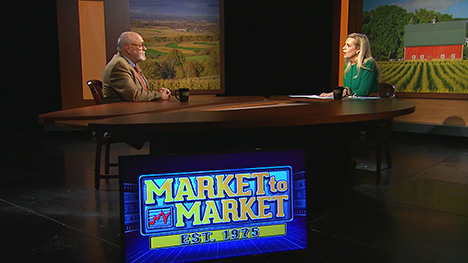
Austin Peiffer discusses farm debt, bankruptcy and why asking for help early can preserve options.
Farm Debt and Bankruptcy: When to Ask for Help With Austin Peiffer
Share


Bankruptcy attorney Austin Peiffer joins Paul Yeager to discuss farm financial warning signs, debt restructuring and Chapter 12 bankruptcy. He explains why farm size and valuable assets can mask financial pressure, and why seeking help early may leave more options for the business.
Transcript
[Announcer] Today's Market to Market Podcast is brought to you in part by the Iowa Economic Development Authority, creating opportunity for business in Iowa by connecting companies, entrepreneurs, and communities with the resources to thrive. Learn more at businessiowa.com.
[Paul Yeager] Whether you're somebody who remembers the DTN screen in the shop, or maybe worked with the open cab on your tractor, you have certain memories about the farm and maybe what agriculture means. But let's remember, farming is a business. Agribusiness is key. And if you can't operate the business, you're not going to keep farming. And there are cases where you sometimes end up in bankruptcy. Not always the end of the story. For the farm, it can just mean a new beginning. And we're going to walk through what the state of the farm economy is, what's prompting some bankruptcies and what's coming out on the other side of things, with someone from Ag & Business Legal Strategies. We're going to have another one of these. This is a law firm that's a little different. Based in Cedar Rapids, Iowa, we have two episodes involving two of the attorneys, father and son. Joe is one of our conversations. But today we're going to talk with Austin Peiffer. He is an associate attorney there with that firm. And his specialty is bankruptcies. He spends a lot of time in the courtroom, but he also spends a lot of time in planning, working with farmers to avoid going through those bankruptcy hearings. And that's what we're going to talk about today: the case for business, the case for smart planning. And there's one thing that came up to me, and I don't know why I didn't use this before, but it's driving by. A farm can tell you some things, but not everything, especially when it comes to the financial health of the operation. We're going to get into that today on the MtoM podcast. I'm Paul Yeager. This is a production of the Market to Market TV show, which is based at Iowa PBS. I want to hear from you. If you have a story you want to share, an idea, someone you want me to talk to, send it to me in an email at [email protected]. Now let's get to our conversation with Austin.
[Announcer] Today's Market to Market Podcast is brought to you in part by Grinnell Mutual, which has been helping protect what people grow, own, build, and value with insurance products since 1909. Trust in Tomorrow® with Grinnell Mutual. Learn more at grinnellmutual.com.
[Paul Yeager] Austin, your dad grew up on a farm. You grew up in an area where your dad talked about and worked on the farm. So how did you decide that that's what you wanted to do, was law and work with farmers?
[Austin Peiffer] So I think it came down to just hearing about what my dad had done all those years growing up on the farm, all the stories. The time that he and his brother got ticked off that they were stuck stacking the hay bales in the top of the barn. And so instead of spreading them out, they stacked them all in one place. And the next morning, Grandpa was back at that farm, shoring that barn up with some extra poles. Hearing about his work with farmers and trying to help them out of tough situations. When I went to law school, I went in with an open mind. I was thinking I could do anything, but when I started taking the bankruptcy classes and the related classes, it all just clicked, and I was like, this is what I want to do.
[Paul Yeager] And like anything, whatever the vocation is, why bankruptcy? Why did that seem something you're like, I'm going to spend all my time working on?
[Austin Peiffer] I had a knack for it. I understand the situations. I understand the law. It's a really appealing mix in law. There's a distinction between litigators and litigation, and then transactional lawyers who do transactions, and bankruptcy bridges both of those. One day I might be in court arguing in front of a judge, and the next day I might be cutting a deal to avoid a bankruptcy and figure a way to get a farmer out of their troubles without the time and expense of a bankruptcy. So you get to do both, and I really like it. The other nice thing is, it's cliche, but you get to help people. I mean, I get to work with farmers and either help them keep farming or, in certain situations, I'll help them get out of farming in a sustainable manner, with as much in their pockets as they can have.
[Paul Yeager] Is it bad for someone to end up in bankruptcy court? Is it the end of a farmer's story if they end up in a bankruptcy courtroom?
[Austin Peiffer] Not always. Farmers can reorganize through a bankruptcy and come out the other side stronger than they went in. That was the reason Chapter 12 bankruptcy was created in the '80s, and there are a lot of great success stories out of the '80s and later where a farmer got in trouble, filed a bankruptcy, right-sized their farming operation, restructured their debt so that it works for them, and got out. Joe has clients who he took through bankruptcies in the '80s and '90s who are millionaires now. That's still possible these days. But there's a big difference, because we have land prices that have stayed high. We've got stress from high input prices and low commodity prices. But unlike the '80s, we don't have land prices tanking. And I believe that while the total farm debt load has increased since the '80s, and most of that increase, even on an inflation-adjusted basis, is in debt on land, there is still a lot of land out there that doesn't have debt against it. And so there are a lot of people that never see me. But for the people I do see, when you've got these land prices this high, you'd think it's a good thing to have high land values. But I can't finance your land. The land can't pay for itself, even on a 30-year amortization at the submarket interest rates we can sometimes get in a bankruptcy. I can't get land to pay for itself. And so, just because of the economic conditions and, paradoxically, the high value of land compared to its productivity, there are a lot more cases now than in the past where, I'm sorry, you own land, I can't make a bankruptcy work for you. It's not to say no one goes into bankruptcy and comes out the other side. I have clients who don't own much land. Maybe they've got reasonable landlords giving them fair rents, and they can come out of bankruptcy in a reorganization. I've got some clients who, they're solvent. They just need to restructure their debts, and they can come out of bankruptcy. So yes, there is hope. And the other thing is, a lot of the clients that come to us don't end up in a bankruptcy. We can resolve their difficulties before we get there. We can work out a deal with the creditor. We can find refinancing for them. We can help them analyze their operation and see what's making money and what isn't, and make rational decisions based on that.
[Paul Yeager] Well, I was going to ask if there is a typical person that comes into the office, but I guess typical probably isn't the right word to use. Let's go this way: Is there a common thread of somebody that's going through bankruptcy in 2026?
[Austin Peiffer] So I'd say the common thread for farmers going through bankruptcy in 2026 is high debt loads and some combination of bad luck and poor management. Could be more on one side or the other. But the high debt loads, they just make everything harder. I believe that if you look at the resources out there from the various extensions in the Midwest, they'll say if you're at a 50% debt-to-equity ratio, that's high; you're in a distress situation. I'm not sure I've ever seen a client come in with even as low as a 50% debt-to-equity ratio. It's the people who overextended when times were good. It's the people who have rolled bad years into their operating, rolled bad debt from their operating to their land or their equipment. It's the people whose attitude is, I'll keep farming as long as the bank will keep lending me money. And it's oftentimes also people who aren't looking at their numbers or don't have their numbers. If your tax returns aren't done, if you don't have a balance sheet, or if your balance sheet is just something that your banker puts together in late December to sign to get your new operating loan, and you're not using that as a tool, you're looking for trouble.
[Paul Yeager] Yeah, that's a flag. Not knowing your cost of production, that's a flag. Yeah. Planning and penciling are as super important as picking the right seed and chemical.
[Austin Peiffer] Yeah, I'd say even more so. I mean, yes, you will probably get a better yield if you pick the exact right seed, but that's just part of the input. The real question is, are you going to make money? Sometimes a farmer might have the attitude, I want to be the biggest farmer in the county. I want to be the biggest farmer in this area, the state. I want to be the biggest farmer in the state. I don't want you to be the biggest farmer. I want you to be the most profitable farmer. I'd rather have you make $100,000 on a hundred acres than have you make $50,000 on a thousand acres.
[Paul Yeager] I had a farmer recently tell me, Austin, that there's a difference that not every producer understands between profitability and cash flow. Tell me your definition of the two. And has that changed in your career, in the way you approach it?
[Austin Peiffer] So profitability is, in my mind, I distinguish between cash flow and profitability based on basically debt service. There's a fancy acronym that the Wall Street types use called EBITDA, earnings before interest, debt and taxes, I believe. And as a rough approximation, that's going to be your profitability. If you can make money before you pay those, well, then maybe you're doing all right. But on the cash flow side, you've still got to pay your taxes. You've still got to pay that interest. You've still got to service the debt. And maybe the biggest part about that is the debt service, because when you look at debt service, as you pay down debt, you're building equity. Yeah, your equipment's probably wearing out, but in general, you pay down debt to build equity. So your profit might show up on your balance sheet as increased equity in your land or your equipment. That's great. And that won't pay your bills. So you could have a profitable operation that still has cash flow problems. The phrase is asset rich and cash poor. And I don't think that's changed at all. It's a constant problem. And so it's important to know both of them. It's important to know, am I making money doing what I'm doing? Is there any benefit? Am I better off this year than I was last year? That's where having your balance sheet from each year is really helpful, because you can look at that and look at the number at the bottom. Is it bigger than it was last year? If so, then it was profitable. Now, you still have to look at your income statement or your cash flow statement to make sure that you're able to pay all your bills and meet your cash needs. Are you able to service all this debt? But they're different, and they're both important. They just come at the finances from different angles. The three main financial statements: you've got your balance sheet, your income statement or your cash flow statement. And... You're going to have to cut this. I can't remember.
[Paul Yeager] The third? Oh, that's all right. Well, no, we won't cut it, because I wanted to, I interrupted you. I started to interrupt you. And here's what I'm going to interrupt you with. I'm not trying to lay blame at anybody's feet with this question, Austin, but are there certain organizations, groups or those involved with agriculture that have enabled or allowed some producers to continue to go into the bank with a balance sheet that's prepared by the loan officer, so they can pay their loan, so they can make money back on the loan? Or if it's somebody else on a commodity that's given them credit, that's going to allow them to plant a certain seed. Are there, not even going to call them bad actors, but are there those who are maybe taking advantage or finding an advantage for their own interest that's not necessarily helping the farmer out there?
[Austin Peiffer] I think a lot of farmers think that anyone who's willing to give them money is trying to help them, because they see that, oh, that'll let me farm another year. And the hard issue, the hard question is, should I be doing this, or do I need to make a change? Do I need to radically change what I'm doing? Do I need to drop some leases? Do I need to change from farrow-to-finish to just a farrowing operation? Do I need to sell my dairy cattle and get beef cattle, or vice versa? And the person who's lending you money, they're probably a good person. They're probably not trying to put you in a bad position, but ultimately their interest is in making the loan and getting it paid back. And so, yes, they would love it if you borrowed from them next year. And again, I'm not saying that every lender is out to give their borrowers the shaft and is just looking at the short term, but the difficulty is, they're being measured on, what their bosses are turning the screws on them for, is making a loan and getting it paid back. Making next year's loan is next year's problem. And so I have seen this. I saw this with a client this year. His bank came to him in late February and said, you've got cash rents due. If you want us to lend you the money for those cash rents, the price is a mortgage on a bunch of land that your parents own, basically free and clear. And the farmer didn't have counsel. His parents didn't have counsel. And they signed the mortgage. And now that bank is very well positioned to collect. Yes, it had to extend a loan for another year, but it cleaned up its books. It got a lot more collateral, and it is much better off. Is the farmer better off? Well, he says he made money this year, but it came at quite a cost. And so the banker, they may have heard from on high: This is a troubled loan. Clean it up. And we're going to plan on shutting off the tap next year, and you have this year to try and get it cleaned up. Or you might have the seed vendor who will give you financing. Why are they giving you financing? Because that will sell them more seed. And they certainly hope they're going to be paid back. But their concern extends only to getting paid back. Again, next year's loan, next year's sales are next year's problems. Yes, they will be better off if you're there to buy from them or borrow from them again, and maybe even in larger amounts. But they're not your agent. They're not the one who's responsible for your operation. They're not the one who's going to analyze your cash flows and tell you what you're doing isn't working. Maybe your banker is. Maybe you've got a really good banker who's looking out for you and is willing to say, hey, you're losing money, and this is a problem. You can't just keep losing money. You've got to change something to fix it. But you can't count on that. That's not their responsibility. That's...
[Paul Yeager] And you can't have the farmer be a hobby farmer. They do need to think business. There is the term agribusiness. It's still attached to agriculture. I mean, those two do go hand in hand. It's not just, oh, this is fun, I'm going to do it.
[Austin Peiffer] There are a lot of farmers who don't run their farms like businesses. They don't think of, how can I use a balance sheet to help me analyze what I'm doing? Their question is, how can I raise the best crops? Now, that's an important thing. Just like me: I'm a lawyer. How can I write the best brief? But that is secondary, because if writing this brief won't help the client, I shouldn't do that. And if applying that fungicide will raise better crops but it'll cost more than it'll benefit you, yeah, you shouldn't do it. Is your goal to get the record yield in the county, or is your goal to make money? And if you aren't even asking these questions or thinking it through, you can't make an informed decision. You're just going on a wing and a prayer. You're doing it because that's what Dad and Grandpa did.
[Paul Yeager] I've often said, maybe you can agree or disagree with me, you can't always tell the health of a farm by driving by.
[Austin Peiffer] Absolutely. You might be able to tell it's in rough shape, but...
[Paul Yeager] You can't even tell it. Can you tell if it's in rough shape just because the lawn's not mowed or the weeds are high? Does that mean that... it might be a sign.
[Austin Peiffer] That's it. Yeah, it might be a hint, or it could be a sign that, yeah, I know, I didn't mow the lawn because I had to go do that fungicide spray, because that's going to net me an extra $5 an acre or what have you.
[Paul Yeager] So just like you can't always tell by driving by, is every farm in competition with one another? Is my neighbor, who's a quarter mile down the road to my east, and an eighth of a mile to the west, and the one on the next section over, is that my competition? And is that anything I need to be worried about as a farmer?
[Austin Peiffer] Not really. The markets are so big that if your neighbor gets 25% more bushels per acre, that's not going to markedly change the prices you get. You might want to ask him, hey, I want to make some more money too. What did you do to get that done? But you might also find out that, well, yeah, he got 25% more bushels per acre, but he had 50% more input costs, because he was going over it more times with his tractor and putting more product on his fields and doing more work on it. So I don't care. There are two types of people in the world. There are people who care about how much money they make, and there are people that care about how much money you make. Be the person that cares about how much money you make, because it doesn't hurt you if your neighbor's making money.
[Paul Yeager] But again, it's back to the bragging rights. I can't go into town. Well, okay, I'm not going to do that. What farmer goes in and says, I made the most money? But there is going to be the farmer that goes into town who may or may not say it, or whisper it to their neighbor. Yeah, they don't always tell what the yield is, and they don't know if he's bragging that they have the biggest yield, because they'll sometimes keep it quiet.
[Austin Peiffer] Yeah. Well, and even if they do, okay, great. They're getting their validation and their value from the wows and oh my, you got lots of bushels an acre. That's great. I'm happy for him. I'm getting my validation because I made money this year. I paid all my bills and I put money in the bank. And, as atrocious as it sounds to some farmers, I paid taxes. A lot of farmers don't want to pay taxes, because who likes to pay taxes? But that means you made money. And if all you're doing at the end of the year is saying, oh, I've got to go buy a new tractor, I've got to go buy a new combine, otherwise I'm going to pay taxes, it's really shortsighted. That's how you end up being asset rich and cash poor, because you put all your money into those assets. And then what happens when it's a slow year? What happens? Farming is cyclical. You're not going to make money every year, or you're not going to make the same amount of money every year. So what's better: to have a tractor that's a couple years newer, or to have a cushion in the bank so that when things aren't as good, you can still survive?
[Paul Yeager] You can make it through. The ebb and flow is...
[Austin Peiffer] What you...
[Paul Yeager] Yeah. Okay. Austin, is there an outside element that farmers are having to deal with, whether they are monitoring every cent and know where each cost line is, an expense and income, that is a headwind that you can help them with? I'm guessing no, because you can't change tariff policy or export policy, but that's also something you, though, have to deal with when you're working with a farmer. Is that accurate?
[Austin Peiffer] Well, yeah, the farmers have to deal with the markets as they exist. And so the input costs are what they are, and they're more than they were a couple of years ago. And the commodity prices, they are what they are. And I don't think there are very many people that are making a good living at corn with a four in front of it. And so, I can't change the markets. And frankly, my clients can't either, but they can react to them. And so I've heard a lot of times farmers say, oh, I'm saving my crop. I want to market it. I want to wait for the prices to come up. I get that you want to make money, and there's value there. But at the same time, I tell a lot of my clients, if you think you know where the market's going, go play the market. You don't need to hold on to corn and keep paying storage costs and interest on your operating note. If you want to speculate on corn futures, you can go play the market just like anyone else. And if you know better than the market, heck, what are you doing farming? You can make a whole lot more money with a whole lot less work.
[Paul Yeager] Yeah, it comes up on the show where, you know, is corn going higher? And that person will sit across from me and say, yeah, let me hold on, let me get my crystal ball dusted off here and set it down right in front, and I'll look at it. Austin, I'm going to ask the last few minutes here about comparisons we talked about. What is around the neck of a farmer right now when it comes to debt and the land values? And this is a question that we often talk about: when times look tough for farmers, we start saying, is this setting up for another farm crisis? Walk me through the comparisons to the 1980s farm crisis, of then, and what are we in right now?
[Austin Peiffer] So my crystal ball is just as dusty as yours, but I think it would take a lot for us to have another farm crisis. Don't get me wrong, there is stress on farmers. Margins are tight, if they're positive at all. High inputs and low commodity prices. And overall, yes, the debt load is going up, mostly fueled by land debt. But I think that's also the reason we're not going to have a crisis like the '80s. We still have investors out there who are looking to buy farmland for a diversified return. And I've heard them say they're looking for 2 or 3% cash return every year, the rents that they're going to get, and they're making the rest of their money on the appreciation. Now, I don't know how long that can last. I don't know if that's a bubble that's going to pop tomorrow or if that's the new state of things. But as long as we've got that sort of demand for farmland out there, I think the values will stay high. I think those values will let some farmers keep farming longer than they should and build up a bigger debt load that's harder to deal with, but it seems like that'll also soften the blow. The big problem with the '80s was everything just tanked all at once. The farms expanded in the late '70s, and then in the '80s we had massive disruptions, and we had too many farmers having too much distress at the same time, and it just became a self-reinforcing cycle. And so, in my very dusty crystal ball, I don't think we're going to have another farm crisis. But I could be wrong. The Des Moines Register had an article this summer that posed that exact question: Is this the second farm crisis? I certainly hope not, but I don't think so. But it's certainly a time of distress for farmers. And the question farmers should be asking themselves now, every day, every year, is, am I making money, and am I going to make more money next year? And if the answer is no, the response is not to just bury your head in the sand. The response is to do something.
[Paul Yeager] It's great. I really could end on that, but I want to ask just a couple more follow-ups here, if I could. And this is something I talked about with Joe, and that's the transitions, the wealth transfer that's about to happen in this country, especially in rural America, from some of those people who made it through the farm crisis, who are set in a different position. And thinking, are they also going to be able to transfer the knowledge and the experience that they went through and survived in the '70s and '80s to get us into the '30s and '40s in this country, meaning 2030 and 2040?
[Austin Peiffer] It depends. You've probably heard the joke about the 80-year-old farmer who says that his 60-year-old son is finally old enough to drive the combine. That's a real problem. There's the wealth transfer, but there's more: the knowledge transfer, the trust transfer. You don't necessarily have to deed the land over, but can you give the next generation the operations? Can you have them make the decisions? And can you also sit back and watch them make some mistakes, because that's how they're going to learn. As a parent, I think of this with my kids. My job is not to keep them from making mistakes. My job is to teach them and make sure that when they make mistakes, they're recoverable. It should be the same in transitioning to the next generation in farming. Yeah, let junior make a mistake about which hybrid to plant this year. It's probably going to cost some money. It's probably going to sting a bit, but that's survivable. Don't let junior make the mistake of leveraging everything to go expand and buy a thousand extra acres and a whole new line of machinery to go with it when the cash flow isn't going to support it. And so I hope that we have this transition, and it always works out, because, I mean, there are always transitions. It looks like it's bigger because we had the '80s. We had a lot of people that ended up selling out, and so we had a new generation that got in at the bottom and worked their way up. And so maybe this cohort's a little bit bigger. But every year you have farm transitions. Every decade there are always people transitioning. It always seems to work out somehow.
[Paul Yeager] I should have asked this at the beginning. Austin, are you okay if you do fewer bankruptcy filings and more of the planning filings with...
[Austin Peiffer] I mean, gosh.
[Paul Yeager] Yes, you would. I mean, yes, you went to school, you're a lawyer, you do bankruptcies, but you would much rather, from where you sit, do the helping plan.
[Austin Peiffer] Oh, gosh, yes. We work with small businesses too, and I had a small business come to me, and it was not working. They knew their numbers. They looked at their numbers. They said, we are not making money. This is not working. And we were planning a bankruptcy. And they said, okay, let's get through this next month, and then we'll talk about it. I think we'll file then. And I didn't hear from them, didn't hear from them. Eventually I got in contact with them. They said, Austin, it switched. The customers who were stuck with the old name and trusted the old folks finally came back, and we're making money. We're in business. This is great. I was so happy for him. I was so happy for him. I don't want to take someone through a bankruptcy. It's an expensive and somewhat public process. It's time consuming, and it's a pain. I would much rather avoid that. But knowing the bankruptcy, knowing what that option is if we don't make a deal or if we don't turn it around, that helps prepare. It helps figure out, okay, does it make sense to go down this path or that path? And if we know that bankruptcy is the alternative, that's very helpful. I don't want to take you through a bankruptcy. I want you to farm or sell out, as you may choose. And I want you to do that with as little lawyer interaction as possible. And I'll tell you, bankruptcy is the opposite of that. Bankruptcy makes lawyers a lot of money, because it takes a lot of legal work and a lot of expertise. I'd much rather help you make a deal with the bank, help you plan your way out of a tough spot, than say, okay, we're going to go through a bankruptcy. I'm not looking to line my pocket from yours. I want you to be in the best position possible. And so the biggest problem I have, and I think a lot of people in my role have it as well, is I see people too late. I see the farmer after he's agreed to pledge Mom and Dad's land. I see him after they sold the one part of their operation that was making money, and now all they've got left is the stuff that's draining their cash flows. I see people when they're up to here and there's not much left. So the biggest thing that I would implore people to do is ask for help earlier rather than later. You don't wait until the disease has killed all of your herd before you call the vet. You don't wait until the fungus has decimated your crop to call the agronomist. Don't wait until you've pledged everything and used up all of your dry powder before you call for financial help.
[Paul Yeager] I'm writing down a note, Austin, from what you just said. I was about to ask you to do a lawyer thing and make a closing statement, but you just did it right there, on what everybody needs to do. Austin, I appreciate the time. Good to see you again. Thank you so very much for your insight, and hopefully we help somebody out here today.
[Austin Peiffer] Thanks for having me, Paul. Look forward to doing it again soon.
[Announcer] Today's Market to Market Podcast is brought to you in part by the Iowa Economic Development Authority, creating opportunity for business in Iowa by connecting companies, entrepreneurs, and communities with the resources to thrive. Learn more at businessiowa.com. Today's Market to Market Podcast is brought to you in part by Grinnell Mutual, which has been helping protect what people grow, own, build, and value with insurance products since 1909. Trust in Tomorrow® with Grinnell Mutual. Learn more at grinnellmutual.com.
[Paul Yeager] We are produced at Iowa PBS. Our production supervisor is Sean Ingrassia. His crew is Reid Denker, Kevin Rivers, Julie Knutson, Neal Kyer and David Feingold. The executive producer of Market to Market is David Miller. I'm Paul Yeager. We'll see you next time.
Watch More
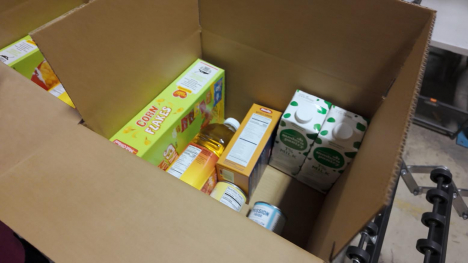
More than 3,500 households have signed up at a food pantry in Emmett, Idaho, ahead of the holidays.
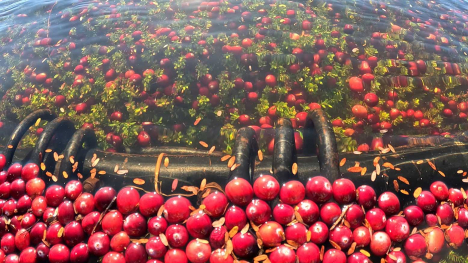
At Edgewood Bogs, the Rhodes family are renovating their bogs for higher production. They've installed new vines that can take up to three years to produce a good crop.
Trade talk as China nears soybean goal, food pantries face holiday demand, family rebuilds its bogs.
Dan Hueber weighs what could lift corn and wheat as soybean traders wait for news from China.

China is close to meeting its U.S. soybean pledge but trails its broader farm purchase target.
Dan Hueber fields growers’ questions on selling stored corn and choosing corn or soybeans for 2027.