The weather’s influence on the market may be closing soon, according to Dan Hueber in Market Plus.
August’s Weather Window Closing Soon – Market Plus with Dan Hueber
Share


The supply story continues to grow as much of the grain-producing region receives timely rainfall. Dan Hueber says month-end positioning may have contributed more to falling prices than improving crop conditions in this Market Plus discussion.
Transcript
[Paul Yeager] Welcome to the table for the Friday, July 31st, 2026 installment of Market Plus. Joining us now, Dan Hueber. Dan, this came up in my brain while you were talking today. The moves are back to 20, 30, $0.40, not two, three and $0.04 that we've enjoyed. I shouldn't say maybe enjoyed that. We've experienced for much of this year
[Dan Hueber] Tolerated.
[Yeager] Why the, why the volatility return?
[Hueber] I would say not average, but typical summer volatility. I mean, you at that point of the year, we know this is the riskiest part of the growing season. So you tend to push the volatility up. I mean if you go back and look at option volatility for example of course you always get a spike in option volatility in the summer months because they know there's a greater risk of seeing these bigger swings. So it's I granted it was a very nice rally, particularly in well, we let it initially. Everybody's taking their turn. Soybeans let it one week wheat let it another week. Corn a little bit less. So they've been somewhat of a tag along and always a retracement. We never got back to the spring highs. But but regardless it's been a, a nice like I say, I think a relatively typical summer move.
[Yeager] But that would lend to a lot of new crop movement. But it's the old crop too that's been, but just not as much of a move.
[Hueber] Not as much of a move. And again, we've seen corn, especially in a. Granted, it's backed off the last couple of weeks now, particularly last week in the last two weeks in the corn export sales. We've had respectable demand on old crop corn throughout most of the entire year. But like I say, that looks like it's probably waning at this point, a little bit. Shifting over to the new crop as certainly the soybeans are up. But so yeah, that helps stimulate those moves. When they came. And I think the other thing I knew, what was a bit unusual coming into the summer months, you had the major specs, the big money specs shorten the market. Unusual for them to come into the summer short. So when they had to turn around, they not only had to cover their shorts, but then continued to buy to go the long side. Have we seen that exhaust? Now? You know, a reasonable probability that we did.
[Yeager] But isn't there usually a sign on why they exit those positions? No. Something else?
[Hueber] I don't think so. Just one. I think it's seasonal as much as anything. I think you get to the end of July. They exit corn. You. You get into the. If you don't see any, any real situational problems growing wise, then they'll begin to exit the market. In the fall. They'll come back in September, October and start buying again. I mean, that's just the pattern they do it with, so.
[Yeager] Well, okay, well, what if they looked on our Facebook page this week with the 40 some pictures of bad crops in Nebraska, South Dakota, parts of Kansas, parts of Iowa.
[Hueber] I guess if that was the only page they looked at, they might get excited. But like I say, I think, but.
[Yeager] But we have people that are screaming that how can this market ignore our situation in some of these areas?
[Hueber] Well, of course you have to look at the overall situation as the overall situation changed that dramatically. I mean, are we looking at less than 180, 181 bushel nationwide? You know, right now it doesn't suggest that we are maybe we'll prove that later. But at this point in time, you know, it's not to the point where you're going to actually get into a crunch supply situation on what we have available.
[Yeager] I have a great follow up question, but I told the control room I was going to go in order today, and I'm going to stick to my word. Let's go with question one. Please., Bradley and Nebraska. We'll see if I can hold this for the next few questions. How large is Brazil's safrinha crop corn this year?
[Hueber] The, you know, again, a record crop. I mean, they're at the tail end of getting the harvest completed here. So it's a, you know, again, I mean, really, you don't have to go back that many years ago, Brazil was a net importer of corn. Yet. I mean, they might export a little bit of corn to their neighbors. You know, here they're moving into actually being a sizable force on this world corn export market. So, you know, there was concern early on that they were not going to be able to, you know, get the corn planted in time, you know, all those things turned out to be, you know, all kind of much ado about nothing. And they've come out and put another record crop out there now.
[Yeager] Well, that's them. How about us?, let's see, Bradley also in Nebraska, wants to know around which date does the market have enough good satellite imagery to start estimating the size of the corn and soybean crop?
[Hueber] You know, the, the satellite industry, of course, has been promising for years that, you know, they're going to be able to get us the, the accurate numbers. And, but and maybe for those who are really willing to pay for the latest technology, those numbers are out there, but I don't think they're being shared along the USDA, of course, relies on it to a minor extent. But, you know, they've been very forthright about the fact that we don't have enough money to really delve into that, to really know. So, you know, for, for now, yeah. I mean, some people are going to have some information on satellite. I don't think it's widespread enough or covers enough area yet to, to be the reliable indicator. So we're going to be back into crop tours here in August. And you know, that's still going to be the number that is going to carry the most, carry the most emphasis for the market.
[Yeager] Well, do you want to fuel a rally or put water on it? And what you saw on your drive here today.
[Hueber] The, the drive across Illinois and the part of Iowa, I came across you, you would not be too distressed about anything that I saw in the growing region. Corn, soybean, soybeans, either one. Granted, I realize the major problems have been further west in Nebraska and Kansas and up in the Dakotas. But boy, the eastern side of the Corn Belt and. And best I know, I haven't been out to Indiana, Ohio, but I haven't heard any major problems there. I think, Pennsylvania has been kind of a sore spot all year, but southern states seem to be getting ample amount of rain. So I don't think, you know, the states that are, that are, that are even last week, it was pretty evenly split on who deteriorated and who, who improved.
[Yeager] So and we'll find out Monday what crop conditions look like. I mean, I know that's not the be all end all, but that's at least a government number to digest.
[Hueber] Well, certainly, certainly you want again. Yes. There was another 3 to 4% deterioration. Both corn and soybeans last week. Crop ratings are not as good as they were a year ago. At this point in time. But again, they aren't. It's not like France. You know, where you're seeing this wholesale wipe out of the crop. And, you know, I think the French corn crop is now down to like a 34% good to excellent rating, where we're probably 66% good to excellent rating. So it,, you know.
[Yeager] Well, if you want to get a good look at France, the tour de France bicycle race always gives you a good view of some of the French countryside. And you can see wheat fields and corn fields, and it's dry. And Europe has been hot.
[Hueber] Hot burning up.
[Yeager] Yeah. All right. Let's, let's talk oil. Dan in Nebraska with oil looking to go higher and higher. Will that pull up grain prices?
[Hueber] You know, interestingly enough, it has helped. It's been given us spurts here and there. You know, it's certainly spurring some reinvestment or investment. I see ADM today just announced that they were going to be pouring more money into refinery or particularly soybean oil refinery. You know, long term, it certainly is a positive. But, you know, and again, look at the soybean oil performance here over the last two weeks. It's just like, well, we don't really care what happens on the world market at this point. Domestically, we're not really suffering. So we're not going to put higher prices out because of it.
[Yeager] Well, let's keep talking fertilizer because that's also on the mind mark in Minnesota, who asks, what do you see in your crystal ball regarding the price of fuel and fertilizer this fall?
[Hueber] Well, if we could know what's going to happen in the Middle East, it would be a lot more informed decision on that. But, you know, right now it's going to be a challenge. You know, even if the, even if the Middle East was settled right now, we have so disrupted the flow of not only crude oil, but fertilizer from those regions. And not to mention the problems we're having with what comes out of, out of Russia at this point in time. You know, not that we're necessarily going to go higher than we have been, but to see prices come down between now and the fall is probably going to be pretty limited.
[Yeager] And again, the story is going to be in 27. And the longer it goes, 28.
[Hueber] The the longer it goes, the longer we continue to push back all of these problems or extend these problems, I should say.
[Yeager] Okay, well, I asked you some technical questions today, so let's go to the cattle market again for Ethan in Kansas. Ethan says cattle have formed shoulders or have cattle formed the shoulder, head, shoulder formation. And are we in a bear market?
[Hueber] I, you know, without looking at a chart, I guess, you know, head and shoulders are, you know, they're rare. I guess we talk about them a lot. It's rare. let me go to the second one. Yes. I think we've seen the top. I think we've probably had a major peak in the cattle. All that said, we're. We are overdue for a rally, which I think began this week. But to think we're going to move that back into even challenge the highs, I think is probably unrealistic at this time. I think we you sell into the rallies.
[Yeager] So we showed a chart, but it was only for months, not the six months. So but next time could you bring your we can do some diagrams.
[Hueber] Oh sure you.
[Yeager] Could, you could give us a little.
[Hueber] Lesson up once we get around to the camera.
[Yeager] Before I let you go, the next month here in August is, we turn the page, end of the month, we're into that key growing season. We look like pollination is in a certain camp. What's what's two things a producer needs to look for here for the rest of summer before we get to the next holiday?
[Hueber] Well, and I think there is right at this point, there's probably a reasonable probability we could see prices rebound. Like I say, I do think at the end of the month probably played into it this week that maybe sold things off a little bit more than they should have. But, you know, without seeing a major shift, a major change,, with intense weather, it's got to be a new element to scare people. These are probably going to be rallies that you want to just consistently sell into. And I think I'd take it a step further. You know, you look out at the new crop, December corn, new crop, November beans. I'm talking 2027. You know, they're not at bad levels either. So, you know, maybe it's time to start taking a piece of what's what we're going to be doing for 2027.
[Yeager] Interesting. I hadn't thought about asking about that. Thank you for bringing me right in there.
[Hueber] There you go. I knew you wanted to,
[Yeager] I did.
[Hueber] Yeah.
[Yeager] I really did. I always do.
[Hueber] Yes.
[Yeager] Dan, good to see you. Thank you much, Mr. Huber.
[Hueber] Likewise. My pleasure to be here.
[Yeager] Dan Hueber everyone, next week we are going to look at a grocery store that's keeping a community from turning into a food desert. And we'll have the commodity market analysis with Kristi Van Ahn-Kjeseth. We'll get a look at what's going on in Minnesota on our visit. Thanks for joining us. Have a great week.
Trading in futures and options involves substantial risk. No warranty is given or implied by Iowa PBS or the analysts who appear on Market to Market. Past performance is not necessarily indicative of future results.
Watch More
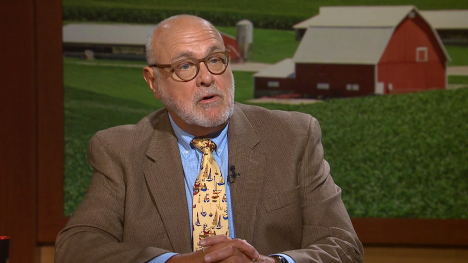
Each commodity took a turn as a market leader, according to Dan Hueber in our Market Analysis segment
Mexico cattle imports, lettuce sourcing, Nebraska wildfire and grain markets with Dan Hueber.
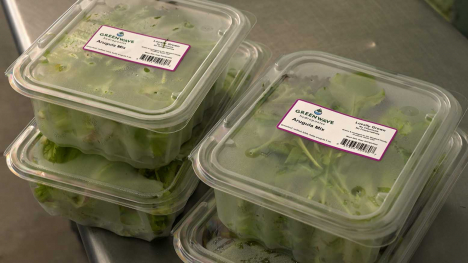
With almost 2,000 cases of Cyclospora attributed to contaminated iceberg lettuce, grocers and consumers are seeking out new sources for salad greens.
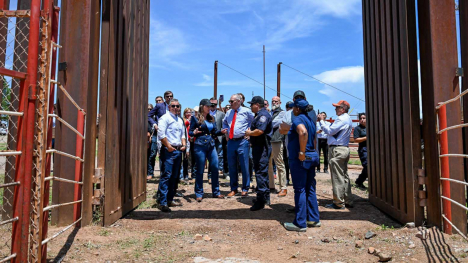
USDA outlines inspections and Arizona investments as cattle imports from Mexico prepare to resume.
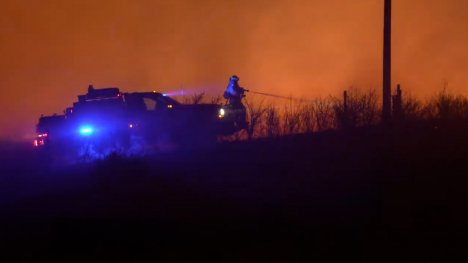
The Morrill Fire burned 643,000 acres as ranchers raced to protect family and livestock.
A regenerative agriculture startup says its soil probiotic can cut fertilizer use by 40%. Bryan Hansel of Holganix explains the science behind bottling nature back into the ground.