CoBank economist Brian Earnest discusses the 2026 outlook for beef, pork, and poultry. Learn how GLP-1 drugs, new dietary guidelines, and consumer demand shifts are creating a rare moment when all three proteins are profitable simultaneously.
Breaking Down the Protein Market in 2026 From the Chicken’s Perspective
Share


Protein is part of the discussion on our diets, economy and weight loss plans. We’ve talked about beef and pork cycles on the program, now it is time to look deeply at poultry and specifically the chicken. The consumer demands and business usages of all of a bird are drivers in growth and adaptation of what’s being grown. There are new factors in the demand for protein including the drug GLP-1 and how the weight loss drug may factor into the outlook this year. Then there’s the government recommendations on dietary standards. Even definitions of processed and ready to eat foods are in the conversation when it comes to SNAP benefits and family meal planning. Brian Earnest is the lead economist for animal protein at CoBank's Knowledge Exchange division and dives into the market.
Transcript
Paul Yeager: Will it be beef, chicken or pork that takes the gold medal and bronze in 2026 when it comes to profitability? Both on the farm and at the grocery store. We're going to get into the topic of protein heavily. We know the government has a strong interest in encouraging you to have more protein. We covered that recently on Market to Market. By the way, I'm Paul Yeager. This is the MToM podcast, a production of the Market to Market TV show, which is based at Iowa PBS. Brian Earnest is the lead economist for animal protein at CoBank's Knowledge Exchange division. We're going to exchange some ideas and questions and answers today with Brian. He's an Illinois native. We'll talk about his career and how he got to sit and just study this industry. What is the biggest influencer we're going to talk heavily about? I wrote three things down on this interview that I wanted to make sure that you hear about in the open. We're going to talk about the GLP-1 usage and how that relates to protein and the farmer. We're also going to talk about rotisserie chickens and ice storms. All of those are factors here in 2026, specifically in the poultry industry. But it's also impacting things all around the livestock industry. We'll talk about what the consumer has been saying, what companies and restaurants have been trying to cash in and find ways. This was just a fascinating thing that extends beyond the farm, but much more to mainstreet economics than I thought we were going to get into. So enjoy this episode, which is produced each and every Tuesday. If you have any ideas for me, send them in an email. Market to Market at Iowa pbs.org. Now let's get to Brian. So Brian, whenever I think of Eastern Illinois, I think Tony Romo. Am I wrong on that?
Brian Earnest: That's spot on. I graduated I think two years or three years after he did. So yeah, it's not, not a hugely known, football campus, but certainly some, some good talent out of there.
Yeager: Well, Jim, here we go. People love to do their impersonations of Tony. It's, I love his career and. And what? It's gone. So you grew up in Illinois? Did. Were you rural, a city kid?
Earnest: Kind of mixed. I grew up in a household. My dad was in manufacturing, Rockford, Illinois is kind of a manufacturing town. I think it's known as Drew City because they produce, you know, or they used to in the 1950s and 60s were, capital for making, stores in the United States.
Yeager: And so you didn't want to get into that business? You thought economics was more fun?
Earnest: I did, you know, I graduated in 2001, and I went through the machinist surprise chip program in high school. So learn how to work on lathes and mills and that sort of thing. I liked working on cars and that sort of thing in high school and college. And then, went from the community college in Rockford to Eastern Illinois. And found out you know, not necessarily great at math, but economics and where the numbers kind of fit in and how they, you know, once you put meaning behind that, that really resonated. Well. So I started getting much better grades in economics, and I did another classes so.
Yeager: Well. And you can always go back and repair things. I mean, things break all the time. So you're not completely walking away from your first love.
Earnest: This is true. I like working on my cars, not necessarily other people's carts that I found. I don't go to the Cadillac dealership for a little while, and, you know, just changed in a while. I noticed they didn't really have the same, you know, I guess fascination for, for me working on the cars, what I did. So, Yeah, it's, you know, there's there's, it's quite an art form.
Yeager: It is. And I'm always, I love, the abilities and talents that people have that they can do those repairs. That was one of the reasons I'm not on this farm is because I was not really good at repairing things. Very good at breaking, not really good at repairing. I've gotten a little better at it. Thanks to YouTube. I can watch a lot of videos. But I've kind of come into the economic side of things. And at CoBank, I've been exposed to, I read these releases. Your area is protein. That's still a jump. How did you get focused so much there in that realm?
Earnest: Yeah, it's, it's kind of interesting. I had many different jobs through high school and college. Actually, my first job was working at a sporting arena, selling Chicago style hot dogs. So I've been around food, you know, as a profession for, pretty much my entire career. Coming from Eastern Illinois University, I worked for a company called Top Co Associates. They're a co-op that's owned by different grocery store companies. And, I started my, you know, adult professional career as a buyer, in, in the chicken industry for, for tray packed chicken and turkeys, for annual Thanksgiving needs. And, through there, kind of started to use my economics degree a little bit more, with my next step where I was with, informal economics or the old sparks commodities group in Memphis, Tennessee. So my background really kind of stems from the meat side of the business. Not necessarily, you know, production, agriculture.
Yeager: And the meat side, with poultry specifically is a little different than in beef and pork and couch it this way with what we talk about in market to market, we have independent producers still in the cattle industry. So we spend more time talking cattle. But in the old days, not that long ago, we were talking hogs. It wasn't on contract, but protein chickens, they're pretty much on contract aren't they. There are not as many independent producers out there.
Earnest: Yeah, this is true. I think, you know, more than 90% of the US broiler production is vertically integrated. And so the risk is not necessarily in the animal portion of it. It's more on the grains and the feed side, and energy and, you know, different things. So, in terms of the producers managing their risk, they don't have, you know, a public contract on chicken or, you know, chickens like you do with cattle and hogs and that sort of thing so unique in the commodity space, in that there's, there's not, you know, there's there's a different area or focus of the business when it comes to kind of that risk management component.
Yeager: And that that part right now is at a. Well, we just had a USDA report the day we recorded this come out that says we still have a big supply, which kind of lends itself to thinking we're going to keep a lid on prices, at least for corn for a while, which is a main ingredient for those, poultry producers, I guess. What does that mean for the consumer?
Earnest: Yeah. Typically, you know, I look back, since 2015, really, we had kind of a low corn price environment from 2015 through 2019, generally speaking, favorable feeding environment for animal protein producers. And then we had a run up in grains and oilseeds, kind of in that period from 2020 through 2023, and now we're back to a situation where, you know, there's a lower feed cost component that's kind of spurring some optimism in the animal protein space. The question has been over the last two years, what is inflation going to do from a consumer standpoint? And that's what I've really kind of been trying to uncover. You know, it seems like for so long analysts were really concerned with what's going on from a supply side standpoint and looking at that to land information for market indicators and that sort of thing. I think we've got some consumer behavior changes that are going on what people are putting on their, you know, on their plates, and you know, how they're, you know, engaging with food in general, it is changing. And the demand side of the picture has been really kind of fascinating here. And I'd say the last 3 or 4 years we've had some pretty big changes there. So all that, you know, was a question mark last year, I think for beef producers of, you know, we're going to see some inflation due to or higher prices due to, you know, tighter supplies. Is the consumer going to hang on and hold the consumer held on? You know, despite some, some higher prices on the beef side. So overall, it's been really interesting to kind of be an observer here and, and try and figure out, you know, all these pieces that are moving just in maybe, maybe the same direction they've been in the past. Or maybe we're seeing some changes there.
Yeager: Is it too simple to say that the reason that the demand for poultry is driven strictly because of the high beef prices?
Earnest: Yeah, I think there's more going on there, with the consumer. One of the things that I, I, you know, I've, I've found really interesting over the years, and in this report, I found some interesting data thinking about the different items that the chicken producers are making. If you look back to the 1960s, they were generally producing a whole gear for the consumer, which, you know, is something that takes some, I guess, some extensive handling to make a good whole chicken. Right. In terms of what the consumer is doing, and then at the grocery store, you know, you had butchers in the back rooms in the 60s, 70s, 80s that were kind of cutting up bigger portions of meat to make something fits in the trade for the consumer today. You know, you go from 80% of chicken was produced in Holbert form to today. A larger portion is in cut ups. So different pieces, you know, breast meat tenders, wings, thighs. And then, about 50% of the mix of what the consumer is receiving today is in the further processed format, which meaning that the workmanship that's done to deliver a product to the consumer is not necessarily done at the store level anymore. It's done to, you know, the production levels of the processing or secondary processing. And it's in a format that's kind of easily converted from raw material to food. Right? So, this we've seen all these chicken concepts, new chicken concepts popped up over the last 3 or 4 years. We had the chicken sandwich wars in 2019, and I think they did a rebirth in 2023. And so, you know, chicken's offering something a little bit different than beef is in my mind. It's not necessarily just value, but convenience and some different flavor profiles and that sort of thing. And they're, they're trying to do something a little bit new. I, I know, like Nashville hot was the new thing maybe three years ago. And I don't see beef. Beef doesn't necessarily need to do that at all, but they're, you know, but they're they're not. Right. It's kind of. I want a rib eye. I want that good experience that I'm getting out of it.
Yeager: Ok Brian, we have a couple people that like to come on the show, and they say we don't celebrate milestones with chicken. We celebrate it with beef. And does that hold true in some of your research? That's still the case.
Earnest: I think there's some of that that still holds on. You know, I'd like to see pork getting involved in it, too. And, and, but, yeah, I think a lot of the eating occasions that we typically associate with food, beef can be, you know, front of the plate as well. Thanksgiving is one of those that has traditionally been a turkey holiday. But interestingly, about five years ago, you know, I started seeing a grocery stores that, you know, they had a ham option or, you know, maybe a bone in breast, and, and a ham or now more recently, you know, putting a rib on there and seeing beef on the menu for Thanksgiving is definitely a cultural change where, you know, the the consumer is saying, hey, this is what I'm looking for. I've had difficulty cooking turkey in the past, or I want, you know, another option on the table. So, you know, it's interesting that we're seeing that kind of shift in behavior that folks are a little bit more flexible with what they're looking to put together.
Yeager: I go to the, you mentioned the hog, and I look at the hog industry and there's. It used to be a different kind of animal even 20 years ago. And now it is really shifted to a less fat, more white meat animal. And you were talking earlier about the chicken, how some things have changed, not necessarily the whole, but has the, has the chicken evolved? I mean, we're not making bigger breasts and bigger chicken wings, are we? Like, they have made a wider meat and pork.
Earnest: Yeah. That's been an interesting evolution. In the broiler space, you, you know, it's you refer back 20 years ago. And that was the focus point for the broiler industry. If you go back four years ago, they were concerned about having, you know, enough, enough eggs, and producing eggs to make chickens and then kind of in the, you know, late 90s, early 2000, folks were after a lean protein and the chicken profile fit that very well. And specifically white meat. I think the US consumer at the maybe not necessarily that time, but in general, compared to the global marketplace, is unique in that the US consumers attracted to white meat versus a lot of the rest of the world is flavor's dark meat. And so the genetics and a lot of the processing followed that desire for the US consumer to have more white meat in their diet, and less dark meat. Now, we've seen kind of a, a shift, not a total change over, but more dark meat come into the demand side of the equation for consumers here in the last, you know, five, six, seven years. Part of this is a change in culture. You know, Chipotle is one that is a booming QSR quick service restaurant. Or I think we kind of fit into the, you know, the fast casual concept. That's more Mexican cuisine, right? So they're using more dark meat in their formulation for the chicken that they're looking for fits the flavor profile. They're looking for. That's kind of a shift. You know, you talk about like, well, what were the what was the producer really kind of trying to to fit the needs. And it was white meat and they produced a genetic, makeup of, of the broiler focused on the genetics to produce more breast meat. You know, 20 years ago today, I don't think we're finding a, you know, a genetic component of the bird that makes more dark meat. But lo and behold, the consumer is now asking for more dark meat. So this is something that I don't know that the industry will work on it necessarily, but, kind of an interesting change or shift and cultural, you know, cuisine that the folks are looking for.
Yeager: Which gets back to, I think originally why I was interested in talking to you. The consumer is speaking and they're talking when they're going to certain stores, whether it's the chicken sandwich wars that you referenced, the chicken wing again, we just got done with a major sporting event that focuses on, you know, we see the price, you know, the price of what the chicken wing is. So I mean, it's there in our discussion. It's that consumer. So in 2026 what's the consumer saying about that. What are their top three things? Is it different than it was a year ago or five years ago?
Earnest: You know I think so I look at the KSU Meat Demand Monitor. They do the survey work. They've been kind of working on it since 2020 and asking the consumer like, what are you going after when you're purchasing your, your protein items, taste, freshness, price? You know, these things really kind of in nutrition. These things fit at the top of the list almost every month when they're, they're looking at, the survey results from their consumers. I think that continues to be the case in 2026. But I think we'll see. Probably more of this behavioral shift, towards GLP one usage start to show up. And what we're seeing at the counter, I wonder if that's the case. We're certainly, you know, seeing the consumers asking for more protein. I looked at some survey work that, I think it was the power of meat or one of those that's, you know, they surveyed folks in 2024 and asked them if they were putting more protein in their diet. And the more than 60% of respondents said, yes, I'm actively trying to put more protein in my diet. In 2019, that was about 40%. So we're continuing to grow, you know, how much protein the consumer is looking for. But at the same time, the caloric needs of this GLP one users are decreasing and they're looking for a smaller portion size. One of the questions I have that I really do think this might just start to show up in the data in 2026 for a consumption in that, you know, chicken fits that profile very well. You think about chicken nuggets. They're kind of portion size. Most of the chicken meat that is developed ERS is produced. It can be sized to four ounce portion. Right. If, if I want to do the same thing on beef, it's like, well, I'm going after a nice big thick cut ribeye to get the experience I want out of beef. But I can't do a four ounce ribeye, you know, to, to to fit my needs. So, that's where I kind of just have a question of like, when is this going to start to show up in some of the data? And the adoption rate has increased rather rapidly. You know, we were talking about figures last year, mid-year, how many GLP one users are there in the US? And they were saying, you know, somewhere around 8 to 8 to 10% of the adult population by the end of the year, they were saying more than 20% of US households, which is a different metric, but they're saying more than 20% of U.S. households have at least one user, and they're making the decisions around what the household is eating. So, I think there's potential for that to influence what we see in the markets this year. For, for the animal protein space.
Yeager: I was looking away while you were talking. Not out of disrespect. I was looking for my deck of cards, Brian, because that's what we always talk about is the more protein we're supposed to have. And your four ounce ribeye is unfortunately about the size of a deck of cards. And it's never enough for me. When you again just tell me GLP that is the weight loss drug or that's, a shot or a pill. Right. And that's being used to, for people a massive try to do weight loss versus the old bariatric that was, that was, the trend a few years ago.
Earnest: Sure. And originally I think the, you know, the drugs were designed to, you know, how about folks have diabetes? They also notice that it really helps with weight loss as well. Now, the difficult component is, they're noticing users while they're losing weight. They're also losing muscle mass. So to retain that muscle mass, we need more protein in our diet. You know, our users need more protein in their diet. To offset that.
Yeager: And also it comes up another thing I wanted to bring up, after your last statement was there is the the new plate recommendations from the federal government is flipping and putting the protein at the front and putting way more protein on that plate than what we used to in the past. How does that play into your research now?
Earnest: You know, I think this is interesting. And I looked at the new food pyramid and yeah, it's flipped and they have a massive chicken on that food pyramid. I think it's I don't know, it's just a visual thing, but, I also have a big rib eye. And so certainly those items are, you know, thinking about more whole foods or, you know, minimally processed. This is a trend that really started, I think, you know, 12, 13, 14, 15 years ago, when I was more working on the food development side, I worked in the frozen foods area for a while, as a sourcing manager. And the trend then was like, how small can we get? The ingredient back on some of these items in the frozen foods case? Same with Center Store. Like how, you know, we want minimally processed. We want labels that we can read fairly easily. These ingredients on it. I look at the meat case and, you know, you look at beef, and it's really one component that's in there. Right? There's just beef. You look at eggs, it's just an egg in there. Right. So, clean labeling is something that I think the consumer has been after for more than a decade now. We're finally starting to see that recognition and the dietary guidelines that the US government has released. And so I think it fits more naturally with what most folks that are focused on their nutritional, you know, their nutritional needs are already doing where I see maybe a change is in government food programs. So what's qualifying for Snap? You know, or, you know, what the military is purchasing for, participants there or in the school lunch program, these sort of things. That's where I see some of the purchasing behavior. Probably has some, some is dictated and may have some change, in the upcoming year.
Yeager: And a fresh piece of meat that's unprocessed, and I'm talking the only processing is taking skin off is a lot different than grinding up a bunch of parts, putting it together, which is what the pork industry is concerned about with the Make America Healthy. The sausage is considered processed, which by definition it is where the chicken breast or whatever is the piece of the chicken, if it's not combined together, is not processed. So can chicken even come out? Even rosier than maybe we thought a year ago?
Earnest: I hope that they get this right. And what I mean by that is just that the food components that are being focused on, hopefully they are the more, I guess, healthy options for consumers at the end of the day. And that also from a cost standpoint that, you know, it's kind of leading consumers or leading purchasing behavior towards items that are nutritionally beneficial. They're also value conscious. And so, you know, I don't know that I'm, I'm completely concerned with kind of what changes will be made. But my, my hope is that they kind of get it right. One of the things that I know the National Chicken Council has come out with, when thinking about new dietary guidelines, the, the guidance that has been given around, you know, what items qualify. And so a, a value conscious item in my mind is the rotisserie chicken. This item has been around for years, right. And we in our household where we’re buying this on a regular basis because we can get a $5 chicken that's already cooked, feeds the whole family for at least one meal. It's easy. And, this, this item does not qualify currently for, users of snap benefits or the like program. And I, I think it's because it fits in the prepared food segment. And, you know, there's a lot of items in the prepared food segment that should, you know, that may be bundled all in kind of the same category. So maybe there's some some room for this to have kind of further discussion and a little bit deeper thought. I don't know, that's, you know, way out of the realm of, of, you know, what, what I'm able to, to really concentrate on. But I do think, you know, it's, it's great that there's kind of room for discussion on this now and that they're making some decisions. Hopefully that is for the betterment of the US populace.
Yeager: Okay. Go with me again. This is another crazy thing that I think you'll be able to go with me. We talk about in the cattle industry. What's happening now is these animals are getting heavier as people are holding on to them longer, whether for price or whatnot. And, the animal or the, the processing plant is slowing chain speeds for various reasons, whether it's labor or supply of the animal. What variability does the poultry industry have to make a bird heavier or to hold it? And what does that have implications on both? The company who's vertically integrated with the animal and you and I as consumers.
Earnest: Yeah. It's interesting. They're, they're all, different processes for bringing meat to the table, with the, you know, the beef cattle, traditional beef cattle production. You know, I don't know the specific timeline, but you could be talking a year and a half, two years or whatever before that animal, when it's one is born or one's conceived to when it's turned into beef. For chicken, it's like 35 days, right? When they know when it's, being put in the barn to when it's being delivered and it can have a lot of variance, you know, just bearing on the weight of that bird. Just a couple of days within the schedule. Now, we saw a a big disruption in Atlanta or throughout the, I guess, the the broiler growing region in the US here two weeks ago, with these ice storms, the snowstorms, I heard, several integrators or producers, had some issues with barns that were, being destroyed with this, this winter weather that can have a huge impact on, what size birds are coming to the plant and how that fits the specs of, you know, going to the grocery store, a food service system, and not just today, not for, you know, weeks, but months or this whole year. Right. We may see some really big influences. To answer your question, I think, you know, there's some pretty big variability that can happen with weather related events, other things that happen. But the the change speeds are regulated in the US. There's I think somewhere around 40 plants that are able to operate with waivers at a line speed of 175 birds for a minute, I think is, the, you know, the, regulation. But the rest of the plants are regulated or I think it's around 140 birds per minute. That sounds very fast. But in the global scale, we've got other plants throughout the world that are operating above 200 birds per minute. And this is one of those things that I think they're, you know, the industry as a whole, is kind of figuring out like, well, what is the ideal speed? What can we on a lot of the newer, more modern processing plants in the US have pretty similar equipment to what they do in other global production systems. So feasibly they could be running at a higher speed and they're limited just based on this government regulation. So that, in my mind, has something to do with why the U.S system produces a larger size bird than a lot of the other systems throughout the world do. So it's it's like thinking about, well, if I can't produce more birds through the plant, well, I'll make a bigger bird. You know, I only have so many shackle spaces. And I need to continue to operate as efficiently as I possibly can. And that, I think, has contributed to some of this build up that we have in the further process segment where, you know, I may not be able to fit the profile of the breast portion that my consumers are looking for. So I'll make a bigger one and size it down. And then that fits the profile of what they want for their chicken sandwich. And the rest of it goes into something like, you know, boneless wings, which aren't real wings, but, you know, or, breaded.
Yeager: That's the processed food that we were talking about, that's part of this, this plate.
Earnest: Yeah. So it's interesting and it's just a different way of looking at things, you know, at the end of the day. Now, if this regulation were to change, I think that could have some implications with respect to where we see the next ten years of growth for the broiler industry. If they're able to get more consistency out of line speeds, if they're able to operate at, you know, faster speed, if we see the size of chicken actually go down. The average has continued to rise over the last two decades. Pretty steady rate. But maybe they start focusing on a smaller bird size format, which is there's actually a lot of real demand in the industry for a small size bird format. This is a lot of like what QSR uses of like, Kentucky Fried Chicken. You know, they're using a smaller size bird that they want for cut ups, and they want to fit the right size profile because they're using whole, you know, a whole meat items, like a whole breast or whole thigh and drumstick, that sort of thing.
Yeager: Okay. I don't know if this is way too simple of a question, but does the poultry. I'm just going to use the big three, the beef, the pork, the chicken. Are those three, If one is high, the other two are as well? A tide lifts all boats? Or is it a cyclical one? Is higher the other or lower. And where's the marionette dance in that?
Earnest: The last three years. Four years? You know, for the most part, they've, they've been, they've been doing pretty well. And this is rare. Usually you do see kind of this, offset of where, like, the chicken segment's doing. Wow. Or the beef segment's not or, you know, the pork segment. So, we're actually operating in a time where that's where I keep kind of going back to the demand side of the picture where folks just they are looking beef is winning out in terms of exceptional demand. The pork side of it, if you look at a, you know, a demand curve for, for pork in general, they're not seeing as much lift, but it's favorable compared to where it was 5 or 6 years ago. And the, the chicken side of the equation, the demand is, I think, stronger than it's ever been there too. So, you know, in, in general, this this space is doing quite well. Despite some, I would say, some massive hurdles from a consumer goods standpoint. I think there's a lot of consumer goods areas that are kind of struggling through this environment of higher inflation, but GMO protein space, has, you know, has attracted the consumer. And they're they're holding on.
Yeager: And we didn't even get into eggs and we didn't get into HpaI, which is influenced, those two cycles. But are those still constant worries for, for protein or for, for poultry?
Earnest: Yeah, I was, I was just at IPG, which is, International Production and Processing Expo in Atlanta. And we had, you know, kind of leaders of different poultry organizations throughout the world that showed up to an IPK event there. And, it's top of mind. We had several sessions that were talking about how bird flu is endemic to flocks throughout the world. It's and regionally, there are areas where we have really strong poultry production that are continuing to struggle with, you know, how do we mitigate the risk. And it continues to come back to biosecurity, biosecurity, biosecurity, despite talking about things like vaccination, you know, and, and other methods of maybe trying to mitigate the risk. That seems to be the number one, you know, concern and area for continuous improvement throughout the poultry space. And, I think it's it, you know, the industry is doing the right thing by continuing to, try to improve their methods there and, and focusing on this because it's not going away anytime soon. And there's some pretty severe implications when we think about supply and trade and those sort of things as well.
Yeager: Well, and it makes for political campaigns where eggs were high, that was driving, you know, there were all the rationing of maybe I, I use the word rationing incorrectly there, but there were people, you know, you'd see different sourcing for eggs and people were cutting back, but now they've come back, to a much more normal level that we enjoyed prior to the first big HPAI outbreak. Okay, Brian, let's close with this, outlook for the rest of the year. What can take home the gold for profitability for all parts of the sector? Can it be the poultry? Can it be the pork, or can it be the beef?
Earnest: I, I think, you know, there's one aspect of this that we didn't really talk about too much, but, broiler meat prices, you know, breast meat was hit in kind of a record high type environment in the second quarter last year, we had really strong feature activity of chicken at, you know, QSR segments, new chicken concepts, that thing. It did really well at the retail segment as well. Lo and behold, in the fourth, fourth quarter, the market got really sloppy. Things fell apart, and we had a pretty strong dive in terms of breast meat prices. And there was plenty of room in the market to put that together. So what I think that means for 2026 is as we get into the grilling season this year and as we get into a season where there's more room for feature activity, chicken is positioned really well to be successful, as a value competitor as well. Again, and I think for the beef segment, they're continuing to win on really high quality, consumer has recognized that the value in high marbling and they're recognizing that, hey, I can get a really nice steak item even at Walmart. You know, where I would just look for a value steak item? They can they can find prime grade beef there even. And then on the pork side of it, you know, pork can be a contender when it comes to quality and value. I think they're starting to focus a little bit more on more high end cuts. And, you know, they're thinking about genetic profiles that produce a little bit better eating experience for the consumer. So I'm very optimistic across the space. You know, and I think the consumer they're going to be looking for how do I get, a really high quality meat item this year? And I'm still thinking really strongly about value. So it'll be another interesting year. I'm always excited for grilling season when it comes back around and, you know, it's it's, it's there's always temptation at the meat counter for me.
Yeager: So while and I'm trying to get a football player to add some weight to his body and he's always been interested in the protein. So we have come up with a lot of chicken, hamburger and pork combinations here in the last year with two more to go. So, I'll continue to help the industry as best I can. One one, bite at a time. Brian.
Earnest: There you go. You know, I'll be right there with you.
Yeager: I'm not sure he's Tony Romo, like, but, you know, hey, we'll circle it back as best we can. Brian, thank you so very much. Appreciate your time.
Earnest: Thank you. Paul.
Yeager: This podcast is a production of Iowa PBS in the Market to Market TV show. Production supervisor is Sean Ingrassia. His crew is Reid Denker, Neal Kyer, Kevin Rivers, Julie Knutson, and David Feingold. They make all of our items look good and sound good. Thank you to them. The executive producer of Market to Market is David Miller. I'm Paul Yeager. Thanks for watching, listening or reading. We will see you next time here on the MToM podcast.
Watch More
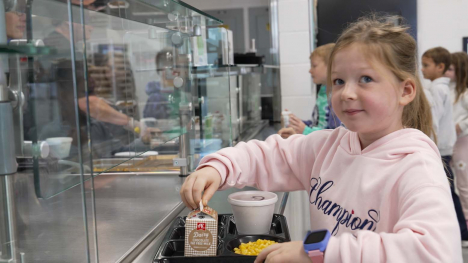
An Iowa school district connects local farms, food hubs and students through the lunch tray.
Naomi Blohm and Ted Seifried question USDA’s corn yield surprise and weigh China’s soybean demand.
Higher USDA yields pressure grain. Plus, opportunities/costs of putting local food on school trays.
How grain prices rally this winter w/Naomi Blohm & Ted Seifried on USDA, China demand & S. America.
Farmers rarely seek mental health help. Farm Dog offers care from people who know farm life.
Wet fields threaten harvest delays, diesel raises farm costs and rural population growth is uneven.