From empty reservoirs to rising wildfire risk, a dry and warm winter is setting the stage for a difficult year ahead. We break down how snowpack loss impacts drinking water, food production, and even air quality far beyond the Rockies.


Water supply, drought management, and long-term climate trends collide in this conversation from Colorado State University. Dr. Allie Mazurek helps illustrate the very slow snowpack impact for farmers, policymakers, and communities as the mounting challenges build heading into summer. A historically warm and dry winter puts focus on irrigation, river flow, and agricultural productivity. We examine the data, the risks, and what it could mean for the growing season ahead.
Transcript
Yeager: Greetings, friends. This one is going to grab some attention. It is hot, it is dry, and no snow. I am talking about almost two-thirds of the country west of the Missouri River basin. Things are dry there, warmer than they usually are this time of year. The snowpack has melted. The rivers are already full of water — way ahead of schedule. What does that mean long term for those who depend on water for anything like drinking or irrigation or electricity or any of those matters? It’s a big deal, especially in the Rockies region, in the middle part of that region. We are going to Fort Collins, Colorado today to have a conversation at Colorado State University with Doctor Allie Mazurek. She’s a Georgia native, and there are also things going on in her home area, but we’re going to talk mostly about Colorado and the areas impacted by the Colorado River. We’re going to show you charts and graphs and maps, and get a sense of just how dire this situation is. So that’s today’s MToM Podcast. I’m Paul Yeager. This is a production of Market to Market from Iowa PBS here in the state of Iowa. And if you are in Iowa, Illinois, or Wisconsin and think this is fine for you, this story still matters a great deal. You all know that everything’s connected, so I do appreciate that. First, be sure you have signed up for our Market Insider newsletter, which comes out each Monday, and this podcast comes out every Tuesday. Then we do the show over the weekend, and we’re busy all the time. Let’s get to this discussion. Fort Collins in April — does that mean green grass is starting to show?
Mazurek: Oh yeah, lots of grass, lots of flowers.
Yeager: So does this mean the skiers have headed elsewhere?
Mazurek: Yeah, you might have to leave the country to go elsewhere. The ski season — I was at Steamboat last weekend for closing weekend — lots of places are closing earlier than expected.
Yeager: Now you’re not a Colorado native, correct? From Georgia. So where did you get an interest in weather and climate from there?
Mazurek: I always grew up loving and being interested in the weather. We get a lot of tornadoes in the South, so memories of hiding in the basement during tornado warnings are something I remember from childhood. I was always curious about science, decided to study it in undergrad, and then kept going. I came out to Fort Collins and did my graduate school in atmospheric science here too.
Yeager: And your official title at CSU is what now?
Mazurek: I am an engagement climatologist with the Colorado Climate Center.
Yeager: So here we go — we’re engaging on the exact topic we need. You were on a call with a colleague of mine. He saw you and said, “You’ve got to interview Allie.” You do presentations — we always talk in agriculture about analysts presenting in January and February — and I always ask, what’s the title of your speech this year?
Mazurek: Hot, dry, no snow — no good news, unfortunately.
Yeager: That is very succinct and to the point. So you focus mostly on your area of the world?
Mazurek: Yeah, for the most part we focus on Colorado, and sometimes expand more broadly to the West and High Plains. Our office focuses mostly on Colorado.
Yeager: Hot, dry, no snow — how long has it been going on?
Mazurek: For months now — really throughout the whole winter. It’s been drier than normal, warmer than normal. We haven’t gotten a lot of snow. It’s kind of been the winter that didn’t happen.
Yeager: Is that because you’re in La Niña, El Niño neutral, or something else?
Mazurek: It’s funny — I was just coming into the office today and ran into a professor who had done some analysis trying to pinpoint what’s been causing this, and they really can’t nail down a specific large-scale climate feature. We’ve just been stuck in this high-pressure ridge — some people call it a heat dome pattern — where we haven’t gotten much precipitation and it’s been really warm.
Yeager: Well, it has, and March has been warm. And, you I've done this before. Those who've watched this podcast. Eric Hunt from Nebraska. Eric, you're not out of a job because I know he's watching. So, but Allie, let's talk about, we're going to do similar format, if we could. Your first slide is about temperature run in the month of March. Explain temperature. Run for me first.
Mazurek: What we’re looking at is how warm this past March was compared to other Marches in our historical data records. We have 132 years of data, and anywhere you see dark red colors are states that set a new record warm March. Across most of the western U.S., at least top ten warm March, many setting their record warmest March. It was warm everywhere in the U.S., honestly.
Yeager: And we like to look at the bigger picture. Does a warm March indicate something down the line?
Mazurek: Yeah, that's a great question. I mean to see like a warm march coupled with, dry conditions, you know, for a lot of places in the West getting precipitation in March is very important to our water supplies. So, you know, not not seeing precipitation, seeing this really warm weather that we'll talk about this later, I'm sure that has melted our snowpack down way ahead of schedule. Certainly causes reason for concern in terms of water availability, heading into the summer and also drought conditions as well.
Yeager: So this is a strong departure from normal?
Mazurek: Yes. For the U.S. as a whole, we were about nine degrees Fahrenheit above average for March. That might not sound like a lot, but across the country, that’s a very large departure. Much of that warmth was focused in the West, though most of the country was warmer than average.
Yeager: I’m looking at your departure-from-normal slide and Eric and I talked about western Nebraska being dry six weeks ago, right on the edge of this.
Mazurek: The heat out West has been extreme. In Fort Collins, we set a new March record by ten degrees — previous record was 81, and we hit 91. We hadn’t seen a 90-degree day until May before. So we didn’t just break records — we shattered them.
Yeager: Does that cause alarm bells?
Mazurek: Yes, it does. We’ve had a very warm winter, and March made things worse. From a water perspective, that’s definitely concerning heading into summer.
Yeager: Warm is one thing, but not having precipitation is another. We joked about the snowpack, but March also sets things up. That’s a strong departure when we look at precipitation, rain.
Mazurek: Yes. I’ll cut to the chase — it’s very dire out in the West right now. Many places saw a top-ten dry March, and that followed a winter that was also very dry. I moved to the West and didn’t fully appreciate how important water is here. Back east, it’s plentiful — you don’t think about it. But here, snowpack is everything for water supply in the summer — for lawns, agriculture, people, animals. Seeing these numbers is very concerning. Places like Colorado and Utah had their lowest snowpack on record this winter, so there are real reasons for concern.
Yeager: Lower snowpack — and back to skiing — some might see that as small, but for those areas, that’s a major economic driver. That income disappears. So it extends beyond skiing.
Mazurek: Absolutely. Heading into summer, there will be tourism impacts — rafting, fishing, boating on reservoirs. With lower streamflow expected, those industries will be affected. Agriculture will see impacts. Municipalities will see impacts. It affects all areas of life here. Water is everything.
Yeager: It is. And water access has always been debated. It hasn’t improved — it’s gotten worse. This year won’t help that discussion. It’s not rhetoric — it’s reality.
Mazurek: Yes. As we moved through winter, concern kept increasing. By late March, those extreme temperatures pushed things even further. We’re seeing drought task forces, restrictions, and growing concern from farmers about irrigation. Impacts are already showing up.
Yeager: This isn’t a new problem. Precipitation has been off for months.
Mazurek: Right. Looking at the last four months, deficits have been stacking up. March was extreme, but it built on earlier dryness. In Colorado, the last major precipitation system was in October. Since then, nothing significant has reduced these deficits. We’ve had small events, but nothing meaningful to change the overall situation.
Yeager: It snowed for a couple hours one Sunday in January — that didn’t solve it.
Mazurek: No — and the Broncos still lost, so maybe that was a sign.
Yeager: Let’s talk snowpack — how is it calculated and why is it important?
Mazurek: We measure snow water equivalent — how much water is contained in the snow. That’s more useful than snow depth because we care about water supply for runoff. We compare it to historical data. This winter, Colorado has been around the third worst on record. There were worse years in the 70s and 80s, but March changed everything. It took a huge chunk out of snowpack. Nearly everywhere in the West is below average — often far below. Many basins are around 15–20% of normal.
Yeager: And the red numbers indicate more concern?
Mazurek: Honestly, everywhere in the West is in bad shape. If you’re looking for the best area, it’s the Missouri River basin, but even that took a hit from the March heatwave.
Yeager: That basin runs from Montana through the Dakotas. Looking at the graph — that black line — what should I focus on?
Mazurek: That black line shows average snowpack accumulation over time. Even in that better-performing basin, the March heat caused a sharp drop. Snow melting this early is unusual — we typically see that in May. Seeing it in March is concerning for summer water supply.
Yeager: The Mississippi has had navigation issues recently, and the Missouri feeds into that. So this sets up another challenge.
Mazurek: Yes. One bad winter can be managed, but back-to-back poor winters raise serious concerns.
Yeager: Are we just in a dry cycle?
Mazurek: Partly, but we’re also in a longer-term megadrought. We still have wet years, but overall the trend has leaned dry. Climate change increases the likelihood of warm winters, earlier snowmelt, and more precipitation falling as rain instead of snow.
Yeager: And March also pulled moisture out of the soil.
Mazurek: Yes. Soil moisture is critical, and we also track evaporative demand — how much the atmosphere is pulling moisture from surfaces. That has been very high, especially in March, because of the hot, dry conditions. All of this compounds the situation.
Yeager: It’s not just the West — this extends into the middle of the country. Some areas didn’t have snow cover for a long time, exposing the soil.
Mazurek: Exactly. Snow cover reflects sunlight and helps regulate temperatures. Without it, temperatures rise and soils dry out faster. While the focus has been on the West, other areas also saw drought worsen in March. Southern Georgia and northern Florida have been particularly affected.
Yeager: Your home area — the drought monitor shows severe conditions there, along with Texas and parts of Colorado. That’s not typical.
Mazurek: Correct. In the West, we don’t usually see severe drought develop during winter — snowpack typically helps. This winter has been different. Exceptional drought — the highest category — is rare and represents something like a 1-in-100-year event. Seeing that is significant.
Yeager: Some areas aren’t in drought, so they may not realize the impact. Why should they care?
Mazurek: Two main reasons: water and agriculture. Water sources like the Missouri River affect other regions, and agriculture impacts the whole country economically. Also, drought conditions can change quickly.
Yeager: The gradient can be small — you can have inches of rain in one area and none nearby.
Mazurek: Exactly.
Yeager: Looking at the drought monitor changes over the past month — March really shows up.
Mazurek: Yes. March made everything worse. The heat was unprecedented and changed the situation quickly. In some areas, drought worsened by three categories. The only areas seeing relief were parts of the Midwest.
Yeager: And it doesn’t look like it will improve soon.
Mazurek: Unfortunately, no. Long-range forecasts don’t offer much hope.
Yeager: Over the next few weeks, patterns will likely continue.
Mazurek: Yes. Above-average temperatures are expected in the West and Southeast. Some precipitation may occur in the Southwest, which would help, but deficits are large. It would take sustained moisture to make a real difference.
Yeager: And the seasonal outlook is similar.
Mazurek: Yes. The West is expected to stay drier than normal, while areas farther east may be wetter. Seasonal forecasts are uncertain, but trends point that direction.
Yeager: Can rain in the middle of the country help the West?
Mazurek: Not really. Water flows mostly south and east. The West needs precipitation locally.
Yeager: Let’s move to streamflow.
Mazurek: Even in the Missouri basin, we expect earlier peak flow and lower runoff due to the early melt and low snowpack.
Yeager: And the Colorado River basin?
Mazurek: Worse. Forecasted inflow to Lake Powell is about 22% of average. Many areas are below 50% of normal streamflow.
Yeager: Reservoir levels will likely drop again.
Mazurek: Yes. Unless we get meaningful precipitation, which is uncertain.
Yeager: Any hope?
Mazurek: Possibly a shift to El Niño later this year, which tends to bring wetter conditions, but that would not help in the short term.
Yeager: How serious is this for the rest of the country?
Mazurek: Very serious. It impacts agriculture, tourism, water supply, wildfire risk, and air quality. Smoke can travel and affect other regions. These impacts won’t stay local — they affect food, travel, and water nationwide.
Yeager: Your smoke becomes our filter and impacts production. We’ve seen that recently.
Mazurek: Exactly.
Yeager: Thank you for your time and insight.
Mazurek: Thank you for having me. Keep an eye on the weather.
Yeager: Sean ingrassia is the production supervisor for Iowa PBS. His crew includes Reid Denker, Kevin Rivers, Neil Kyer, Julie Knutson, and David Feingold. The executive producer of Market to Market is David Miller. I’m Paul Yeager. We’ll see you next time.
Watch More
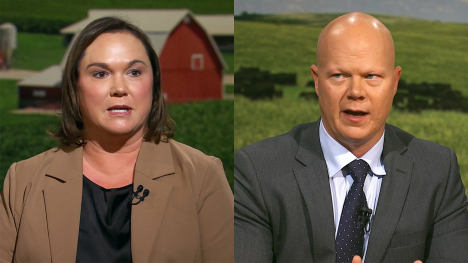
Naomi Blohm and Ted Seifried question USDA’s corn yield surprise and weigh China’s soybean demand.

Higher USDA yields pressure grain. Plus, opportunities/costs of putting local food on school trays.
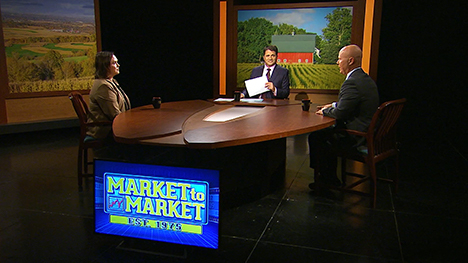
How grain prices rally this winter w/Naomi Blohm & Ted Seifried on USDA, China demand & S. America.

An Iowa school district connects local farms, food hubs and students through the lunch tray.

Farmers rarely seek mental health help. Farm Dog offers care from people who know farm life.
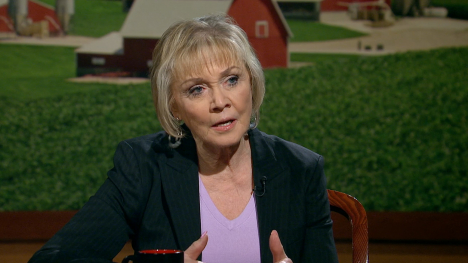
Sue Martin examines grain stocks, harvest risks, soybean demand, energy costs and livestock markets.