Zach Lahn, a Republican candidate for governor, discusses his campaign and the Republican gubernatorial primary race.


On this edition of Iowa Press, Zach Lahn, a Republican candidate for governor, discusses his campaign and the Republican gubernatorial primary race.
Joining moderator Kay Henderson at the Iowa Press table is Brianne Pfannenstiel, chief politics reporter for The Des Moines Register.
Program support provided by: Associated General Contractors of Iowa, Iowa Bankers Association and Robert and Doreen Sheppard.
Recorded: April 2, 2026
Transcript
[Kay Henderson] He launched his campaign for Iowa governor at his family's farm near Belle Plaine, promising an Iowa first agenda. We'll talk about what that means with Republican Zach Lahn on this edition of Iowa Press.
[Announcer] Funding for Iowa Press was provided by Friends, the Iowa PBS Foundation.
The Associated General Contractors of Iowa, the public's partner in building Iowa's highway, bridge and municipal utility infrastructure.
The Bob and Doreen Sheppard Family. Proud supporters of educational programming seen only on Iowa PBS.
Banking in Iowa goes beyond transactions. Banks work to help people and small businesses succeed, and Iowa banks are committed to building confident banking relationships. Iowa Banks, your partner through it all.
[Announcer] For decades, Iowa Press has brought you political leaders and newsmakers from across Iowa and beyond. Celebrating more than 50 years on statewide Iowa PBS, this is the Friday, April 3 edition of Iowa Press. Here is Kay Henderson.
[Kay] We have invited multiple candidates for governor in 2026 to join us here at the Iowa Press table. Most appeared last fall. Today we're going to have a conversation with a candidate who is one of five Republicans on the primary ballot in June. Zach Lahn is a businessman and a farmer. He and his wife have seven children. They founded a company that invests in agriculture, real estate and technology. He also co-founded a private school in Wichita, Kansas. He has some experience working in politics, but this is his first run for public office and his first time on Iowa Press. Welcome to the Iowa Press table.
[Zach] Thanks for having me.
[Kay] Joining our conversation is Brianne Pfannenstiel of the Des Moines Register.
[Brianne] Zach Lahn you've got a background in business and in politics. Tell us really briefly why you decided to run for governor.
[Zach] You know, I think that when I was looking at running for governor, the big thing that stood out to me were some of the large systemic issues that are facing our state. I've often said it's not because of politics for me, it's because of culture. It's the history and the heritage of our state. And when I'm looking at these issues, I'm really looking at things that I think Iowans are talking about just about every day, about kids leaving the state, education system, being in the bottom half, losing the family farms, and especially about the cancer crisis facing our state. So I thought it was time that we brought those issues to the forefront. And that's what brought me to the race.
[Brianne] You just mentioned cancer. On the campaign trail you talk about this as being the number one issue facing the state right now. You've also linked that to agricultural chemicals, something we don't hear from a lot of your Republican competitors. What can the state do about this? What would you advocate if you're elected?
[Zach] Well, you know, I'd say this issue has become one that has been brought up to me at every stop. I maybe get ten messages a day from Iowans that are talking about how cancer has affected their life. And I think it's reached a point that it just cannot be ignored anymore. And so I think what we have to be looking at as a state are making sure that we're putting in place policies and measures that help Iowans to get to the bottom of what's happening. And I've said very, very clearly, I do believe that large agricultural companies have been lying about the safety of their products to our farmers and to our people. And so some very simple things to start with is that no company should have immunity from liability. And these companies are currently pushing to take away the recourse that Iowans that have been harmed for their products would have when they are harmed. And so that's a number one step. Number two would be the state of Iowa should be doing independent research on these products to make sure that we can talk to our farmers and our members of our community about what is safe and what are the true risks.
[Brianne] And kind of an offshoot of that as well. People are very concerned about the water quality issues in the state. Are those two things connected?
[Zach] Yeah. You know, I think for a long time there has been this debate and it's kind of been urban versus rural. And I don't see it that way. You know, we operate our family farm today. My family's been involved in agriculture in the state for 130 years. Our family's been farming. Actually, I was just saying that one of my uncles used to be on a show on this network market to market, and I watch them just about every week. He was on. And I think we're past the point of that debate because we understand that there's there are things that are at play, both in urban and rural settings. But when you have an outlier condition, you have to look at outlier conditions. You have to look at what's happening in our state. And so I do believe that, you know, our farmers have been operating on razor thin margins for decades now. And one of the one of the technologies that's helped them has been pattern tiling. And we've seen a very high increase in that in our state. And from that we get daylighting directly into our streams and we get, you know, high nitrate water loads that are coming into our city centers. And so we know how to solve these problems. I mean, you know, Iowa State did experiments up at Bear Creek. They actually removed 100% of the nitrate load with using saturated buffers. We can come together as people to solve these. It's not about blame. It's about how do we protect Iowa's kids?
[Kay] What about restricting the use of nitrogen on ag land?
[Zach] You know, I don't I don't think it's actually so much about restricting the use of it. I think it's using it properly. There are ways that we could incentivize, you know, actually using nitrogen fertilizer in a way that's not necessarily top dressing. I think that's, you know, going back to talking about these inputs, there's no farmer that I know that wants to spend more money on inputs. They don't. And when you talk about losing up to 30% of your input to wash out, if we had and we do have better ways to do this, that we could incentivize by applying it deeper into the soil. You know, I've heard people even talk about providing tax credits for that type of that type of application that would reduce the load that is needed from farmers, reduce the cost that is that is associated with it. And it would also reduce what ends up in our streams, which they don't want their product ending up in the stream. They want it ending up in the plant. So it will help them produce greater yields.
[Kay] Let's shift to talking about taxes. But before we do, all of the competitors for the Republican primary have said they oppose the use of eminent domain for the carbon capture pipelines. But you are talking about property in a different way than your colleagues. You have said that out of staters should pay more property taxes if they own property. In Iowa. Rob Sand, the Democrat who's running, has suggested the same thing, getting huge pushback from prominent Republicans. How would you do it?
[Zach] You know, I think the well, first we have to look at the issue that we're facing, you know, at least what I've seen is 25% of our land is owned by people who don't live in our state. We actually don't know who owns the land in Iowa. We don't require human level disclosure of who owns our land. I'm often asked, how much land is China owned in the state of Iowa? And the political answer to that is none. It's illegal, but the true answer is we have no idea because we don't require human level disclosure, not even to the state do we require it. That's wrong. We need to know who our neighbors are as part of our heritage and our tradition. But I think when we look at what's happening to our land in Iowa with the artificial inflation evaluations, keeping young farmers off of land and preventing the next generation from starting their own farming heritage, which I don't really think that this is a left or right issue. The left and the right want to see more young farmers getting on farms. So we're seeing what I would call an extraction in so many ways from our communities, especially our rural communities and our agricultural sector. And one of those ways is through land ownership. And so I think that you can look around the country and there's other governors who have tried to do this and actually implemented some of these policies. You know, Ron DeSantis has talked about in Florida, the governor of Montana has actually done it. They've raised property taxes on second homes by 70% and reduced property taxes for primary residents by 30%. We have ways we can do this. The first way I'd look at is a new category of property investment farmland, that gives exemptions to family families that are actually farming it directly, but also targets those out of state funds and investors that are here to extract wealth from our from our state. Because when you look at other things that Iowans are opposed to, you know, some of these things are, you know, the proliferation of windmills or solar farms or data centers, whatever it might be, the first people to say yes to those projects are absentee landowners. And the reason is they're looking at Iowa's land as a cell in a spreadsheet. How much money can I make off this piece of land? They're not looking to say, what would this do to the community that's surrounding it? And I often talk about this one key question that guides me in many things that I think about. And that question is one that the Amish have asked for generations before they make a big change is what will this change do to our community? And I believe our politicians just have not been asking that question.
[Kay] You have called for data centers to pay five times the property tax rate of their surrounding, and you've said you're not a big fan of data centers. Data centers are getting built all over Iowa.
[Zach] Yeah. You know, and I would challenge somebody to tell me what the added benefit to the citizens of Iowa is. You know, the reason they want to be here is because of our climate. It makes it cheaper for them to do business. They're not employing our people. You know, the data center south of Cedar Rapids, one of the companies received $529 million in Tax abatements to create 30 jobs at $17 million a job. It doesn't make sense. So the one main added long term benefit of having a data center in Iowa is property taxes. And we're giving it away. We're just giving them the ability to do this without adding the benefit that we should have. And so when I look at data centers, I'm not against development in general. I'm against development. That doesn't put Iowans first. And so this is one of those pieces, our data centers that want to come in the state need to be a net additive to our communities. So yes, I would I said, if they want to come here, they are looking for something from us. This is a negotiation in business. That's what I like to do, is find ways that I can create benefit in that way. And for Iowans raising property taxes on data centers that want to come here, I mean, these are $100 billion multinational companies. They do not need a handout from the people of Iowa. What they need is to pay more to benefit the neighborhoods and communities to lower their property taxes.
[Brianne] Let's talk about income taxes as well. As governor, one of the major functions of that office is to oversee the state budget. One of your competitors, Randy Feenstra, this week, had suggested that he wants to continue lowering the state's income tax, eventually eliminating it. Do you think that's a smart idea for the state?
[Zach] You know, we right now use all three taxing authorities, property sales and income tax. I think there's ways to provide the services that other states have been doing with only using two of those. I think income tax would be the lowest hanging fruit to be able to eliminate for the people of Iowa. I would love to find a way to do that. Now, the question then becomes, how do we backfill? Where are we going to find the money to do that? And this goes back to me to another question of putting Iowans first. You know, when we talk about data centers last year, I think it was $150 million in welfare to these companies. That comes from the state of Iowa. That alone should be cut. So we can have the added funds to provide benefits, to be able to give benefits to the people, like cutting their income tax or eliminating their income tax. We're also giving refundable tax credits to Chinese companies that operate in our state. There's no foreign company, especially a Chinese owned company, that should be getting our tax dollars. And I think when I talk to people on the trail about this company that's gotten since I think 2013, $7.5 million in refundable tax credits in their wholly owned by the state of China. I literally hear gasps in the room. They don't understand what's happening. Because, you know, I often say that I believe our citizens just believe that the government and the economy of Iowa has been doing business to benefit the citizens of Iowa. And when they learn about some of the ways that they haven't, it's astonishing to them. We don't need to be giving foreign companies tax credits. As a matter of fact, many of these publicly traded companies that are coming into our state and getting tax credits and then cutting the jobs of Iowans that needs to go, those funds can go to lowering and eliminating income tax, making property taxes more affordable for the citizens that live here. And investing in Iowa's homegrown businesses. I just yesterday was meeting with a great Iowa homegrown business success story. They're having to compete against these big companies that are getting Iowa's tax dollars. These are publicly traded companies they're competing against. One just had a lawsuit with with one of these companies. And that company spent $50 million against an Iowa company. And we are subsidizing that through our tax credits.
[Brianne] When you look at the big picture of the state's budget right now, the state is facing a deficit. They're going to have to figure out how to overcome. There's there's the potential to face that again next year and in the coming years, some candidates, Randy Feenstra this week suggested that there might need to be spending cuts to cover those deficits. How would you handle a budget shortfall as governor?
[Zach] Well, you know, in businesses and organizations that I've run, I've been asked to you, what do you bring to the table? And I think the main thing is that I go back to foundational thinking, what's the problem here? You know, I think we've seen on the national level, and I know it's on the state level as well, that we have a tremendous amount of money that we we could be associated with waste, fraud and abuse that's in the state. The problem is we don't know where all that money is being spent. We need to start looking at innovative solutions to first understand where our money is going and how much money we are wasting. I have called to put every single government transaction in the state of Iowa on the blockchain, so that way we can have hundreds of citizen auditors that are auditing what's being spent by our government. And each transaction should have the name of the person who approved that transaction. And here's why that matters. If it's a Republican, as governor, you'll have hundreds of citizen auditors that are trying to find waste and abuse and fraud in our government. And if it's a Democrat, that's governor, you'll have hundreds of Republicans that are trying to find waste, fraud and abuse. And the people of Iowa just win. And so before we talk about where we're going to cut spending, we first need to understand where are we wasting our money? And I think we can do that in pretty short order. With the help of Iowa citizens.
[Kay] There are Republicans and a lot of Democrats who say the tax credits for research and development that you just mentioned are a waste of money. You have suggested only Iowa companies and Iowa entrepreneurs should get those tax credits, whereas we have both covered multiple governors who are sending economic development officials to other states to try to lure companies here with these tax credits. Which is which is the best approach?
[Zach] Well, I think the approach you just mentioned that we've been doing is the short term thinking. I'm I'm trying to do long term thinking because when these Iowa companies that we help grow face hard times, when the economy gets tough, they are still dedicated to their communities. They're going to church with their employees. They're seeing them at baseball games and soccer games. They're living in the community with these people. And so they're the last people to lay somebody off. Instead, they're going to often times, just like the person I talked to yesterday, reach into their own pockets to help keep people employed. And I think there's a rich history of this in the state of Iowa. And when we're talking about what's best for the long term vision of Iowa, I think it's far better to invest in companies that are grown here that will have a faithful presence here and will be dedicated to our communities. And I really don't believe these publicly traded companies and large companies from other from other states have that best interests in mind. As I said, it's a cell on a spreadsheet. What's happening here? And they're not looking at what's happening to our communities. Again, it goes back to that question what will these changes do to our community if we take a long term approach and we say that we are going to invest in Iowa's homegrown businesses and entrepreneurs, of which we have many that are competing with the companies, we're giving tax breaks to, we will see over the long term a flourishing in our state.
[Brianne] Switching gears again, you've said that you believe that life begins at conception. Iowa currently has a law banning most abortions at about six weeks of pregnancy. Do you think that goes far enough, or would you advocate for more as governor?
[Zach] You know, I think the legislature has done a really good job of protecting life. But this goes back to the heritage, I believe, of our state. We are people that protect life. Pre-born and after after born, we're a community that, you know, in the past, we leave no man on the battlefield. So I believe that the current legislation is good. However, if there was a measure to further protect life, I would likely support it. I mean, it depends on the exact piece of legislation. But yes, I would like to continue to protect life in our state. But I also want to say that I think this issue has been one that has been used to divide for a very long time. I think Iowans understand, enlarge that we want to protect life. And there's been a debate here that that has been going on for a long time. We need to protect life. And then we also need to look at how do we move forward to also address these larger systemic issues so we can come together on things we really agree on.
[Brianne] What are some of those systemic issues.
[Zach] The issues that I've been talking about in this campaign, I think the number one is that we're fourth highest in the country for outmigration of our kids. You cannot build a state or a culture if your kids are leaving at a rate faster than 46 other states.
[Brianne] Right, and kind of, you know, going back to the idea of abortion legislation, there are a lot of Iowa families who are concerned about the future of things like in vitro fertilization. Is that something that you would support and protect in the state?
[Zach] You know, I have some personal experience and views on this, and I think that when we're looking at these things, it goes back to what do we want to support as a culture and a state. And I think supporting growing families is a great thing. I also think that we need to look at what regulations come alongside that to make sure it's being used in the right way. So the way it's been used in other states that I've seen, where there is no regulation around it, and we see the destruction of life that comes along with some of the practices that are more reckless I don't support, and I think we need to look at regulating that to promote and protect life.
[Kay] So you're talking about no destruction of any embryo, right?
[Zach] I think that ultimately, if you believe that life begins at conception, then that decision is made for you. And so I believe that when we're looking at in vitro fertilization, that's a really complex issue. But if we believe life begins at conception, we have to take that stance.
[Kay] You have been endorsed by the Make America Healthy Again PAC, formed by some of Robert F Kennedy Jr.'s associates. And you talk about issues that are related to that. Do you share RFK Jr.'s sort of skepticism of the use of vaccines?
[Zach] Yeah. You know, this is a deeply complicated, complicated question, but I think that the baseline of this is that the medical establishment lost our trust and has lost our trust. Covid was a glaring example of that. And so, yes, I absolutely do look at the way that the industry has been pushing vaccinations onto people and trying to mandate vaccinations onto people. Look, we understand that there's benefit from from vaccinations. We understand that. But we also understand that there's a tremendous financial incentive incentive for large pharmaceutical corporations to push vaccines at every chance they can. If you look at the rotavirus, for instance, before this, before the vaccine was put in place, they they thought that that the amount of deaths that was happening from that in one year in the United States might have been three. Now, there's millions of kids getting this vaccine. And we know that the the death rate amongst that from just the vaccination isn't is more than three. And so there's a financial incentive that needs to be taken away here. And we need to be doing the right thing for the health of the people. And I think that if you look at the Vaccine Immunity Act from 1986, that is a piece of legislation that needs to be repealed because the free market needs to be able to allow recourse for people that are injured. And we have not allowed that for, well, for 40 years.
[Kay] Should vaccine mandates be repealed?
[Zach] Yes.
[Brianne] In public schools, you've said that you plan to be an advocate for public schools if you're elected governor, just as much as you support private schools in the Education Savings Account program right now, public school advocates are telling the state that they they feel dramatically underfunded, that they need more money to keep doing what they need to do. Would you support increasing funding for public schools?
[Zach] I personally believe that's the wrong question. And I mean this sincerely in that we have seen increases in spending correlate with decreases in quality. I believe that the education savings accounts are foundational to freedom as Iowa Nice Guy. You should have more say over where your tax dollars are spent, and you should have more say over where your kids go to school. That being said, I've been very clear. The governor of Iowa has to be the number one advocate for public school kids in the state. And so what I look at when I look at this is how do we unburden teachers and superintendents to innovate in the classroom? And and then once we understand what are these innovative methods that we can be using, what is the cost associated with that? But we can't have a situation where we're increasing funding and having decreasing inequality. You know, when I'm on the campaign, I often hear people talk about, you know, public versus private schools and what students they accept and what students they don't. You know, the other thing I hear, though, is teachers telling me that 95% of their time is spent with 5% of the students, students that are having a real problem integrating the classroom. And so when I look at this issue, I look at those 5% of the students as crying out for help. They're looking for someone to come along and help them. They might have malnutrition. They may be sleeping in a car. They might have problems at home. The teacher is not a behavioral therapist. We need off ramps for those kids that are not punitive to help them reintegrate back into the classroom so they can participate and learn. And that is the very compassionate way to look at this. And so when it comes to public education, we need more innovation in our public schools. We need to unburden our superintendents and teachers. And we also need to make sure that we are rooting out any indoctrination that's happening in these schools. That's not what parents send their send their kids to school for. They are looking for something they can count on, and that's to learn critical thinking, clear speaking, powerful writing. They're looking to be able to learn the basics and learn how to work well in a group with other people.
[Kay] We're dwindling in the number of minutes we have for this conversation, but very quickly, we have people concerned about their local hospital, particularly in rural areas. And we just learned recently that Clinton will lose pregnancy services. People can't deliver a baby in Clinton. What should the state do?
[Zach] You know, that's a really good question. It's one that affects me. I mean, you know, we use the rural hospital in Marengo and it's an amazing hospital. It's a great example of a great rural Iowa hospital. We I would use that hospital before I'd go to a big city hospital. They're just great people. But when I look at this again, I'm going to go down to the foundational thinking we have issues that we're having right now that pop up, just like what you're saying. And that's sort of the outward evidence of an issue that's coming out. But the why are we having this issue in our rural communities? The biggest reason we're having these issues is because we're losing population. We have to grow. It's very similar to the property tax issue in rural communities. We're trying to provide more services or the same amount of services with fewer and fewer people. Growth is the way out of this. And so we have to prioritize many of these things. I'm talking about on the campaign trail to do that. But then we also have to look at what's happened in industry after industry across our state and our nation, including our health care industry. There's been consolidation, taking away the local aspect that that these hospitals used to bring to our communities to be dedicated in the community. So even in the medical industry, there's been consolidation. After consolidation, we have got to start bringing antitrust suits. And basically every industry to break up and bring competition to the market for the people. And so this is something I deal with myself very, very often. I've had my kids go to these hospitals and I'm very thankful for the care. I want more rural hospitals. The number one way we need to fix that is by prioritizing growth in our rural communities.
[Brianne] In this race, you're coming to it as a little bit of an unknown to many people, something of an underdog. Randy Feenstra comes with millions of dollars and name ID. How do you compete against somebody like that?
[Zach] You know, I think we're bringing a completely different message. You know, there's a Pulitzer Prize winning journalist that's in northwest Iowa that recently wrote an article about me. And in that article, he kind of wrote out that the issues I'm running on and how did we let a Republican beat us to the punch on these issues? And I think that's how we win this race is by talking about these issues that Iowans care about. They're not left right. Look, it doesn't matter if you're left or right. You don't want Iowa's kids leaving Iowa. It doesn't matter if you're left or right. You don't want our family farms dying off. You don't want our education in the bottom half, and you definitely don't want your friends, families and neighbors dying from cancer. The more we get our message out through traditional media mediums like TV, radio, mail, things like that, the better. But also we've been seeing 80, 90, 100, 150 people coming to our town halls across the state. We see a movement forming and building, and we're going to continue on that.
[Kay] We can't continue this conversation because we are out of time. Thanks for joining us today.
[Zach] Thank you very much.
[Kay] Thank you. We've invited all Republican and Democratic gubernatorial candidates in 2026 to join us here at the Iowa Press table. Most were here this past fall. If you would like to see those programs, go to iowapbs.org/iowapress. For everyone here at Iowa PBS, thanks for watching today.
[Announcer] Funding for Iowa Press was provided by Friends, the Iowa PBS Foundation.
The Associated General Contractors of Iowa, the public's partner in building Iowa's highway, bridge and municipal utility infrastructure.
The Bob and Doreen Sheppard Family. Proud supporters of educational programming seen only on Iowa PBS.
Banking in Iowa goes beyond transactions. Banks work to help people and small businesses succeed, and Iowa banks are committed to building confident banking relationships. Iowa Banks, your partner through it all.
Watch More
Zach Lahn (R-Belle Plaine) and Rob Sand (D-Des Moines) will answer questions from Iowa reporters and discuss their priorities and vision for the state during a 90-minute debate.
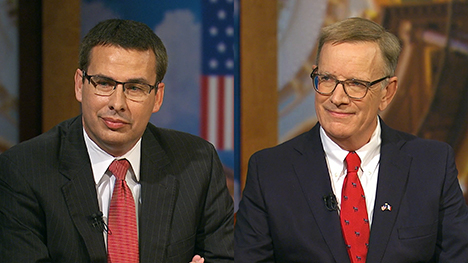
Iowa State Treasurer candidates John Norwood (D-West Des Moines) and Roby Smith (R-Davenport) discuss key issues and policy positions.

Candidates Dave Dawson (D-Lawton) and Chris McGowan (R-Sioux City) will answer questions from reporters and discuss their platforms, concerns and future plans.
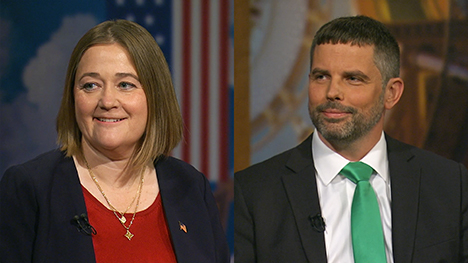
Iowa Attorney General candidates Brenna Bird (R-Dexter) and Nate Willems (D-Mount Vernon) discuss key issues and policy positions.
Lindsay James (D-Dubuque) and Joe Mitchell (R-Clear Lake) answer questions from Iowa reporters and discuss their platforms, concerns and future plans.
Candidates Ashley Hinson (R - Marion) and Josh Turek (D - Council Bluffs) answer questions from reporters and discuss their platforms, concerns and future plans.