On this edition of Iowa Press, a reporters' roundtable discusses the 2026 legislative session..


On this edition of Iowa Press, a reporters' roundtable discusses the 2026 legislative session..
Joining moderator Kay Henderson at the Iowa Press table are Stephen Gruber-Miller, Capitol bureau chief for The Des Moines Register, Erin Murphy, Des Moines bureau chief for The Gazette, and Dave Price, Iowa political director for Gray Media.
Program support provided by: Associated General Contractors of Iowa, The Bob and Doreen Sheppard Family and Iowa Banks.
Transcript
[Kay Henderson] The legislative session is winding down. We've gathered a group of political reporters to talk about what lawmakers are still working on and share a little news from the campaign trail on this edition of Iowa Press.
[Announcer] Funding for Iowa Press was provided by Friends, the Iowa PBS Foundation.
The Associated General Contractors of Iowa, the public's partner in building Iowa's highway, bridge and municipal utility infrastructure.
The Bob and Doreen Sheppard Family, proud supporters of educational programming seen only on Iowa PBS.
Banking in Iowa goes beyond transactions. Banks work to help people and small businesses succeed, and Iowa banks are committed to building confident banking relationships. Iowa banks, your partner through it all.
For decades, Iowa Press has brought you political leaders and newsmakers from across Iowa and beyond. Celebrating more than 50 years on statewide Iowa PBS, this is the Friday, April 17th edition of Iowa Press. Here is Kay Henderson.
[Henderson] It's sometimes said that a legislative session is a bit like a roller coaster ride. There are highs. Lows. Sometimes things turn upside down and there are some rapid falls. We're going to talk about what's going on at the legislature, and maybe we'll have some insight on the roller coaster ride that is the 2026 Iowa General Assembly with these gentlemen who've joined me at the Iowa Press table. They are Stephen Gruber-Miller. He is the Capitol bureau chief for the Des Moines Register. Dave Price is Iowa political director for Gray Media. And Erin Murphy is the Des Moines bureau chief for the Gazette in Cedar Rapids. Stephen, this past week, there were some fundraising reports for federal candidates. What's going on in Iowa's U.S. Senate race?
[Stephen Gruber-Miller] That's right. Well, we are really neck and neck with the Democratic primary race between State Representative Josh Turek and State Senator Zach Wahls. There were they both raised $1.1 million in the last quarter. Turek was $222 ahead of Walz. So, if you're looking for a front runner, you're not going to find it among the campaign finance reports. Walz has a little more money on hand. $1 million to $750,000 for Josh Turek. Both of them are lagging behind the Republican frontrunner, Ashley Hinson, who raised 2.3 million and has 6.5 million on hand. So, it's getting competitive for the Democrats before their primary. We're starting to see some television advertising from some outside groups. A group called Vote Vets is airing ads on behalf of Josh Turek. And just today, Friday, April 17th, Turek began airing his own first ad of the campaign. So, the race to capture voters’ attention is on.
[Henderson] Erin, what's going on with the four congressional races in Iowa?
[Erin Murphy] It's a little different from the Senate in that case. And I'll just add real quick to Stephen's note, I think it's Stephen and has covered that election more than I have. But that would reflect, wouldn't you say, what we're seeing in that primary to the Democratic voters are very divided on Josh Turek and Zach Wahls. Like there's no clear front runner anecdotally in that race. It doesn't feel like either. I think so the fundraising isn't a surprise from that standpoint. In the House races, the Democratic challengers are actually surpassing the Republican incumbents, whereas Ashley Hinson had a much better performance in the Senate race. Christina Bohannan in the second and Sarah, did I get that right? No, it's in the second or first.
[Henderson] She's in the first. Mariannette Miller-Meeks is the incumbent.
[Murphy] See -- we're almost ready for the next redistricting and I'm still struggling with the first and second switch.
[Gruber-Miller] Maybe they'll switch it back.
[Murphy] Yeah, right. Anyways, Christina Bohannan out fundraised Mariannette Miller-Meeks this past cycle and Sarah Trone Garriott out fundraised Zach Nunn in the third district. That one I can remember. The Republican incumbents have better cash on hand numbers, but the point there being that any time you see a challenger to an incumbent having a better fundraising period, that that says something. And again, I think it speaks to momentum. We see for Democratic candidates in the state and across the country. Does it mean we know what's going to happen on November 3rd? Absolutely not. But it does show a signal that there's energy behind those Democratic challengers in those congressional competitive congressional districts.
[Henderson] And also, Dave, this week, there have been a lot of somethings said about Iowa's race for governor. It's been rated a toss-up by some agencies.
[Dave Price] By the Cook Political Report was one in particular. This nonpartisan entity and perhaps the difference this cycle is that, well, as we know, the last one wasn't all that competitive with Governor Reynolds going up for reelection against her Democratic challenger, Deidre DeJear. That ended up not being a close race at all, and was never really thought to be. But I think maybe the conversation is perhaps different for Democrats as we look now that they can point to this, this toss up, rather than leaning to the right, leaning for Republicans, this is this nonpartisan entity saying that this is a toss-up. This is not hopeful Democrats who say this is going to be the time we're coming back. It's striking to me in the sense that when you look at the voter registration numbers, unlike these two, I do not like to spend my time doing a lot of math because I work on TV primarily, and numbers are not always good for television, but it's about 198,000. The registered voter difference between registered Republicans and registered Democrats. So that's still a big old gap. So, for an outsider to look at this and think the climate has changed, so much so that this can be a toss-up, probably pretty encouraging for Democrats, especially a well-funded challenger like Rob Sand.
[Henderson] And Erin, we've heard this before from Democrats saying this is a great environment for us and the voter registration edge that Republicans have seems insurmountable. At some point during a campaign.
[Murphy] Yeah, the what makes this possibly different is that still a significant percentage of the no party voters in the state. And forgive me for not being better prepared and having those numbers exactly in my hand. In the past, it's been roughly a third, a third, a third. I don't think it's quite that --
But it's but it's still a not insignificant chunk. And if you have a wave movement in that group of voters, that's what can tilt even these statewide elections. And so, it's going to be interesting to see and it's why Rob Sand started portraying himself as a moderate, which I know all the Republicans watching right now their skin is recoiling at that classification. But that's how Rob Sand is portraying himself. And he's trying to reach those voters that move from election to election.
[Gruber-Miller] And Democrats really need kind of that perfect storm where their voters are excited to come out and vote. Republicans are not excited to come out and vote. And the leader of the ticket, like Rob Sand, can win over a percentage of the Republicans as well as independents.
[Murphy] And I know sorry, just really quick, we talk about the hurdles and they're significant and they're real. We don't have to go that super far back. I know it seems like ancient history. In 2018, Governor Reynolds won by three percentage points, less than three percentage points. So, this is not an insurmountable challenge for Democrats. Is it an uphill climb? Absolutely
[Price] But the numbers, the voter registration numbers were different back then.
[Murphy] Fair.
[Henderson] Stephen let's switch to statehouse news. This past week, the House speaker unveiled yet another iteration of a property tax bill. Just sort of gloss over what the highlights might be.
[Gruber-Miller] Yeah. House Speaker Pat Grassley called it a serious attempt at compromise. The House has yet to pass a plan out of their chamber. The Senate has. So, they’re in different places when it comes to that, the House plan keeps some of the core features that they've had all along, like a 2% revenue growth cap. That's kind of the main feature. It does some different things with the state's homestead tax credit. It would turn it into an exemption and triple it in size to about a $15,000 exemption off the value of your home that you wouldn't be taxed on. And then they would use the money that currently funds the existing state tax credit and use that to lower a tax levy that pays for school, property, school through property taxes. So that would be some of the money coming out of property taxes for schools. The key here is that it's all still in flux and is not the final product, but the speaker's point was the House Republicans have taken some elements of the Senate plan, some elements of the governor's plan, as well as their own. And they're trying to find common ground.
[Henderson] Erin, about half an hour after the speaker unveiled these details, Governor Reynolds spoke to reporters and she had a reaction.
[Murphy] Yeah, she was very supportive and promoted the at the very least, the fact that the House Republicans had put out a new bill, which she said drives the conversation forward. And even went so far as to say, this gives us one bill that we can work off of, which it was sort of a noteworthy statement, because as we talked about in the past, there's three different bills, including one of her own, and the Senate still has one that they have passed off the floor of their chamber by with strong bipartisan support. So, it's it felt like and this is a vibes thing, this isn't anything that Reynolds. Governor Reynolds said directly, but it very much felt like she was sort of throwing her support behind this proposal. And while saying all along, there's still going to be negotiations and we're going to have to come together to an agreement. But she was very enthusiastic about the House bill.
[Henderson] Well, one thing it does not include that's in the Senate bill that passed last week is a gas tax increase. And we also heard from the chairman of the Senate Ways and Means Committee, Dan Dawson, who's sort of the main architect of the Senate plan, not terribly enthusiastically about the House plan.
[Murphy] He’s still feeling good about the Senate Republicans. He pointed out that vote. I talked about 41 to 4 vote for the Senate plan in the Senate. And you had a Democratic senator, Tony Bisignano of Des Moines, get up in the debate on that bill and talk about how much he liked it. And he liked the work that Dan Dawson was doing. So, yeah, interesting days ahead on this policy that they all want to get done, but have some work to do to agree on how to do it.
[Price] The Senate seems to have listened more to the concerns of the local leaders with this in their version. This lack of a hard cap. So instead of the 2% like the house has it outside of new construction.
[Henderson] And the governor put that in —
[Price] And the local leaders have been insistent on this, that we will be kneecapped if you have this hard to in there. And for a lot of these communities that don't have new home construction, they can't they can't look at that as some help here. That's one of the bigger ones. I'm wondering how that plays out because it seemed like Speaker Grassley in this new iteration, as you called it, they're still insisting on that. Now, maybe there's some kind of middle ground there that you can figure out working in with inflation or whatever. But that's a hard one for these locals. They don't want that part. And there's no special break for seniors on the House side.
[Murphy] I'm sorry real quick. That's why the gas tax is in there too, as a as an aid to help local governments have that funding.
[Price] Which didn't seem like the House is all that jazzed about.
[Murphy] No.
[Henderson] There was another tax issue that was discussed this week. The House passed a bill that would provide a sales tax break to the project to sort of re-up the Duane Arnold energy plug it back in, which is Iowa's only nuclear power plant that went that went offline in 2020 during the derecho. And they're trying to bring it back up. Also, this tax break would be available to these small modular nuclear reactors that people have talked so much about as the next wave of what happens in nuclear energy development. So, what's going on there?
[Price] It's pronounced nuclear, first of all. Yeah, that was a lopsided vote 94 one right in the House. And there is a news conference on Monday in Hiawatha. NextEra Energy is the company that is trying to bring that that facility back online in Palo. And I believe their plans are. The hope is that to get it back going in 2029. And they did work out this sunset clause, this 25-year sunset clause in the House version. And they have that claw back provision in there too. So, if there's basically no discernible progress in this sucker is not going in like 12.5 years, then you have to pay some of this back.
[Henderson] The governor also has a nuclear task force that will be issuing a report in July. So, legislators aren't going to be acting on that. But one of the interesting things that they heard last week from a US energy official is that it's the state level incentives that help the construction, and then it's the federal tax breaks that help the ongoing operation. Once the thing is up and producing energy. So, let's shift to another tax issue that's been up at the state House, especially this past week, a tax on vape products. And if you don't know what vaping is, it's an alternative to smoking cigarettes.
[Murphy] And we've seen a few different bites at this apple this session, some earlier ones that would have increased the sales tax on these products by much more. Ultimately, were not successful. And now we have a new one moving this week that again, taxes these products bt at a lower level to the point where it was sort of interesting to cover the hearing in this and that you had nobody was happy with it. The industry didn't like it because they're getting taxed. And the public health advocates didn't like it because it didn't go far enough. They said, this tax will not in any meaningful way -- the point of a sin tax is to discourage behavior. And they said this tax is not high enough to do that. People will still buy this product. This isn't enough to scare them off of that. So, it'll be interesting to see if that bill moves at all. If that tax gets increased at some point along the way.
[Gruber-Miller] The other interesting thing about this is we started off the session, and Governor Reynolds proposed an increase to the cigarette tax, and there were some there are some lawmakers in the public health groups calling for a much larger increase to the cigarette tax. Those don't appear to be going anywhere. And so, this very small tax on vapes and other nicotine products that are not cigarettes seems like the only feasible policy with a chance of passage. And I think it would raise about $15 million.
[Henderson] And the Senate's alternative would take up to $3 million of that and funnel it to pediatric cancer research. Whereas in the House, you and I Stephen heard a debate in the House Appropriations Committee last night. They are just actually appropriating $3 million for that research in one of the budget bills that they're preparing in the Iowa House. Also, in that same -- I'm sorry --
[Murphy] No, I was just going to -- in all my time now covering this, and I just mentioned none of the public health bills are for this because they say the tax is so low and I forget the organization now, but they had, you know, a comment attached to their opposition said, but we support pediatric cancer research.
[Henderson] Exactly. Well, in the House Appropriations Committee on Thursday, early evening, they had a debate about a bill that had already cleared the House Human Services Committee and sort of failed to meet a parliamentary deadline earlier in the year.
[Gruber-Miller] Yeah, as you're alluding to, this was not a bill dealing with appropriations. It's a bill that deals with abortion medication and requires people to have an in-person appointment with their doctor to receive that medication, instead of being able to get it through the mail. So, this is something House Republicans had tried to move earlier in the year. They had passed it out of a committee. They had never taken a floor vote on it, which made it fail that deadline. So now they're bringing it back through. This alternative means. So, it's something that House Republicans and Senate Republicans, to an extent, have an interest in. They want these restrictions on they call it the black market, but just requiring more stringent checkups and rules governing medication abortions. The hang up in the house was that there is a Republican representative who had attached an amendment to the bill back when it was eligible for debate that would have criminalized all abortions and made it put it under the homicide chapter for doctors or women who have abortions, and they didn't seem to want to take a vote on that amendment, which would have been necessary to act on it in some way to get to the bill that they wanted to do. So that may be an obstacle in the future.
[Henderson] Or may not? Anybody think it will not be an obstacle?
[Gruber-Miller] Well, I mean, that's the decision.
[Murphy] Yeah, that's the decision that one leadership office in particular is having right now. I don't have any insight, but it's a it's we asked them about it this week at the Capitol. And the answer, Speaker Grassley's answer to that was pretty vague. It's basically it's clearly something we're going to have to have a discussion about and decide what to do.
[Gruber-Miller] And the legislator who has sponsored this amendment is not running for reelection. He believes very deeply in this policy. So, I think it's unlikely that he would refuse to.
[Price] Voluntarily withdraw — yeah, that which puts them in a conundrum in an election year for a vote they likely don't want to take.
[Henderson] It appears as if legislators do not have a conundrum about the budget.
[Price] I know.
[Henderson] It appears that it's just coming together rather easily, which seems unusual given the budget realities. Dave?
[Price] And you could have just jinxed it. Probably not.
[Henderson] Okay.
[Price] But yes, their numbers are not far apart. Really. The three entities at all. And this historically, we could, if we thought really hard, could probably come up with years where they really had to fight like crazy to come to some kind of agreement. And it dragged out the session, but it just seems more likely it's property tax that's really gumming things up in the budget. They'll just figure it out because they're not far apart.
[Henderson] Stephen as I mentioned a few minutes ago, we were in the House Appropriations Committee and Democrats make the argument that this budget is really not balanced. And you had the chair of the House Appropriations Committee, Republican Gary Moore, respond to that forcefully.
[Gruber-Miller] Yeah. The Republicans are in an interesting position because they're currently spending more than the state is taking in for revenue on an annual basis, but they've saved up money into the taxpayer relief fund. About 4 billion. And reserves. And so, their argument is we cut your taxes so there's less revenue coming in. But we think the economy will grow and revenues will come back up. And so, in the meantime, we're spending down some of our savings. The Democrats are saying that's irresponsible. They are quoting back the Republicans line that you shouldn't use one time money for ongoing expenses. So, they sort of got into it in the committee meeting, right? Because the Republicans feel like they've been very clear about their plan to do that, do it this way. And the Democrats are constantly criticizing them of mismanaging the budget.
[Murphy] And I wonder why they would do that in an even numbered year.
[Henderson] We'll just leave that for another episode of Iowa Press. Turning to a couple of the governor's proposals that she made at the beginning of the year, she again asked legislators to make the pill available over the counter. That's not going to happen. She made an immigration proposal that's been sort of up in the air and included in one proposal and not in another. Stephen what can you say about some of the governor's proposals, even her Make America Healthy Again Iowa version?
[Gruber-Miller] Yeah, some of these are sort of up for negotiation, right. So, we know there's negotiations happening between the House and Senate on the Make America Healthy Again bill, which does all sorts of different things. That's just a nice catch all. But it includes language requiring the state to continue seeking a healthy foods waiver for SNAP. It would allow Ivermectin to be sold over the counter. It has some other rules for schools with dealing with screen time and nutrition and food dyes.
[Henderson] And it originally had the tax increase on cigarettes in it.
[Gruber-Miller] And it originally had that, but it was removed pretty quickly in the process. So, they're negotiating those details. Also under negotiation is the immigration plan. It seems like they will get to some sort of agreement on both of those. I mean, maybe I've jinxed it now, but they're still having those conversations and moving towards a deal. On those particular policies.
[Henderson] Well, they did this week act finally on a proposal that actually came from the Iowa Motor Truck Association, which requires an English proficiency test for truckers and adds new state penalties if a trucker is pulled over and is not able to converse with the officer easily in English and also the employer of that trucker would get a $10,000 fine. There are some other immigration related issues for educators, and in other elements of other bills as well.
[Murphy] Yeah, this is part of a kind of a broad theme that we've seen a number of bills, as you said, this session, and part of it is just the focus on immigration among conservatives and the Republican Party. And then we also have the when you speak about the education one specifically, the issue with the former Des Moines Public Schools superintendent here that was arrested on federal immigration and gun charges. And so, there's been a focus on verifying citizenship at various stages, whether it's when applying for a job, when voting, those sorts of things.
[Price] And that's kind of a, I don't want to say a mess, but we're going to have to see a conference committee where basically you have the Senate on one side, the House on the other side, sort of insisting their ways, what they want, and they're refusing to solve this on their own. So, they each pick their representatives to go sit in a room in a conference committee and try to work this out. And whether they're going to separate out some of this immigration stuff, requiring employers to use the federal database, the E-Verify, those kind of things, I believe that's not – I’ve got to think my way through -- that's on the House side, not the Senate side.
[Gruber-Miller] And that's for state employees, for new state license —
[Price] Yeah. So, do they end up separating some of that stuff so they can come to an agreement on this? I thought the Ian Roberts saga was going to lead to some kind of action. In some sense. It seemed like there was a lot of push for that. But it's kind of complicated.
[Gruber-Miller] And to be clear, the governor just signed a bill yesterday regarding employment vetting for educators. So, there is there is some policy that has changed. And, you know, the dispute over this immigration bill, I think the governor described it as a misunderstanding yesterday. She did. So. She was not feeling too worried about her ability to get it passed.
[Henderson] So, a final question we have about 30 seconds left the issue that was addressed by the House in January, eminent domain, they passed a bill, said, you can't use eminent domain for the carbon capture pipeline. The Senate Republican leader has made his own proposal that would widen the corridor for the pipeline and perhaps let the developer summit carbon solutions go around. Some of these landowners who don't want the pipeline on their land. It appears that there's no agreement. How many of you think that there will be some sort of eminent domain action in the 2026 legislature that lands on the governor's desk?
[Murphy] I don't know, I won't make a definitive guess, but it's entirely possible that nothing happens in this case. And part of that is the status quo is okay for one side. It's not like property taxes where they have different disagreements, but both really want to get a bill done. In this case, one side is fine if a bill doesn't get done.
[Henderson] And I have to get done with this conversation because we're out of time. Thanks for joining us today. You may watch other episodes of Iowa Press at iowapbs.org. For everyone here at Iowa PBS, thanks for watching today.
[Announcer] Funding for Iowa Press was provided by Friends, the Iowa PBS Foundation.
The Associated General Contractors of Iowa, the public's partner in building Iowa's highway, bridge and municipal utility infrastructure.
The Bob and Doreen Sheppard Family, proud supporters of educational programming seen only on Iowa PBS.
Banking in Iowa goes beyond transactions. Banks work to help people and small businesses succeed, and Iowa banks are committed to building confident banking relationships. Iowa banks, your partner through it all.
Watch More
Zach Lahn (R-Belle Plaine) and Rob Sand (D-Des Moines) will answer questions from Iowa reporters and discuss their priorities and vision for the state during a 90-minute debate.
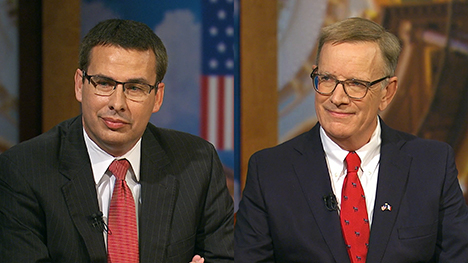
Iowa State Treasurer candidates John Norwood (D-West Des Moines) and Roby Smith (R-Davenport) discuss key issues and policy positions.

Candidates Dave Dawson (D-Lawton) and Chris McGowan (R-Sioux City) will answer questions from reporters and discuss their platforms, concerns and future plans.
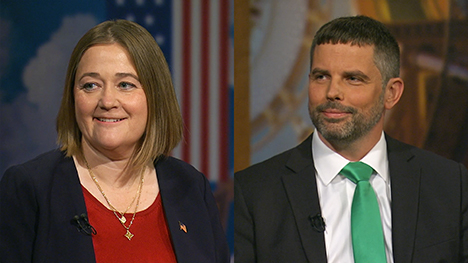
Iowa Attorney General candidates Brenna Bird (R-Dexter) and Nate Willems (D-Mount Vernon) discuss key issues and policy positions.
Lindsay James (D-Dubuque) and Joe Mitchell (R-Clear Lake) answer questions from Iowa reporters and discuss their platforms, concerns and future plans.
Candidates Ashley Hinson (R - Marion) and Josh Turek (D - Council Bluffs) answer questions from reporters and discuss their platforms, concerns and future plans.