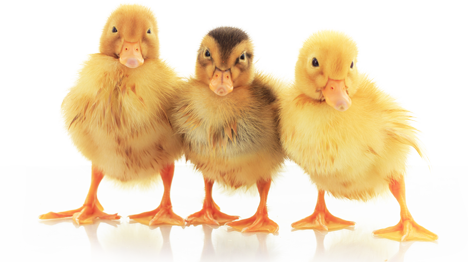
Matthew Bormann, James Hepp, and Zack Smith, three northern Iowa farmers known as the Lobe Rangers. The group discusses their efforts to show by example that farmers can have successful crop production while also protecting soil and water quality.


On this edition of Iowa Press, we feature Matthew Bormann, James Hepp, and Zack Smith, three northern Iowa farmers known as the Lobe Rangers. The group discusses their efforts to show by example that farmers can have successful crop production while also protecting soil and water quality.
Joining moderator Kay Henderson at the Iowa Press table is Stephen Gruber-Miller, Capitol bureau chief for The Des Moines Register.
Program support provided by: Associated General Contractors of Iowa, Iowa Bankers Association and Robert and Doreen Sheppard.
Transcript
[KAY HENDERSON] Agriculture is being blamed for contributing to Iowa's water quality woes. But the Lobe Rangers say it doesn't have to be that way. We'll talk with those three farmers on this edition of Iowa Press.
[ANNOUNCER] Funding for Iowa Press was provided by Friends, the Iowa PBS Foundation.
♪♪
[ANNOUNCER] The Bob and Doreen Sheppard Family, proud supporters of educational programming seen only on Iowa PBS.
♪♪
[ANNOUNCER] Banking in Iowa goes beyond transactions. Banks work to help people and small businesses succeed, and Iowa banks are committed to building confident banking relationships. Iowa banks, your partner through it all.
♪♪
[ANNOUNCER] For decades, Iowa Press has brought you political leaders and newsmakers from across Iowa and beyond. Celebrating more than 50 years on statewide Iowa PBS, this is the Friday, September 11th edition of Iowa Press. Here is Kay Henderson.
[HENDERSON] Water quality has become an issue of concern for many Iowans. Our guest today. Three farmers, they call themselves the Lobe Rangers. That's LOBE. That's because they farm on the Des Moines Lobe. It's some of the most fertile soil in Iowa and in the country. They are showing by example that growing crops can be profitable, while also protecting soil and water quality. Let me introduce these fellows. Zack Smith is a fifth generation farmer from Lake Mills. He has a degree in agronomy from Iowa State. He's a former ag retail salesman, seed dealer and Farm Bureau county board director. Matt Bormann is a fifth generation farmer from Algona. He earned a degree in ag business from Iowa State. He's a former Farm Bureau county president and board member, and James Hepp is a first generation farmer from Rockwell City. He has a degree in agriculture from Northwest Missouri State in Maryville. He's also a former Farm Bureau county president and board member. Thanks for being here today.
[ALL] Thanks for having us.
[HENDERSON] Also across the table is Stephen Gruber-Miller. He's Capitol bureau chief for the Des Moines Register.
[STEPHEN GRUBER-MILLER] So, Matt, I want to start with you. I want to get your origin story as a group. How did you all meet and decide to start doing this work?
[MATTHEW BORMANNN] Well, we're a group of farmers. There's a lot of farmers that are doing conservation practices that are getting fed up, that we're not seeing enough adoption. And so, about the fall of 2023, I started a peer group to try to get a group of farmers together that feel the same way. And somehow that peer group, we wanted to grow it into something bigger and better and had several meetings. And at some point somebody had to take the lead and the three of us decided to emerge from that and grow it into something. And the first videos of the Lobe Rangers started around the 1st of March, and it took off from there.
[GRUBER-MILLER] So you encourage farmers to adopt some of these conservation practices. James, what are some of the practices you use on your farm that you're hoping other people, other farmers, will adopt?
[JAMES HEPP] Sure. So, on our farm, we're doing strip till. So, all the corn ground gets stripped, tilled, where we make a narrow band, where we place our nutrients right where you need it. Then you leave the middle open. So, it's like conservation wise for water infiltration. Then we know till our soybeans. And then every acre gets a cover crop. So that's what we're doing. Then we're also doing the in-season nutrient management, adding nitrogen in season when it's needed.
[GRUBER-MILLER] And Zack, what are some of the barriers that farmers face that make them reluctant or discourage them from adopting some of these practices? Or are they costly? Is there just some skepticism around it? Walk me through some of that.
[ZACK SMITH] It's change, and change is hard. And I think one of the biggest issues, what makes our group unique is that we don't have an older generation involved in our operations that maybe has been really successful for the last 30 or 40 years with the way they do that. We're all sovereign individuals that are able to make our own choices, which makes a big difference. We're a little bit of a unicorn, I would say. So, change is hard, and it is hard to farm differently than what your neighbors are. You know, farmers are a social kind of herd animal, and we don't want, you know, when you go to the coffee shop, if your fields look a little bit different than somebody else's, there's some stigmas that come along with that. So yeah, that's, that's a big part of why we don't see, you know, some of some of this stuff shift at a greater frequency than what we, what we have right now.
[HENDERSON] Matt, let's help our urban neighbors. No till sort of took root in the 1970s. Describe what no till is for people who may not be familiar with it.
[BORMANN] No till is planning right into the soil behind the previous year's crop residue and maybe moving a little bit of residue out of the way with the planter and planting right into it. So, no tillage.
[HENDERSON] And that's because people used to plow in the fall after they harvested, right?
[BORMANN] Yep.
[HENDERSON] And so, the field was bare.
[BORMANN] Yep. The field was bare. And then you had a lot of river erosion. That was a result of that. And some of the early pioneers tried to figure out how to do it without doing all the tillage.
[HENDERSON] And so, what have you found from using no till that is the benefit?
[BORMANN] Well, what I found from using no till and strip till is better water infiltration, less passes across the field, less machinery ownership, less fuel costs, less maintenance, and our yields haven't suffered a bit. I mean, they're either they stay consistent or maybe even a little better than with when I compare with other farmers yields.
[HENDERSON] Well, let me shift the discussion to fertilizer. Zack, you folks are applying fertilizer When the plant needs it. What does that mean?
[SMITH] Well, so a corn crop really doesn't start to take up nitrogen in earnest until about the 10th to 15th of June. That's kind of when the exponential uptake from an agronomic standpoint happens. But we will have nitrogen in a lot of cases, go on in the form of things like fall anhydrous or fall hog manure applications that will start as early as, with manure at least maybe as early as this next week. So, nine months ahead of the game. It doesn't necessarily mean always that if somebody applies manure or fall anhydrous or other nutrients in the fall, that it's going to end up in the river. You know, right now we've got pretty dry soils. And so, there's not we don't anticipate a lot of movement in northwest Iowa. But when things go bad and we get a lot of rainfall, like in late, late fall or winter or early spring, that's when things can get out of hand. And that's when we end up with situations like we've had the last two summers here in Des Moines.
[HENDERSON] Talk about the cost of applying fertilizer. And do you save money by doing it the way that you do?
[SMITH] Well, we would argue we do in a lot of cases, fertilizer applied in the fall is applied where rates are typically bumped, because there is an assumption that we will lose some just to the natural, you know, the natural systems that happen in the processes that happen over the course of the spring. So that's why we do what we do is we want to apply economic rates, especially now with, you know, things going on in the markets with the price of fertilizer. We want to be super efficient. So, we apply our nitrogen either with the corn planter or when the corn is just getting to that exponential uptake. So, it allows us to have -- it allows us to apply with less pounds more confidently to still get maximum yields.
[HENDERSON] Many Iowans have been reading the stories about Iowa's cancer rate, and folks are linking the cancer rate to farm chemicals. I don't know who cares to answer this question. Maybe Matt. Do you think, do you have people in your family who believe that to be true?
[BORMANN] Well, there's a lot of people that believe that to be true. Yes, there are some links. Yes. I'm not a cancer expert. I'm here to talk about what we can be doing better on the farm to make water quality better. So that's kind of where we come into play with this group, you know, pointing out where we're kind of falling short on meeting the goals of the nutrient reduction strategy.
[HENDERSON] Let's talk about the nutrient reduction strategy adopted in 2013 by state policymakers, worried that the federal government was going to come in and establish some regulation for farming. When you were farming at the time, what was your impression of that, Zack?
[SMITH] I was excited. I remember going to the first rollout meetings for it. I had just adopted a strip till in 2011 and was adopting cover crops in 2013 and 14, and I thought, this is great. We've got this pathway. There's this list of practices that farmers could follow. And, and then time went on and there were just not that many folks that that followed in line because it's a voluntary program, there is no deadlines, there's no consequences for not doing so. And even though that we were successful and others in my county were successful with it, we haven't seen the rest of farm country come along.
[HENDERSON] So, I covered Mike Naig, who's running for reelection for state agriculture secretary. He said Iowa farmers had a record amount of cover crops this year, 1 million acres. And he also sort of complained about the blame game that farmers are being blamed for water quality. Any of you want to share your thoughts on whether Iowans should blame farmers for water quality?
[SMITH] It's a tough question for farmers, you know, to answer. And I think we have to be accountable for our actions. And I think one of the failures we've had in our state is that we've had leaders who lead with, you know, these ginormous percentage gains and things like cover crop adoption. So, no doubt those numbers have happened. But as far as where we need to get them to be to be meaningful, as spelled out in the Iowa Nutrient Reduction strategy, it says with the example of cover crops, we need to have at least 60% of the land area in row crops covered with cover crops. So, with 24 million acres of row crops, that means we need 14.4 million acres of cover crops in the state. Right now, we're around four. So, it's correct that we've had a lot of growth, but we're nowhere near to the points where the Iowa nutrient reduction strategy says for things like cover crops that we need to be. And in some of the other metrics like edge of field practices were woefully behind those numbers as far as where we're supposed to be.
[HENDERSON] So, James, tell us what edge of field practices are for our urban neighbors.
[HEPP] Sure. So, a lot of edge of field practices would be like your buffer strips where the water runs through, like where you have hills coming together instead of letting it just eat the dirt out, you know, you'll have that. You'll have bioreactors and some of those types of items.
[SMITH] So, what the, the intention of those structures is to basically intercept tile, tile water and treat it so that roots can pull the nitrates out of out of the water itself, or woodchips and bioreactors. And then wetlands are another great, a great way to, to take nitrates out of out of water as well.
[GRUBER-MILLER] So, you're talking about some of the things in the nutrient reduction strategy. And one of the things that I think is different about your group is you're not just talking about voluntary. You've talked even and said maybe there's some regulations that are necessary, which is something we don't hear all the time. I'm curious, what does that look like for you? What would you like to see as far as regulation to, to make some of these things happen?
[SMITH] Well, we have to have policies that actually lead to the outcomes that we want, and we don't have that right now. We didn't you know, we drove down on I-35 today and it wasn't voluntary to drive 70 miles an hour. It's a requirement. And if we go over that, there's a, you know, you can have a ticket issued for that. And right now, there isn't any, any things within, you know, what we do that are really regulated to that point. And so, if we want to get to the numbers that are laid out in the Iowa Nutrient Reduction Strategy, to expect meaningful drops in the levels of nitrogen and phosphorus, it's a mathematical certainty that we will have to have something more substantial where there will be, perhaps, incentives for behavior that lessens the possibility of that happening, and disincentives for practices that increase the chance for negative outcomes.
[GRUBER-MILLER] So, Matt, one of the challenges for this is Republicans in elected office in Iowa have said regulation is almost never the answer that they want to pursue. What needs to happen to change that political calculation or convince people that this is something that's needed to do?
[BORMANN] Well, I think the public is getting fed up with the rhetoric. If we talked about the blame game and we've talked about driving I-35, if you drove from Des Moines to Minnesota right now, you are not going to see a scalable amount of change that our ag leaders are saying that it's out there. So, about the only other thing to do, we've had education, we've had all kinds of field days. We've had all kinds. We've got incentives. But what else is there to do to get farmers on board to do these practices other than to maybe we reward the people that are doing the practices and have some sort of disincentive. You know, if you're not following the nutrient reduction strategy, we're not seeing the level of progress that's needed to make a change.
[GRUBER-MILLER] Yeah. One of the things I know your group is doing this year is you've met with both of the candidates running for governor. What's the goal of those meetings for you? What are you talking about?
[SMITH] Well, the goal of the meetings is to have conversations. Conversations just like this and to make sure that they know who we are and where we stand. And, you know, we have no intentions after the election of, you know, this isn't a campaign that goes through, you know, November, this is going to continue on for the foreseeable future. Because, you know, Matt's right, this is something that we'll have to come through the legislature. It's not something that's going to happen, we're not going to fix water quality very likely in the next the next session alone, it's probably going to be something that's going to be a two, four, six, eight, ten year process in order to get people into the legislature or change hearts and minds in the legislature to put policy forth that will actually address these issues.
[GRUBER-MILLER] James, do you feel like the candidates, as you've talked to them, are kind of receptive to the things you're saying, or what's the attitude been?
[HEPP] Yeah, no, they've been great. We've had really good conversations like this, just literally sitting at a table. One of them came to Matt's shop, one we went to his place. We just had good conversations. We laid out what the nutrient reduction says in there, and the 60% cover crop, stuff like that made sure they understood it. And like Zack said, let them know that we're not going away. We're here to help. You know, we want to get this going and we need farmer led. Who better to help make policy than farmers? We need to lead the charge. We need to help with this. We don't want someone that's like maybe outside of farming to try and dictate what we're doing. So that's what we do. And they've been really, really receptive of it.
[SMITH] And then what I would add is I think it's fantastic that we have two gubernatorial candidates that are both talking so actively about water quality. It's the first time in my lifetime that I can remember that happening.
[HENDERSON] Let's talk specifically about cover crops. And in Iowa, it seems like rye and oats are the crops that are being planted to cover the ground after it's been harvested in the fall to sort of protect soil loss. How do you get farmers to adopt those cover crops if they can't find a place to sell the crop when it's harvested?
[SMITH] So, with cover crops, just to be clear, you're not harvesting the crop. It's the point of the cover crop is to be there to hold soil for soil erosion purposes, but then also take up the nitrates and hold them so that they're in a stable form. And so that's really the purpose that it solves. And then the next spring, you would go out and terminate the cover crop so that it doesn't inhibit the growth of the cash crop the following spring.
[HENDERSON] So, but Matt, back in yesteryear, if you will, some farmers rotated for crops, hay and oats in the rotation with soybeans and corn. Is that a solution?
[BORMANN] That's totally a solution. But you're going to have to find a place to go with the other crop. I mean, we totally need to raise more oats and more specialty crops. But where is the market for it? One of the missions of our group is pointing out that it's corn and soybeans are the main crops here in Iowa. And the cover crop is you had asked about, you know, getting more farmer adoption, I think was kind of what the point of your question was. We've been talking about this since 2013, when Iowa Nutrient Reduction Strategy came out. There's all kinds of money and incentives. You could get enough incentives to almost, well, you could pay for the cover crop and the application and have money left over if you do it right. And we still don't have anybody. Well, let me rephrase that. We still don't have enough adoption. We have farmers in Iowa that have never, ever tried a cover crop and have no intention to try a cover crop. So, I don't know what else is left to do to try to bring this on, to get, you know, to get the stuff we need to get better water quality in this state.
[SMITH] And I want to add one thing to that. You asked about the blame game earlier, and I didn't probably answer that as well as I could have. Farmers follow policy, and the policy directs what we plant in this state. And we don't, you know, with in regards to crop insurance at the federal level, you know, it's in our best interest as farmers to plant corn and soybeans. That's what we get the highest revenue guarantee. I'm growing oats for the first time this year. That is not incentivized very well. My guarantee on oats is far substantially lower. So, some of this isn't can't just be solved in Iowa. We need federal policy overhaul will help with adding diversity to the state.
[HEPP] And also, I'd add this -- it's a systems approach. None of this is a la carte. Like if you just go to no till that's not going to solve it. If you go just strip till it's not going to solve it. We need everybody working together, doing in combination strip till no till, cover crops, making sure you have proper waterways, making sure you're doing some of that kind of thing. So, it's not just an easy button, you know. Oh, we did that. We're good.
[HENDERSON] One of the candidates that visited your farm is talking about having more food grown in Iowa for human consumption. Is that doable? Is there a market for that? How do you do that? It's very labor intensive.
[HEPP] I would say markets take a long time. I would say there's a huge need for it. I think people want it. And we need to follow the markets. So, I think it's something we need to research now. I don't foresee hundreds and hundreds of like all of us having like 160 tomatoes. But, you know, someone might someday. So, it's a market. But like I said, markets don't just show up overnight. So, it's just like the oat plant. I mean, that's been a long term that didn't just come up last week and they built it. So, but we have to start. You have to take the first step. You can talk all you want, but you have to get the first step on some of these markets. And that's the hardest the first step.
[SMITH] The other thing is that those are great, fantastic ideas. And I'd love to, you know, a lot of the candidates are talking about that, but it's not going to do much to solve our water quality issues because, you know, it's not that many acres. We have 24 million row crop acres in the state. And it would maybe be, you know, at most 50,000 acres that would be, you know, transitioned into some sort of food production.
[GRUBER-MILLER] So Matt, I'm curious, as you've started going publicly and talking about some of these practices, what has the response been like from other farmers? You know, have there been people who reach out to you who say, oh, you know, I didn't know that this could work for me? Is it different for them to hear about this from a fellow farmer? Or has there been criticism?
[BORMANN] It started out we had some level of criticism, but I would say the farming community is overwhelmingly supportive of us. We can't go every day. We're getting comments from farmers calling us, coming up to us, commenting on our feed that they think this stuff is coming. They think that we are going to get regulated. And we as farmers need to lead the charge. We know what we need to do to make this thing better. I was at a field day Wednesday night. I had three farmers that came up to me that wanted to talk about this, but one of the problems was they don't really know how to do any of it either, which Zack and I have been strip tilling and doing cover crops since 2011. And I'm thinking to myself, you know, these 30 year old guys, they this has been in all the farm magazines. It's there's numerous occasions to get educated on it. It's everywhere getting talked about. But to not have any of that knowledge and have never tried it before was kind of maybe shocking, but also the fact that they're admitting it is huge. The fact that, I mean, one of them is saying that he feels he's going to have to do this, you know, in the next ten years to, to get past that hurdle. I think it's huge. So, we're getting we're getting unbelievably good support, which we were not. We were not planning on. We were thinking that, you know, we were going to be going somewhere like the field or the field day. I was at last the other night, I thought I was going to be getting some criticism. I was scared to go to it. And I was one of the last guys to leave.
[GRUBER-MILLER] Yeah, well, I think maybe Zack mentioned earlier about the generational difference. Right. And I know, James, you're a first generation farmer. I mean, how did you get into that and sort of, you know, did you get to kind of decide blank slate, like what sort of practices you were going to do? Is it, is it sort of different for you than it is for somebody who has an existing operation?
[HEPP] Yeah, yeah, that's a great question. So, for starters, I'm a first generation farmer and one of my best friends in high school asked me to help his dad. Him and his brother already had careers outside of farming. And long story short, he asked me to help his dad and it went really well. And that's where I am now. So now I'm helping run their farm. So that's how that went. So, but yeah, like people just -- sorry, I forgot the question.
[GRUBER-MILLER] Is it, is it a little bit easier to adopt some of these different practices because it's not something you've been doing?
[HEPP] Yeah, yeah. So, the guy helped start farming with, he was doing a lot of conservation stuff. So, he planted the seed in my mind and I just took it to the next level and kept pushing because I see value in it right away. You know, like with the rye and the cover crops, the water hemp was a lot less than the soybeans. And it just started going one thing after another. Like Zack mentioned earlier, a lot of operations have multiple generations looking down, keeping an eye on them and won't allow them to. I have a lot of younger people reach out and say, I want to do this, but grandpa won't allow me, Dad won't allow me, but I really want to try it. And that's really unfortunate. And I really feel for him. My landlord has been awesome, he's been really supportive, and he knows if I'm doing the best for my family, it's the best for his family and it's worked really good. So, my story is kind of a unicorn, so I do feel bad for people out there that want to do this stuff, but they're kind of governed by it.
[HENDERSON] We have about two minutes left. Zack, what's next for your group beyond the election and all the chatter with candidates?
[SMITH] Yeah, I mean, we're kind of riding the wave. I mean, we're on Iowa Press for good grief, you know, so it doesn't get much better than that. So, we're going to we're going to be working in harvest here up to the election. We're probably we're not going to weigh in. You know, we're a nonpartisan group. So, we're not going to be endorsing anyone ahead of the election piece. But after that, our focus is going to be figuring out how to take it from something that's been a social media kind of craze over the last eight months, which has been a surprise to us. But how do we transition where we can actually start influencing the policy at specifically at the legislature legislative level? Because like I said, this is going to be a long game for us. You know, we've Matt and I are, you know, probably 15 years from retirement. And we intend to kind of spend, you know, the rest of our career here trying to advocate and leave Iowa in a better place than we found it.
[HENDERSON] Matt, you were talking about incentives earlier. Are you talking about tax credits or are you talking about direct grants for farmers that might come through something like IWILLwhich was created in 2010 by voters but has never been a fund that has been filled at all with any money?
[BORMANN] Well, we want IWILL to be funded. That's one of the things we do want. And then we need, we need, we need incentives. We need incentives and disincentives. So why is it that the people that are doing this were showcased and highlighted, but other people aren't? We need to bring the we need to bring the laggards up to speed and maybe then if you want to change to, say, in-season nitrogen, then you could draw from a fund and get some money to offset the cost of the new equipment that you're probably going to buy anyhow.
[SMITH] I think the take home is that it's all on the table, and it all needs to be considered when moving forward with all the tools to incentivize people to do this, more.
[HENDERSON] So, to our beginning farmer here, is this an encouraging note to enter this discussion, or do you think that it's sort of daunting to people?
[HEPP] Well, you could say yes and no to both that I guess. Everything is like this has been really encouraging. And like I said, we're inspiring people, we've had like Matt was saying, you know, people are coming to him, asking him questions. And for the first time, people are asking questions, you know, like, even like city people are asking questions of the farm. So, I think it's been great. Taking over and doing something new is daunting. I have a lot of sleepless nights. I don't have a unicorn farm. You know, I do a lot of stuff on my farm and I lose sleep for a while, but I know it's okay and I have faith in it, so it can be scary, but that's why we need to work together, you know, don't do this alone. I mean, cover crops, no, till, strip till is not a new thing. Ask a neighbor. Find somebody in your area. There's got to be someone within 15 miles of your mailbox that's doing it successfully. You know, don't make the same mistakes. Learn from them, work together. So that's what I tell people to do.
[HENDERSON] Well, thank you for being together at the Iowa press table today.
[ALL] Thanks for having us.
[HENDERSON] You may watch other episodes of Iowa Press at iowapbs.org. For everyone here at Iowa PBS, thanks for watching today.
♪♪
[ANNOUNCER] Funding for Iowa Press was provided by Friends, the Iowa PBS Foundation.
♪♪
[ANNOUNCER] The Bob and Doreen Sheppard Family, proud supporters of educational programming seen only on Iowa PBS.
♪♪
[ANNOUNCER] Banking in Iowa goes beyond transactions. Banks work to help people and small businesses succeed, and Iowa banks are committed to building confident banking relationships. Iowa banks, your partner through it all.
Watch More
State Auditor candidates Chris Cournoyer (R-LeClaire) and Taylor Wettach (D-Muscatine) discuss key issues and policy positions.
Iowa Secretary of State candidates Paul Pate (R-Cedar Rapids) and Ryan Peterman (D-Davenport) discuss key issues and policy positions.
Iowa State Treasurer candidates John Norwood (D-West Des Moines) and Roby Smith (R-Davenport) discuss key issues and policy positions.

Candidates Dave Dawson (D-Lawton) and Chris McGowan (R-Sioux City) answer questions from reporters and discuss their platforms, concerns and future plans.
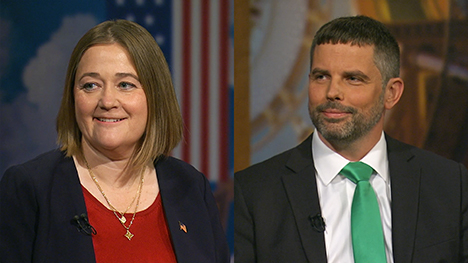
Iowa Attorney General candidates Brenna Bird (R-Dexter) and Nate Willems (D-Mount Vernon) discuss key issues and policy positions.
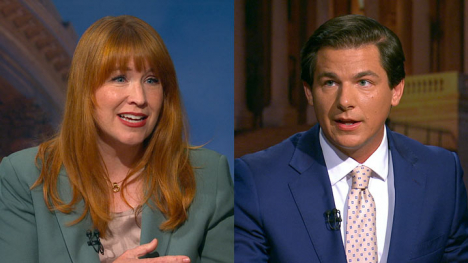
Lindsay James (D-Dubuque) and Joe Mitchell (R-Clear Lake) answer questions from Iowa reporters and discuss their platforms, concerns and future plans.