Questions grow after the screwworm is found in Texas. Commodity groups push to strengthen North America’s trading relationships. Farmers are called to talk about competition and options in the fertilizer industry. And, commodity market analysis with Matt Bennett.


On this edition of Market to Market ...
Questions grow after the screwworm is found in Texas. Commodity groups push to strengthen North America’s trading relationships. Farmers are called to talk about competition and options in the fertilizer industry. And, commodity market analysis with Matt Bennett.
Transcript
Paul Yeager: Coming up on Market to Market -
Questions grow after the screwworm is found in Texas.
Commodity groups push to strengthen North America’s trading relationships. Farmers are called to talk about competition and options in the fertilizer industry.
And commodity market analysis with Matt Bennett. Next.
[MUSIC]
[Announcer] (Pioneer) I wouldn't be here without my customers. Yeah, I'd like to thank the customers. They're, they're very dear to our hearts. It's about the people that you're working with and the relationships that you have. Thank you, thank you, thank you. Thank you from the bottom of my heart.
[Announcer] Tomorrow, for over 100 years, we've worked to help our customers be ready for tomorrow. Trust in tomorrow. Information is available from a Grinnell Mutual agent today.
[Announcer] Support for Market to Market has been provided by a bequest from Philip Leeds of Alta, Iowa, in recognition of public television's commitment to agricultural programing.
[Announcer] Market to Market is made possible in part by a grant from the Corporation for Public Broadcasting.
“This is the Friday, June 5, 2026 edition of Market to Market - the Weekly Journal of Rural America.”
Hello, I’m Paul Yeager.
The jobs report arrived Friday. It’s a snapshot of what employers are doing in terms of hiring and who is looking for work and can’t find it.
Friday’s numbers revealed 172,000 new positions were added. That’s the third consecutive positive number from the Labor Department. Most of the gains came in the hospitality and healthcare sectors.
The unemployment rate stayed at 4.3 percent.
This could be viewed as increasing inflation.
As could the average price for a gallon of gasoline which hit $4.22, down 17 cents in a week, but up more than a dollar from a year ago.
The New World Screwworm reached Texas this week as a three week old calf was found to have the parasite.
Last found in the U.S. in 1966, the NWS was mostly eradicated with sterile flies but had been making the march north - prompting USDA to close the southern border to live cattle coming into the country from Mexico.
If properly treated, the calf should recover.
Laurel Bower reports on the government response in several forms to an issue that seemed to be more of ‘when’ it would arrive, not ‘if’.
Sec. Brooke Rollins, Department of Agriculture: “We have, number one, formed a unified incident command team with the Texas Animal Health Commission and deployed our APHIS response team personnel to the area. They are on the ground.”
In the wake of the announcement, USDA Secretary Brooke Rollins provided updates on the New World screwworm situation in a series of meetings with lawmakers and in press calls.
Sec. Brooke Rollins, Department of Agriculture: “If we all work together and follow animal treatment and the movement restriction guidance, there is no reason to believe that this incursion will result in any sort of establishment of the pest.”
NWS is a serious pest that affects livestock, pets, wildlife, and less commonly, people and birds. They most often enter an animal through an open wound and feed on its living flesh. According to USDA, the nation’s food supply is safe. Screwworms do not infest meat, fruits, vegetables, or other food sources. It is not contagious and does not spread directly from animals to people or from person to person.
The issue quickly became the focus of Thursday’s previously scheduled House Agriculture Committee hearing, where lawmakers pressed Rollins on the threat posed to the nation’s livestock sector.
Sec. Brooke Rollins, Department of Agriculture: “We have activated a NWS response playbook which includes detailed protocols and procedures. We’ve established a 20 kilometer zone around the detection area and are implementing quarantines, movement controls and surveillance in the region. In fact, I’ll be there next week.”
In addition, Rollins explained the USDA has accelerated the release of sterile flies –the primary tool used to eradicate screwworm populations. Lawmakers from cattle producing states expressed concerns for their ranchers who are already experiencing tight herd numbers and economic uncertainty.
Rep. Sharice Davids, D-Kansas: “Why should Kansas ranchers and consumers facing high beef prices have confidence that the USDA has this under control?”
Sec. Brooke Rollins, Department of Agriculture: “I was on the phone most of last night and through the night with the ranchers of south Texas. We do not believe this will be an infestation. We will be able to isolate each case.”
The last outbreak in U.S. border states was in the 1960s and it decimated the local wildlife population and caused millions of dollars in damage to ranchers. NWS was eradicated at that time when researchers began releasing massive numbers of sterilized male screwworm flies that mate with wild female flies to produce infertile eggs. Rollins says the nation’s first production facility for sterile flies is expected to open in Texas late 2027.
Sec. Brooke Rollin, Department of Agriculture: “When it does, it will produce about 300,000,000 flies per week in addition to the 100,000,000 from Panama and then we outfitted an additional Mexican facility for another 100 million dollars so we will get it back to the point where we are able to push it back and eradicate it.”
So far, there have been no further detections reported. For Market to Market, I’m Laurel Bower.
Yeager: The US Trade Representative announced a new round of tariffs of at least ten percent on dozens of countries over concerns they are not doing enough to tackle forced labor.
The USTR is also working to review current trade pacts. Commodity groups are keeping pressure on North American trade officials to renew the USMCA.
Mexico is a big customer of U.S. corn and soybeans while Canada’s top item with America is energy and autos.
All are vital to the economic health of the continent as Peter Tubbs reports.
This week, the Iowa State Fairgrounds hosted one world agriculture event while another took place looking for better relations between three major trading partners. The reauthorization of the United States-Mexico-Canada trade agreement, commonly known as USMCA, was the topic in Des Moines, Iowa.
Randy Miller, Iowa Soybean Association: “It's just do no harm. This. This agreement works like it is. It's free, reciprocal, and everything flows back and forth. Do no harm and and reinstate it for the 16 years so that we have the certainty.”
The USMCA went into effect in July of 2020, with a provision for review and adjustment in 2026. Just last week American and Mexican trade officials initiated their review process together ahead of the July deadline.
Ag industry speakers advocated for renewal of the trade pact with minimal changes.
Julie Kenney, Agribusiness Association of Iowa: “The other part is this when we're in a challenging economy, I think people are craving certainty and to have a stable, predictable, trade arrangement with our two largest trading partners and our neighbors is so incredibly critical. And so at a time when when things are tough, I think it's even more important that we have that certainty for the next 16 years to know what are the rules of the road and know that we have, access to those markets and they have access to, to our market.”
The tariff actions of President Trump have caused friction between the United States and its neighbors, and both Mexico and Canada have charged the US of being in violation of the pact.
Advocates of freer trade in North America focused on the advantages of friendly relationships.
Julie Kenney, Agribusiness Association of Iowa: “We do get over 85% of our potash from Canada. Canada is sitting on the largest, potash, reserves in the world. And so, having a neighbor that has that vast resource is is critically important to Iowa farmers, to our wholesalers and manufacturers and retailers as well.”
The trilateral agreement also creates leverage over other grain producers in the hemisphere.
Christopher Pudenz, Iowa Farm Bureau Federation: “Regarding, you know, our biggest competitor agriculturally, internationally right now is Brazil. You know what Brazil doesn't have with Mexico? Some sort of free trade agreement like Usmca. And so it, you know, reviewing and renewing and maintaining this Usmca relationship is really, really important for keeping, Brazil, a step behind us in a market like Mexico.”
For Market to Market, I’m Peter Tubbs
Yeager: Last week the head of the Federal Trade Commission, Andrew Ferguson was in Texas to hear from 100 producers from 18 states on the issue of fertilizer - specifically on anti-trust actions by the companies who produce and sell inputs.
Farmer Adam Ladwig was part of that group in his role as secretary / treasurer of the North Dakota Corn Growers Association.
Our next MtoM podcast features a conversation with the North Dakota farmer and the challenges fertilizer has posed him just in the last few months.
A part of the discussion is our Cover Story.
Adam Ladwig: And we were able to kind of voice our concerns within the fertilizer industry. And, then he made the announcement there that, they were launching an investigation into, the fertilizer industry for unfair practices for, antitrust policies or antitrust laws, pricing or non transparency of pricing. I guess I would put it, because it a lot of the talk happened to be, the Southern Mississippi Valley guys. They have a little different story down there. So a lot of what they focused on is that, the manufacturers are actually becoming retailers down there. They've been undercutting the retailers, and, they don't really have the true co-op mentality or true co-op style down in that area anymore because, the manufacturers kind of kick them out, I guess, in a sense. Where in our area we still have the co-op style, but our co-ops are still, purchasing from only 1 or 2 of these manufacturers. Did you get an answer? No, I guess not. Not a straightforward answer, but, in my opinion, I guess for the chairman to be there, I know they're serious about it. And how I understand it, they've already sent out subpoenas on some of these things, so, I believe they should have. There's something that they're chasing after, and I hope they find all the evidence they need and can get. But I don't think the chairman would come out to us and meet with us in that setting if there wasn't something there, and if they weren't serious about it.
Yeager: At what point is, is the words and the actions? Where does the rubber need to meet the road for you?
Ladwig: Adam? Yeah. We just we have to see change in the industry, whether I mean, ideally, we would like to see more fertilizer manufacturers. I know there's there's one in North Dakota that's trying to get started, but there's others in other states and like I said, the example in Iowa that there was a fertilizer plant there and it got out by bought out by the big company. And I guess if that's not, a form of monopoly, then I guess I don't know what it is because you're just you're taking out that, competitiveness in the marketplace.
Yeager: It's that middle. It's that retailer that probably is the biggest concern, outside of your own right now, right?
Ladwig: Yeah, absolutely. And I guess we're seeing that in the the retailer market as well. Consolidation beyond belief. We lost a lot of we don't have the co-ops or the retailers that we used to around here. I guess their locations are still there, but it's a different name under a bigger company. So the squeeze is on for them, for sure.
Yeager: What's the perfect solution that can come from all of the meetings and the conversations right now?
Ladwig: The solution is going to be is hopefully we can get enough evidence or the FTC can get enough evidence to, bring a lawsuit for, that was one of the biggest thing is, they kind of want to make sure that they have all their ducks in a row to be able to bring a lawsuit forward because, they're it'll just end up being a lawyer battle. But as of now, I wish I could say things would just change immediately, but that's not going to happen. So I think as far as the FTC goes, that that would be the solution is, being able to sue the fertilizer industry and, confirm that there is antitrust laws being broken. And I know the DOJ has been investigating as well on other issues. So, I mean, there's a lot of eyes on that industry right now. Within the government.
Yeager: The full MToM episode will release Tuesday.
Selling pressure was evident for various reasons including good weather and funds changing positions.
For the week ending June 5…
The nearby wheat contract lost 31 cents and the July corn contract fell by 29 cents.
Favorable weather led the move lower in the soy complex.
The July soybean contract sold off 65 cents, while July meal weakened by $21.30 per ton.
July cotton declined by $2.44 per hundredweight.
June Class Three milk futures shed 12 cents.
The livestock market was mixed. August cattle added $2.60. August feeders put on $5.47 and the July lean hog contract declined 70 cents.
In the currency markets, the U.S. dollar index added 98 ticks.
July crude oil gained $2.85 per barrel.
COMEX gold was off $220.80 per ounce, and the Goldman Sachs Commodity Index was higher by almost 5 points to settle at 698 - 85.
Here now, to lend us his insight on these and other trends is market analyst, Matt Bennett. Hello, sir.
Matt Bennett: Hello, Paul.
Yeager: You know, this is probably one of the most down weeks we've had in quite some time. Is there an overarching theme on why grains were the way they were? I mean, the easy thing to say is the fund's changing and the weather. Is there more to it than that?
Bennett: Yeah. I mean, the fund's obviously got into a record, almost a record long position with this corn market. You know, we saw price levels we hadn't seen in a couple three years. You had presidents Xi and Trump. They talked about the $17 billion program. Right. That was going to be on top of soybeans. And I think a lot of folks felt like right on the heels of that, we're going to get maybe a bean sale or two in several corn sales, maybe even some wheat sales. It's been crickets since that happened. And so I think that kind of frustrated some folks. You combine that with obviously a pretty good start to the crop. I know some regions have run behind and clearly have had issues. And I feel for those folks. But if you looked at the weekly progress report, we actually have been running at pace or above average pace. And then conditions this week, of course, 67% did nothing to keep a story alive, if you will. You know, there's parts of the country that are excessively dry, but this time of year, that's not a huge ordeal just yet.
Yeager: And it's maybe a little early for that story to develop as well. But Let’s Talk wheat then specifically, if we could, because that is where the wheat or the weather has been the best story. But if my rough math, something like 65, $0.66 in two weeks, and that market is this end anywhere close?
Bennett: Yeah. I mean, that's been rough. You look at, for instance, hard red hard, red's been down 12 straight sessions. I mean, just an absolute death spiral. I don't know how to even explain it. It's been awful. And I know that some folks in that part of the world are saying, you know what? I don't have a crop. It's not that great. Yes, they got some rain here recently, but let's face it, a lot of that wheat is ready to cut, you know, so it's probably a little bit too late. You get into the soft red, it's going to be a little bit better crop. And so those folks in the Kansas City situation on the hard red, they're like, how is this occurring? Well, the problem we have, Paul, is that the total wheat crop. You put all three classes together. And in the grand scheme of things in the world, it doesn't matter a whole lot. We are not a huge player in this wheat deal. So you take one of the three classes that had an absolutely awful situation. It still doesn't move the needle, and I know that's frustrating, but that's pretty much where we're at. And so obviously this wheat deal, you're going into harvest. You know, there's just headwind after headwind after headwind.
Yeager: So that would, I'm guessing by what you're saying. So we always talk about a harvest low. This is not, really sounds like a time to be selling anything because of fears it could go lower. This is more a harvest issue than it is anything.
Bennett: Well I think it's a variety of things. Clearly, I think that we got overbought at the time. Whenever we look, for instance, at world fundamentals, you couldn't really make the case for $7 and above wheat if you looked at everything in total. Right? The problem, of course, is that you get into this tunnel vision of what the hard red crop was, the situation you went on the tour, obviously hearing some yields that are really challenging, you know, 15 and below. But the bottom line is once again, probably not the best time to be stepping in after you basically stepped off a ledge.
Yeager: Old crop corn. I know we're going to talk a lot about new crop corn, but why is old crop struggling so much?
Bennett: Well, first of all, we have a couple billion bushels still is what we're thinking, you know, going into harvest timeframe. I mean, here's the deal, Paul, we had a lot of opportunities here. And I don't want to be a hindsight guy. We had a lot of opportunities to sell. And so what happened was in those opportunities is that the funds were buying okay. Because they had a story. It was kind of an inflationary hedge type situation. Obviously, war situation. We know fertilizer that kind of played into it. But regardless, they're buying at the same time the commercials are selling because the grower is selling to the commercials. They turn around and hedge it until it gets used. Well, the problem is the funds, they lost interest for a variety of reasons. There's a whole lot going on here, but now you've got funds selling, you've got commercial selling. And let's face it, we don't have enough buyers on the other side of this thing. And so yes, there's plenty of corn around. Some of these basis levels have improved. But Paul, whenever you drop 25 - $0.30 in a week. I don't know anybody's basis levels that are improving enough to counteract that.
Yeager: Well, I knew you would say something like that. And so that was that's a big concern is the thought of this basis, because sometimes that's a savior for people. Yeah. It doesn't sound like that's coming anytime soon.
Bennett: With 2 billion bushels. Yeah. Yeah. Right. That's the problem.
Yeager: And that's the math.
Bennett: That's the problem. Paul. If I want to get a little more of a friendly tone, it's tough to do so based on old crop. You know, my biggest concern isn't even ‘26. I mean, obviously ‘26. We can talk acres. They're probably going to scale back somewhat. It depends on how good that March number was. I don't know how good that March number was, but I think some folks switched a few acres around due to fertilizer, where I'm really concerned because a lot of growers had the opportunity to sell, and I believe they sold a lot more corn for this crop than they did the previous three crops. They never had an opportunity. The problem I've got is ‘27. That's what scares me the most.
Yeager: Well, let's talk about the new crop then, because are you referring to new crop? Do you think they've sold a lot of new crop? Or were you saying they've sold more of the old.
Bennett: I mean, I'm going to guesstimate at 25%. Okay.
Yeager: Okay. So then on this new crop story, whether you mention it, it's ideal in certain spots, not all, but enough to keep the market saying you're fine crops, It's June.
Bennett: Yeah. Well, the thing is, is that if you go into pollination with a drier bias, there's always the chance to get things fired up. Right. The problem is, if you go into Fourth of July with plenty of moisture, it's not probably going to give you a whole lot of concern around pollination. Pollination, as we all know, a very important time frame, genetics have been able to counter a lot of stress here over the last several years. So you would need to throw a fair amount of stress at it, in my opinion, to get people fired up. Right now, you look at the National Drought Monitor, there's a ton of drought in the U.S., but where it matters to this corn market, there's just not that much stress at all.
Yeager: So we've saved the worst for third because beans took a huge hit. Weather is a factor in that. But tell me about the old crop story first.
Bennett: I mean, the thing is with beans yesterday, in my opinion, Thursday, if you will, that was the real blow. It seemed to me like beans were kind of hanging in there, relatively speaking. They were performing better than corn, let's be real about it. And then you come in here and you look at the screen, you're down $0.35. It's like, oh, they got the memo, right. And so the thing about beans, you've got great domestic demand. There's a lot of hope. You know that, hey, China's going to come in here. They're supposed to buy 25 million tons. I know some people say, well, who knows if they're going to do that. Well, they bought several beans over the winter at a dollar premium to Brazil because of this sort of trade agreement. Part of the problem this week, in my opinion, was China. You know, some rumors that China said, hey, we're not going to do anything until maybe September. So I've had a lot of questions. Could they get all these beans bought if they wait till then, go back to 2024? We hadn't sold hardly any beans heading into harvest. And then it was just a flurry of sales to China. It can happen, but the trade's not real happy with the fact that they haven't started that purchasing program.
Yeager: And then on the new crop side, then again, weather is a story. I mean, I have plenty of questions that I could have gone to. I guess let's Holtz View Farms if we could, because this one ties both corn and beans and wheat, but with the lack of moisture in the corn belt, why is the market's going down? Did I miss something? That's the issue that you're talking about. It's not the same everywhere.
Bennett: Yeah. It's the lack of moisture is a regional issue. Now if you get into my part of Illinois we're in decent shape. We've actually had too much rain at times. But you get like north, for instance, of I-74. And I mean it's dry as a bone now. They had some rain on the radar here this morning. I don't know how much rain they're going to get, but the forecast is that over the next week they could get 4 to 5in. Now if you bless that area hopefully not all at once. But with that much moisture, you're going to start to take some of those dark red areas on the drought index or topsoil index, and you're going to shrink them, which is going to do nothing. I do believe that's part of the problem this week with the markets.
Yeager: How many conversations did you have with Ross Baldwin once this new world Screwworm was coming and what was the take that the two of you were talking about?
Bennett: We've been busy enough, to be honest with you. I've read his stuff though. And the thing about the Screwworm incident. The market just plummeted, you know, and then we stabilized later on. How come we didn't come here? Well, two days before this was announced, it was 31 miles south of the border. The day before is 25 miles south of the border, and flies fly, and they don't know where. They don't know where the border is.
They don't know where the border is. And they can go over it. They can go through it. But the bottom line is we knew this was going to happen at some point. And so what Thursday looked like to me was a sell the rumor, buy the fact type of deal. And so I think moving forward, it still could be actually kind of friendly. But I was a little surprised that whenever it was announced, there wasn't more panic. But look at the ranges yesterday. I mean good night.
Yeager: Feeder market too. Had some of that same same low. And then a quick high.
Bennett: Absolutely. And up the limit. You know, I mean you had a 15 like $15 range there. I mean it was just an incredible move there. But bottom line is I think moving forward, you got to ask yourself if we have much of an outbreak at all, what does that do to us fundamentally on down the road? You've still got people right now. You've got people selling pairs out west because they're too dry and don't have enough grass. I mean, we are not having any luck building this cattle herd here. And fundamentally, I think that you're going to have a story for some time.
Yeager: And there's the news from this week means we're not opening that border anytime soon.
Bennett: I don't know how they could.
Yeager: So that was always Ross has talked about that and it's like it could happen. That's not happening anytime soon.
Bennett: I don't believe there's any way with what we're dealing with now. They've obviously got their hands full trying to make sure that we don't let this thing get out of hand quickly.
Yeager: 20 seconds on hogs. They haven't benefited.
Bennett: No. And you look at that chart, it's just ugly, ugly as can possibly be. And I think that if cattle can regain some momentum here, maybe that substitution effect really sees them. Maybe you'll have an opportunity to see this hog market get back up into triple digits on more than 1 or 2 contracts for a little bit, but I don't know right now. It doesn't look great.
Yeager: I thought we could have something positive. We'll work on that in Market Plus. How about that? Absolutely. All right. Thanks, Matt. Good to see you. Matt Bennett everybody.
You’ve been watching the analysis portion of our program and in a moment we will continue our discussion in an online only segment. Find it by searching Market Plus with Matt Bennett wherever you get your podcasts. You can also go to our website of markettomarket.org to listen.
The Market Insider newsletter returns Monday morning with news on this program including analyst updates, classic program releases and other behind the scenes details we want to share with you.
Sign up for free at market to market dot org.
Next week, indoor farming looks to survive the hype and harvest profits.
Thank you so much for watching. Have a great week.
[Announcer] (Pioneer) I wouldn't be here without my customers. Yeah, I'd like to thank the customers. They're, they're very dear to our hearts. It's about the people that you're working with and the relationships that you have. Thank you, thank you, thank you. Thank you from the bottom of my heart.
[Announcer] Tomorrow, for over 100 years, we've worked to help our customers be ready for tomorrow. Trust in tomorrow. Information is available from a Grinnell Mutual agent today.
[Announcer] Support for Market to Market has been provided by a bequest from Philip Leeds of Alta, Iowa, in recognition of public television's commitment to agricultural programing.
[Announcer] Market to Market is made possible in part by a grant from the Corporation for Public Broadcasting.
Trading in futures and options involves substantial risk. No warranty is given or implied by Iowa PBS or the analysts who appear on Market to Market. Past performance is not necessarily indicative of future results.
Watch More

Huub Lelieveld receives the 2026 World Food Prize for six decades of work advancing food safety.
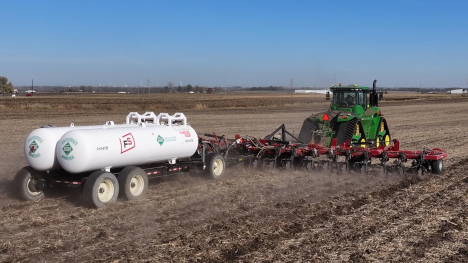
New federal plans target farmers' fuel and fertilizer costs through direct relief and investments in domestic fertilizer production.
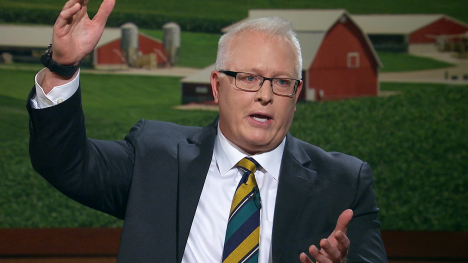
Chris Robinson weighs corn recovery prospects, soybean price levels and the rebound in cattle.
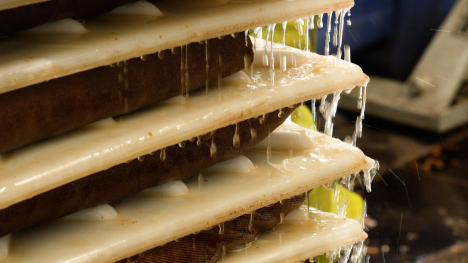
Minnesota’s Keepsake Cidery combines heirloom apples, traditional cider making and direct sales to help a small farm thrive.

New farm relief, a food safety honor, Minnesota cider and commodity market analysis with Chris Robinson.
Chris Robinson answers viewer questions on corn yields, crude oil and cattle, and explains his soybean outlook.