Hard data backs up what American farmers have long been concerned about with Brazil. A squid squabble off the Oregon coast. And, commodity market analysis with Ted Seifried.


On this edition of Market to Market ...
Hard data backs up what American farmers have long been concerned about with Brazil. A squid squabble off the Oregon coast. And, commodity market analysis with Ted Seifried.
Transcript
[Paul Yeager] Coming up on Market to Market -
Hard data backs up what American farmers have long been concerned about with Brazil.
A squid squabble off the Oregon coast.
And commodity market analysis with Ted Seifried. Next.
[Announcer] (Pioneer) I wouldn't be here without my customers. Yeah, I'd like to thank the customers. They're, they're very dear to our hearts. It's about the people that you're working with and the relationships that you have. Thank you, thank you, thank you. Thank you from the bottom of my heart.
[Announcer] Tomorrow, for over 100 years, we've worked to help our customers be ready for tomorrow. Trust in tomorrow. Information is available from a Grinnell Mutual agent today.
[Announcer] Support for Market to Market has been provided by a bequest from Philip Leeds of Alta, Iowa, in recognition of public television's commitment to agricultural programing.
[Announcer] Market to Market is made possible in part by a grant from the Corporation for Public Broadcasting.
[Announcer] This is the Friday, July 10 edition of Market to Market, the weekly journal of rural America.
Hello, I’m Paul Yeager.
The return of conflict between the U.S. and Iran impacted prices this week from Wall Street to Main Street.
The national average gas prices from AAA came in at $3.88, up six cents from last week, but down from a month ago when the average was $4.15.
Existing home sales were off 2.4 percent in June.
The median home price hit an all-time high as affordability conditions of interest rates and wage growth impacted buyers the most according to the National Association of Realtors.
Purdue University’s Farmer Sentiment survey revealed another drop in June - this time by 5 points to a reading of 113. Inputs were identified as the biggest challenge by 47 percent of the respondents to the Purdue survey.
Inputs are also on the mind of the National Corn Growers Association and their members.
The NCGA has been raising concerns about rising input costs for years. A study, released this week, shows there is a discrepancy as U.S. growers pay more for seed and crop protection than their major competitor in South America.
Laurel Bower reports on the survey.
[Laurel Bower] This week, the National Corn Growers Association, or NCGA, released a report supporting what American farmers have long argued – they face higher production costs than their competitors while selling into the same worldwide commodity market.
The study, conducted by Kynetec for NCGA, details the price premiums U.S. farmers pay for their inputs compared to Brazilian farmers –their largest global competitor.
It found U.S. corn growers consistently paid more than Brazilian farmers for major crop inputs between 2023 and 2025.
Matt Frostic, National Corn Growers Association: “The American farmer pays up to 60 to 70 percent more for that same seed that is planted in Brazil and crop inputs like fungicides, herbicides and insecticides can be priced as much as double for the same product in the U.S. versus Brazil.”
According to NCGA, Brazilian farmers generally have more access to generic products and single active ingredient options, while U.S. farmers are more often buying premium mixes sold by major manufacturers.
Matt Frostic, National Corn Growers Association: “It really kind of pops the red light of why does the American farmers shoulder so much cost on those products versus the Brazilian farmers.”
[Bower] The organization says the price gap carries added weight because U.S. and Brazilian farmers are producing many of the same commodities for the world market.
Matt Frostic, National Corn Growers Association: “We can’t continue to sustain these high of inputs versus what the farm gate sales are and I think every farmer could tell you we understand many years we are going to miss money. We’re in the commodity market it’s cut throat and we understand that, but we’re walking through four years of extremely low or negative margins and you just can’t continue to survive that without major changes in how this industry will look in four to five years with such low investment.”
For Market to Market, I’m Laurel Bower.
[Yeager] Fishing can be hot one day and cold the next in any location.
But whether it’s one boat pulling in full nets, or an entire fleet cashing in at once, too much of a good thing can cause real problems for those trying to make a living off the catch of the day.
That’s the case in Oregon, where the netting of calamari – better known as squid – has sparked a squabble between the fishing industry and regulators trying to strike a balance between profits and protection.
Colleen Bradford Krantz walks us through the lines in the water in this week’s Cover Story.
[Colleen Bradford Krantz] Joseph Mulkey of Reedsport, Oregon was so eager to follow his father into the commercial fishing business that he was tempted to drop out of high school.
Joseph Mulkey, Pacific Challenger Fisheries - Reedsport, Oregon: “The only reason I finished high school is my mom told me that if I didn’t graduate, I would never get the opportunity to run the boat.”
[Bradford Krantz] He did graduate and, after years on the crew, he eventually became captain of the family’s 68-foot fishing boat, known as the Pearl J. This fall, he finished building a 57-foot boat of his own. But Mulkey’s all-in commitment to commercial fishing came with concerns about how the industry sometimes operated.
Joseph Mulkey, Pacific Challenger Fisheries - Reedsport, Oregon: “Sadly, we are on somewhat of a decline. I feel that our industry is too focused on volume as opposed to quality. When you look at other fisheries in the world - Norway and European fisheries - they focus on very high quality and much lower volumes than we do.”
[Bradford Krantz] That concern about quantity over quality became especially relevant when market squid fishing off Oregon’s coast began drawing serious interest from other West Coast commercial crews. Troy Buell, the State Fishery Management Program Leader for the Oregon Department of Fish and Wildlife, helps regulate certain ocean species fished within three miles of the state’s coast.
Troy Buell, Oregon Department of Fish and Wildlife - Newport, Oregon: “This fishery started in 2016 when we saw about 2.7 million pounds of squid landed, which was more than we'd ever seen historically. And we have records going back to the early 80s showing that there was some squid fishing happening but not to that degree.”
[Bradford Krantz] A marine heat wave - or area of usually warm ocean water - from 2013 to 2016 is believed to have brought more market squid north to Oregon. California fishing crews wanted to follow them.
Troy Buell, Oregon Department of Fish and Wildlife - Newport, Oregon: “We started getting questions from some of those fishermen about what would be required to fish market squid in Oregon, as far as, you know, what permits and licenses they would need to have.”
[Bradford Krantz] For Mulkey, the squid boom offered a chance to try purse seining - a net-based fishing method that uses a drawstring-type rope at the bottom to gather the catch. Around 2018, Mulkey convinced his family to invest $100,000 in used nets and gear for a test run.
The test succeeded, and the family upgraded their equipment. Market squid, known as calamari when served, are usually caught only at night in the fall - they’re drawn to lights just like moths. Some fishing operations used a separate light boat that would attract the squid while a catcher boat set nets around them. Even though he was using this strategy himself, Mulkey began to worry that it was too effective.
Joseph Mulkey, Pacific Challenger Fisheries - Reedsport, Oregon: “A lot of times, as soon as you are done with the set that you just made - pumping those squid on the boat - you can immediately go back and set again. It’s extremely efficient. And our fishery here in Oregon is not a big enough fishery to sustain that much efficiency. And so there were a few of us that felt we needed to get rid of the light boats.”
[Bradford Krantz] By 2019, nearly 40 boats were working in the Oregon squid fishery, a term that, in this case, refers to all the crews fishing for the same regulated species.
Joseph Mulkey, Pacific Challenger Fisheries - Reedsport, Oregon: “There was always a fishery up off of Florence….And even without light boats, we’re very efficient and, with all of those boats participating, I've never caught a squid in that area since then. And so I think we kind of demolished that run.”
[Bradford Krantz] Mulkey called state fisheries managers with his concerns and found himself in the unusual position of asking for a few new regulations over his own livelihood. The state, however, already had a safeguard in place.
Troy Buell, Oregon Department of Fish and Wildlife - Newport, Oregon: “We had what we call a harvest guideline set: 4.5 million pounds of squid landed. And so the requirement that if we ever landed that much squid into Oregon, though, is that we held a public meeting to be able to evaluate the fishery.”
[Bradford Krantz] Unlike long-lived species like rockfish or whales that take years to mature, market squid are a bit easier to protect as they reproduce rapidly and live less than a year. The state has a goal of fishermen leaving 30% of the squids’ eggs on the ocean floor to protect the species’ future.
Troy Buell, Oregon Department of Fish and Wildlife - Newport, Oregon: “That is rather hard to measure. And so we did put in a regulation that closes the fishery two days a week on the weekends, and that is a proxy for allowing the squid to spawn, you know, 30% of what they would have been able to do without any fishing.”
[Bradford Krantz] But it was the banning of separate light boats - after contentious debate - that angered some fishing crews.
Troy Buell, Oregon Department of Fish and Wildlife - Newport, Oregon: “I took a lot of calls about the light boat issue, both from people that, you know, felt that they weren't necessary and were creating kind of an unfair playing field for people that they weren't using, or didn't have them, to people that, you know, had invested in building light boats and were using them in the fishery. So, yeah, lots of calls. It was pretty contentious.”
[Bradford Krantz] For Mulkey, advocating for restrictions cost him some friendships.
Joseph Mulkey, Pacific Challenger Fisheries - Reedsport, Oregon: “Particularly with the light boats, I have some people that I used to call friends that are not friends anymore.”
[Bradford Krantz] After the regulations concerning separate light boats took effect, which also lined up with a swing back to cooler ocean conditions, Mulkey said participation dropped rapidly from 40 boats to four or five. The peak in 2020 brought 10 million pounds of market squid - or $6 million worth - into Oregon’s ports. In recent years, the catch has totaled closer to 1 to 1.5 million pounds.
Troy Buell, Oregon Department of Fish and Wildlife - Newport, Oregon: “That's not a huge amount of money…But it's not nothing. And it is significant for, you know, individual operators and even some of the ports.”
[Bradford Krantz] Both men feel the state is now better positioned to balance economic and ecological considerations when the next marine heat wave hits, bringing along thousands of tiny tentacled mollusks.
Joseph Mulkey, Pacific Challenger Fisheries - Reedsport, Oregon: “I want to do this the rest of my life. And if my kids want to do it, I want them to be able to do it. And the stocks have to be there for us to do it.”
[Bradford Krantz] For Market to Market, I’m Colleen Bradford Krantz.
[Announcer] Next, the Market to Market report.
[Yeager] The early week trading was influenced before turning attention to position ahead of Friday’s USDA report which was neutral. However, a report out of Russia sent the wheat market higher Friday…
The early week trading was influenced by weather before turning attention to positioning ahead of Friday’s USDA report which was neutral. However, a report out of Russia sent the wheat market higher Friday…
For the trading week ending July 10…
The nearby wheat contract gained 41 cents and the September corn contract was up 17 cents.
China did return to the U.S. market and made some purchases boosting the soy complex.
The August soybean contract improved 56 cents, while August meal put on $14.90.
December cotton expanded $4.42 per hundredweight.
August Class Three milk futures increased 58 cents.
The livestock market was mixed. August cattle sold off $3.83. August feeders cut $6.20 and the August lean hog contract added 40 cents.
In the currency markets, the U.S. dollar index gained 11 ticks.
August crude oil gained $2.93 per barrel.
COMEX gold was down by $20.10 per ounce, and the Goldman Sachs Commodity Index improved almost 23 points to settle at 639 - 95.
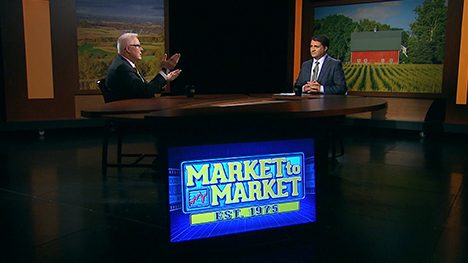
Here now to lend us his insight on these and other trends as regular market analyst. Ted Seifried. Hello, sir.
[Ted Seifried] Hi, Paul.
[Yeager] Going into Friday morning before this USDA report, wheat was already on a tear. The geopolitical story. Then the USDA report. That's a one two combo. How high can this wheat market go?
[Seifried] Yep. And before the report came out on Friday, I was jokingly checking with my team. What's limit up in wheat? We didn't get we didn't get the report to get us there. It was not a shockingly bullish report for wheat. I felt like some of the buying in front of the report on Friday was because we were looking at the production number, thinking that the average trade guess was maybe too high and that it could come in lower. It didn't. The USDA ended up raising wheat yield, and so therefore wheat. The wheat report. It was pretty neutral, slightly bearish ending stocks came in a little bit above expectations. Production came in a little bit above expectations. But it was not this big bullish report that I think some of us thought could have happened on Friday. But the fireworks were really happening before that report even came out. And it started on Thursday when there was a massive Ukrainian drone attack attack on Russia. Russian ports in particular, and then the announcement from Russia that they are suspending exports out of the channel of what Don Azov and therefore.
[Yeager] The Kerch Strait and the Sea of Azov.
[Seifried] Yep. And so that's just. Well, and they didn't give a time frame of when that might reopen. That can actually have a fairly large impact on Russia's Russia's wheat exports. We have, I think, collectively gotten a little bit jaded about the news coming out of the Black Sea. This has been going on for a very long time now, and for the most part, hasn't really affected exports coming from either Ukraine or Russia. This one, though, does have the potential to do that. And that's where the reaction in wheat came from.
[Yeager] We've had it last couple of weeks going into the weekend. It's a long weekend. It's going to be a long weekend. Where are we at on Monday morning with wheat? What are we advising people here?
[Seifried] Yeah. Great question because the report in and of itself was not that bullish. And when you look at the ending stocks for wheat, while their domestic ending stocks for wheat, while they are tighter than they've been in the last few years, you're still at almost a 40% stocks to usage ratio. That is not that's not bullish by itself. You have to have these global disruptions from a lasting perspective to really get us going. And if that if if that channel opens back up, by the time we get to Monday, that's going to take a lot of the bullish enthusiasm that we had at the end of the week this week. The bigger question, though, I think, is what happens with row crops, because that was really coming from well, I think the report and whether.
[Yeager] Well, yeah, I've been putting it off, but corn is kind of a big deal for you right now.
[Seifried] I, I'm really happy with the report that we saw on Thursday. In fact, you know what? Let's do it. Here we go. Corn hat. All right. Yes. Look, I think this corn report was rather bullish for a number of reasons. One, we saw old crop ending stocks drop 125 million bushels. That's including them taking away 25 million bushels from ethanol, which I think they really had to do. They increased feed and residual by 150 million bushels. That is a direct reflection of the quarterly grain stocks report that we saw, what, ten days ago? And corn stocks were lower than expected. That means that feed and residual number is higher. Now, I've seen on Twitter, some people say that the feed and residual number statistically is an anomaly. It's too high and it cannot be justified. That's just plain not correct. It's just inaccurate, Paul, because if you look at the feed, residual statistically from a percentage of production, it's just a little bit of a 37% of of overall production. Typically, the five year average is just under 40%. In fact, this is a seven year low for the percentage of production of that feed residual category. It is well within the bounds of where it should be on a USDA report. And so it's not saying that quarterly grain stocks report is not saying, at least not outwardly saying that we didn't have a 17 billion bushel crop last year. I think everything all the signs are that we did have a 17 billion bushel crop last year. And by the way, that's not bearish. Having a 17 billion bushel crop last year and yet having to lower ending stocks because we have such strong demand, that's actually even more bullish than having a smaller crop. So that's great. And then you look at the new crop.
[Yeager] Well yeah, I was going to ask you we're going to get to that in a minute because this is the opportunity. I say I know you get to keep it, but I want to have you. I'm so distracted by you right now. I haven't heard.
[Seifried] I don't care. I'm not done talking.
[Yeager] You're not done.
[Seifried] I'm not.
[Yeager] Okay. So let's talk about this new crop because that's that's the weather story that we had. Many people ask about. Does that put you've got a phrase, I don't want to take it that we're setting up for something here in new crop.
[Seifried] Yeah. So the new crop balance sheet is a powder keg potentially, right. It is very rare that the USDA lowers supply production bumped up just a tad because of the acreage. And it's just a rounding thing. But lower beginning stocks. So lower supply yet they increased demand. That is a very rare thing. They increase exports for corn. So now you have a carryover that's below 1.8 billion bushel carryover. That's at a 183 national average yield. If you start taking away from that national average yield, let's take it down to 180, which by the way, Paul, a 180 national average yield is a fantastic corn crop. But at 180, we're potentially sub 1.5 billion bushel carryover for corn. That gets really tight. Now it doesn't happen necessarily that way because when you take away production, generally speaking, we find ways of taking away demand. But that's a function of higher prices. So corn has the potential for a massive weather powder keg. If we start to feel like that 18183 national average isn't going to happen. And if we start talking about something below a 180 at some point, and I'm not saying we have any justification for that right now, but if at any point we start talking below a 180 national average yield, things could get extremely interesting for corn.
[Yeager] Let's talk about beans for a minute. I know, I know, I know.
[Seifried] You're distracted.
[Yeager] It's fine, I am. Well, I want to see your eyes. I don't know. You'll go back and see. You couldn't see your eyes as much. What did USDA they are. Did USDA's report do the same? Set the stage for beans like it did for corn.
[Seifried] The stage for beans has kind of been set for a little while, in the sense that, you know, at a 310 million bushel carryover for new crop, it's not a massive carryover. It doesn't leave a whole lot of room for error as far as production is concerned. And the same thing, same math applies to beans, a 53 national average yield. If you take that down to 50, we're talking 140 million bushel carryover. If you don't do anything on the demand side of the equation, the powder keg is there for beans. It has been there for beans. The question is, are we going to see that these exports to China, the 25 million metric tons that have been talked about, and we're starting to see that. Paul, it's good to see if you if you look at the the the export sales explicitly to China that we've seen so far on either weekly export sales or on the daily flash sales, that's including this week. Obviously, it's a little over a million metric tons. And then if I go digging around in the unknown destination category, I could say that China's maybe bought 2 to 2, well, 1.8 to maybe two and a half tops, million metric tons of corn so far. That's 10% of that 25 million metric tons. That's a good start. But we're a long way from getting that finish line. So a lot of it's really going to depend on that. But if China does buy that 25 million metric tons and that demand side of the equation is inelastic because of it, because crush is probably going to be pretty inelastic. And if those exports again, China buys a 25 million metric tons, it's going to be hard to cut that export number down. Wow. Like I said, you cut off that. You cut anything off that yield. We start to get really rather tight in soybeans. So soybeans are a powder keg as well potentially as well.
[Yeager] We have a couple of great questions about beans that we'll have to get to in Market Plus, but I cannot ignore the livestock complex. And what happened this week, especially with live cattle, the stress of what is driving this market lower.
[Seifried] Anytime you have a government or an administration that is actively talking about or trying to influence prices, it makes speculators very nervous. And in the case of the live cattle complex, you have speculators that have been very long and continue to be very long. I think the uncertainty of what the effects of taking the major retailers and having them cut their prices below what, what fair value would be, what that effect might have. Overall, I think that creates uncertainty and it makes them want to maybe step a little bit more towards the sidelines. I think that's a big part of it. Longer term, we have concerns about the economy, especially in the sense that we've been talking about inflation for a long time, Paul, but now we're starting to talk about deflation in the form of higher interest rates. It's been said that the fed could raise interest rates, possibly three times between now and the end of the year. They are very, very at ends or at odds about whether that happens or not. The fed, the the fed voters in particular, or by themselves, they're, they're not agreeing. We haven't seen them agree yet. But if we start raising interest rates, then we start worrying about what that does for stock market, what it does for overall economy, what it does for our buying power, and then high priced beef does become a bit more of a problem. So yeah, I think that uncertainty overall of where demand might be going. And also, you know, what's going on with government intervention. That's been the problem. Now we did come we bounced back.
[Yeager] Off.
[Seifried] Hold sideways in this range that we've been in August live cattle for some time. But you keep knocking on that door. Eventually it might open.
[Yeager] Feeders didn't quite do the same reaction like live cattle did. Or for that matter.
[Seifried] Came off the lows, but not quite as much. But also feeders haven't come off the highs quite as much. I mean, the feeder chart doesn't look quite as perilous as the live cattle chart does quite yet. Right. So yeah, the feeders are the leaders we generally say. But I think in this, in this, in this scenario right now, to me it looks more like live cattle at the leaders.
[Yeager] And a few seconds on hogs.
[Seifried] Wow. You know, we had a massive day on Tuesday, October hogs traded the highest. They've traded since November 10th or it's the was the biggest update that we had seen since November 10th of 25. The funds have been very, very short. Hogs at open interest was down about 8000 contracts on that day. So we're finally getting the funds to cover their short position a little bit. I don't know if there's a big bullish underlying fundamental there that keeps this going, but it's been nice to see us pick up off the lows. And that might be a longer term low.
[Yeager] Thank you Ted. Great to see you as always. A lot of information.
[Seifried] Thank you. Pleasure's mine Paul. Thanks for having me.
[Yeager] Ted Seifried you've been watching the analysis portion of our program. In a moment, Ted and I are going to continue that discussion in an online only segment. Find it by searching Market Plus with Ted Seifried wherever you get your podcasts. You can also go to our website at Markettomarket.org to listen to last week's knee high corn pictures were fantastic. Thank you to those of you who submitted them. Check them [email protected] slash markettomarket.org to see those images and other items we've been posting this week. Next week, a look at a rural veterinarian shortage. Thank you so much for watching. Have a great week.
[Announcer] Market to market is a production of Iowa PBS, which is solely responsible for its content.
[Announcer] Market to Market is made possible in part by a grant from the Corporation for Public Broadcasting.
[Announcer] Support for Market to Market has been provided by a bequest from Phillip Leitz of Alta, Iowa in recognition of public television's commitment to agricultural programming.
[MUSIC]
[Announcer] (Pioneer) I wouldn't be here without my customers.
[Announcer] Yeah, I'd like to thank the customers. They're. They're very dear to our hearts.
[Announcer] It's about the people that you're working with and the relationships that you have.
[Announcer] Thank you, thank you, thank you.
[Announcer] Thank you from the bottom of my heart.
MUSIC]
[Announcer] Tomorrow, for over 100 years, we've worked to help our customers be ready for tomorrow. Trust in tomorrow. Information is available from a Grinnell Mutual agent today.
Trading in futures and options involves substantial risk. No warranty is given or implied by Iowa PBS or the analysts who appear on Market to Market. Past performance is not necessarily indicative of future results.
Watch More

Huub Lelieveld receives the 2026 World Food Prize for six decades of work advancing food safety.
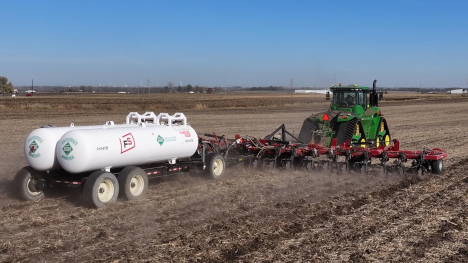
New federal plans target farmers' fuel and fertilizer costs through direct relief and investments in domestic fertilizer production.
Chris Robinson weighs corn recovery prospects, soybean price levels and the rebound in cattle.
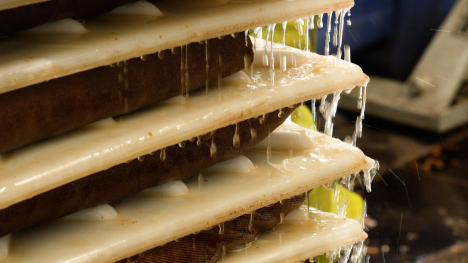
Minnesota’s Keepsake Cidery combines heirloom apples, traditional cider making and direct sales to help a small farm thrive.
New farm relief, a food safety honor, Minnesota cider and commodity market analysis with Chris Robinson.
Chris Robinson answers viewer questions on corn yields, crude oil and cattle, and explains his soybean outlook.