Tariffs, beef imports, Western water limits and rallies across all the grain markets.
Trade Fights Flare, Beef Producers Seek Answers, Water Shortage in the West, Wheat Rallies
Share


U.S.-Canada tariffs add pressure to thin farm margins, while a plan to import 300,000 metric tons of beef draws cattle-industry criticism. Idaho farmers adapt to water restrictions that threatened millions of irrigated acres. Brad Matthews analyzes rallies in wheat, corn and soybeans and continued pressure on cattle market.
Transcript
[PAUL YEAGER] Coming up on Market to Market. Trading partners squabble while beef producers look for answers on imports. The Mountain West squares off over a shrinking water supply. And commodity market analysis with Brad Matthews next.
[MUSIC]
[ANNOUNCER] I wouldn't be here without my customers.
Yeah, I'd like to thank the customers. They're very dear to our hearts.
It's about the people that you're working with and the relationships that you have.
Thank you. Thank you. Thank you.
Thank you from the bottom of my heart.
[MUSIC]
[ANNOUNCER] Tomorrow, for over 100 years, we've worked to help our customers be ready for tomorrow.
[MUSIC]
Trust in tomorrow. Information is available from a Grinnell Mutual agent today.
[ANNOUNCER] Family owned and operated for more than 60 years. Sukup Manufacturing is a full-service provider of grain handling, storage and drying equipment, helping farmers feed and fuel the world.
[ANNOUNCER] Support for Market to Market has been provided by a bequest from Philip Lietz of Alta, Iowa, in recognition of public television's commitment to agricultural programing.
[ANNOUNCER] Market to Market is made possible in part by a grant from the Corporation for Public Broadcasting.
[ANNOUNCER] This is the Friday, August 28th edition of Market to Market, the Weekly Journal of Rural America.
[PAUL YEAGER] Hello, I'm Paul Yeager. The Federal Reserve Board is in Jackson Hole, Wyoming for their annual conference. What emerged this week was still centered on one thing inflation. New fed Chair Kevin Warsh delivered his first Jackson Hole address Friday. Now, Warsh gave no indication on what might happen with interest rates, but says that inflation is still too high. The PCE is the Fed's preferred measure of inflation, and the number stayed on the stubborn side with a 2/10 of a percent gain in the monthly view and a 3.7% increase on the annual look. Now, new home sales fell to their lowest level since January, with a drop of 10.5% in one month. Orders for durable goods added 1.1% in July, according to the Census Bureau. The transportation sector for things like semi trucks, trains and planes drove the increase. The political side of the economy has been factored into the equation. When it spilled into the relationship between two major trading partners already pointed, negotiations were elevated from disagreement to walking away from the table entirely. After weeks of progress between the U.S. And Canada. Negotiations broke down Friday night, August 21st, when, according to the Canadians, U.S. Officials introduced last minute demands. Now, in retaliation, Canadian Prime Minister Mark Carney told President Donald Trump that Canada would push back against new U.S. Tariffs. Laurel Bower reports.
[MATT CARNEY] Canada will match Washington's new tariffs dollar for dollar in order to protect Canadian workers, farmers, families and businesses.
[NARRATOR] The Trump administration imposed new tariffs of up to 50% on Saturday, August 22nd, tagging a wide range of imports from the nation's number two trading partner worth roughly $20 billion, according to the White House. The duties are designed to protect America. Canada's counter-tariffs are being tacked on to U.S. Goods, including dairy products and agricultural equipment. All of this comes at a time when farmers are dealing with thin margins.
[WILLIAM RIDLEY] It's just another, you know, match on the fire, so to speak, to make it even incrementally more expensive. Well, that's going to affect margins. That's going to affect profitability.
[NARRATOR] Only a small portion of Canada's tariffs are aimed at U.S. Farmers. But the American agricultural sector would feel the pressure if they go into effect.
[WILLIAM RIDLEY] It's kind of a theme that whereas the dispute might have originated over one set of concerns, you often see agriculture and other sectors getting brought in, and that's known as cross retaliation.
[NARRATOR] Trade policy uncertainty may already be affecting decisions on farms and ranches across the country. Even before the Canadian tariffs take effect on September 8th.
[WILLIAM RIDLEY] So even though we might not see so much on the output side in terms of the prices received for your products on the input side, I think that's where it's going to be felt most.
[NARRATOR] For Market to Market, I'm Laurel Bower.
[YEAGER] Details for sourcing and timing emerged this week over the president's call for imports of 300,000 metric tons of ground beef to reduce prices at the grocery store. Industry analysts know that it will be difficult in a tight supply chain for exporting nations to redirect beef to the U.S. To potentially be sold at a discount. The administration has yet to name either source countries or importers willing to sell at 25% off. This is the second time the president has turned to a foreign country for assistance on this issue, having authorized beef imports from Argentina back in February. Peter Tubbs has the story.
[NARRATOR] A timeline for President Trump's plan to reduce retail beef prices by importing ground beef and offering it at a discount has been released. A presidential proclamation signed Thursday created three tranches for the importation of subcuts beef trimmings into the United States. The first tranche of 100,000 metric tons will open on September 1st, with successive tranches opening on October 1st and November 1st. The rollout of the plan details has been muddled. On Tuesday, Secretary of Agriculture Brooke Rollins denied being involved in planning the beef import project. Politico has reported that both USDA officials and beef industry groups were blindsided by President Trump's social media post announcing discounted imported ground beef. U.S. Cattlemen's Association President Justin Tupper said in a statement. You don't put America first by putting U.S. Cattle producers last. This move will weaken our markets and gamble with food safety in the process. For Market to Market, I'm Peter Tubbs.
[YEAGER] The state of Nevada sued the Department of Interior this week over who governs Colorado River operations. The suit claims Nevada could lose 70% of its water allocation, while Upper Basin states were not required to contribute a drop. With no long-term management plan to address the decades long drought, states across the West are making tough calls on water, including Idaho. In this week's cover story, our Mountain West bureau chief Tami Scardino, talks to Idaho policy makers and growers about their plan to stay afloat.
[ADAM YOUNG] It's something I can't imagine not being part of.
[NARRATOR] Adam Young's legacy family farm planted roots in Bingham County, Idaho, back in 1952. The Youngs Irrigate alfalfa, barley and several different types of wheat on about 2600 acres. The fields lie within about four miles of each other. Considering the lack of water throughout the region, the farm is in a pretty good spot. The crops at Young family farms require very little water compared to those grown by other Idaho farmers, some of whom opted out of the planting season altogether and accepted an insurance payment. The Young's cut about 200 acres out of their planting mix to remain within their watering limits for this year. They are groundwater users who pump their water from deep wells straight out of the aquifer.
[ADAM YOUNG] The aquifer and its hydrology is a little bit different from surface water from rivers and canals. We don't see those massive upswings and then downswings like they see year to year impacts to the aquifer take longer to see whether that's positive or negative.
[NARRATOR] Idaho water rights use a first in time, first in right approach. In other words, seniority determines who gets water first when there isn't enough to go around. Young says it's easier to adhere to the state limitations and good water years because the crops are supplemented by rain instead of just groundwater sources. But for several years now, they've only been able to draw 40% of their water rights as set forth in a mitigation plan that exists for groundwater users on the eastern Snake River plain. By enrolling in such plans, farmers avoid harsher curtailments.
[ADAM YOUNG] That represents a loss to those of us who make those adjustments. But we do work to ensure that we're facing reality. We're looking at what water is available, and then we're placing that water in the areas of greatest impact of greatest, I guess, economic impact for us.
[NARRATOR] Recognizing the future could have more drought years. Young and his family are learning how to adapt. He says the addition of these solar panels has been a major boon to the farm, helping them pay for costs associated with irrigating water. Water for some farmers in the Gem State has already been cut off, with many knowing that was going to be the case heading into the growing season.
[BRIAN PATTON] We feel for those that you know are already out of water and are having to modify their operations because of that.
[NARRATOR] Brian Patton is the deputy director for the Idaho Water Resources Board. His job is to oversee the governance of water rights and make sure the right amount of water gets put into the corresponding locations across the state.
[BRIAN PATTON] Idaho's economy depends on our ability to capture, store and move vast amounts of water from one place to another. Many of the western states are similar, without the ability to utilize that water to capture it in reservoirs, deliver it through canal systems, our economy would and population base would be much, much smaller than it is today.
[NARRATOR] An increasing Idaho population. The second warmest winter on record and zero snowpack above 8000ft are testing the system at every level.
[BRIAN PATTON] Most of those irrigation districts have storage water supplies in the reservoir system. So, what they are doing is they are they are reducing deliveries. You know, instead of 100% of normal delivery, they're delivering a 70% of normal delivery and trying to get through to the end of the season as best they can.
[NARRATOR] Since 2024, nearly all of those groundwater rights would have been curtailed without the Eastern Snake River plain Mitigation Plan. Lieutenant Governor Scott Bedke and Jeff Raybould, the chairman of the Idaho Water Resources Board, brokered the settlement without an agreement between water users in place upwards of 800,000 acres of irrigated land would have gone follow this year due to the lack of water.
[SCOTT BEDKE] Now, there's a lot of National issues. And you've seen the federal courts step in and to manage the Colorado River system. And that's the last thing that we want to have happen here in Idaho. We want to solve these Idaho problems with Idaho stakeholders to the benefit of Idaho. The original reason.
[JEFF RAYBOULD] The original reason the water board was formed is California was talking about coming up and taking water out of the snake River and piping it to California. And Idaho didn't want that to happen. So, they amended the Constitution and it created the Idaho Water Resource Board and gave that the water board the instruction to create a state water plan to show how we were going to utilize our water supply. We still have that responsibility.
[NARRATOR] The Idaho Water Resources Board has received more than $350 million in state and federal funds over the last five years to invest in infrastructure improvements and grant programs to encourage water users to upgrade their equipment. The I B is channeling some of the money towards recharging aquifers, building up existing dams, and partnering with the state of Utah on a cloud seeding project. For young. Even with good faith negotiations and investments in water infrastructure, he's keeping a wary eye on the future.
[ADAM YOUNG] We see that pressure. We feel that pressure. And. And it does have an impact on what we're able to do. But we're committed to figuring out how to how to make things work long term for all water users in the state.
[NARRATOR] For Market to Market. I'm Tammy Scardino.
[ANNOUNCER] Next, the Market to Market report.
[YEAGER] Heightened strikes between Russia and Ukraine drove the grains higher, while the prospects of a smaller corn crop boosted that commodity. For the trading week ending August 28th, the nearby wheat contract added 12%, or $0.85, and the December corn contract gained $0.28. China kept working to fill their purchase obligations in the soy complex. The November soybean contract increased $0.49 and December meal put on 2310 per ton. December cotton strengthened 303 per hundredweight. September class three milk futures lost $0.12. The livestock complex was mixed. October cattle fell 620. October feeders cut 712. And the October Lean hog contract improved $1 two. In the currency markets, the US dollar index gained 93 ticks. October crude oil weakened three. 87 per barrel Comex gold declined by one. 7250 per ounce and the Goldman Sachs Commodity Index fell more than five points to settle at 70417. Here now to lend us his insight on these and other trends is market analyst Brad Matthews. Welcome back Brad.
[BRAD MATTHEWS] Thanks for having me back.
[YEAGER] Heck of a week to come back. When you get to talk about what has gone on in wheat last week, it was the strikes. This week it's the strikes again. It seems like we're back to when this war started with the value of this commodity. Is it only tied to these two countries going after each other?
[MATTHEWS] I would say that's definitely the biggest influence. Obviously, we know in the beginning or earlier on in this this year, we had a smaller crop. We priced all that in. Then the market sold off some because they had priced it in and really for about what, four years now, we have ignored a lot of the strikes that have been happening with Russia, Ukraine. And now all of a sudden, because it's getting more significant with the amount of damage being done at the actual ports. I know Odessa, that's a major issue. I think they said Russia is 21% of the world exports for wheat. Ukraine is sick. So, between the two of them, you got 27%. And they're very limited right now in what they can actually ship out. So, these headlines suddenly have become much more important. And then you've got the funds chasing this. And the biggest thing is the funds were short Chicago wheat. And technically, as of Tuesday's close, still are. So, I'm guessing they're long now. But that's a big issue there.
[YEAGER] But Kansas City has been also a big performer. But that's because of a different reason. That's what the crop size. So, with those two factors in sound like, still a rally for or the ingredients for a more of a rally.
[MATTHEWS] We absolutely could. If this continues, it depends on how long it goes on. So, the initial area that I had was 780 to $8 off Chicago December wheat. We hit 790 today. Okay. So that's going to be what we call an equal leg extension of this next leg up. If that area does not hold 868 70 and you it feels like that's kind of where we're heading. We're both completely wrong with the idea that we should keep going up if we get a close below 720, but right now the bias is higher.
[YEAGER] You mentioned percentages. That same region also is about 10% contributing to the world for corn.
[MATTHEWS] Yes.
[YEAGER] So, it took corn for the ride and we were still dealing with the after effects of a crop tour guesstimate that was below the USDA's, which was the bigger weight this week.
[MATTHEWS] Well, it started off obviously with the crop tour. I mean, that was a big surprise. It was way under what anybody was expecting. Most people thought 178 would be friendly. If you got the 176. 175 kind of. Wow. So, the 173.2 definitely pricing it in, but it's pro farmer, not USDA. So, they're not going to take that as gospel, right? The next half of that move definitely was being drug up with the Russia Ukraine situation and the wheat market doing what it's doing. For a numbers perspective, we had five, 24.25 was an equal leg extension. We hit that, we sold off. Then we flew through there. And the reason we flew through there after stopping there initially was because of wheat. And the 1.618 extension is 564 off December corn. So that's the number to watch.
[YEAGER] That number I think would get some people excited.
[MATTHEWS] Absolutely. They should be.
[YEAGER] And how excited could should they be then with percentage of 26 crop.
[MATTHEWS] I would be making sure you take advantage of that price if we get there. I think that's a spot to be buying puts put some protection underneath the market, advance your sales. But I don't want to sit there and say that that's going to be a high. I cannot sit there and say that we can't go to 6 or 650 corn because we have all the ingredients right now as to make that a possibility. You have the situation going on over in Brazil with their ethanol, right? We need them to be a player in the export market so that we can start to ration some of our demand. Problem is in 2017, they did zero corn to make ethanol. It's supposed to go up 14% this year to take them to around 1.3 billion bushels of demand feed supposed to go up by 4%. We also have a El Nino, which means higher risk of crop loss potential in Brazil. So, if they don't have the bushels, it's going to take longer to slow us down in the export market, and we need to start to ration. If pro farmers number is close.
[YEAGER] That's a discussion for the next 32 minutes because that that's an incredible statement right there. But I do want to ask Stephen Wisconsin's question we had four incredible questions on corn this week. We're going to go pick Steve to start. August and September are statistically not a good time to price new crop gains or new crop gain grains. We are seeing some of the best prices for 26. Corn and beans. Can this rally continue through harvest?
[MATTHEWS] Yes it can. Now this is what you call counter seasonal and that's what you have to pay attention to, right? He's right. August, September. That's usually when you're finding your low and you're looking to start to make a rally when you have counter seasonal moves, they are usually vicious and very strong. And that is exactly what we're seeing now. My number one concern about a pullback in this market is the fact that the funds are now 375,000 contracts, net long. That is big. I mean, the largest you ever really see them is maybe 4 to 450. So, they are getting very, very long. I could see a pullback at some point in time. But that doesn't mean that they can't come back in and rebuy those and then push us back up. I will still look for that 464 area or sorry. 564 area like we talked about. And that might be through harvest, but that would be an area to go ahead and get more stuff sold. But to answer the question, yes, we can rally through harvest.
[YEAGER] The heat dome is to return next week. It is late in the growing season. Does that have a bigger impact on corn or this bean crop?
[MATTHEWS] I would have to imagine beans, unless it's drying corn down faster. If anybody wants to talk about maybe a test weight issue, I almost think that we're kind of past the weather at this point in time. Maybe, like you said, a bigger deal for soybeans and pod fill and whatnot. But this is really more about the fact that damage has already been done to a large degree in these crops. And you have good demand, huge demand, stepping up in, in soybeans, and you have these wars around the world Iran us. And then even bigger deal for the grains, the Russia, Ukraine situation.
[YEAGER] What else in beans is grabbing your attention this week?
[MATTHEWS] I think what people really have to pay attention to is, let's say that pro farmers, right? Let's say the yield goes back up because USDA cut it by 3/10 of a bushel. Right? So, we're going to say we raise it by one bushel. That's 86 million bushels gets added to the carryout from where it currently is. Okay. But the White House told us that China was going to buy 25 million metric tons from us. The USDA currently has 16 million metric tons. So, you take that 9 million metric ton difference. That's 332 million bushels. If they buy all 25 million metric tons, which at first it was hard to believe. But now over the last month, we're what, 30% of the way there? There's a meeting at the end of September. And the whole point is they're supposed to continue to be buying going into that to make Trump happy. If they actually buy 25 million metric tons, we got to be a lot higher to ration. Otherwise, we still don't have beans even with a yield that's one bushel higher.
[YEAGER] So that's two commodities. You've used the R word. Do you have a target on -- let's just say that meeting goes average between the U.S. and China -- what's a high range?
[MATTHEWS] So, the first area of the 1.0 that we keep talking about, the Eagle Lake extension, we're almost there. It's 12.97 to $13 off November beans. The next area of a Fibonacci extension is going to be 1370, the area in which we're wrong for being bullish is 1240. We close below 1240. It's no longer bullish. And since I didn't give you that number on corn, it's $5 December corn. We close below there. We're wrong for being bullish.
[YEAGER] Okay let's go to livestock if we could. Because last week the news about ground beef, the news story that we had this week, it is still an impact on this live cattle market. Is it the only story in the cattle market right now?
[MATTHEWS] That definitely helped put a low end because we kind of surged down there. And then it's like, well, is it actually going to happen? Can he do that? And we got a little bit of a bounce. Obviously we had the cattle feed report last Friday, I think to pay attention to that. The placement number that was bullish, but it's more for the deferred, which is why you saw the bear spreads working right. It's later on that they can have a bigger impact. I think what you got to take a look at on cattle is the cash price. Low typically comes right around Labor Day. Okay. And when it comes to changing the charts, we're in a downward rotation to get back into an upward rotation. Bare minimum, we need to see fat cattle close above 214. If they do that, I think they can make a run to 225 feeders. October make a run to around 340, but no questions asked. If you do not have the protection that you need, that or those are the spots, you have to do it.
[YEAGER] Okay, so on that feeder complex, though, I get the sense that there are some looking at potential for lower prices for an opportunity to maybe hedge something that they are maybe upside down on. Now on the other side, are you hearing anything in that nature?
[MATTHEWS] The problem with feeders is that if corn stays bullish, that's going to continue to put pressure on the feeders. And right now, from my understanding too, in the cattle with where corn prices are, with where feeder prices are, even though feeders broke, fats broke, corn rallied, there's still no money really to be made between the inputs going up. Fuel corn feeders broke. But yes, like you said, fats, it's tough to make that pencil out.
[YEAGER] It's been tough to make a pencil out for quite a while.
[MATTHEWS] It has.
[YEAGER] And do you see that changing in the next six months at all?
[MATTHEWS] Because I'm friendly corn in the long term and I don't see a huge break coming to diesel prices, I think it's going to continue to be a struggle, which is why I'm saying they got to be protective on rallies.
[YEAGER] All right. Anything in the hog market that's any different.
[MATTHEWS] So, hogs are basically have been going sideways here trying to consolidate towards the bottom. Seasonally. They're supposed to get a bounce. The funds are short. I think they've added to their shorts. So, you could get that seasonal rally. But I think all protein is going to be somewhat under pressure. Meals going up now too as part of the bean rally. So, I think that's going to also pressure the hog market. So, I think if you can get a rally to December hogs around 77, that would be a spot. I'd throw on some hedges.
[YEAGER] I have a question about fertilizer and Market Plus, but I'm going to ask you about diesel fuel right now since you just mentioned it. Are you encouraging anybody to make purchases right now?
[MATTHEWS] I'm not sure what to tell guys. It's such from what you read right now, it feels like the price risk of higher is still there. But we're also sitting at basically all-time highs, right? So, it's tough to sell. Tell somebody to go rush out and buy a bunch of diesel right now with what's already happened. But I'm afraid in the short term we might not be done.
[YEAGER] Well because again, the geopolitical side of this, the this, what's in reserve, what's out there. A lot of factors to consider. Yes. Okay. All right. I appreciate your time, Brad. Good to see you again. That's a whole lot of numbers. I think people are going to have to go back and watch that one a couple of times. Thank you sir.
[MATTHEWS] I appreciate it.
[YEAGER] Thank you. All right. Brad Matthews everybody. And you have been watching the analysis portion of our program. In a moment, we will continue our discussion in an online only segment that we call Market Plus, which is available wherever you get your podcasts. You can also go to our website at markettomarket.org to listen, as well as read the transcript. We roll out new material on our YouTube channel every week. We put up some regular features from this program. We also have some classic content from our vault. Subscribe now at our YouTube channel. Here's the address youtube.com slash Market to Market. And hit that bell, by the way. So, you're notified at any of those new products next week. The growing danger of extreme heat in rural America. Thank you so much for watching. Have a great week.
[MUSIC]
[ANNOUNCER] Market to Market is a production of Iowa PBS, which is solely responsible for its content.
[ANNOUNCER] Market to Market is made possible in part by a grant from the Corporation for Public Broadcasting.
[ANNOUNCER] Support for Market to Market has been provided by a bequest from Philip Lietz of Alta, Iowa in recognition of public television's commitment to agricultural programing.
[MUSIC]
[ANNOUNCER] Family owned and operated for more than 60 years, Sukup Manufacturing is a full-service provider of grain handling, storage and drying equipment, helping farmers feed and fuel the world.
[ANNOUNCER] I wouldn't be here without my customers.
Yeah, I'd like to thank the customers. They're very dear to our hearts.
It's about the people that you're working with and the relationships that you have.
Thank you, thank you, thank you.
Thank you from the bottom of my heart.
[MUSIC]
[ANNOUNCER] Tomorrow., for over 100 years, we've worked to help our customers be ready for tomorrow.
[MUSIC]
[ANNOUNCER] Trust in tomorrow. Information is available from a Grinnell Mutual agent today.
Trading in futures and options involves substantial risk. No warranty is given or implied by Iowa PBS or the analysts who appear on Market to Market. Past performance is not necessarily indicative of future results.
Watch More
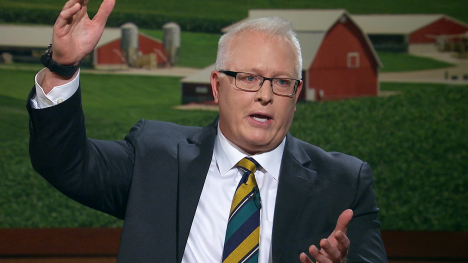
Chris Robinson weighs corn recovery prospects, soybean price levels and the rebound in cattle.
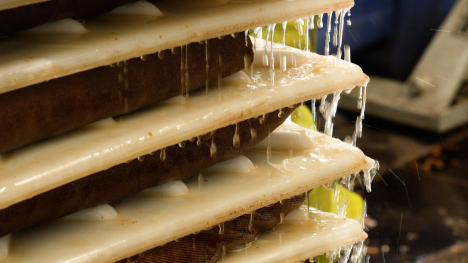
Minnesota’s Keepsake Cidery combines heirloom apples, traditional cider making and direct sales to help a small farm thrive.
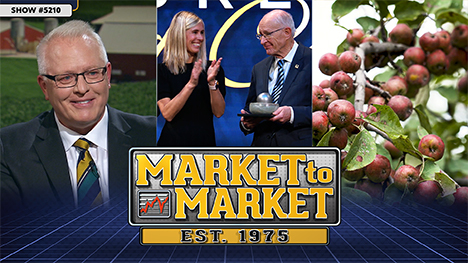
New farm relief, a food safety honor, Minnesota cider and commodity market analysis with Chris Robinson.
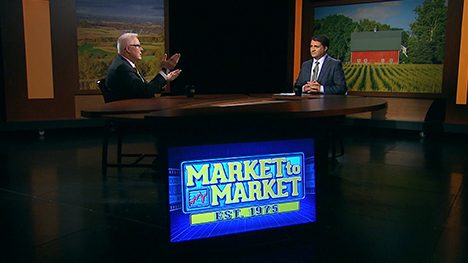
Chris Robinson answers viewer questions on corn yields, crude oil and cattle, and explains his soybean outlook.

Huub Lelieveld receives the 2026 World Food Prize for six decades of work advancing food safety.
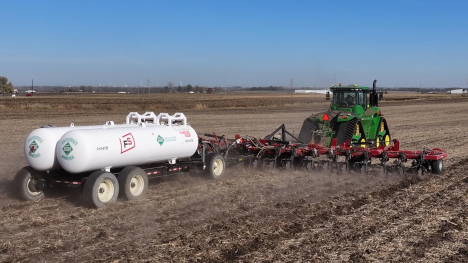
New federal plans target farmers' fuel and fertilizer costs through direct relief and investments in domestic fertilizer production.