Over the Moon Farm's Anna Pesek talks Prop 12, the Save Our Bacon Act and what's really at stake for independent hog producers
Prop 12, Save Our Bacon and the Fight Over How Pigs Are Raised
Share


Prop 12 went all the way to the U.S. Supreme Court, and the ruling upholding it hasn't ended the fight — opponents are now pushing the Save Our Bacon Act, which would preempt state laws like Prop 12 at the federal level. Iowa is home to large-scale confinement operations — and strong opinions on both sides of the issue. Anna Pesek raises and finishes Berkshire hogs at her farm, Over the Moon, near Coggon, Iowa, and says her direct-to-consumer model connects farmers and consumers who want to know exactly where their food comes from. She's opposed to Save Our Bacon, arguing it would override a law voters approved at the ballot box and further cement an already consolidated industry — and that the money spent fighting Prop 12 could instead go toward helping farmers transition to higher-welfare practices. She also says that model may be one of the last real entry points for new, independent hog farmers if the industry stays consolidated as-is. We also discuss what's in the stalled farm bill that could help producers like her stay or even begin farming.
Transcript
[Paul Yeager] Today's MtoM podcast is brought to you in part by the Iowa Economic Development Authority, creating opportunity for business in Iowa by connecting companies, entrepreneurs and communities with the resources to thrive. Learn more at Business Iowa. There's a saying in food production: the closer the consumer is to where food is grown, the better it is. And that is one of the arguments for smaller operations in rural America, whether it be Iowa or another state. In Iowa, the big theme has always been hogs. There are more pigs than people in the state, but the way the pigs are grown has come under a hot spotlight from the nation, specifically for what came from California and Prop 12 — Prop 12 is in effect right now. The ways to knock it down have turned. There is language trying to be circulated through a bill called Save Our Bacon, and a recent conversation we had at the Iowa State Fair with the president of the NPPC drew a bit of a reaction from those who don't grow hogs that same way — maybe a little more on the smaller side, local, direct to consumer. And that's what we're going to talk about today. As a farmer in Iowa, just north of Cedar Rapids in the Linn County, Delaware County area, right where the two counties meet, she has a farm called Over the Moon. We're going to talk about what that operation grows, how it grows it, and where her life has taken her — from California to Massachusetts, and now, for the last decade plus, to the state of Iowa. We'll find out what makes her farm special. Also, what is potentially still being talked about, as the farm bill is still stuck in the Senate — an open line to Anna to let her talk directly to those making decisions about the farm bill, a little different than what you've heard before. So that is our MtoM podcast. Come out each and every Tuesday. We're glad you're here. This is a production of Iowa PBS, Market to Market the TV show. Now let's get to Anna. Anna, this is the second week in a row I've interviewed somebody who's originally from Massachusetts. I think that's fun — I was in Massachusetts early this summer. Where did you grow up in the state of Massachusetts?
[Anna Pesek] Yeah, so I'm actually a two-time transplant. I was born in California, and then my parents transplanted when I was in young elementary school to Massachusetts, where I grew up in the central part of the state.
[Paul Yeager] Describe growing up there. Was it a rural background for you?
[Anna Pesek] So it was not rural. It was suburban, small town, but bigger than the town that I'm in now, which is population 600. So it was larger than that. But I will say Central Massachusetts does have farms. One pretty impactful farm experience for me was that my parents always got their dairy directly from a farm, and it was delivered to our house once a week. I grew up knowing Richard and Sandy, those dairy farmers, really well. I quite literally drank their milk from age six till, you know, 20. So there were farms in the area for sure.
[Paul Yeager] I could make an easy joke about Coggon and when did they get to 600 — but I know it's always kind of been a little smaller of a community. It's a great area there in Linn County, in east central Iowa. Let's talk about — if you buy milk from the neighbors, how do you go into getting into agriculture then?
[Anna Pesek] This is a good question, and probably one that deserves its own podcast. But I have always felt incredibly rooted in agriculture. Sometimes I identify as being like one generation removed from the farm. My grandparents had an apple orchard in the Central Valley of California, where they raised apples — my grandpa sold to a co-op, and the apples became processed into sauce. My dad grew up there. There are pictures of my grandparents, my great-grandparents, raising turkeys outside that actually look remarkably just like me raising turkeys today, except the photos are black and white. My dad always had the same variety of apple trees planted in the home I grew up in, and now I have some of those apple trees planted at my own home. So in so many ways I feel deeply rooted in agriculture despite not growing up on a farm. And secondarily, I've always had this deep love of growing things, whether that was plants or animals. When I was a child, I was obsessed with dairy cows. I went to a farm camp, was outside in the garden — give me a pair of boots any day of the week. I should have grown up on a farm, and I didn't, but I had a lot of exposure. By the time I went to college as an 18-year-old, I went to the University of Massachusetts Amherst, which has an ag school — looks very different than an Iowa ag school, but has an ag school — and I majored in sustainable agriculture there. I was incredibly involved in the student farm, loved all my classes at the ag school. I also majored in political science, so I had the best of both worlds. But I spent a lot of time really immersed in that world.
[Paul Yeager] I have a friend over at Tufts who studies agricultural policy, and I always ask him — I think it gives him a different perspective on agriculture as a whole, not what you're dealing with working with now in your backyard, but as a country as a whole. So when you say studying agriculture was different at your university at UMass Amherst, tell me what that means.
[Anna Pesek] Yeah, absolutely. I was incredibly involved in our student-run vegetable farm. We ran, grew and sold a community supported agriculture share on campus to other students, professors, etc. Having a university with a student farm that was really focused on a smaller-scale, direct-to-consumer, diversified operation is a different experience. And contextually it's different too — I had classmates who grew up on cranberry bogs, I knew people who came from small fishing families. It's a different genre. I have classmates who came from small New England dairies. So it's just contextually different. Not everything is some type of polar opposite, but industries look different.
[Paul Yeager] So how do you go from that to Over the Moon? Reading the Over the Moon background, you sound like you've got a lot of where you've been in the DNA.
[Anna Pesek] Yeah, absolutely. When I graduated college, I think like many young people — particularly young women — I saw the only place for me in agriculture as being in the policy world, in the nonprofit world, behind the desk. That's where I saw a future for myself, because that's where I saw other people like me, who looked like me, who had backgrounds like mine, maybe removed from the farm or who didn't grow up on a farm. So that's what I did. I'm a very ambitious person — the day after I graduated college, I moved to Washington, D.C., and I thought, this is what I will do. And it turns out I found myself, 21-year-old me, taking my weekends to go drive around Amish country in Pennsylvania because I missed a rural landscape. I missed farms, and I felt confused about what it looked like to work on the Hill and not have that direct connection. I had a wonderful experience and met a lot of good people doing some of that initial work, but it wasn't for me. So, kind of by chance, I had a friend with a farm in Iowa, and I had come to visit a few times since I was in college — I think I came here for the first time when I was 19. So it's been a while at this point; I'm pretty far from 19. And I just adored it. I think it's one of those weird things — sometimes home is where you're born, sometimes home is a place that finds you. For me, I never questioned that Iowa was home. I moved here in October 2016, thinking maybe I would stay for a little while and find my way. I brought a suitcase and took a bus from Chicago, thinking I would live and explore agriculture in a different way. And I never left. I'm obviously incredibly, deeply rooted here. Now I have a business, a family, a child — I am deeply rooted in the future of Iowa agriculture in all the ways. So it was by chance and by choice, in all the ways that life plays out.
[Paul Yeager] It's funny that you say you took a bus from Chicago, because sometimes people take the bus to Chicago and end up in a big city — and here you took the reverse, from the big city out into the country. So, background in policy, a background in food — why not start a farm? Was it right away? The umbrella is huge in agriculture, so you knew, through your study, through your work, that there was room for you. What was specifically 2016 Anna, and 2026 Anna — do they look the same when it comes to agriculture?
[Anna Pesek] I would say, of course they don't look the same. I have Anna in her early 20s and Anna in her early 30s, and she's evolved a lot and experienced a lot more life. But Anna has always, always believed really deeply in the power of what we can build with our own hands. I think there is no other industry quite as potent as agriculture — what other business can you quite literally build a new supply chain, which is what I feel like we're doing with Over the Moon. There are very few industries where that's possible, where you can see this incredibly real, tangible impact of your work in your community, economically. I think farming can be incredibly transformative, and I have always believed that, young me and slightly more mature me. I think that has only deepened as I've built a business that feels more impactful, and hopefully is only just getting started.
[Paul Yeager] I told you before we started recording, I grew up on a farm — it's this one right behind me on the video. We really only knew about three things in the '80s and '90s: corn, beans and cattle. Your operation is basically that times three, at the minimum. But the big thing we're talking about is hogs. Berkshire is one of the breeds you have. Why them, and tell me about how your animals are raised.
[Anna Pesek] Yeah, so we raise purebred, feeder-to-finish Berkshire hogs. Sometimes when people see our pigs, they feel like it's reminiscent of Iowa in the past. We're not trying to go backwards — there are lots of challenges — but it is reminiscent of a previous moment in Iowa agriculture. We raise them because the meat quality is fantastic. They're really adaptable, they still have back fat, they can be outside all winter, they're good mothers, and our customers love the pork. And as you probably know from a family farm, your family's opinion matters. When we started Over the Moon, we were raising just a handful of feeder pigs that we could get from different people. We tried all sorts of different heritage breeds, and the conclusion among everyone was that the Berkshire was the best — and that's just an opinion you don't fight with. After that experimental phase, we went pretty strong with the Berkshires and haven't wanted to add anything in. We also market entirely direct to consumer, so having name recognition and solid customer reviews behind us is important, as well as consistency in the animals we raise. We have kind of a mixed setup — everyone is outside with access to barns. We farrow in open pens, so we don't use farrowing crates. Our sows are housed together, and our animals are on our farm from birth through the end. We're selling entirely direct to consumer, which is a different way of raising hogs than what I drive by to get to my own hogs, down at the dead end where we raise them.
[Paul Yeager] Sometimes a code word for direct to consumer is small, not a massive operation with a very large barn where they're indoors. When you say you drive by those types of operations — what really distinguishes you? I'm sorry — is size sometimes what distinguishes you from the others, and profitability — is that true?
[Anna Pesek] Yeah, I oftentimes describe it as these parallel supply chains that exist specifically in the hog industry. We have very large-scale, commodity, vertically integrated systems of raising hogs, and then we have this other system, which we exist in, which is this smaller-scale, independent, direct-to-consumer supply chain. Honestly, the more I view that phrase "parallel supply chain," the more it feels inaccurate — it's more like we actually have two different planets happening. Part of why that is happening is because we don't have an independent, fair, open, competitive hog market. Direct to consumer really is the only entry point for someone like me to raise pigs, because the capital barrier to entry is a lot lower — but also because there really isn't an alternative, based on how policies have gone and how our system is set up. So I often say I love being what I would call a community-sized farm. I love what we produce, what we've grown, and what we can get to people. I do genuinely wish it wasn't the only opportunity, and I wish there were fewer barriers to scaling within the ways that keep our values and how we raise our pigs. But there are a lot of barriers in the hog industry to being able to scale in this kind of parallel, alternative universe that exists alongside the big guys.
[Paul Yeager] Well, how big are you? You want to give me a number on how many you have on the farm there?
[Anna Pesek] Yeah, so we're finishing — we've really kind of slowly grown, keeping back pigs. We'll probably finish and market about 200 to 250 this year to our direct-to-consumer base. Again, when I talk about these parallel, different-planet supply chains, it's really hard, because that is really, really tiny on a commodity scale — when you have operations with 5,000 pigs leaving the farm a day. It is more substantial for a direct-market operation, though — we're certainly not a hobby. We're not raising ten pigs.
[Paul Yeager] I want to bring in the state where you were born, California, to the state you live in now. Prop 12 was something we talked about on Market to Market, and you knowing where that originated, and probably even some of the players who started it — to now, where the NPPC and other large groups are wholly against Prop 12, and don't see it as something helpful and beneficial — how do you see that?
[Anna Pesek] Yeah, what I see is a deeply, deeply consolidated industry where there are very, very few opportunities for the future of young, beginning, first-generation hog producers, because of the amount of market concentration that we have. I see any opportunity for niche markets as a positive one. I think it's an important market signal that people want pork raised with higher standards, and I think that's important to listen to. I also think that farmers want better, and can do better. I think the argument against Prop 12 is being made by the biggest of the big — we have an incredibly consolidated meat industry with a lot of money and a lot of power. As was brought up in a previous interview, the end of independent pork production — I would say that has already happened in Iowa. There are very few independent pork producers, and very few opportunities for independent pork producers. So anything that continues to cement in a system that supports an industry that is deeply consolidated and run by a couple of players, I think, is a big concern.
[Paul Yeager] And the Save Our Bacon Act — I'm going to guess is maybe not something you're signing on to support.
[Anna Pesek] No, it's not. As a young producer, as a beginning farmer, as someone doing something in an alternative system, but also just as a mother, as a concerned citizen — all the above — I feel disheartened that this is even where we've spent so much time, energy and money fighting. We could transform the hog industry with the amount of money that's been spent trying to overturn Prop 12. I also think we need to acknowledge that we have a system that's largely based on contract production and puts the risk, the cost of production, the cost of barns, on farmers, on producers — meanwhile we have a handful of major companies bringing in a lot of money for themselves and their shareholders. I believe there is plenty of opportunity for farmers to be supported with transition costs, and that we could transform an industry — and I don't think that should be on the backs of contract growers. I think we have to ask those in power to listen to consumers, to listen to things that were democratically voted on, and believe that a different way is possible. When I look to the future, I think about what kind of hog industry do we want to see in five, ten, 20 years — and I think we could have something that looks remarkably different. Cementing in a system that arguably isn't the best for farmers, for pigs, for communities, is not the way to go. We don't have to cement that in.
[Paul Yeager] There are a couple of huge topics to get to, but I'm going to go first to free markets, if we could. Anna, the Secretary of Agriculture came to Iowa last week — from when we recorded this — talking about a heifer retention program, and a couple commented on our story over the weekend, wanting the free market to be the free market. Is Prop 12 going to allow a free market opportunity, because the consumer — say, one of the most popular states, California — says, "we want meat raised this way"? Can the free market work without changing and disrupting the way some in agriculture have set up, with large concentration and inefficient CAFOs, for example?
[Anna Pesek] Yeah, I think that's a good question. I think industries adapt, change and evolve to meet consumer demand constantly, all the time. So I don't think letting Prop 12 continue to exist, or other bills — Massachusetts ballot measure three, or the number of others on the books — I don't think that impedes the free market. I also think, for me, the question around Prop 12 is that the standards it demands are much lower than even the standards we're following on our own farm. They're fairly basic. And I think what the market is signaling — Prop 12 didn't pass by a small margin, it passed by a very large margin — is that the majority of people want animals raised better.
[Paul Yeager] One of the counters to Prop 12 in California was that it's going to cost too much to convert the barns. So maybe there'll be language that says you don't have to convert everything, but anything new from here on out has to adhere to these policies. Is that a realistic expectation, and result of legislation that could spread through the countryside of this country, raising pork?
[Anna Pesek] Yeah, I think it's a fundamental question of who is responsible for the changes. I do not think there's a shortage in the meatpacking industry to pay for better practices and to support farmers in doing so. I think that transformation could happen tomorrow if the desire was there for it to happen tomorrow. Again, my feeling is: who has the power, where is the money, how can we ask.
[Paul Yeager] There were two thoughts I saw last week in a couple of stories, saying that the era of big agriculture in Iowa may be coming to a close, just because of the way the governor's race is going, looking at the two candidates. Is that a realistic prediction of what could happen in Iowa?
[Anna Pesek] I would say I can't speak to whether the era of big ag is over in Iowa. I would say there's a general, bipartisan understanding that we have a lot of concentration in a lot of industries in the ag world, including meatpacking, including fertilizer, including seed. I think there's bipartisan recognition, without getting into the race, that those things have negative impacts on our communities. What's really important is for farmers like myself, but also farmers of all kinds, to be at the policymaking table, so we're part of the conversation and proposing solutions. Farmers are incredibly innovative, of all kinds — we're shaping new worlds with our hands every day. Take those same skills and put them in a realm where we're making policy, and I think we can have a different system. There's a lot of appetite and desire for farmers to have more opportunities, more markets, to grow more crops. There's a lot of appetite for local and regional food systems, but we also need our policymakers to back that up with real support, real funding. We have a farm bill that's still not passed, and a Senate farm bill that, in my opinion, still doesn't meet the moment in terms of giving us adequate support to really build our local and regional food systems.
[Paul Yeager] That's funny, because I was going to say let's put DC Anna back on the mic, because that's what I want to talk about last — the farm bill side of things. One story I heard at the State Fair was that the reason the farm bill stalled was over — and Prop 12, those two were the big actions on why it was held up. If that's the case, you have an open mic to those who could still make decisions in shaping the farm bill — what do you want to tell them?
[Anna Pesek] I would say we need a farm bill that meets this moment. We have record numbers of farm bankruptcies. Farmers like myself are still really reeling from the federal funding cuts that were made in March of 2025. I want full, mandatory, restored funding for programs like the Local Food Purchasing Assistance Program, where I was producing an incredible product and getting it to food banks, schools, food pantries, childcare centers in our state — which meant money was circulating locally in our rural community. Discretionary funding is not enough; we need mandatory funding for those programs. We need EQIP dollars, we need conservation money going to small and mid-scale farms. And I don't want to see Save Our Bacon in there — I think preempting states' rights, overturning something that was democratically voted for, is fundamentally very concerning. I want a dignity-centered food and farm system — a food system with policies that support vibrant rural communities, vibrant urban communities. I want people fed, I want animals well taken care of. I'm not naive to believe that's not possible — everything we see around us is a result of people, and it's a result of public policy. The situation we're in today — Iowa has growing cancer rates, Iowa has a massive water quality problem — these things are on the news every day, we don't need to talk about them, it's hard — but we can have something different. It's a result of policy, a result of priorities. It's absolutely crucial. I'm a constituent in Ashley Hinson's district — it's crucial that farmers like myself are at the table, that we're listened to, and that our perspective is valued and seen as an active member of our community.
[Paul Yeager] For those outside of Iowa, the Ashley Hinson you're referring to is the current congresswoman, and she's running for U.S. Senate, trying to take the place of the senator who was elected on a bacon-themed ad — that was Senator Ernst, when she was first elected. Anna, let's get close to the end here, because you mentioned the opportunity, the environment, rural areas — I want to close with repopulating rural spots. I'm not trying to — when we talk about Coggon being 600 people, I remember when it had more, I remember when Jesup had more. Part of it is because there weren't as many jobs in agriculture. If we could put more jobs in agriculture in smaller farms, is that going to be the leader for repopulating rural America?
[Anna Pesek] I think it's one of them, but there's a whole laundry list. People need opportunities. People need good health care. People need good public schools. People need housing that's available. They need employment. They also need to be living in areas where they can be healthy, and not fearful of rising cancer rates and all of the above. So there's not one silver bullet to how we'll repopulate rural Iowa. But as a young person living and growing a family in rural Iowa, I do believe the role of small and mid-scale farms is to bring more economic opportunity. A business like mine circulates very tangible money in our community, supports multiple other businesses in our rural communities, and we need more of that. I think this type of agricultural, and also social, entrepreneurship brings immense opportunities to our communities. Couple that with better policy that creates some of the things I just listed, and I think we could have vibrant futures.
[Paul Yeager] What's the best product made on your farm? What tastes the best?
[Anna Pesek] Everything. Everything tastes best. Our pork is incredible. Anyone who's ever been traumatized by having a really dry pork chop just hasn't eaten one of ours — delicious, beautiful marbling. Great meat comes from healthy animals.
[Paul Yeager] Is the best way to make a pork chop grilled?
[Anna Pesek] I mean, as someone who doesn't grill a lot, I think searing and throwing it in the oven is just fine. But a grilled pork chop, you can't complain.
[Paul Yeager] Yeah, they both work, and the bacon is always good — all the products that come from them. I appreciate the time and the insight. Oh, I better let you answer the bacon question — sorry, I can't let that one go.
[Anna Pesek] Oh, I mean, bacon is always the best. We have jalapeño-flavored bacon, and it makes the world's best BLT.
[Paul Yeager] Oh, now you had me at jalapeño — I love it. All right, Anna, thank you so very much. Appreciate your time.
[Anna Pesek] Thank you.
[Paul Yeager] Today's MtoM podcast was brought to you in part by the Iowa Economic Development Authority, creating opportunity for businesses in Iowa by connecting companies, entrepreneurs and communities with the resources to thrive. Learn more at Business Iowa. We are produced at Iowa PBS. Our production supervisor is Sean Ingrassia. His crew is Reid Denker, Kevin Rivers, Julie Knutson, Neal Kyer and David Feingold. The executive producer of Market to Market is David Miller. I'm Paul Yeager. We'll see you next time.
Watch More
Farmers rarely seek mental health help. Farm Dog offers care from people who know farm life.
Sue Martin examines grain stocks, harvest risks, soybean demand, energy costs and livestock markets.
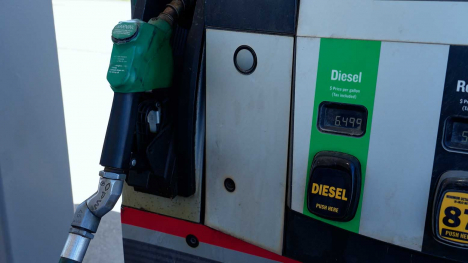
Rising diesel and freight costs squeeze farm margins and could reshape plans for the 2027 crop.
Trade frustration is muting the weather rally, according to Sue Martin in our Market Plus segment.
Midwest population growth brings opportunities near cities, while remote farm towns lose residents.
Wet fields threaten harvest delays, diesel raises farm costs and rural population growth is uneven.