Wet fields threaten harvest delays, diesel raises farm costs and rural population growth is uneven.
Wet Fields, Higher Diesel Costs and Rural Population Shifts
Share


Heavy September rain could delay corn and soybean harvest in the western Corn Belt, while higher diesel prices raise farm operating and freight costs. We explore why some Midwest communities are growing as more isolated farm towns lose residents. Plus, Sue Martin analyzes the USDA Grain Stocks report, discusses harvest weather and the action in the commodity markets.
Transcript
[PAUL YEAGER] Coming up on Market to Market, A wet September ends in the grain belt. High diesel's impact on producers. Midwest cities grow, but leave some rural areas behind. And commodity market analysis with Sue Martin, next.
[MUSIC]
[ANNOUNCER] I wouldn't be here without my customers.
Yeah, I'd like to thank the customers. They're very dear to our hearts.
It's about the people that you're working with and the relationships that you have.
Thank you. Thank you. Thank you.
Thank you from the bottom of my heart.
[MUSIC]
[ANNOUNCER] Family owned and operated for more than 60 years. Sukup Manufacturing is a full-service provider of grain handling, storage and drying equipment, helping farmers feed and fuel the world.
[MUSIC]
[ANNOUNCER] Tomorrow, for over 100 years, we've worked to help our customers be ready for tomorrow.
[MUSIC]
Trust in tomorrow. Information is available from a Grinnell Mutual agent today.
[ANNOUNCER] Support for Market to Market has been provided by a bequest from Philip Lietz of Alta, Iowa, in recognition of public television's commitment to agricultural programing.
[ANNOUNCER] Market to Market is made possible in part by a grant from the Corporation for Public Broadcasting.
[ANNOUNCER] This is the. Friday, October 2nd edition of Market to Market, the weekly Journal of Rural America.
[YEAGER] Hello, I'm Paul Yeager. The Federal Reserve picked up two key pieces of data this week on the path for the key interest rates Next movement. The first came in Friday's jobs report. 29,000 positions were added in September, well below August's revised gain of 133,000. The unemployment rate rose to 4.2%, still historically low. The other key piece is the Fed's preferred inflation gauge. That's the PCE report. The August reading showed up that prices were up 3.4% year over year, with the core rate at 3%. The PCE tracks prices on goods and services consumers buy. That spending makes up roughly two thirds of the U.S. economy. And this week's Drought Monitor added a fourth week of improvement in conditions. Rainfall has been a storyline in the grain belt for much of the month, delaying harvest for key growing areas. Peter Tubbs reports on the week in weather.
[NARRATOR] This year, the Western Corn Belt went from a damp summer to an extraordinarily wet September. Multiple weather systems pounded eastern Nebraska, Iowa and southern Wisconsin during September, leaving wet fields and new precipitation records behind. Areas of Iowa experienced their third wettest month ever, with the highest precipitation for a month since September of 1914. Rain totals for the month in excess of 15in were reported over a wide band across Nebraska and Iowa. The National Weather Service began recording weather data in Des Moines in 1878. Iowa averages 35in of precipitation a year. Harvesting of corn and soybeans may be delayed in the Western Corn Belt to allow fields to dry out and crops to lower their moisture content. Corn kernels sprouting on the ear is a concern for Market to Market. I'm Peter Tubbs.
[YEAGER] The average price for a gallon of diesel fell again this week to $6.37, which is $0.16 off of last week's record high and up 80% year to date. As farmers across the country harvest their crops. They're dealing with added costs. Our Mountain West bureau chief, Tammy Scardino, has more on how today's fuel prices could have lasting effects.
[NARRATOR] Shay Meyers, the CEO of Owyhee Produce, oversees his family's farming operations. Located along the Idaho Oregon border. Meyers buys about 10,000 gallons of diesel at a time. He's calculated the higher cost of fuel has added almost $40,000 to their weekly operating costs when compared to a year ago. Along with increased fuel prices, Meyers says his freight costs have doubled and he's had to pass all those additional costs along to his customers.
[SHAY MYERS] So often people look at price increases. They're like, well, hey, that's not fair. Why would you just raise your prices? Well, we don't have a choice. Like, we can't go to zero margin or to negative, or at least we're fighting not to. Nobody wants to work for free.
[NARRATOR] Brent Wilder is an agricultural economist at the University of Idaho.
[BRETT WILDER] Farmers across the country are struggling and in different ways depending on where you are. Some people have more distance to market so that diesel is hitting you harder on the truck that's on the highway. Some people have bigger equipment and bigger fields, so that diesel hits you harder as you run that machinery to harvest, to do the later work in the fall for next year's crop.
[NARRATOR] Looking ahead to 2027, producers might plant different crops or stop topping off on farm storage tanks.
[BRETT WILDER] What they want is stability. To be able to know that what they currently do, the way that their operation currently functions, can be sustainable moving forward.
[SHAY MYERS] This is three generations of effort, with the fourth generation kind of knocking on the door. Now, this isn't something you want to give up.
[NARRATOR] For Market to Market. I'm Tammy Scardino.
[YEAGER] More than 40% of rural counties hit their peak population in 1950 or earlier. Today, about 46 million people live in rural America, roughly 14% of the country. Growth is returning to some Midwestern communities, but not all, as Colleen Bradford Krantz reports in our cover story.
[NARRATOR] Earlier this year, a U.S. Census Bureau press release led to headlines like this one from The Wall Street Journal. The Midwestern exodus is finally ending. News like this is welcomed in communities that once struggled to hold on to population, but many more isolated towns still aren't booming. Even where growth is happening, longtime locals don't always love the changes those new residents might bring. South Dakota grew more than 5% between 2020 and 2025, the fastest rate among Midwest states, with West Coast residents moving into the Black Hills region. Idaho and Montana have seen similar trends over the past few decades. A South Dakota rancher told David Peters, an Iowa State University professor of agriculture and rural policy. This story.
[DAVID PETERS] They had someone move out and they had. They were on an acreage and they had a long driveway that connected their home to the county road. They built their home. And winter comes, and western South Dakota gets a lot of snow. And they were shocked that the county wasn't plowing their long driveway.
[NARRATOR] But ask residents in any town about to close their school due to a lack of students, and the wish for growth remains.
[DAVID PETERS] The areas that are losing are essentially the farm belt. So, any places heavily dependent on agriculture and places not adjacent to metropolitan areas are still hemorrhaging people quite a bit. So, the Corn Belt in particular, that would be Illinois, parts of Iowa, parts of southern Minnesota, Nebraska and Kansas losing population outmigration and low birth rates.
[NARRATOR] Sioux Falls, South Dakota, is one of the fastest growing metro areas in the country. Its fastest growing suburb, Harrisburg, has nearly doubled its population over the past six years.
[DERICK WENCK] The population right now is just under 12,000. Six years ago, when I was elected in 2020, I was elected mayor. Our population was about 6300.
[NARRATOR] The eight miles of fields that once separated Harrisburg from the metro has shrunk to less than two.
[DERICK WENCK] In the next ten years, Sioux Falls and Harrisburg will be shaking hands across the street.
[NARRATOR] Wenck himself left a small rural South Dakota town 20 years ago so his family could live in a metro area with more entertainment.
[DERICK WENCK] There's a lot of people that are coming and moving with their jobs to Sioux Falls area that didn't want to live in the big, the big city and wanted to live somewhere on the outside. A lot of it had to do with the school district.
[NARRATOR] Wenck is happy to see the schools full and thriving, and the corresponding property and sales tax boosts.
[DERICK WENCK] The cons of it is Harrisburg for years didn't have the sales tax revenue or the tax revenue to keep up with city streets. Well, now we're paying for it and we're tearing streets up constantly and making them wider.
[NARRATOR] Jobs are also a key driver, as is distance from family because of a new job. Jonathan Gallagher and his family are in the process of moving from Sioux Center, Iowa, a town that's had its own steady growth, to Sioux Falls.
[JOHNATHAN GALLAGHER] I actually had another offer around Des Moines, actually in Ankeny, and family was the reason both. Both jobs seemed to be really good and family was the reason to go.
[NARRATOR] Peters says for many families, it comes down to the distance from a city.
[DAVID PETERS] People are moving to rural communities that are directly adjacent to a metropolitan area, so you can think about it as these communities look like rural places, but most everybody works in a city. They commute in 30 minutes, 45 minutes. Cost of living is a little bit lower. There's better quality of life where we see areas very distant from metros. You know, it's still the sort of what's been going on for decades in rural America, sort of outmigration of younger people.
[NARRATOR] 45 miles outside of Sioux Falls, right at the outer edge of that commute. Peters described is Pipestone, Minnesota. It peaked at 5600 people in the 1970s, while the county has held at nearly 10,000 for a century, the city itself shrunk to about 4200.
[DAN DELANEY] We used to have large farm families, and most of the people lived out in the county. Now we have people living in town and they have homes with 1 or 2 people in it that at one time had maybe a half a dozen people.
[NARRATOR] To turn the slight dip in population around, Pipestone started offering an incentive build ready lots for $15,000, fully refunded. If you build a house within two years.
[DAN DELANEY] And we've had some success with that. Last year we had eight new homes built in the city of Pipestone, and it doesn't contribute all to that program, but most of them did, and that's probably eight more than we had in the five years prior to that.
[NARRATOR] Often those migrating are wealthy retirees leaving California, Oregon and Washington who are willing to pay big city prices for property with a view near lakes, rivers or mountains.
[DAVID PETERS] I think it's sort of a cascade. You have the California where people are leaving because it's densely populated. They gain a lot for their home. So, they buy rural property. They can outbid that rural property in Montana, Idaho and Colorado. So that kind of displaces people that want to want to stay in Colorado.
[NARRATOR] And often those moving in are buying their second home with no plan to be there year round.
[DAVID PETERS] So, they're not spending their money 365 days a year in that community. You know, they are there for the amenities, not for the community. So, they tend to isolate themselves. They don't really care about the town itself.
[DAVID PETERS] Pipestone mayor remembers a trend a decade ago where communities were trying to attract retirees who had money to spend.
[DAN DELANEY] And that's great. We want to see people retire in our community, too. But I think the goal would be to have the young families come back. And that way you have a better tax base for everyone.
[NARRATOR] For Market to Market. I'm Colleen Bradford Krantz.
[ANNOUNCER] Next, the Market to Market report.
[YEAGR] The market thinks planting and harvest delays are nearing an end. That thought process was reflected in the market's action for the trading week ending October 2nd. The nearby wheat contract lost $0.20 and the December corn contract sold off $0.31. The fall of soy products kept a lid on the soy complex. The November soybean contract cut $0.41 and December meal dropped by 23 $0.50 per ton. December cotton lost $3.83 per hundredweight. November class three milk futures fell by $0.31. The livestock complex was mixed. December cattle fell by $0.67. November feeders declined $0.83, and the December lean hog contract expanded by $1.10. In the currency markets, the U.S. Dollar index gained 90 ticks. November crude oil decreased $0.50 per barrel. Comex gold dropped by $154.90 per ounce, and the Goldman Sachs Commodity Index was down more than ten points to settle at 738.91. Here now to lend us her insight on these and other trends is regular market analyst Sue Martin. Hello, Sue.
[SUE MARTIN] Hi, Paul.
[YEAGER] This wheat market had been all the rage in the summer we get now. Sounds like everybody left the party. Is that party over in wheat?
[MARTIN] No, it's not. Wheat is in a war cycle that has been in existence since 1860 61. The U.S. Civil War and in many of the cycles since that time have, I'd say all of them, but maybe two in the cycle of that chart, basically, you would see wheat. It's based on cash, wheat. You would see wheat move up and then pull back and hesitate, kind of like what we're doing. And then it exploded. And I feel that the explosion is yet to come. And I think that starts next year into 28.
[YEAGER] Is that a technical movement then that you're referring to, or is there some big fundamental story that's out there that's going to cause this?
[MARTIN] Well, I think the fundamentals will underpin it. First off, you know, you've got Russia, world's largest exporter of wheat, ceding about 15% less. You've got Ukraine talking there. Their egg ministry on Friday said they were going to plant 15% less. And it all comes back around not making money. The EU, who did get blessed with a wheat crop, not corn, but they got blessed with wheat and they're picking up their exports, trying to help fill in. But you know, it's all what it is. And I would have to say long term, I think you come back to these. One thing I'm interested in is this next Friday on the supply demand report, I want to see the global numbers. I want to see what the stocks are like on rice, what they're like on wheat. I think I already know and on corn. And of course, coarse grains fall in there. But that's a bull market.
[YEAGER] And when Sue says it's a bull market, we know there's something to talk about, which we'll get into. But I want to talk about that report just a little bit for next week. And specifically, when it comes to corn. And that is actually our question that I want to bring in here to start our discussion. And it comes from Brian in Nebraska. With all this harvest time, moisture, and the potential for grain quality issues that have presented itself, what scenarios do you see that could involve?
[MARTIN] Well, I think first off, you know, when we go looking at the report for next week, I can tell you the trade is one, their focus is going to go straight to feed in residual that the stocks report almost appeared like it might have ended up vindicated the analysts who had been saying it was overstated on the feed usage for the past year. And I think it's possible we could see maybe 220, 230. But then the other thing they're going to look at is production. And the one thing I'm hearing talk about is because out of the Delta, starting by the end of July, harvesting into the 1st of September, when this report is as of the thought is maybe 290 million bushels have been transferred out of new crop into old. If that is. And of course, this report was sort of similar to last year, and we found, you know, 173 million more bushels of carryout, I think it's going to be interesting to see how they handle this, if that is indeed the case, because then that tightens your carryout even further for new crop on a year that you've had lots of weather, probably some of the worst. And then on top of that, you're also looking at a super El Nino. And so, all of this combined, I think that corn markets got Interesting because I go back to the years of a six since 1916. And out of all of those, there's been. And this year I'll throw it in. So, it'll be 12. But since that time there's been one year where the high came for a lead contract in the month of May. That was 1986, one year in June, that was 2016. And then there were three years in July, two years in August. And up until this year, two years. Now it's three years thus far in September. So, the high for a lead contract is actually 544. And what, three quarters? Something like that. So, if in October here we take that high out, I don't care if it's by a quarter of a century. That's not the contract high on December corn. It's 549. I then think you're moving on up into December, but only two times since 1916. Have we ever put a high in for elite contract in the month of December? And one of those was 2006. So, I'm wondering about that. And in 2006, you know, the market just kept on shrugging. So, it's going to be interesting because, you know, this could be a market that just meanders around. But to be honest, with everything that's going on, there are so many other factors that we haven't had in the past.
[YEAGER] One of the factors missing in the soybean market this week is we're not hearing about Chinese buying after this summit. It seems like they maybe have left the market. Have they?
[MARTIN] I don't think so. They're on holiday right now. Golden week, and that ends next Thursday. But I think are they ever really out of the market. Probably not. So, it wouldn't surprise me. We come back here next Monday and we start hearing some sales because remember China wanted over 16 million metric tons done by at least the end of December.
[YEAGER] And if the harvest low is to be believed that the seasonality is about to kick in, there could be a lot of buying coming soon.
[MARTIN] There sure could. This market, first off, on the beans, there's a gap from that. 1358 I should say. 13 35.25 high up to 1358. But this bean market has a lot of demand to it. And I know that, you know, they're wondering how, you know, with the beds in processors and they need beans. And I know they say that there's X number of million bushels on farm. I don't see it. But what's interesting is the demand is so huge for beans, not only for export, but also for U.S. Domestic demand for our crush. Now, the next thing will be, what about Brazil? What about their weather? They haven't gotten into it. They're just planting. And so that's the one thing that is really could become an extra catalyst. And with El Nino and as strong as this one is, you could see the center and northern portions of Brazil having a big problem. And of course, Mato Grosso would fall in largest producing state that could fall in there very easily.
[YEAGER] I do want to dive into that a little bit and Market Plus, because I do have that written down that I wanted to get your take, because that seems to be the market seems to be waking up to that fact. Let's go to cattle for a moment. There's a couple of stories about transportation and the diesel impact on that market. Is that what's being reflected right now in this live cattle market, or is it more of a feeder issue?
[MARTIN] I think it's more of a feeder issue. As far as the diesel. Yes, it's no doubt it's high. And it wasn't just the Iranian war with the US and Saudi Arabia cut in production or not production, but what they were shipping out through the east West pipeline, what it is, it was being backed up by the war between Ukraine and Russia. Russia's refineries were getting hit. And Russia is a large producer of diesel fuel. And they were so much in stress that they had to turn to India for diesel fuel. And, you know, all of a sudden you see all of this gelling. And it sent the prices running. And I think crude oil, of course, you know, I'm a major bull on crude oil, diesel, I think, too. But I think we do catch a pullback in diesel and reset. And then I think next year diesel prices crude oil going higher. I think we'll see $200 crude if not by mid to late next year. I would imagine 28. But prices of everything I think is going higher. And that's also reflected in cattle. You know unfortunately when they have to ship these cattle to other packing houses, it's costly. Not to mention then trying to get it to the grocery store and what have you.
[YEAGER] Well, and that's still the consumer issue. I mean, that was part of the resilience of a couple of these reports this week, is that the consumer is still buying, no matter what the price is. But we don't always know what all the demand is. And diets change. If we could for a moment close with the hog market because they seem to be the bright spot in the livestock. Why?
[MARTIN] Well, you know, October is pork month. And I think that now that we are heading into fall and even though we should be warming up in the next week, the cooler temps and, you know, more diets where you have roasts and what have you, I think more pork is going to start to see some demand. And that's a blessing. But the one thing we keep seeing in the hog industry is that the Sow is so efficient in her pigs per litter. You know, when you talk about nearly 12 pigs per litter.
[YEAGER] And of our time together, too, it goes flat, doesn't it?
[MARTIN] It always does.
[YEAGER] It does. Thank you Sue. Great to see you. So, hang around for a minute though because you've been watching our market analysis. If you're watching us here online or on the PBS app, we're going to stay here, continue this discussion in Market Plus. That's our online only segment. Find it wherever you get your podcasts, you can go to get it first with our Market Insider. That's the stories behind our stories, what our analysts say off camera, and the special invitations to be a part of the program. Subscribe at Market to Market dot next week. From farm to tray, getting locally grown food into school. Lunchrooms. Thank you so much for watching. Have a great week.
[MUSIC]
[ANNOUNCER] Market to market is a production of Iowa PBS, which is solely responsible for its content.
[MUSIC]
[ANNOUNCER] I wouldn't be here without my customers.
Yeah, I'd like to thank the customers. They're very dear to our hearts.
It's about the people that you're working with and the relationships that you have.
Thank you. Thank you. Thank you.
Thank you from the bottom of my heart.
[MUSIC]
[ANNOUNCER] Family owned and operated for more than 60 years. Sukup Manufacturing is a full-service provider of grain handling, storage and drying equipment, helping farmers feed and fuel the world.
[MUSIC]
[ANNOUNCER] Tomorrow, for over 100 years, we've worked to help our customers be ready for tomorrow.
[MUSIC]
Trust in tomorrow. Information is available from a Grinnell Mutual agent today.
[ANNOUNCER] Support for Market to Market has been provided by a bequest from Philip Lietz of Alta, Iowa, in recognition of public television's commitment to agricultural programing.
[ANNOUNCER] Market to Market is made possible in part by a grant from the Corporation for Public Broadcasting.
Trading in futures and options involves substantial risk. No warranty is given or implied by Iowa PBS or the analysts who appear on Market to Market. Past performance is not necessarily indicative of future results.
Watch More

Those who survived farming in the 1980s Farm Crisis have stories to tell and agriculture today should focus on cash flow, not profit.
Shawn Hackett weighs storing corn versus selling soybeans and Brazil’s potential weather risks.
A growers association reports average losses of $500 per acre as sugarbeet harvest gets underway.
Shawn Hackett weighs corn demand, USDA yields and potential November turning points for grains.
Sugarbeet losses, diesel costs, Montana’s feral horses and market analysis with Shawn Hackett.
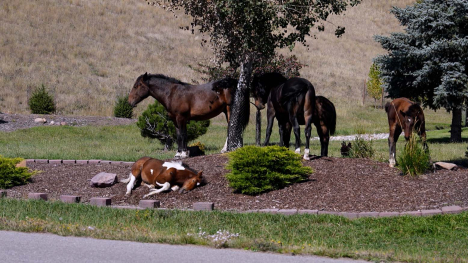
Montana residents balance affection for free-roaming horses with safety and property concerns.