Protein demand, genetics and component pricing are reshaping dairy economics — and creating new opportunities for producers.
Why Butterfat and Protein Are Driving Dairy Profits
Share


Protein is having a moment — from GLP-1 users protecting muscle mass to weightlifters and everyday consumers reaching for high-protein dairy. CoBank's Corey Geiger explains how that consumer shift is rippling all the way back to the dairy farm, where multiple component pricing now rewards butterfat and protein above almost everything else. Geiger, a sixth-generation dairy farm kid turned economist, walks through the data behind a new CoBank report, the genetics driving record milk components, and why he thinks this is a trend, not a fad. We also look at trade opportunities and the need for more animals (with ever-improving genetics) at a time cattle are also in high demand.
Transcript
[Paul Yeager]
Today's MtoM podcast is brought to you in part by the Iowa Economic Development Authority, creating opportunity for business in Iowa by connecting companies, entrepreneurs and communities with the resources to thrive. Learn more at Business Iowa.
Protein, one's butterfat, milk components. We're getting all in on both the health trends, or are they health fads, when it comes to the American consumer as well as the American dairy farmer? We're going to talk about a lot of things about dairy and how it impacts everyone who's looking to add muscle or bulk, or stay thin and trim with good proteins. It's all the rage. But that's not why we're talking to Corey Geiger from CoBank. He is officially their lead dairy economist, and we're going to talk about a survey that recently came out, a paper of sorts. You know, his homework, as I tell him, that's what he just turned in. But it studies how improvements in the herd have made a big difference and could make even greater difference for those who raise dairy cows and also who have milk. There's also an economist side to this discussion when it comes to global trade as well as growing markets. And we're again going to talk about the I-29 corridor. Who knew it was such a big deal? I'm Paul Yeager. This is the MtoM podcast, a production of Iowa PBS and the Market to Market TV show. New episodes come out each and every Tuesday. Head into our archives, look around and see what you like. Don't forget to sign up for that Market Insider newsletter. You can do that at our website of MarkettoMarket.org. Now let's get to Corey.
Corey. In my line of the world, it used to be both of the husband and spouse worked for Deere. We called them double Deere. You are a double dairy family, it sounds like. Is that right?
[Corey Geiger]
That is correct. I grew up on our six generation dairy farm in northeast Wisconsin, and my wife and I grew up on a dairy farm as well. And to this very day, her brother runs that operation, which was the first in the United States to put robots into milk cows 26 years ago now.
[Paul Yeager]
And there's probably been lots of stories about them over time. So you're very familiar with people knowing almost everything about your operation.
[Corey Geiger]
Yeah, especially the robot dairy, they actually even hosted an episode of The Bachelor on the farm, and were the source of a video that, a couple of years ago, ran right before a Thursday night kickoff. Bears. Packers.
[Paul Yeager]
Oh, there you go. That's you, last night in Kansas City. It's the barbecue in Wisconsin, it's the dairy. How stereotypical can those network sports people be.
[Corey Geiger]
Getting the cheeseheads?
[Paul Yeager]
That's right. Well, let's talk about cheese and your dairy. Growing up, did you think you would be the sixth generation, I'm going to only be on the dairy farm? Or did you have aspirations of, you know, I think I can talk about this economically too?
[Corey Geiger]
Well, my original goal and desire was to become a dairy farmer, and it's a very noble option. But my parents said that I wouldn't be able to come to the farm unless I went off to college. So I majored in dairy science and agricultural economics and had an internship in Ohio one summer, where I did a bunch of writing, and I landed up taking a job 15 months before I graduated with Hoard's Dairyman, and worked there 28 years.
But really, what my beat was, economics. And now I've been with CoBank three years and have expanded my research and focus in dairy economics and beyond.
[Paul Yeager]
And this week, as we record this, you've turned in some homework in the form of a new paper. Tell me the significance of this.
[Corey Geiger]
Quite frankly, I think this is the best research I've ever done in my professional career. The significance is, back in May, the federal milk marketing order system — so we have a very regulated system of pricing milk in the United States, but there's a lot of great data there — and I was reading a report from the Upper Midwest order.
So think about Wisconsin, Minnesota, Iowa, and South Dakota. They had the dairy herds, over 5,000 of them, in deciles — so 10% groups. And when I saw the difference of the components in the high group and the bottom decile group, I just started doing the math and I'm like, holy cow, literally, holy cow. There's a lot of separation in the profitability, or the revenue stream in this case, of those dairy farms.
[Paul Yeager]
The dairy farm has been, through your generations of the past, profitability or revenue is not always something that gets said with a smile. Sometimes it's just enough to keep the doors open. Sometimes it's years you're carrying some debt. So the significance of dairy profits and the products, that's significant for a region, for an industry, correct?
[Corey Geiger]
It is. On a dairy farm, under almost all of our lifetimes, 95% of the revenue came from the milk check. Today that's a little different, it's closer to 80%, because of the historic beef prices. But it doesn't matter what lifetime you lived in, milk is the driver. And that story has been consistent through all the generations. I mean, I even have milk checks from the 1920s, from my great grandmother and great grandfather, of the milk shipped and what the butterfat percent was.
Now we also measure protein.
[Paul Yeager]
What year do you think the biggest change was, or what prompted the biggest change to not just rely on milk?
[Corey Geiger]
Well, farms have always — I mean, especially in pioneer America — farms were diversified. And then, you know, this evolution came in the '50s and '60s, and farms really, it didn't matter what their area was, they became more focused, whether they became grain and row crop, or focused more on dairy, or focused more on beef. Specific to dairy, though, what was a big change in milk pricing was a flag post in the late 1980s, when the Utah area, the Great Basin Order, started pricing on multiple component pricing.
So up until that era, it was just basically pounds of milk, and an added price for butterfat. But today 90% of the milk is priced on multiple component pricing, and 90% of that money is placed on butterfat and protein.
[Paul Yeager]
And those are the two words we're going to discuss a lot now. So let's start with — I think I've talked to a couple of your colleagues, or at least folks similar to your job, and they've been telling me about protein and the GLP-1s and the demand for protein in general, not just tied to the weight loss drug.
How did dairy get swept into this?
[Corey Geiger]
Well, let's start with this. It's a great question, Paul. The amino acids in dairy are the most complete found in food. And amino acids are the building blocks for protein. And protein is the building blocks for muscle. And that's kind of where this all starts setting in here. And we've had a number of things that have been happening to really drive this protein movement.
First started clean label — people looking for shorter ingredient lists, really thinking about healthy foods. And I think that was an outcome of the Covid pandemic. Then comes along GLP-1 weight loss drugs. And right now it's been estimated at 12% of Americans have been on a weight loss drug. And the key mover there is, I'm eating only 70% of the calories of a normal consumer, and those calories have to count.
And if I'm trying to lose weight, I don't want to lose muscle mass. That's what you're trying to keep — you're trying to lose, you know, fat and adipose tissue. Then came the movement, and now we have the food pyramid. And these are all amplifiers in that protein story.
[Paul Yeager]
And also, let's go back again, generations. It was butter — oh wait, butter is bad for us. Now we're like, no, butter is better than what the alternative was. How does this not become a fad that then the industry has to endure?
[Corey Geiger]
I speak around the country, and that is a very, very good question, Paul, and one that I get asked from time to time — is it a fad or is it a trend? Actually, I'm a board advisor for Dairy Management Inc., the national dairy checkoff, and we're going to be meeting at the Mayo Clinic here in late September. And part of that is food is medicine.
We're, you know, coming back to this — coming out of the pandemic, people are a lot more conscious about what they're eating, what it does for their body, and some of the research that's coming out of there — there's already five years of research, and Dairy Management Inc. is renewing the agreement with the Mayo Clinic for five more years of research.
But we're finding that saturated fats are actually good for you, especially when it comes to cognitive ability and brain health. And so those findings are getting firmed up through one of the best health centers in the world. I think when that kind of research comes out, that moves it to a trend, not a fad. Then we come to protein here.
I think this has got long-term legs here. It's what's been driving the beef market. When you look at the top three growth products in dairy, it's protein, protein, protein. So cottage cheese, the yogurt category, which is half Greek yogurt — and that's the one that's growing double digits. And then you add in what people like me would call high-dairy nutritionals, or dairy protein shakes, in that category.
Now, if you look at Fairlife, and then you go to this next group of [brand names unconfirmed — see transcription notes] and Core Power, and products like that that are 30 grams-plus of protein, together they're 15% of the fluid milk category. Now, that's a big shift.
[Paul Yeager]
Well, and you mentioned, I think you said, 80% is still fluid milk. Is that right? Okay. So when I look in the refrigerator of my house, and my 16-year-old trying to put on muscle and trying to gain weight for football, protein's been a discussion for us. What he's been trying to do, add the muscle. But that's not always been the case where the options for him have been the same. I think about the shake that's popular, that's maybe more on the trend, maybe more on the fad than the trend.
But the other items you mentioned clearly line up in the trend, not fad. So that has to give encouragement. So let's talk genetics. Oh, go ahead.
[Corey Geiger]
Well, and you know, this whole protein movement actually did start with weightlifters and people who wanted to work in athletics, in that category. And it's moved to the general consumer market. And that's the big shift. The one other part of this whole protein category, it's not necessarily a product you pick off the shelf, but it's put in all these different categories: whey protein concentrate 80 and whey protein isolate, which is the holy grail of the proteins for dairy category, which is 90-plus, higher protein.
And they're now 77% of the market. Think about — if I rewind the clock to when I was a little boy, Little Miss Muffet, eating her curds and whey — we had no ability to extract the whey powder out, so we were feeding it to baby pigs. That's why the Wisconsin Feeder Pig Association got going in the 1950s and '60s, and we were literally shipping 5 million feeder pigs to Iowa to get finished off on corn and soybeans.
Or we were land-applying it as waste. And now today, every new cheese plant out there is being built with a whey strategy, and it's a paradigm shift, and it's permanent.
[Paul Yeager]
Corey, is it because — or has this change happened because — all tied to the nutrition side, or have we made changes in the milk itself that's coming off the farm?
[Corey Geiger]
I would say both. I think if I were to stack that answer together, the trends have taken place. We have a historic $14 billion of new processing assets coming online in the dairy industry through 2028. Those processing assets are aligned to the new consumer trends. And then we come back to — 90% of the milk is priced on multiple component pricing.
So the dairy farmers are getting the signal: send me more butterfat, send me more protein. Now we're in a butterfat surplus as of August of 2025. But until that moment in time, we were a deficit nation in butterfat, and now we can't possibly make enough protein.
[Paul Yeager]
The butterfat — let's, why the surplus?
[Corey Geiger]
Well, we had sent price signals to dairy farmers, and farmers are really good at reacting to price signals. If I were to make a little line chart here — in 2010, we imported 10 million pounds of butter into this country. By 2021, it was 100 million. And by 2024, it was 176 million pounds of butter that we were importing here.
So we were growing our exports, but we were exporting protein and we were keeping every ounce of butterfat essentially here in this country. Well, then we hit this teeter-totter, and we went from 176 down to 98 million last year.
Of imported butter — which means we were making a lot of butterfat. Now, we've exported a historic level of butterfat last year, and we're almost matching last year's butterfat exports just through July. But we've changed the genetic profile of the dairy cow through natural genetic selection, and it's been profound. If my grandpa came back today and said we have Holsteins averaging four-six, or some couple herds that are nipping at 5%, which is extreme, and those are rare Holstein herds — that's impossible, but it's happening.
[Paul Yeager]
Well, you took me to the G word. We were going to discuss genetics anyway. That's where I wanted to go next. We talk about it in improvements in corn and soybeans, it's also been big in the dairy herd. Is it tied to a breed, that these genetic improvements have happened?
[Corey Geiger]
Well, all the breeds are changing in lockstep. However, the Holsteins are outpacing all the other breeds. I will tell people in my talks across the country that the dairy cow is the most researched animal on planet Earth. We know more about her than any other animal except the human being. And today, genomics — the study of DNA and comparing it to the data of historical populations — is causing this big shift.
The science became public in 2008. I actually wrote the very first public story about it in the world, and I've been studying it ever since. But last — now, at first you could tell I get excited talking.
[Paul Yeager]
Well, that's okay, there's nothing wrong with being excited. That's why it's so fun, Corey.
[Corey Geiger]
At first, we really worked over and studied the bull population in picking the sires for the next generation of cows, and 90% of the dairy cows or more, we use the original AI, artificial insemination, on them. And today we're also doing genomic tests on heifer calves. So one out of four baby heifer calves has had a DNA genomic sample taken.
And we compared it to the 123 million records that we have. And we are sorting the keepers and the duds, and the duds go to career number two right away, to a feedlot, and they become beef. But this is accelerating the flywheel of genetic pace. Holsteins actually doubled up the pace of gain here in the last five years over jerseys.
And based on semen sales in the United States, about 85% of the U.S. dairy cow population are Holsteins, with jerseys making up about another 10% or 11.
[Paul Yeager]
But hold on just a minute. Hold on. I'm not going over my set pieces, but I'm pretty sure that my butter cow from the Iowa State Fair is the jersey. So is the jersey only good for being a model now? No, I'm just — don't throw shade.
[Corey Geiger]
They're doing quite well. But there's one issue with jerseys right now that they've had to work to overcome. If 20% of the dairy farm revenue is coming from the beef side of the equation, their calves — even when you cross them on Angus or Charolais — have a smaller frame size. And the same goes with the cull.
You know, when we send a cow to processing for ground beef, there's less yield on it. So they're not generating as much revenue. And that's impacting their breed.
[Paul Yeager]
Well, okay. This is — cow is the rise of the Holstein, and maybe not as — when you talk, not necessarily — I don't know if you call them duds, but not as good animals to be in the parlor — has the run-up in the cattle market actually helped get you quicker to highlighting those better genetics and having more of those animals?
Because the farmer can ship that animal to the next feedlot, or, as you said, career number two, because of this — it's sped it up because of the rise in beef prices.
[Corey Geiger]
It has. I spoke at the USDA Ag Outlook Forum back in 2017 and was starting to document this beef-on-dairy trend. And I started saying at that moment in time that dairy farmers were employing a triple play. The triple play was using gender-sorted semen on their best cows, so they were planning their heifer calves; they were using beef semen on the lower genetic quality portion of their cows and sending them straight, and really getting the higher revenue stream from the beef on dairy.
And then, of course, genomic testing — and that's part of the triple play. So fast forward to last year, I spoke at the 101st USDA Ag Outlook Forum. And before I started talking about this change in milk components and cows, I said, by the way, I was here in 2017 and some of you looked at me a little bit like I was landing from planet Pluto on this beef-on-dairy.
And this year, 84% of the beef semen sold in the United States was purchased by dairy farmers to use on their cows, which means the remaining 16% was purchased by cattle ranchers to use on their beef cows. But — big asterisk there — a lot of beef cattle are natural service. But still, a lot of the genetic data coming from the beef sector to this day is actually originating from a dairy cow, in whatever beef bull breeding from her.
There's just a lot of dynamics happening in the countryside again, that if our grandparents would come back, they'd be like, are you serious? That's really happening.
[Paul Yeager]
What was the time frame between your first Outlook Forum appearance and your second one? What was that, about five years?
[Corey Geiger]
Okay, so 2017 to 2025. Okay, eight years. What's the next eight years, then?
[Corey Geiger]
Well, this is going to accelerate. I'm actually working on our quarterly outlook here for CoBank. And I've had a couple people raise their eyebrows, and I raised the question: will we see a dairy herd in this country at 10 million cows? Now that seems far-fetched, but we're at 9.7 million cows, the highest in 34 years. And there's a group of dairy cows being kept on the farm in what I would call a cow-calf operation.
The calf that they're having is worth enough that they're keeping older cows around. Now, beef prices have come down some. We peaked at $2,000 for a baby black-hided calf from a dairy cow back in May, and we've dropped down to $1,200 to $1,300. The issue, though, is, in a positive way, that number has to drop probably to $400 before this isn't a profitable endeavor.
And so that's a big shift on dairy. If the beef cattle herd is at the lowest level since 1961, dairy is helping lift up beef supplies in this country. Now, to be fair, only one out of five pounds of beef in this country comes from a dairy mama, either the dairy cow herself or the calf she has, but that number is probably creeping to 23, 24%.
And so dairy is helping what — consumer demand in the beef category.
[Paul Yeager]
Well, dairy has also been wrapped up in a political issue when it comes to labor. So what's the other hurdle to get you to that 10 million mark?
[Corey Geiger]
Well, dairy farmers are unable to use the H-2A visa program, which a lot of other seasonal crops and row crops and vegetable crops have had. And so labor supply and availability is an issue on dairy. It's one of the reasons that we're seeing dairy become more digital these days, because we need to use data monitors and other things to get information.
I mean, today we can know a cow's rumination, her activity — and if those numbers are down, that means she's probably ill. If they're high, she might be coming into estrus, so we can breed her. But there's more data coming into dairy to help manage the operations, and we're expediting that because of our labor shortages. Quite frankly, without action from Congress — and I don't see a lot of remedies to our current labor situation in this country, because our population in the U.S. is kind of flat, leveling out here. We have, for our entire lifetime, Paul, we have been in this mindset of our population always growing. And this is going to be different for all of us in agriculture, if we keep improving our productivity.
And there's not more mouths to feed in the United States, that means we have to find other markets.
[Paul Yeager]
Well, that's what I was actually going to go to next, then, is — so maybe we aren't going to need 10 million, and we're better at producing. So I need — do we need more animals if we're better with the ones we have?
[Corey Geiger]
I have a great answer for that. Despite all the headwinds of the export market right now, U.S. dairy is growing. If you look at the global dairy supply, the big three export two-thirds of the products going around the world. The big three are the EU, which is 1.6 times the size of the U.S. dairy industry, and they export 20% of their products.
Then comes New Zealand, the mighty island nation the size of Illinois and Wisconsin — 6 million people, 6 million dairy cows. They export 95% of their product. Then comes hard-charging United States. When I started as a professional in the industry in 1995, we were exporting just 2 to 3% of our milk production as forms of dairy products and ingredients.
Fast forward to today, that number is 17, 18%. And during that time we grew our milk supply 44%. So we are growing our export share but also growing the milk supply. It's one of the reasons, if you bring this full circle, that we're seeing $14 billion in new dairy processing investment in this country, because the world sees the American dairy industry as probably the best opportunity to provide nutrition to the world and grow that category.
There's a couple other countries that have a lot of assets here as well.
[Paul Yeager]
And isn't there also some Saudi investment too? That's been happening. Maybe that's more in Arizona, and maybe that's more on the alfalfa side.
That is a lot more in the alfalfa side. That is correct. Yep, okay.
I had to think.
About that, for assisting.
[Corey Geiger]
They're not involved.
[Paul Yeager]
Okay.
[Paul Yeager]
So if we grow, and we get better at growing, and we're better at producing with this animal, where does the growth come from? Is it adding to existing locations? Is it putting Wisconsin back in a spot, California? Or is there some new region that grows?
[Corey Geiger]
When I look at this — and if you talk to dairy people, we think in terms of milk sheds — there's areas in the overlap states, and the trend, for the most part, is the new plant expansion is happening where there's water. I'll put a big asterisk on a couple of those and I'll go through them in order here.
The area we're seeing the largest investment right now is the New York-Northeast milk shed, and I put Vermont in there, they're very interconnected. There's over $2.8 billion in new processing assets coming online. A lot of that is in yogurt, in these dairy protein shakes, in nutritionals — so those products have more water content. Water is more expensive to ship, and so they can access the East Coast market. I just spoke in Pennsylvania two weeks ago — they just had a $1.2 billion plant from Chobani announced. Chobani is the fastest-growing yogurt brand out there. So that's another big milk shed. Michigan has seen a lot of investment, they're a top-seven dairy state. Wisconsin is a very traditional milk shed, they've had over $1 billion of investment, and Wisconsin makes a lot of cheese, because it's nutrient-dense and easier to ship. And then the I-29 corridor — think South Dakota, western Iowa and western Minnesota — has been a big, big growth area. In fact, since January of 2023, South Dakota has added 68,000 dairy cows, they're in the top three.
And I say that intentionally, because the Texas Panhandle leads the list of new cows, and Idaho is second, and those are the other two growth areas. Now, I didn't say California — in my lifetime they will still be the number one dairy state, but they have reached peak growth when it comes to dairy.
[Paul Yeager]
And it's tied back to that water issue.
[Corey Geiger]
Water and other land, competing land sources or resource issues. Yeah.
[Paul Yeager]
This is the second week in a row the I-29 dairy corridor has been mentioned. Last week it was about land purchases, and that's who's buying operations, or land, in South Dakota, because they're on the I-29 corridor. So I had not heard about that, so that was good to hear. Okay, I have a whole list of items that we haven't even gotten to.
So let's go to the report a little bit, on why we're here. So we've talked about the protein levels increasing, the butterfat, what is in the component side, so we talked about breed, we talked about producer plans, let's go — opportunities here for growth, we've kind of highlighted a lot of that. But before I get to that, opportunity you mentioned, about we need to find new markets.
And it's — those opportunities are more of a challenge with certain trading partners right now. Can we sustain, or just go inward in the United States, to handle this new growth that's needed, or that could happen in the industry?
[Corey Geiger]
So the new cheese plants coming online, almost 60% of that new cheese is being exported. Before May of 2025, we had never exported more than 110 million pounds of cheese in a month. Since May of 2025, we have exported 110 million pounds of cheese every month. And then that plateau reset in about February or March of this year, and we're at 140 million pounds.
So we're exporting a lot of cheese now. We're also exporting a lot of butterfat as well. So those are two of the new avenues for a lot of these dairy products. We're largely keeping our protein at home these days for those growth categories of cottage cheese, Greek yogurt and dairy protein nutritionals. And whey protein is at historic prices because it's so versatile.
I mean, you put it into a nutrition bar, or you put it into a shake, or you put it into a coffee — you just put whey protein isolate, three words, or you put milk protein concentrate. A lot of these plants are doing things that are founded on filtration, so ultra-filtered milk.
But we're also filtering out the lactose. So a lot of these are very low-sugar products as well, coming online. Every strategy — we're also harvesting protein, we're reducing the sugar content.
[Paul Yeager]
Well, lactose in milk — we could do another few hours just discussing what's milk and what's not, Corey. But we won't get either of us in trouble. Can we quickly go back to trade for just a moment? You mentioned Vermont — we had a story a couple of weeks ago on the TV show about a dairy producer in Vermont, and I think 7 to 9% of his business has been lost because of trade issues with Canada.
Canada's dairy system is again another — our podcast discussion to explain the differences. However, if the U.S. and China — do we need each other to get along enough to help both sides of the border when it comes to the dairy industry as a whole?
[Corey Geiger]
I'm going to bring in the M of the USMCA agreement, and then we'll talk China. 25% of U.S. dairy trade is with Mexico. So from a dairy farmer and processor standpoint, do nothing to upset that relationship. Our other good customers — China would be in the top three there, number three. But we also export a lot to the Central American countries, there's a free trade agreement there with seven of those. We do some with the Middle East, North Africa, Southeast Asia is another big market — the Kiwis, New Zealand, that is their number one market. China, that you brought up, Paul, they've hitched their marketing wagon to them. But China is important to us. The other product we haven't talked about is whey protein concentrate 34.
It's dry whey. A lot of that was — the original, when we just got started going in the industry, that product was the first thing we made, and it's largely animal feed. So we do export a lot of that. And China has the largest hog population — WPC 34 is an active ingredient in hog feed rations.
[Paul Yeager]
And the other C, with Canada.
[Corey Geiger]
The other C is Canada. Now, Canada's domestic dairy industry, you have to buy the right to sell milk, it's quota, it's a supply management system. So by and large, Canada doesn't export a whole lot of dairy products. We do have some issues that we've been working through with the U.S. Trade Representative, in so much that they've been marketing milk protein concentrate — jargon for the dairy folks — as a Class 7 product.
But that's been finding places and being sold under the world market prices, and that's probably where the tension starts when it comes to U.S.-Canada trade here. We'll see what happens at the end of the month with these tariff volleys going back and forth. But by and large, Canada supplies itself with dairy and does import a little bit.
But we don't take much down here.
[Paul Yeager]
This report you mentioned — that farmers, dairy farmers in particular, are very good at following the money, following where there's opportunity. Does this report change — where do you see the biggest change coming first?
[Corey Geiger]
Well, I think what this report really says here — I talk dairy farmers' financial language here, and I put this in hundredweights. I looked at that top decile group, so the top 10% and the bottom 10%. And the difference at an average U.S. milk production — so an average U.S. milk production is 67 pounds per cow per day.
But that top group was making 70 more cents per cow per day than the bottom group, because of the higher butterfat and protein content. And that changed to $256. And we're looking specifically at the Upper Midwest when we're discussing this one, Paul. I did it for other regions of the country, but then there's a lot of really top herds that are averaging 90 pounds per day, and the spread changed to $0.95, or $345 per cow per year.
That is substantial.
[Paul Yeager]
That sounds like the next place that we're going to have to talk — maybe not, we won't wait seven years, because we might both be retired by then. But let's find out again how things shake out here. So Corey, I appreciate your time. Thank you so very much.
[Corey Geiger]
It's been a pleasure.
[Paul Yeager]
Today's MtoM podcast was brought to you in part by the Iowa Economic Development Authority, creating opportunity for businesses in Iowa by connecting companies, entrepreneurs and communities with the resources to thrive. Learn more at Business Iowa.
We are produced at Iowa PBS. Our production supervisor is Sean Ingrassia. His crew is Reid Denker, Kevin Rivers, Julie Knutson, Neal Kyer and David Feingold. The executive producer of Market to Market is David Miller. I'm Paul Yeager. We'll see you next time.
Watch More
Those who survived farming in the 1980s Farm Crisis have stories to tell and agriculture today should focus on cash flow, not profit.
A growers association reports average losses of $500 per acre as sugarbeet harvest gets underway.
Shawn Hackett weighs corn demand, USDA yields and potential November turning points for grains.
Sugarbeet losses, diesel costs, Montana’s feral horses and market analysis with Shawn Hackett.
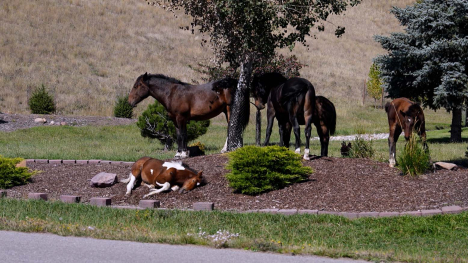
Montana residents balance affection for free-roaming horses with safety and property concerns.
Shawn Hackett weighs storing corn versus selling soybeans and Brazil’s potential weather risks.